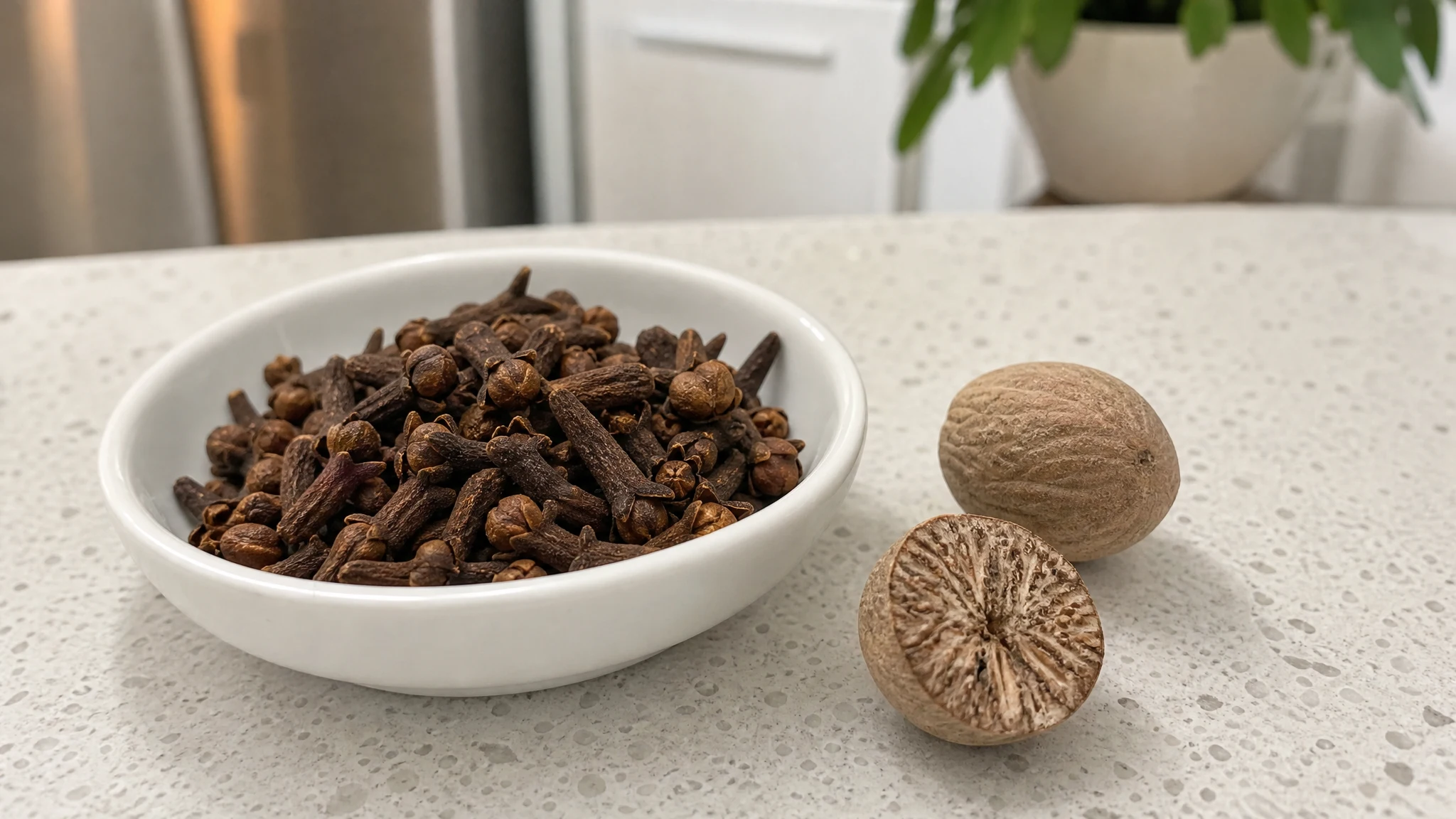
Clove Bud vs Clove Leaf Oil: Which Should You Pick?
Most buying guides say leaf oil has more eugenol than bud oil. When you look at the batch data, that turns out not to be the case. In a safety opinion that analyzed both oils side by side, the eugenol levels overlap almost completely. What differs is everything around the eugenol, and that is where the character of each oil comes from.
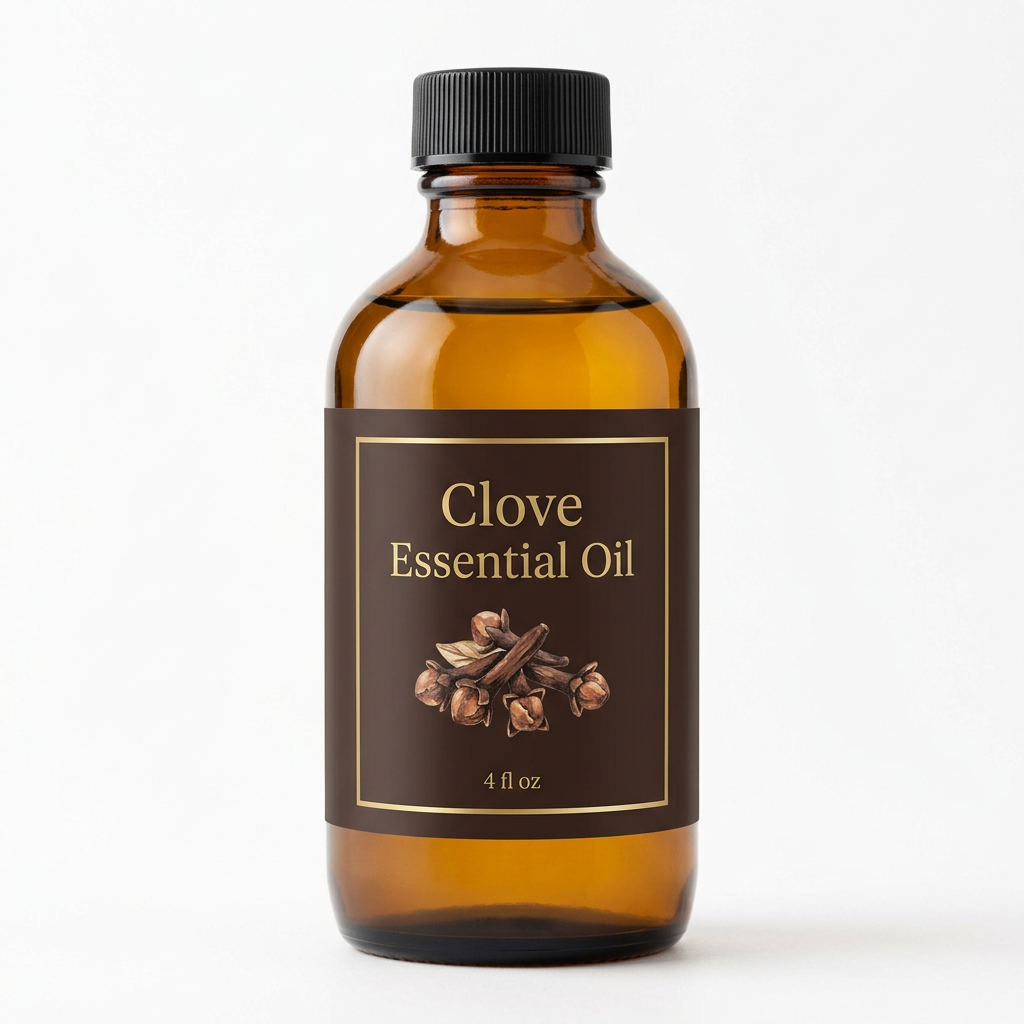
Clove Essential Oil
Our own Clove Essential Oil, in sizes from 0.5 oz to bulk.
From $10.99
Shop Now →What really sets them apart
The European Food Safety Authority's feed panel looked at seven batches of steam-distilled bud oil from Indonesia and six batches of leaf oil from Madagascar and Indonesia (EFSA FEEDAP, 2023). Average eugenol came out at about 82.7% for bud and 82.6% for leaf, practically the same. The difference showed up in two other compounds. Bud oil carried about 8.5% eugenyl acetate, against well under 1% in leaf oil, while leaf oil carried roughly twice the beta-caryophyllene, about 13.5% against 6.7%. They were measured by slightly different methods and come from one applicant's batches, so read it as a pattern rather than a guarantee for any bottle.
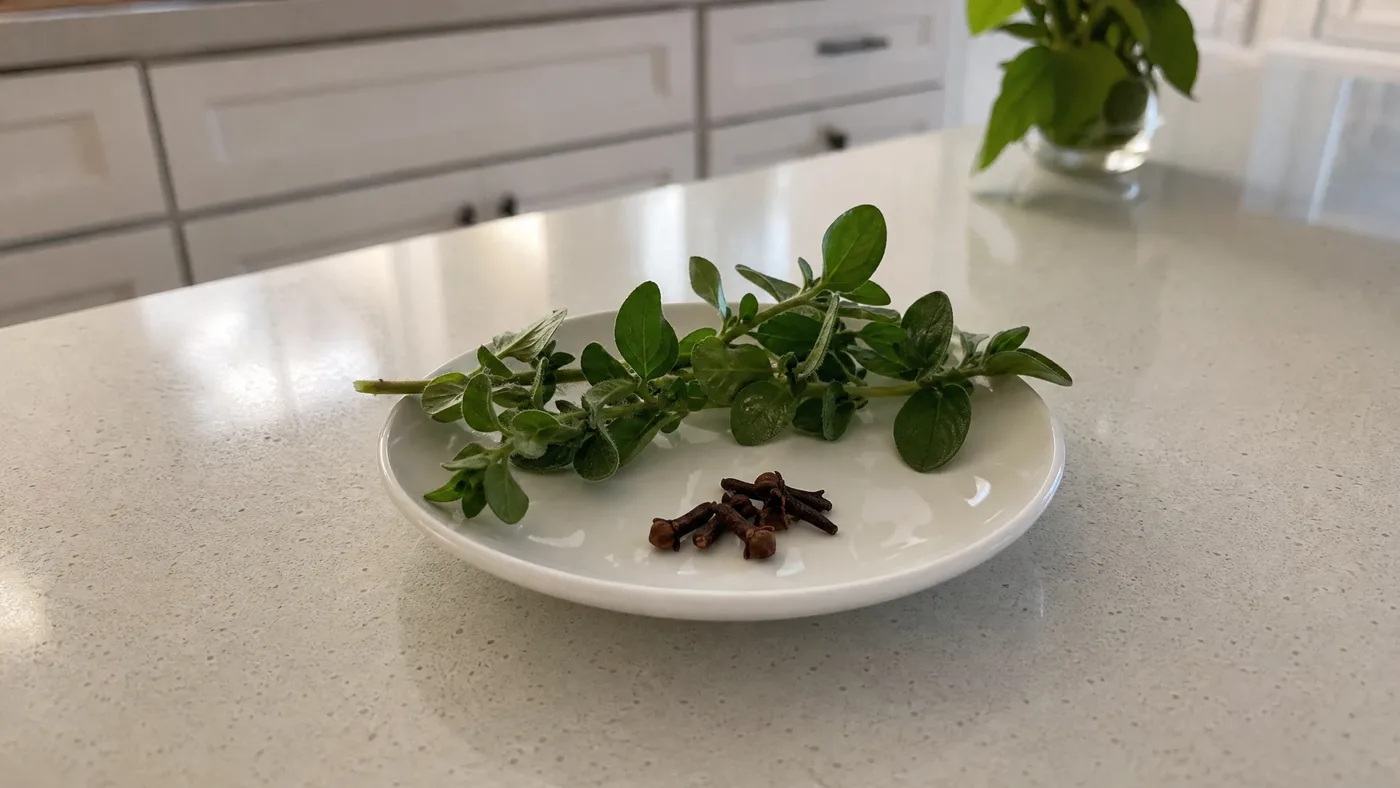
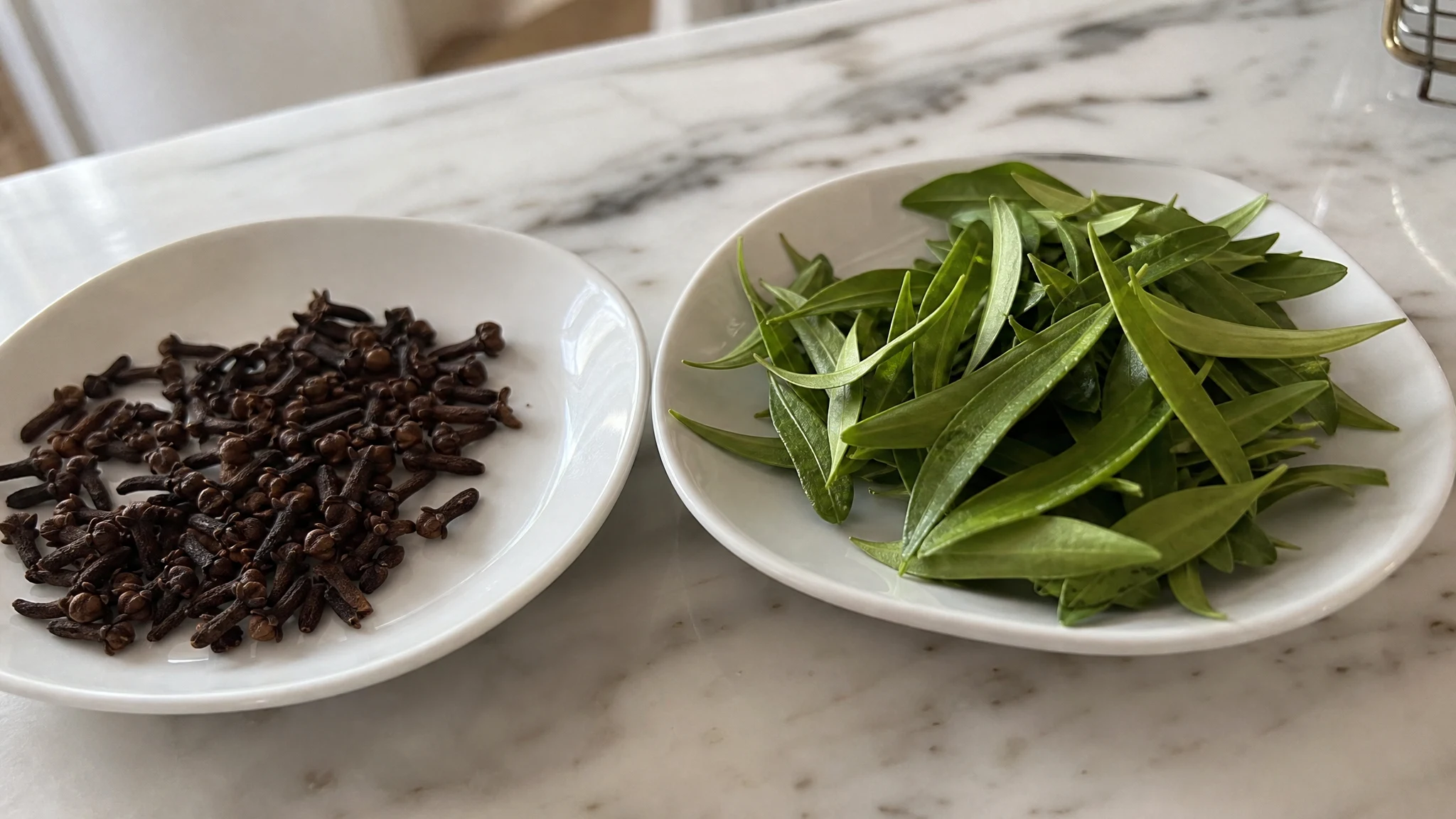
It is reasonable, though not proven, to link that to what you smell. Eugenyl acetate is the compound that sets bud oil apart, and the bud oil is the sweeter, rounder one. We describe our bud oil as warm, rich and sweetly spicy, with a baking-spice depth, and our leaf oil as bold, smoky and earthy-spicy, drier and less sweet.
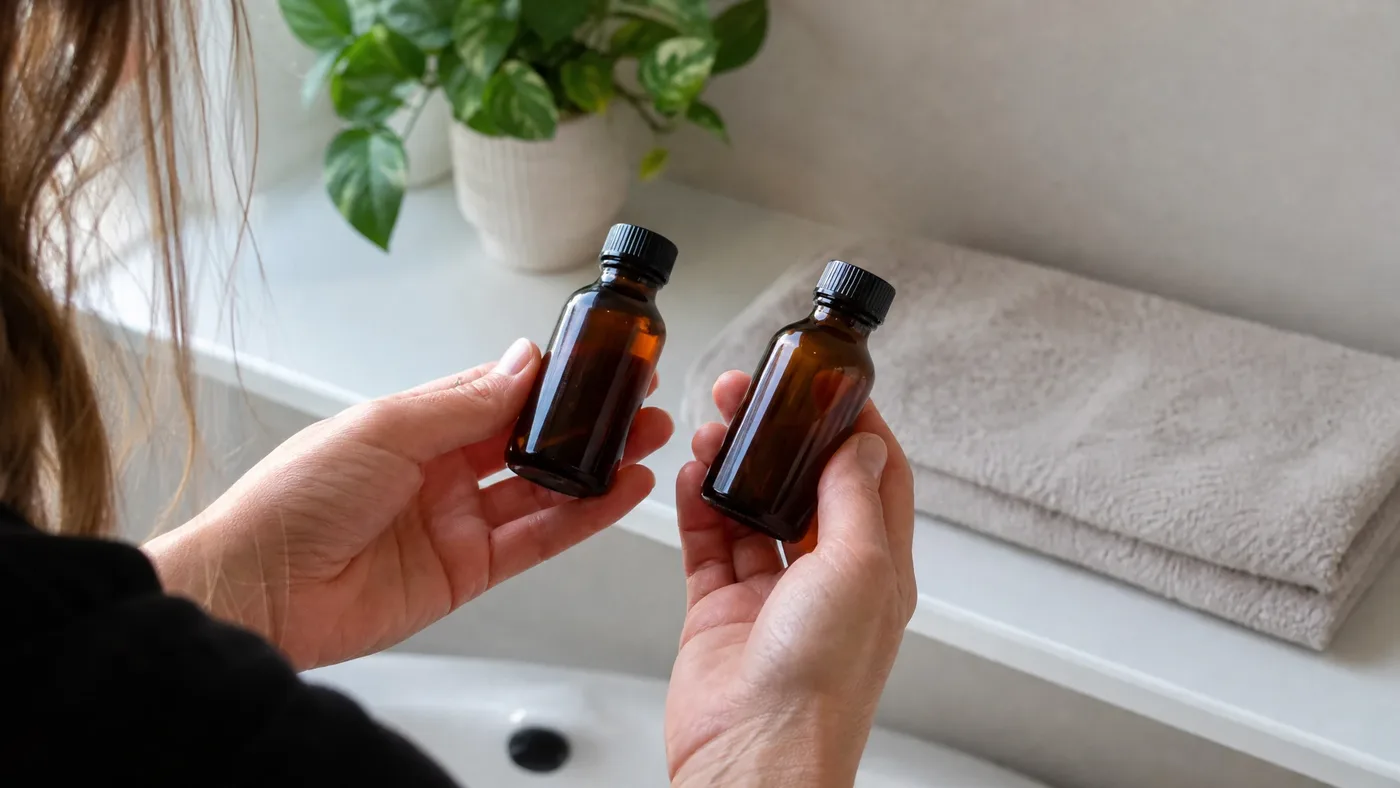
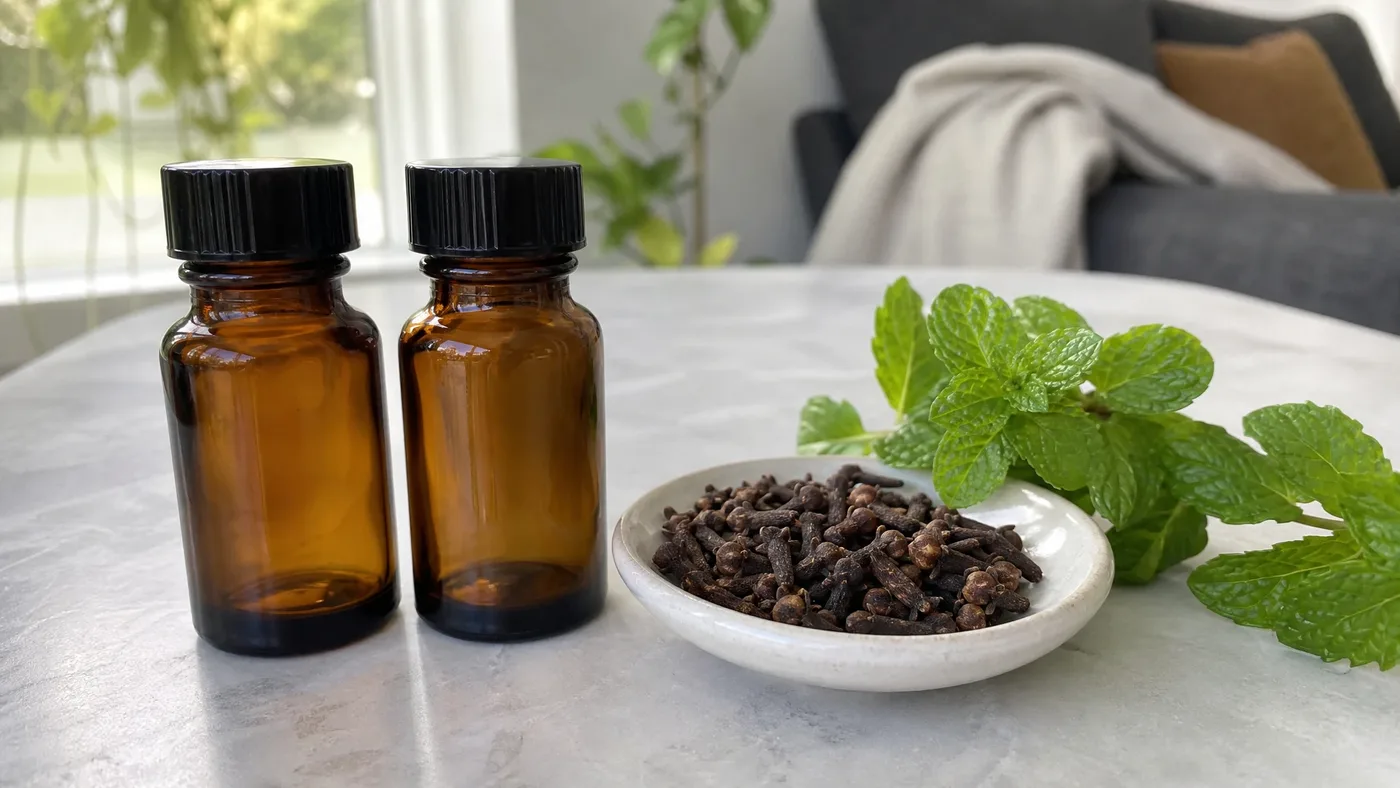
Opening both bottles side by side
The fastest way to understand the difference is to smell them together. Put a drop of each on its own paper strip, label them, and compare after a minute, after ten minutes and the next morning. You will likely notice the bud strip staying round and sweet, like a baked apple with spice, while the leaf strip reads drier and smokier with more of a campfire edge. Neither is better. They are two different moods from the same tree.
Why leaf costs less
Leaf comes from a far more abundant harvest, which is why it is our more economical clove oil. Buds are the other side of that story: they are picked by hand, the work is labor-intensive, and a dried bud weighs about a third of a fresh one (Kamatou et al., 2012). So bud oil starts from a scarcer raw material, and leaf from a bulkier one. The price gap says something about the harvest, not about which oil is better for your project.
Choosing by what you are making
A scent you will lean into
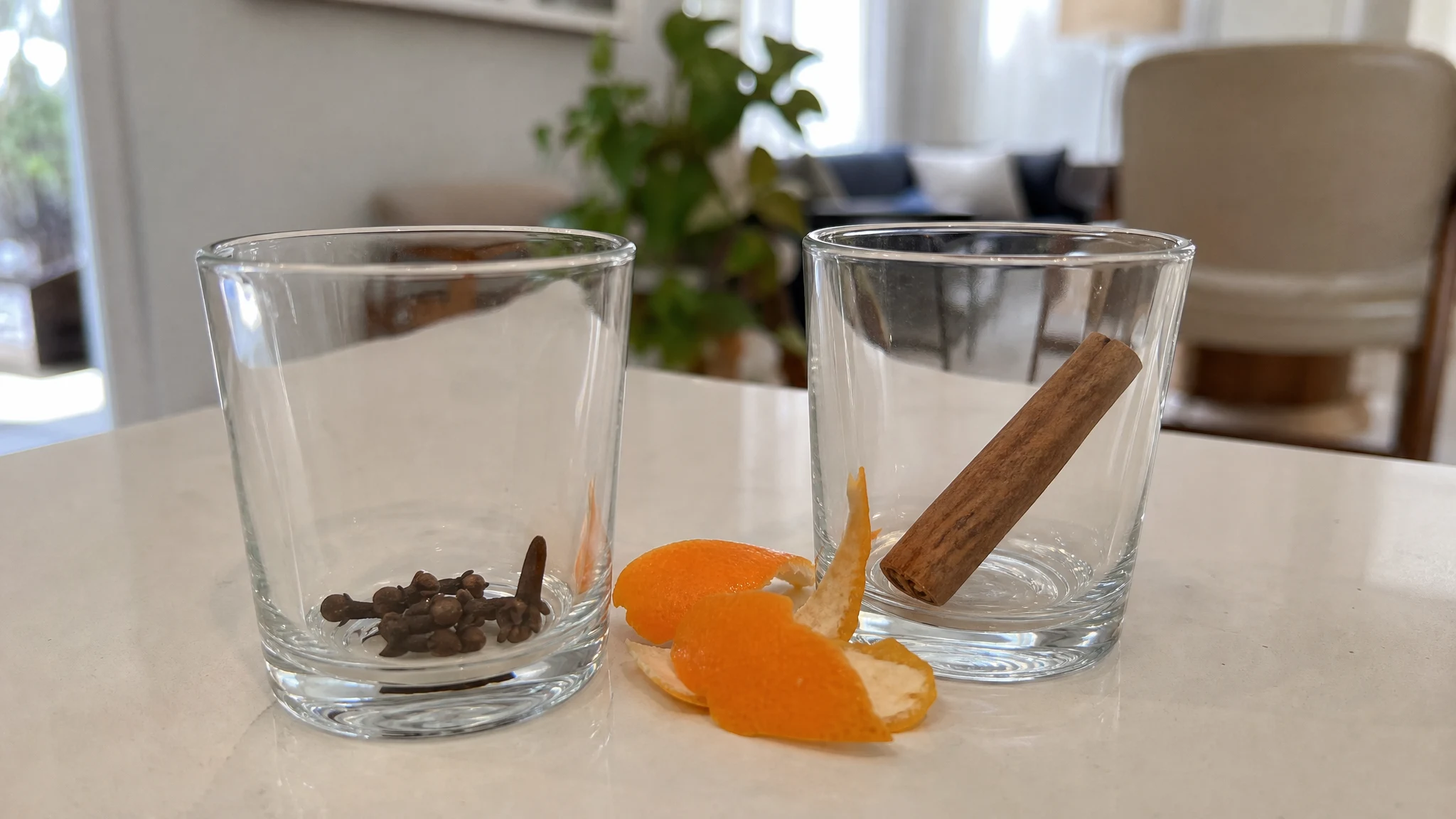
For a perfume accent, a small-room diffuser blend or a mulled-cider style simmer pot, the sweeter bud note is the safer starting point. We suggest orange, cinnamon, cedarwood, frankincense and vanilla alongside it. Our scent profile post describes the aroma in more detail.
Something for bigger batches
Soap, candles and cleaning blends use more oil per batch, and that is where leaf shines. It is the formulator's pick, and it pairs well with sweet orange, cinnamon leaf, cedarwood, patchouli, black pepper and vanilla. Our melt-and-pour soap post and candle post cover those projects.
Anything that touches skin
Both oils are strong. The EFSA panel described them as irritants to the skin, eyes and respiratory tract and as skin sensitizers. The Tisserand Institute gives a recommended topical maximum of 0.5% for clove bud oil (Tisserand Institute), and we keep skin blends at or below that for either oil. Our side effects post goes further. For anything involving the mouth or teeth, the person to ask is a dentist, not a bottle.
Two different personalities
Think of the two the way you might think of two spices in a drawer. Bud is the one you reach for when you want a gentle, sweet warmth to lead a scent. Leaf is the one that holds its ground in a big pot of soap or a candle, with more of a smoky, dry edge. They share a family resemblance, and you will recognize both as clove at once, but they do not play the same part. If you are choosing your first bottle, ask yourself whether you will be sniffing the project up close or filling a room.
A quick word on paperwork and standards
The Certificate of Analysis and GC-MS report we publish are for our bud oil, and you can see how to read the report line by line in our GC-MS walkthrough. If you need documents for the leaf oil, ask us in writing through the contact page. Standards also treat the two as separate products: the EFSA specifications follow ISO 3142 for bud and ISO 3141 for leaf. The two are distilled separately and never blended into each other, and we do not sell stem oil.
If you make a few things, you may find yourself using both. Bud for the pieces you want to smell up close, leaf for the batches where a bolder, drier spice does the heavy lifting. Treat them as two tools and not as rivals.
Bud for a scent you want to savor, leaf for the hard-working jobs, and a small first bottle of each if you cannot decide. Smell them side by side and you will know within a minute which one is yours.
Clove Essential Oil
Clove Essential Oil from our own shop, in sizes from 0.5 oz to bulk.
From $10.99
Shop Now →Sources & Further Reading
- EFSA FEEDAP Panel, 2023. Safety and efficacy of feed additives from flower buds or leaves of Syzygium aromaticum. EFSA J 21(7):e08183. PMC10375362
- Kamatou GPP, Vermaak I, Viljoen AM, 2012. Eugenol: from the remote Maluku Islands to the international market place. Molecules 17(6):6953. PMC6268661
- Tisserand Institute. Eugenol: Essential Oil Constituents in Food, Part 4. tisserandinstitute.org/learn-more/eugenol