Clove Oil vs Tea Tree Oil: Which Needs More Care?
Tea tree and clove are both oils that people keep in a drawer and both can make skin react, but they get there by different routes. One becomes more of an allergen as it ages. The other is strong from the first drop. Knowing which story you are dealing with changes how you store, dilute and use each bottle.
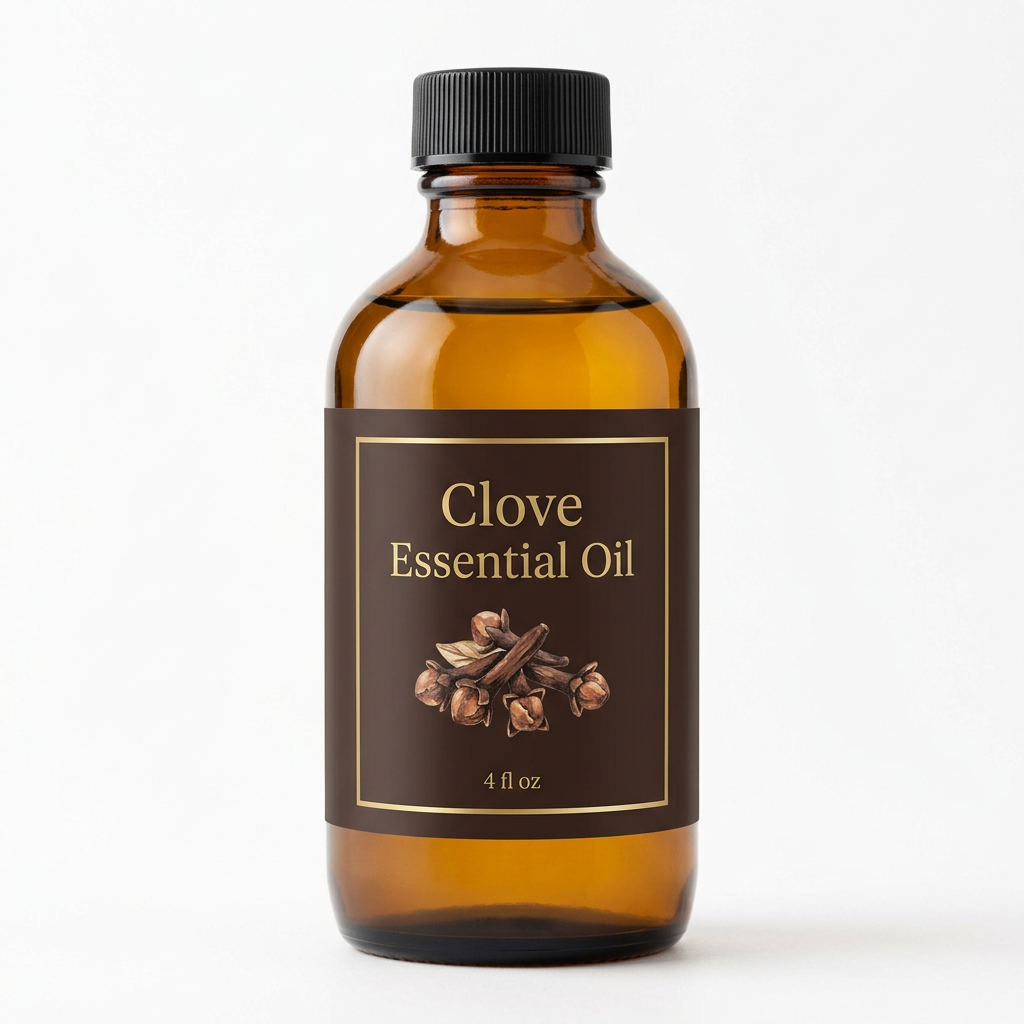
Clove Essential Oil
Our own Clove Essential Oil, in sizes from 0.5 oz to bulk.
From $10.99
Shop Now →Tea tree: the oil changes in the bottle
Researchers who studied tea tree oil allergy stored fresh oil on a window sill, exposed to light, air and warmth, and then tested it. Fresh oil was a very weak sensitiser, and the oxidised oil was about three times stronger. Peroxides in the oil rose from under 50 to over 500 ppm within four days, and the 11 tea-tree-sensitive patients in the study reacted mainly to breakdown products such as alpha-terpinene, terpinolene and ascaridole (Hausen, Reichling and Harkenthal, American Journal of Contact Dermatitis, 1999). A 2023 analysis of WHO reports of tea tree reactions found that problems were reported especially after exposure to light and air, and concluded that properly stored oil used before it expires is considered safe for people who are not vulnerable (Bekhof et al., 2023).
The lesson there is about freshness. Tea tree oil is one to buy in small amounts, keep sealed and use up.
You will notice the difference the moment you open the two bottles. Tea tree smells sharp, fresh and a little camphor-like, the kind of scent that clears the air. Clove smells warm, deep and sweetly spicy, closer to a baking tray than a medicine cabinet. If you have only ever met one of them, the other will come as a surprise.
Clove: strength is built in
Clove works differently. Eugenol is the dominant compound, at 73.57% of peak area in the GC-MS report we publish for our bud oil, and it is described as a primary irritant and a sensitiser, among the fragrance chemicals most often reported as consumer allergens in the EU (Kamatou, Vermaak and Viljoen, Molecules, 2012). The Tisserand Institute, eugenol page gives a recommended topical maximum of 0.5% for clove bud oil, so the dilution rule is the main control, rather than just freshness. In a large German patch-test network, 1.5% of patients tested with clove oil reacted, in a group already referred for suspected allergy and so not a general-population rate (Uter et al., Contact Dermatitis, 2010).
The arithmetic keeps it practical. At 0.5%, a 30 ml bottle of carrier holds 0.15 ml of clove oil, a handful of drops. Neat clove oil on skin is far beyond that, and a patch test on a small area comes before anything larger. Our safety basics post works through the dilution steps, and our balm arithmetic shows how few drops a small jar actually takes.
A drawer routine that suits both
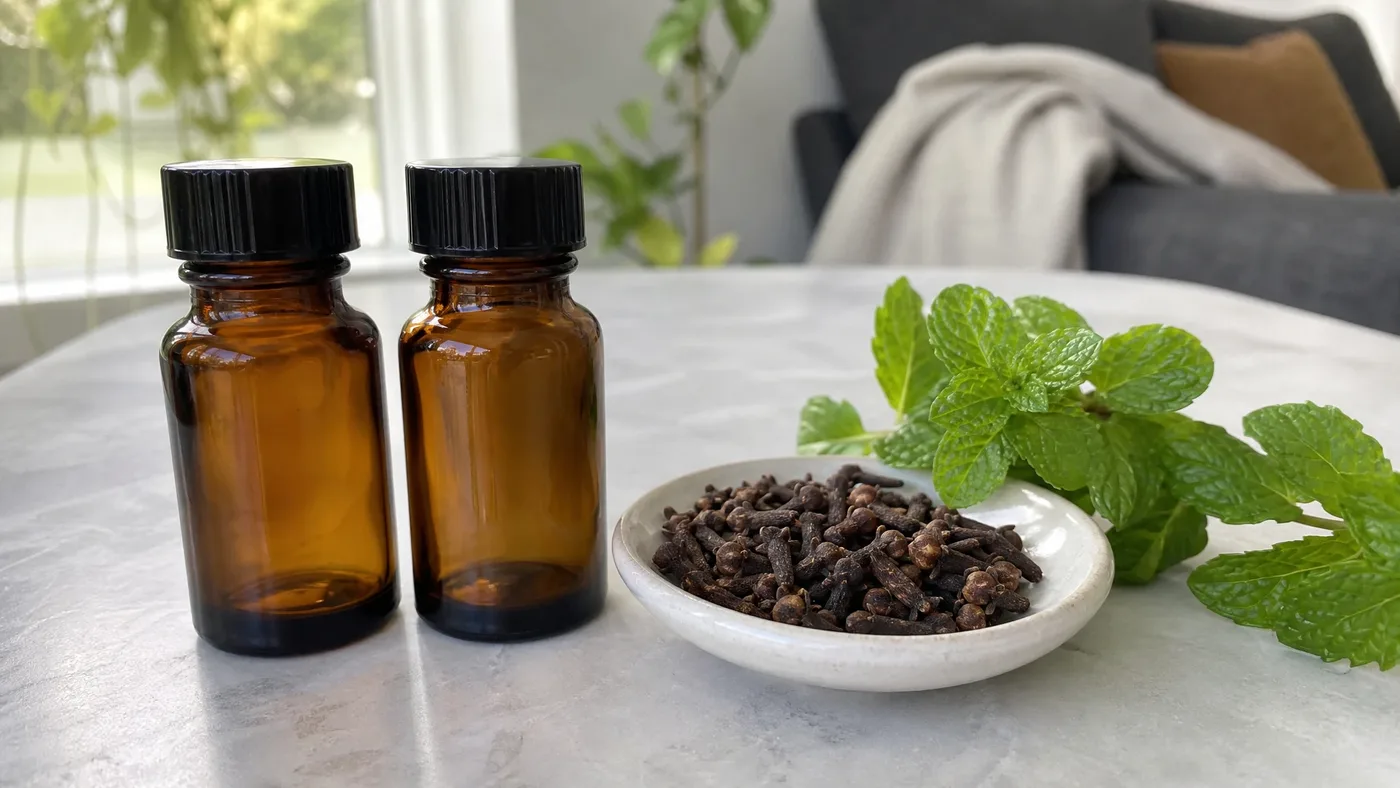
If both bottles live in the same drawer, a few small habits keep them straight. Put a strip of tape on each cap with the date you opened it. Keep the bottles standing upright so oil does not creep into the cap threads. And give each one its own careful pour, because the smell of clove travels and lingers on anything it touches.
- Wipe the neck of the bottle after every use, so the cap does not stick and nothing dribbles down the side.
- Store them above the reach of small hands, and not in the bathroom, where steam and warmth are hardest on any oil.
- Keep a small saucer or jar lid nearby for measuring, so you never drip straight over a larger container.
What the two have in common
It is easy to think of a strong smell as a sign of a strong product, but the two oils show how different strength can be. Tea tree announces itself with a bright, clearing sharpness. Clove announces itself with warmth and weight. In both cases a little goes a long way, and a bottle that smells powerful on a sniff test is telling you to measure with a light hand.
Both oils are best treated as concentrated aromatics. Both belong capped, in a cool, dark place, out of reach of children and pets. Clove is not immune to ageing either: oxidation is a general feature of essential oils, so the storage habits that protect tea tree help clove too, and our storage post goes through them.
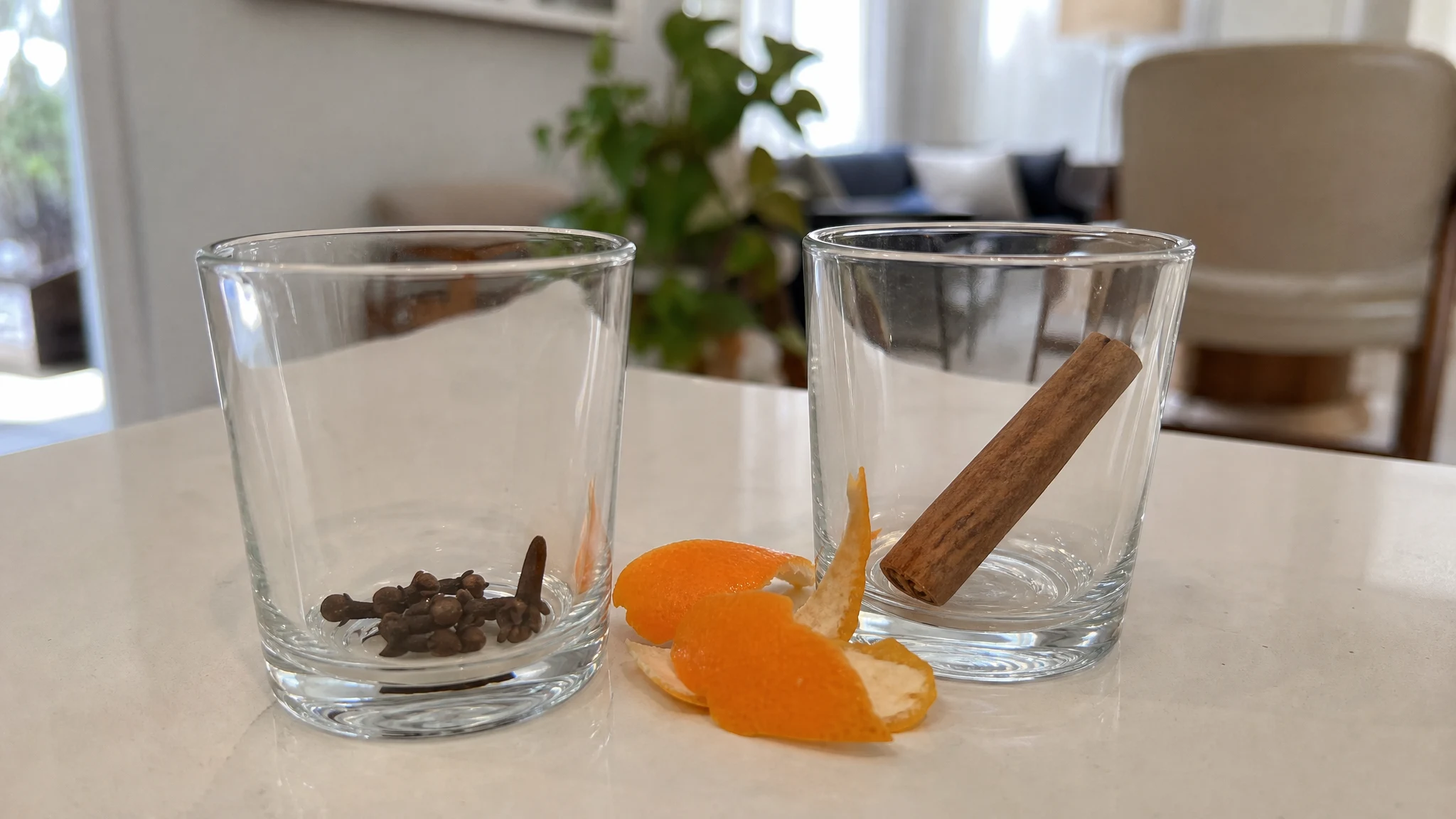
If you are choosing between our two clove oils for a craft project, the bud oil is the one with the sweet, mulled-cider warmth, and the leaf oil is the bolder, smokier choice. Hold a bottle of each a few inches below your nose rather than right up close, and decide which scent you want the room or the project to carry.
Where they differ is in what they are for. Clove is something we sell for aroma and craft use: a warm, rich, sweetly spicy bud oil for blends with orange, cinnamon, cedarwood and vanilla, and a bolder, smoky leaf oil often chosen for soap, candles and cleaning scents. We do not sell tea tree, and for any skin or nail concern, a dermatologist or pharmacist is the right person to ask rather than either oil.
Put simply, treat tea tree with a short shelf life in mind and clove with a small measuring spoon in mind.
Clove Essential Oil
Clove Essential Oil from our own shop, in sizes from 0.5 oz to bulk.
From $10.99
Shop Now →Sources & Further Reading
- Hausen et al., American Journal of Contact Dermatitis, 1999: oxidised tea tree oil and sensitisation
- Bekhof et al., 2023: tea tree oil adverse reaction reports
- Kamatou, Vermaak and Viljoen, Molecules, 2012: eugenol as irritant and sensitiser
- Tisserand Institute, eugenol: topical maximum for clove bud oil
- Uter et al., Contact Dermatitis, 2010: patch test results for essential oils