Clove Oil Safety: Dilution, Patch Tests and Pets
Clove oil is a joy to smell and a bit of a character to handle. It is mostly eugenol, the compound behind that unmistakable clove scent, and eugenol is also a recognised skin irritant and contact allergen. None of that is a reason to avoid the oil. It is a reason to measure it, dilute it and store it with a little respect.
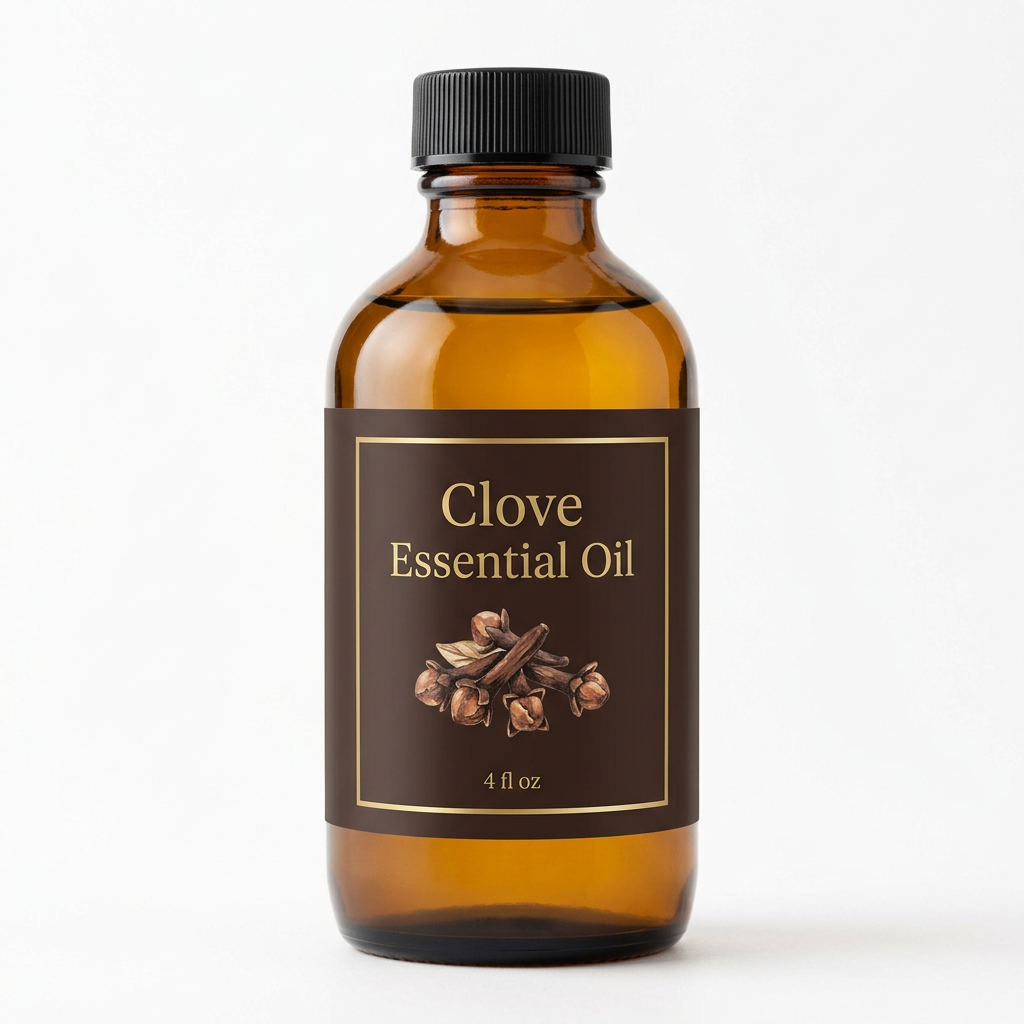
Clove Essential Oil
Our own Clove Essential Oil, in sizes from 0.5 oz to bulk.
From $10.99
Shop Now →Our ceiling for skin: 0.5%
We recommend keeping clove oil at 0.5% or below in a carrier oil whenever it goes on skin. The nearest published figure comes from the Tisserand Institute, which lists a recommended topical maximum of 0.5% for clove bud (citing Essential Oil Safety, 2nd edition) and no figure for clove leaf (Tisserand Institute). Because leaf oil is also rich in eugenol, we apply the same cap to it. For anything you plan to sell, check the current IFRA standard for your own product category.
Why this oil gets a lower ceiling
The GC-MS report we publish for our bud oil lists eugenol at 73.57% by peak area, and EFSA's review of clove oils reports a similar order of magnitude for both bud and leaf oil. EFSA's panel describes both as irritants to skin and eyes and as dermal and respiratory sensitisers (EFSA FEEDAP, 2023). Eugenol is one of the fragrance chemicals used in dermatology's standard patch-test mix and among the 26 fragrance allergens that EU rules require to be labelled (Sukakul, Bruze and Svedman, 2024). The practical lesson is that an irritation fades when you stop, but an allergy, once acquired, stays, so a conservative dilution is cheap insurance.
Researchers have tried to put numbers on this. A 2026 comparison of eight essential oils estimated skin-sensitisation thresholds for a clove bud oil sample in three different ways and got three different answers, which is a good reminder that no single figure is the last word. The authors treated the results as descriptive only (Dawson et al., Toxics, 2026). Cinnamon bark, by the same methods, came out considerably more potent.
The drop counts
Percent here means oil as a share of the finished carrier by volume. Drops vary by bottle (Tisserand's own survey averaged 20 drops at 0.66 g, and counts per millilitre range from about 20 to 40), so use 20 per millilitre as a rough guide and measure the carrier, not the oil.
| Carrier | 0.25% | 0.5% |
|---|---|---|
| 10 ml (about 2 teaspoons) | under 1 drop | about 1 drop |
| 15 ml (1 tablespoon) | about 1 drop | about 1 to 2 drops |
| 30 ml (1 fluid ounce) | about 1 to 2 drops | about 3 drops |
The numbers are small, which is the point: this is an accent oil. Count drops rather than guessing at "a few," because a few can quietly become six. We do not sell carrier oils, so choose a cosmetic or food-grade carrier with a date on it from a supplier you trust.
A patch test worth doing
Skin tests are imperfect. The Tisserand Institute notes that patch tests can give false positives and negatives, and it prefers gradual dose escalation (Tisserand Institute). Still, a simple check on your own skin is a sensible habit:
- Mix the dilution you actually plan to use, not a weaker one.
- Dab a little on the inner forearm and leave it for a day without washing.
- Watch for redness, itching or swelling, and rinse at once if it stings.
- If anything appears, stop using it on skin. A dermatologist or allergist can sort out what you react to.
A clear patch does not guarantee you will never react, because sensitisation can build with repeated use. If you have eczema, broken skin or a history of fragrance reactions, ask a dermatologist before putting clove on skin at all.
Kids, cats and birds
Store the bottle out of sight and reach of children. Poison Control advises keeping essential oils where children cannot find them and notes that aspirating one can cause pneumonia. If a child swallows some, call Poison Help at 1-800-222-1222 (US) or your local emergency number (poison.org). In a case cited in a review of clove's main compound, a child who swallowed 5 to 10 ml developed severe toxicity (Kamatou, Vermaak and Viljoen, 2012).
For pets, Pet Poison Helpline says essential oils can affect all species but cats and birds are at the greatest risk, with swallowing the most dangerous route, then skin, then inhalation (Pet Poison Helpline). EFSA also notes that cats clear phenols like eugenol slowly. That adds up to a few easy habits: keep clove oil off pets, wipe up spills before a cat walks through them, and ask your veterinarian about diffusing around your animals.
If scented air gives you headaches or a tight chest, a spice oil will not be an exception. We cover the scent side in our diffuser article. For a reaction to undiluted oil, see our clove oil burn guide, and for swallowing, our ingestion article. Store clove oil sealed, cool and dark, as described in our storage guide.
Think of safe handling as a short routine you can do without thinking: cap the bottle, wipe the neck, put it back on the high shelf. Small habits like these cost nothing and make a strong oil easy to live with.
Handled this way, clove is a generous oil: a drop or two does a great deal of work.
Clove Essential Oil
Clove Essential Oil from our own shop, in sizes from 0.5 oz to bulk.
From $10.99
Shop Now →Sources & Further Reading
- Tisserand Institute, Eugenol: Essential Oil Constituents in Food, Part 4
- Tisserand Institute, irritation and allergic reactions
- EFSA FEEDAP Panel, 2023, clove bud and leaf oils, EFSA Journal 21(7)
- Sukakul, Bruze, Svedman, Acta Derm Venereol, 2024
- Dawson et al., Toxics, 2026
- Kamatou, Vermaak, Viljoen, Molecules, 2012
- Poison Control, essential oils
- Pet Poison Helpline, essential oils