Is Clove a Base Note? Clove Oil in Perfume
Ask around and you will hear that clove is a base note. The measurements are more interesting: in one dataset of perfumers' timed paper-strip tests, clove bud oil lands in the middle of the range, not at the bottom. That changes how you build with it. Clove will not anchor a perfume, but it will give the heart its spice, and something else has to hold the base.
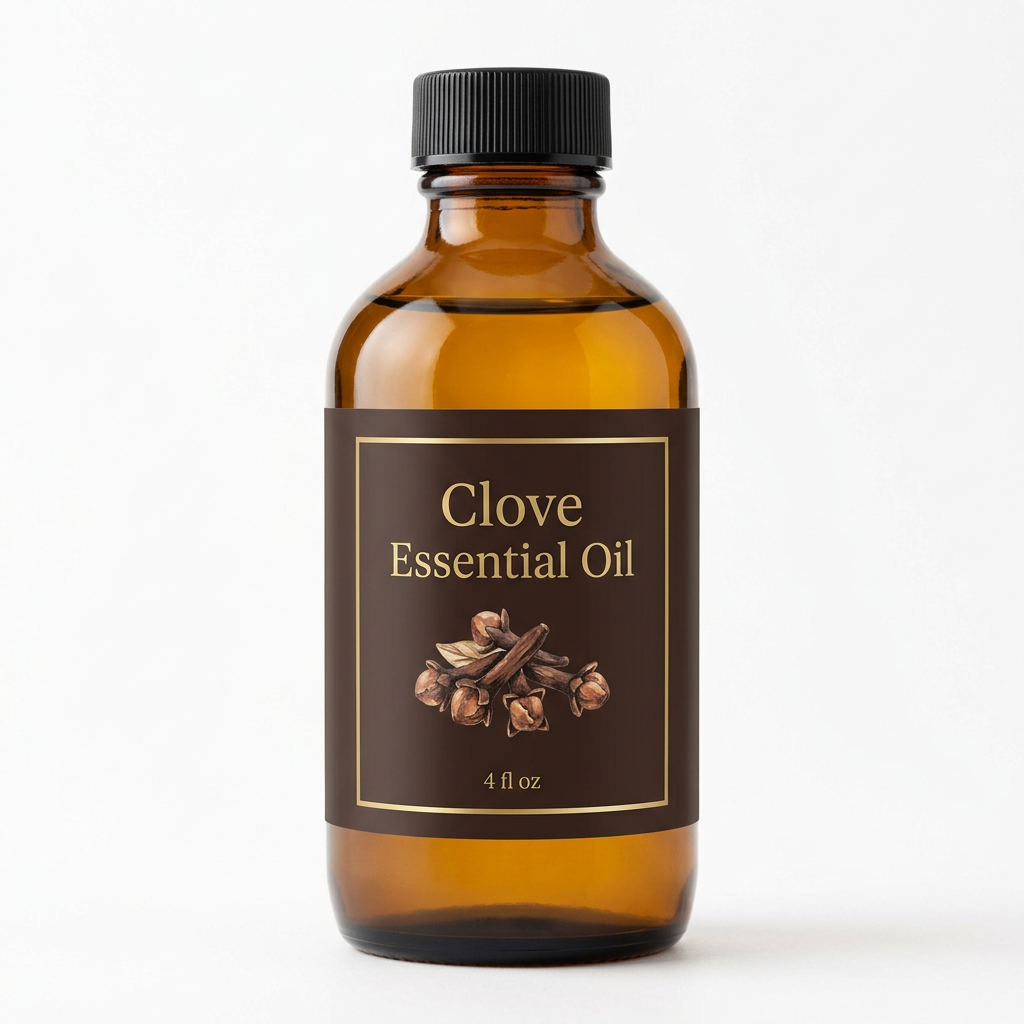
Clove Essential Oil
Our own Clove Essential Oil, in sizes from 0.5 oz to bulk.
From $10.99
Shop Now →Where clove really sits
Zarzo's 2012 study in Sensors pulled together several sources on how long fragrance materials last, including Poucher's scores for 332 materials, where under 15 is a top note, 15 to 60 is middle and over 60 is base (Zarzo, Sensors, 2012). Bergamot scores 6 and lemon 8, so they are bright and fleeting. Clove bud oil scores 22, a middle note. Patchouli and black pepper oils both score 100, solidly base. Vanillin sits at the base end of the separate note index the paper uses.
We describe clove as a middle to base note, and that is a fair way of putting it: it straddles the line. In a formula, that means clove starts to fade while the real base is still building. If a blend still smells loudly of clove hours later, the likelier explanation is that there is too much clove, not exceptional staying power.
Start with the ceiling
Perfume stays on skin, so the safety number shapes the formula. Tisserand's eugenol page gives a recommended topical maximum of 0.5% for clove bud oil, citing Essential Oil Safety, 2nd edition (Tisserand Institute), and we recommend working to that figure for the finished perfume. If you plan to sell perfume, read the current IFRA standard for eugenol before you finalise a formula.
Here is how small that is. Say you make 100 g of finished perfume. At 0.5% clove, that is 0.5 g of oil. The Certificate of Analysis we publish for one bud batch gives a density of 1.054 g/ml, and at roughly 20 drops to the millilitre a drop weighs about 0.053 g, so 0.5 g is about nine drops in the entire bottle. If your perfume is 15% fragrance concentrate in alcohol, those nine drops are only about 3% of the concentrate. That is the discipline clove asks for: a bright accent in a spice accord, never the accord itself. In a 10 ml roller bottle at 0.5%, you are down to roughly one drop.
Building around a small clove
With clove held that low, the structure comes from other materials. Here is a first-draft layout, in parts of the fragrance concentrate, worked out from the longevity data above:
- About 3 parts clove bud. Our bud oil blends well with orange, cinnamon, cedarwood, frankincense and vanilla, which gives you a ready-made palette.
- 40 to 50 parts base: a woody material such as cedarwood plus a vanilla material. Vanillin's sweetness also softens eugenol's sharp edge.
- 20 to 30 parts heart: something resinous and warm, like frankincense, where the clove joins in.
- 20 to 30 parts opening: citrus, such as sweet orange. Citrus is the first thing to fade, so it plays the welcome, not the lasting role.
We sell clove bud and leaf oil, so the cedarwood, vanilla, frankincense and orange come from a perfumery supplier who provides ingredient lists and paperwork. Treat the ratios as a draft to adjust on paper, not a recipe carved in stone.
Working it out in practice
- Dip blotter strips in each oil on its own and in the blend, and smell them at one minute, one hour and the next morning. If clove is the loudest note at hour three, the ratio is too high.
- Past the first draft, weigh instead of counting drops. Droppers vary, and with clove at 3% a small error is a big change.
- Use perfumer's-grade ethanol, not household rubbing alcohol, and add it last. Judge the blend over several days and date the bottle.
- Write the formula in percentages by weight, with clove as a share of the finished perfume at the top.
An alcohol perfume or an oil-based roller is the easiest format to get right, because neither needs a preservative the way a water-based spray does.
A word on skin
Eugenol is among the 26 fragrance allergens EU rules require to be labelled, and Eugenia caryophyllus oil is among the 45 entries added in the 2023 amendment (Sukakul, Bruze and Svedman, Acta Derm Venereol, 2024). In practice, that means trying the finished perfume on a small patch of inner arm before wearing it, steering clear of broken skin, and skipping it if you know you react to fragrance. If you are pregnant, take medication or have a skin condition, ask your doctor or pharmacist first.
One more thing to look forward to: the dry-down. Clove's spice stays friendly when it is held low and surrounded by sweeter, woodier materials, and you will notice the blend turn from a bright opening into something softer and warmer as the hours go by. Keep a note of how it smells at each stage, because that record is worth more than any ratio on paper.
For more on how clove plays with other oils, read blending with clove oil; the same dose arithmetic for a balm is in our balm article, and the full skin picture is in clove oil for skin. A perfume that opens bright, warms at the heart and leaves a trace of spice is a lovely thing to build with a handful of drops.
Clove Essential Oil
Clove Essential Oil from our own shop, in sizes from 0.5 oz to bulk.
From $10.99
Shop Now →