Clove Oil on Skin: How to Dilute It the Careful Way
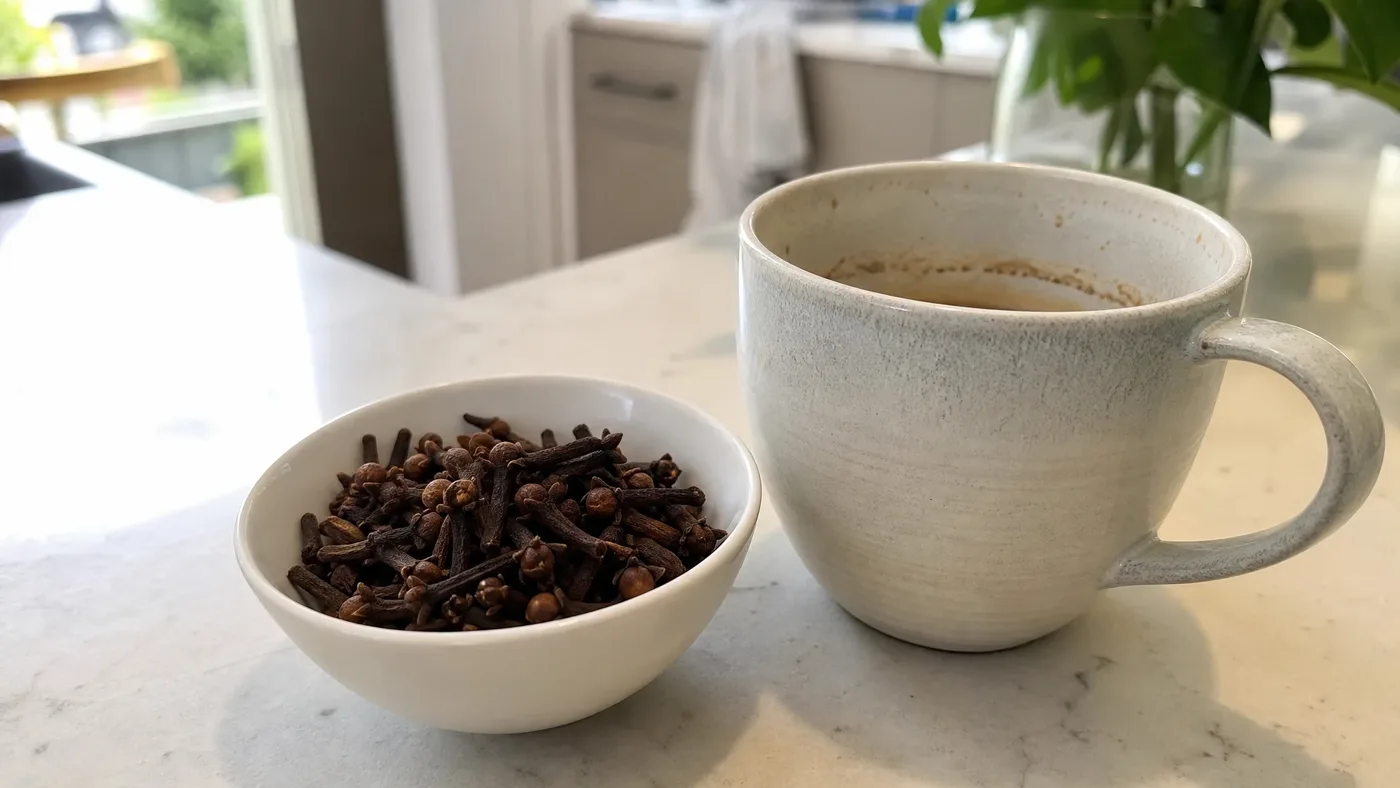
Open a bottle of clove oil and the smell tells you most of what you need to know about its behavior on skin. That big, warm, baking-spice scent is mostly one molecule, eugenol, and eugenol is a strong ingredient that rewards a light hand. We sell two clove oils, bud and leaf, and when someone asks us about skin, our answer starts with a number: 0.5%.
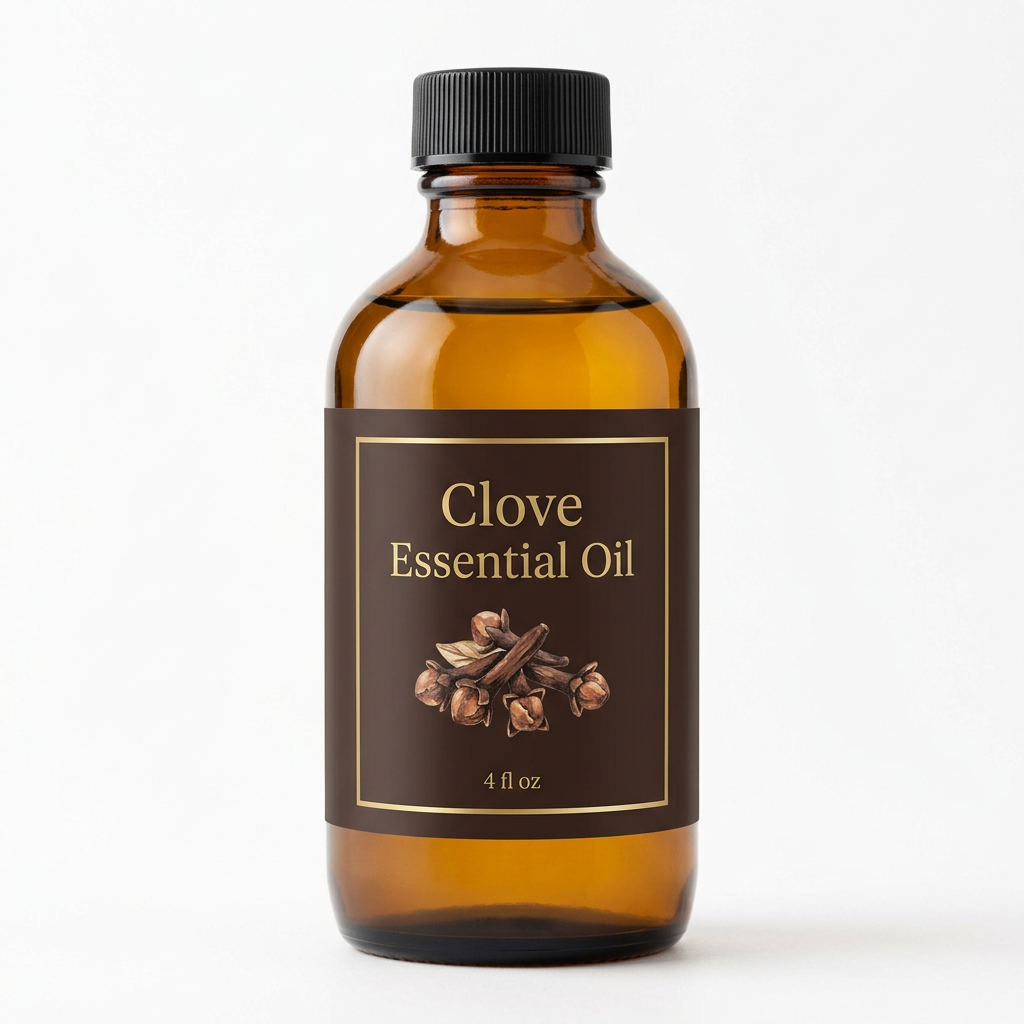
Clove Essential Oil
Our own Clove Essential Oil, in sizes from 0.5 oz to bulk.
From $10.99
Shop Now →One molecule does most of the talking
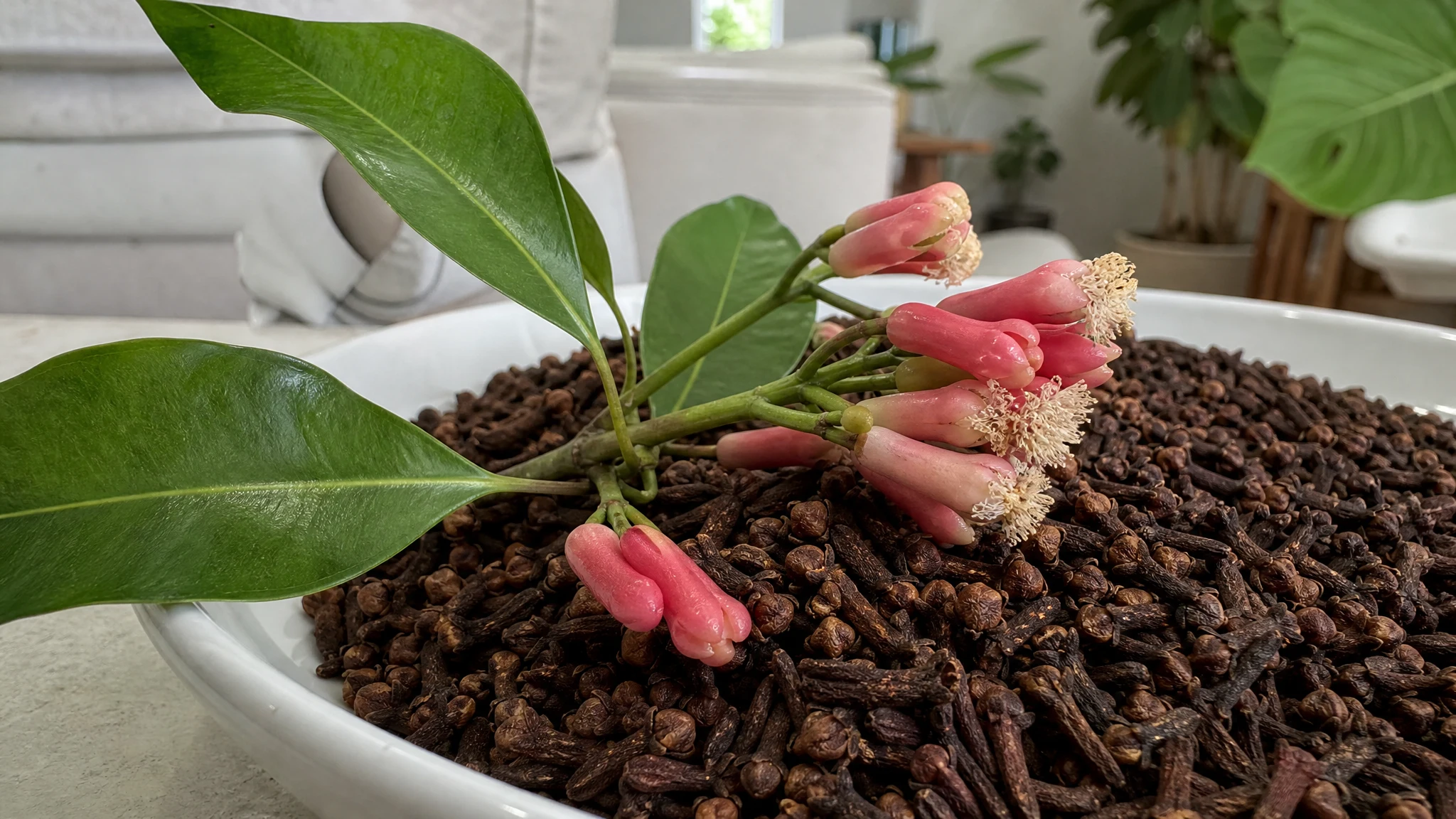
The GC-MS report we publish for our bud oil lists eugenol at 73.57% and eugenyl acetate, a close relative, at 12.82%. Between them they account for most of the bottle, which is why clove smells the way it does and why it behaves like a concentrated material rather than a gentle one. Robert Tisserand's article on eugenol says it can be a skin irritant or allergen if not used in proper dilutions, and lists a recommended topical maximum of 0.5% for clove bud oil, taken from Essential Oil Safety (2nd edition). The Tisserand Institute's wider safety guidelines name clove among the oils more likely to cause skin reactions than most.
That page gives no figure for clove leaf oil. Since leaf oil is also led by eugenol, our practical conclusion is to treat it the same way and begin at 0.5%. That is our reasoning from the chemistry, not a published leaf limit.
Our rule of thumb: begin at 0.5% and stay there
Our dilution guidance runs from 0.5% to 2% in a carrier oil, with a patch test first. Given the Tisserand figure, we would start at the bottom of that range and treat it as the place to stay, not a rung on a ladder. The arithmetic is easy, and it helps to see it. At the usual rough convention of 20 drops to the milliliter (drop size varies by bottle):
- 30 ml of carrier at 0.5% takes 0.15 ml of clove oil, about 3 drops. With 73.57% eugenol in our bud oil, the finished blend carries roughly 0.37% eugenol.
- 30 ml at 2% takes 0.6 ml, about 12 drops, and carries roughly 1.47% eugenol. That is four times the exposure for the same patch of skin.
We do not sell carrier oils, so pick one up from a grocery store, pharmacy or craft supplier. A small pipette beats counting drops if you have one, because the same bottle can deliver quite different drop sizes depending on how you tilt it.
How to ease in
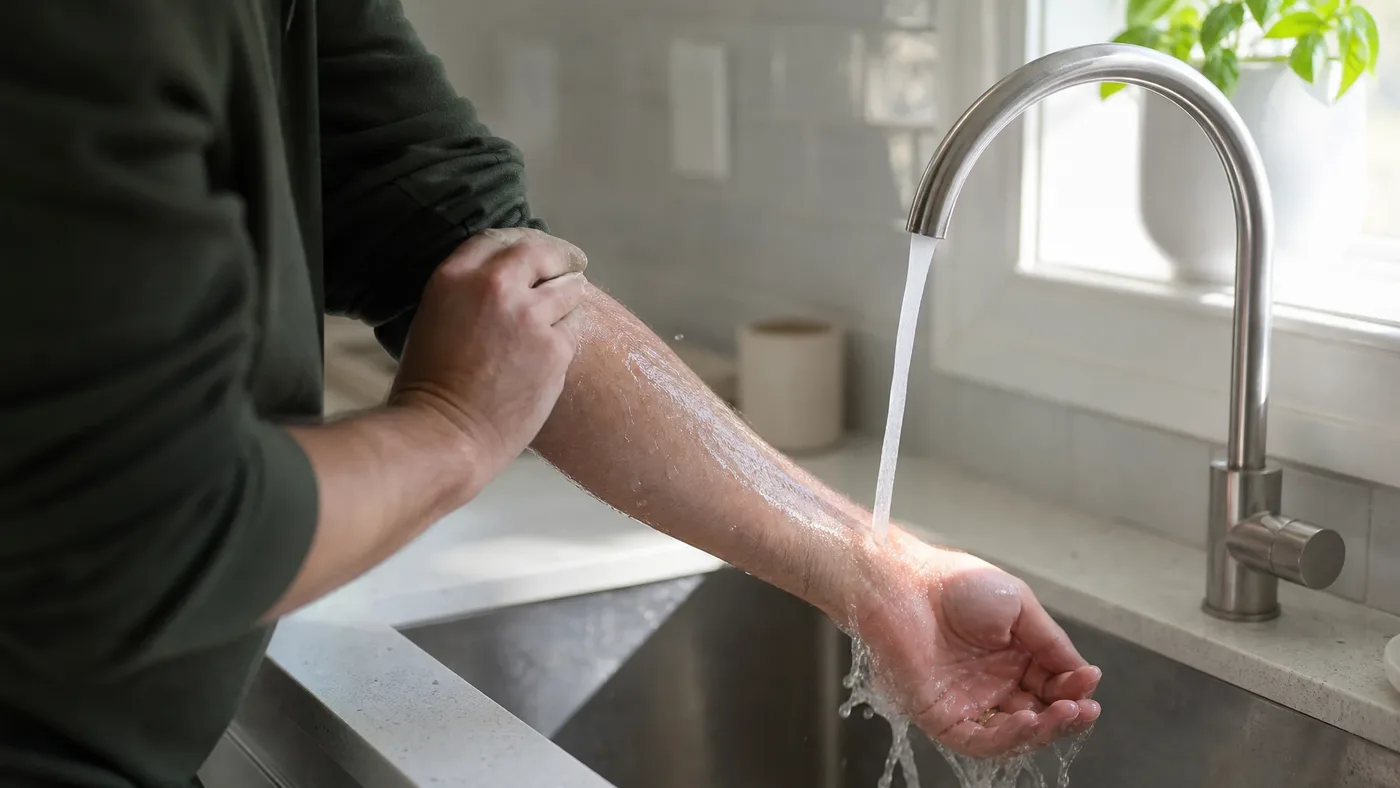
We suggest a patch test on a small area of forearm, then a wait before using more. It is worth knowing that Tisserand's own view is that patch tests are imperfect, with false positives and negatives, and that he prefers starting with a small amount and building up gradually. Both ideas point the same way: go slowly. Keep clove blends away from your face, eyes and any broken, freshly shaved or sunburned skin, and stop at the first sign of redness, itching or warmth.
A few small habits that make it easier
- Mix in a clean glass bottle. Pour the carrier in first, add the clove, cap it and roll it gently between your palms so the oil is evenly spread.
- Label it. Write the oil, the percentage and the date on the bottle, so nobody wonders later what is inside.
- Make small amounts. A little blend that you finish is better than a large one that sits around.
- Wash your hands afterward. It is easy to carry a trace of oil to your eyes without noticing.
The allergy side, in plain terms
Irritation is about dose. Allergy is a learned reaction that can turn up at much smaller amounts, and clove shows up in dermatology patch-test series for exactly that reason. In a large German clinic network, Geier and colleagues patch tested 10,930 people with dermatitis and found clove oil positive in 1.6%; an earlier Uter analysis of the same network found 1.5%. These were people already referred to skin clinics, so the figures do not describe the general public. They do show why anyone who has reacted to a fragrance, a dental eugenol product or a spice-heavy cosmetic has reason to be cautious.
What the lab papers do and do not tell us
You will find plenty of online talk about clove oil acting on bacteria and fungi. Nearly all of it traces back to dish studies. In one often-quoted example, Pinto and colleagues exposed Candida, Aspergillus and skin-fungus strains to a commercial clove oil that was 85.3% eugenol, and the oil inhibited every strain in the dish. That is a fascinating result about microbes in a laboratory, and it says nothing about what a drop of oil does on a person. We sell our oils for their aroma and for cosmetic use, so we leave skin conditions to the people trained to treat them: a pharmacist or dermatologist.
Where clove shines instead
Clove earns its place in a home for its scent. If you love it, the room is the happiest place for it, and our guide to scenting your home with clove oil walks through the options. For the full picture of what can go wrong and how to avoid it, see clove oil side effects, and for measuring and pet cautions, our safety basics.
Think of clove on skin the way a cook thinks of cayenne: wonderful, potent, and best added in small, deliberate amounts.
Clove Essential Oil
Clove Essential Oil from our own shop, in sizes from 0.5 oz to bulk.
From $10.99
Shop Now →Sources & Further Reading
- Tisserand Institute. Eugenol: Essential Oil Constituents in Food Part 4. tisserandinstitute.org/learn-more/eugenol
- Tisserand Institute. How to Use Essential Oils Safely. tisserandinstitute.org/safety/safety-guidelines
- Tisserand Institute. Irritation and allergic reactions. tisserandinstitute.org/safety/irritation-allergic-reactions
- Geier J et al., 2022. Contact sensitization to essential oils: IVDK data of the years 2010-2019. PubMed 35417610
- Uter W et al., 2010. Contact allergy to essential oils: current patch test results (2000-2008) from the IVDK. PubMed 20946456
- Pinto E et al., 2009. Antifungal activity of the clove essential oil from Syzygium aromaticum on Candida, Aspergillus and dermatophyte species. PubMed 19589904