How to Scent a Home with Clove Oil, Carefully
Most cozy-clove advice starts with a recipe. We would start a step earlier, with a simple question: who shares the air in the room you want to scent? Clove is a strong, eugenol-rich aroma, and the right method has more to do with the people, pets and heat in that room than with the calendar.
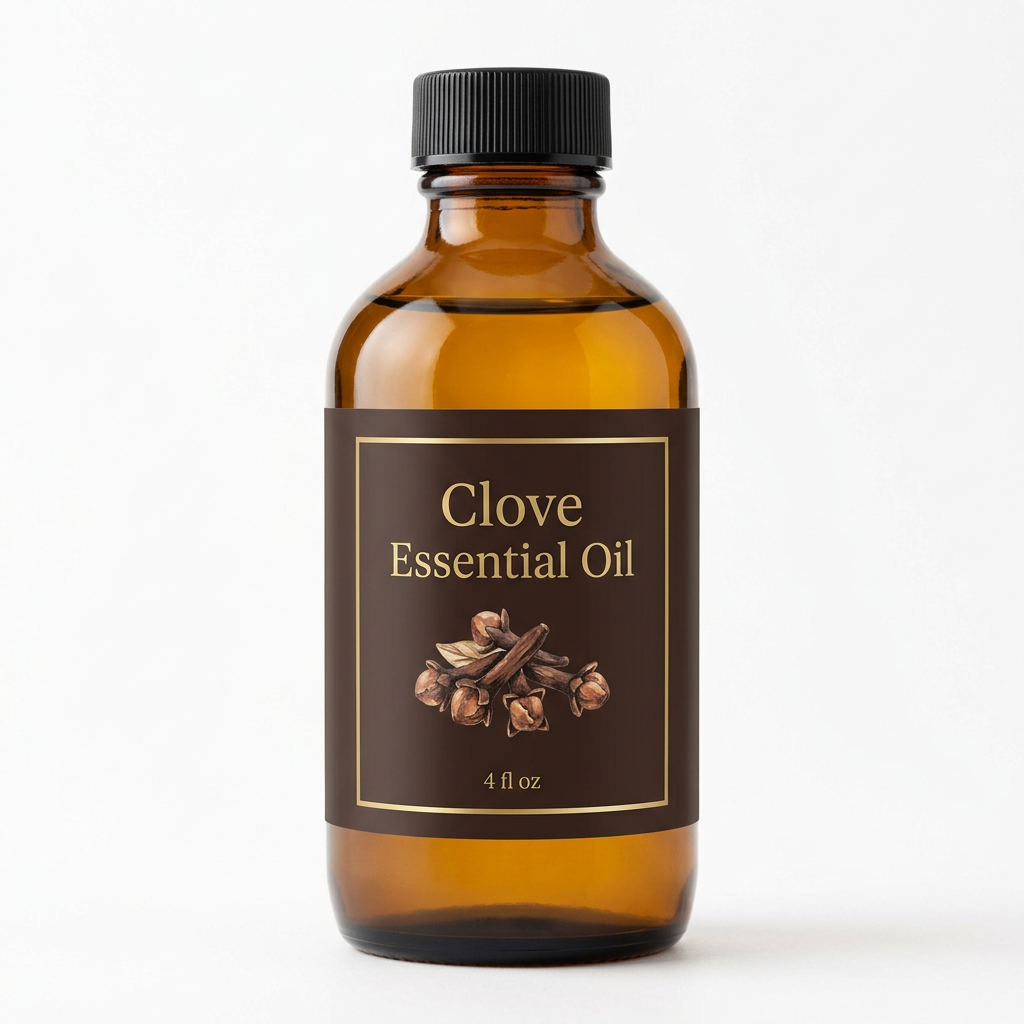
Clove Essential Oil
Our own Clove Essential Oil, in sizes from 0.5 oz to bulk.
From $10.99
Shop Now →Think about the people and animals first
Fragrance is not neutral for everyone. In a US survey of 1,137 adults, about 26.8% reported asthma or an asthma-like diagnosis, and 64.3% of those respondents reported at least one adverse effect from fragranced products, most often respiratory (43.3%) (Steinemann, Air Quality, Atmosphere and Health, 2018). That was a self-report survey about fragranced products in general rather than clove, so it shows how common the complaint is, not what your diffuser will do. Our approach is to start small if anyone in the house has asthma or a guest has said scents bother them, with a short run in a room with the door open, or to skip clove for that gathering.
A good host's trick is to treat scent like salt: easy to add and impossible to take back out. Open a window a crack, start with the smallest amount, and watch how the room feels after a quarter of an hour. If anyone wrinkles their nose or reaches for a window, you have your answer.
Pets belong in the same decision. Pet Poison Helpline says essential oils can affect all species, with cats and birds at greatest risk, and lists clove among the oils that can cause poisoning (Pet Poison Helpline). If you keep animals, ask your veterinarian before diffusing, and keep the bottle where nothing can knock it over.
Pick the method for the room
Our shop lists diffusing, candle pours, potpourri, cold-process soap, stovetop simmering, natural cleaning blends and perfumery accents as uses for both clove oils. Here is how we would match them to a room:
- A few hours of scent in one room: a diffuser. It is easy to overdo, so see our diffuser post.
- A kitchen that smells of the stove: a simmer pot, which needs watching so it does not boil dry. Try our simmer pot recipes.
- A bowl that lasts for days without power: potpourri on a dry base. Oil can mark wood and fabric, as our potpourri post explains.
- A scented wax product: a candle, which adds an open flame and fragrance load limits. See the candle tutorial.
Heated wax is worth a note. A 2025 test-house study of scented wax warmers found they emitted large numbers of tiny particles, formed when fragrance terpenes such as limonene and linalool react with ozone, at levels comparable to candles and gas stoves, though it did not test toxicity (Patra et al., Environmental Science and Technology Letters, 2025). Good ventilation is a sensible habit with any heated scent.
You will also notice that clove behaves differently depending on the surface it lands on. In a bare, tiled kitchen the scent seems to bounce and carry. In a room with rugs, curtains and upholstered chairs, it settles and lingers, which means a lighter touch goes further. Think of the furniture as a sponge, and plan the amount to match.
Bud or leaf
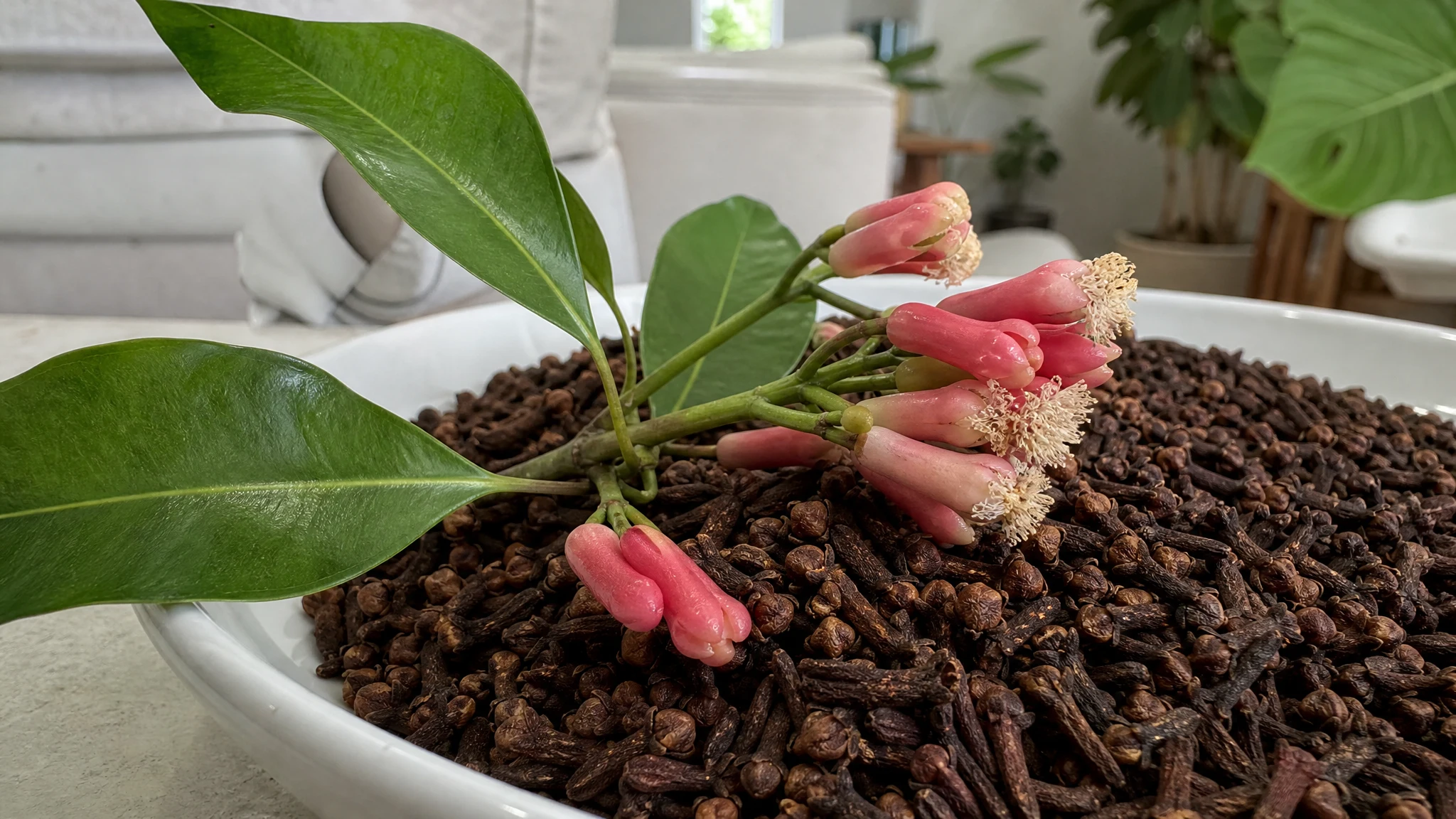
We sell two clove oils, both Syzygium aromaticum, both steam-distilled and sold undiluted. We describe the bud oil as warm, rich and sweetly spicy, which suits a room that should smell like mulled cider or spice cake. The leaf oil is bold, smoky and earthy-spicy, drier and less sweet, and it sits well behind other notes in a soap or cleaning scent. They are never blended into each other. Our comparison has the detail.
If you cannot decide, open both bottles one after the other, a few inches from your nose, with a minute between. The bud oil tends to read as dessert and cider; the leaf oil as a campfire and an old spice drawer. Pick the mood you want in the room, then work backward to the method.
Dose the room, not the calendar
Drops are a rough unit, at about 20 per ml. The bud batch on our Certificate of Analysis has a relative density of 1.054, so it is a little heavier than water and undissolved clove oil sinks in a water-based tank or pot. That is a reason to add it last and run the device straight away. As for how much, we suggest one drop in a small room, then walking into the next room for twenty minutes before deciding on more. With clove, a second drop is a different experience, not just a stronger one.
It is also worth knowing the evidence is thin. A review of common airborne fragrance compounds found indoor levels of alpha-pinene, limonene and linalool well below irritation thresholds, but no indoor data at all for eugenol (Wolkoff and Nielsen, Environment International, 2017). Moderation is simply the sensible answer.
A room that smells faintly of clove when you walk in is usually a room where it was used about right.
Clove Essential Oil
Clove Essential Oil from our own shop, in sizes from 0.5 oz to bulk.
From $10.99
Shop Now →Sources & Further Reading
- Steinemann, Air Quality, Atmosphere and Health, 2018: fragranced products and health effects survey
- Pet Poison Helpline, essential oils
- Patra et al., 2025: particles from scented wax warmers
- Wolkoff and Nielsen, Environment International, 2017: airborne fragrance compounds indoors