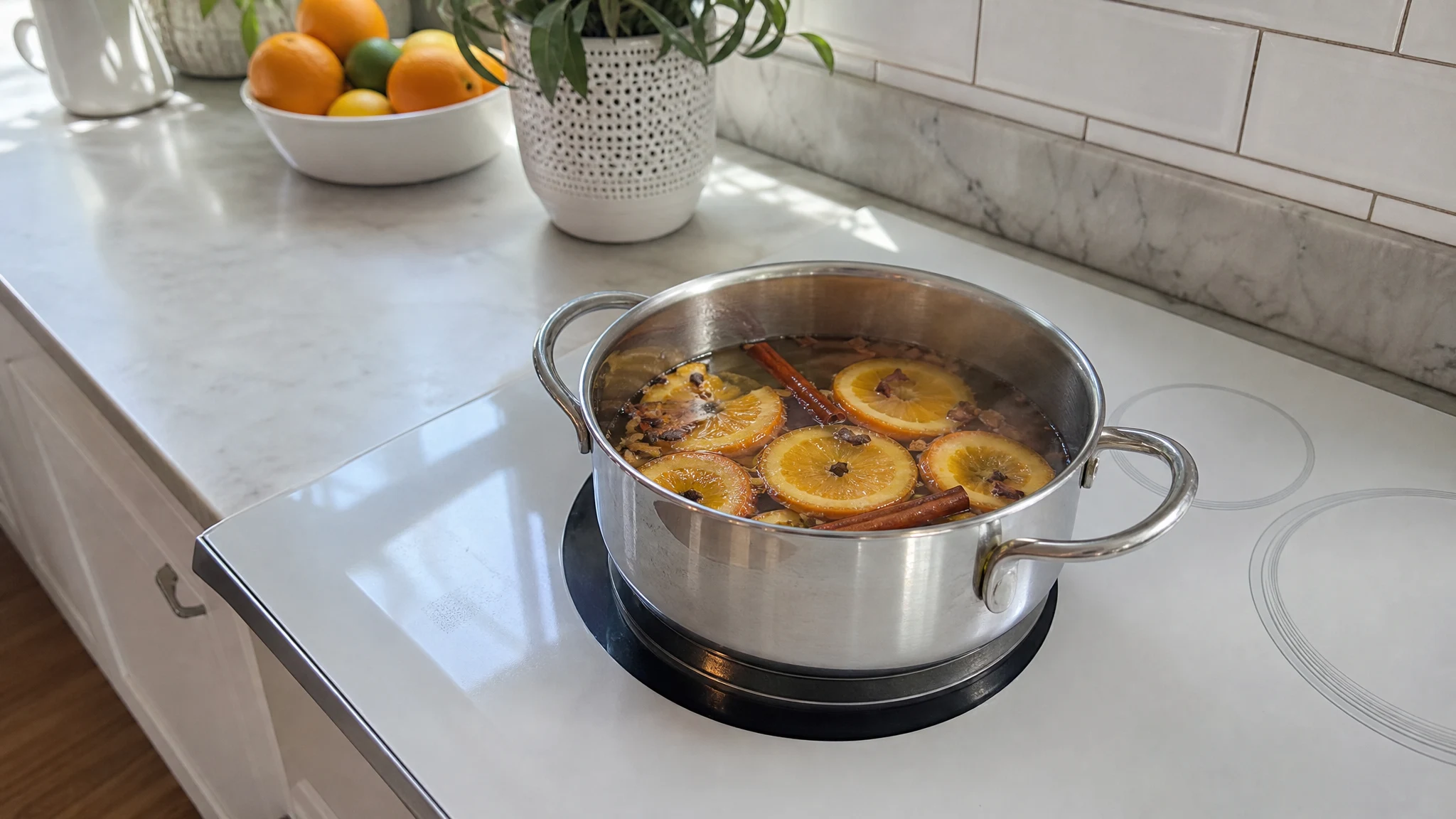
Clove Simmer Pots: Five Stovetop Recipes to Try
Clove is the one spice in a simmer pot that needs no help. A whole clove is the very bud that clove bud oil is distilled from, and a pot of warm water coaxes its scent out slowly, the same way a still does on a grander scale. Here are five pots worth making, and a short word on where a drop of oil fits in.
Clove Essential Oil
Our own Clove Essential Oil, in sizes from 0.5 oz to bulk.
From $10.99
Shop Now →Why whole cloves do the work
Steam distillation is how clove oil is made. In a 2021 review of extraction methods, Haro-Gonzalez and colleagues report clove hydrodistillation at 100 C for 150 to 360 minutes, and steam distillation runs of several hours. A pot on the stove is a gentle version of the same idea: warm water draws the scent out of the buds over an hour or two. That is why we would start with whole cloves and add oil only if you want something extra. The ingredients below are from the grocery store, where you will also find the whole cloves, since we sell the oil rather than whole spices.
Five ingredient lists
Quantities suit a 2-litre pot and are starting points to adjust to taste.
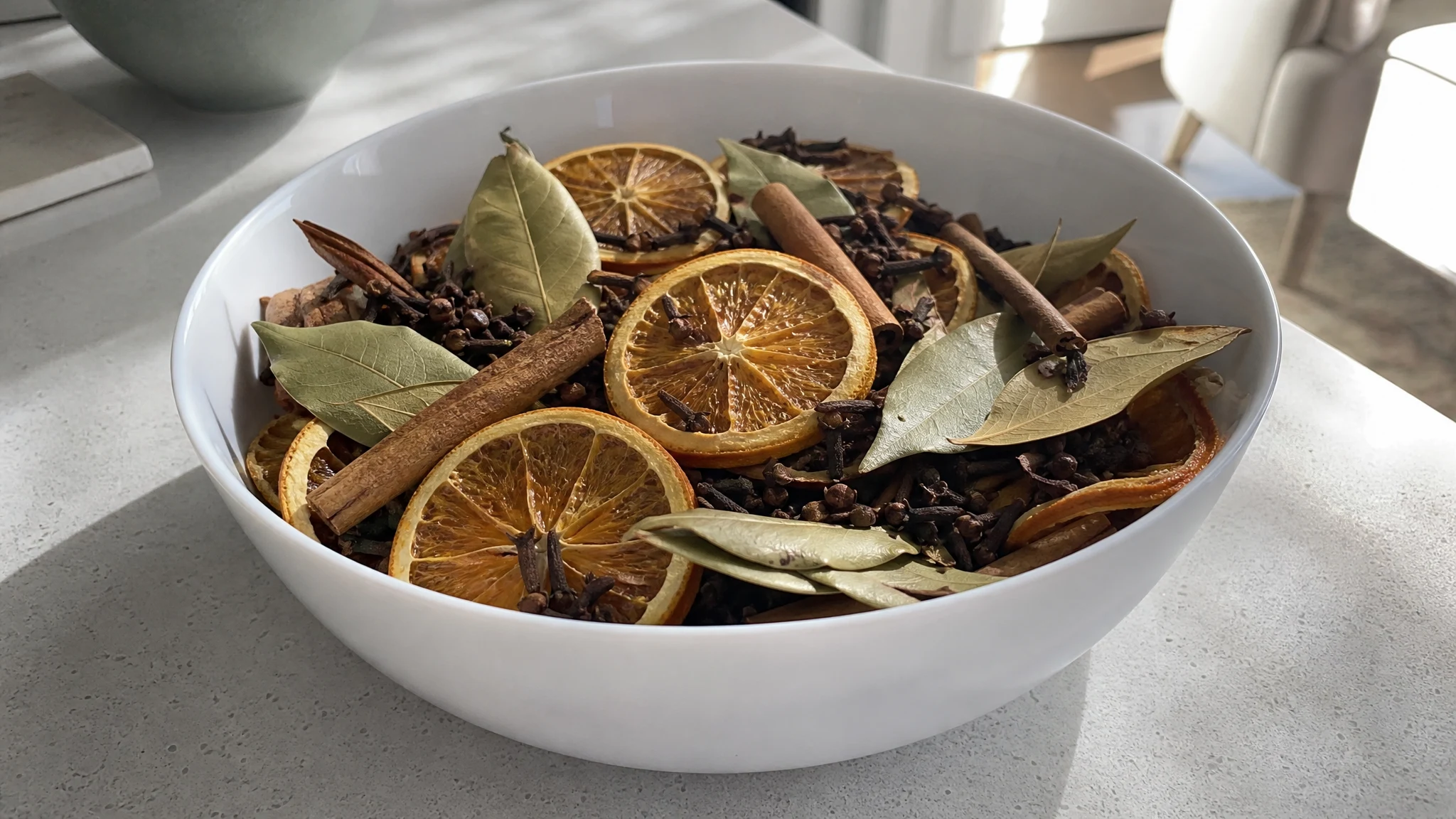
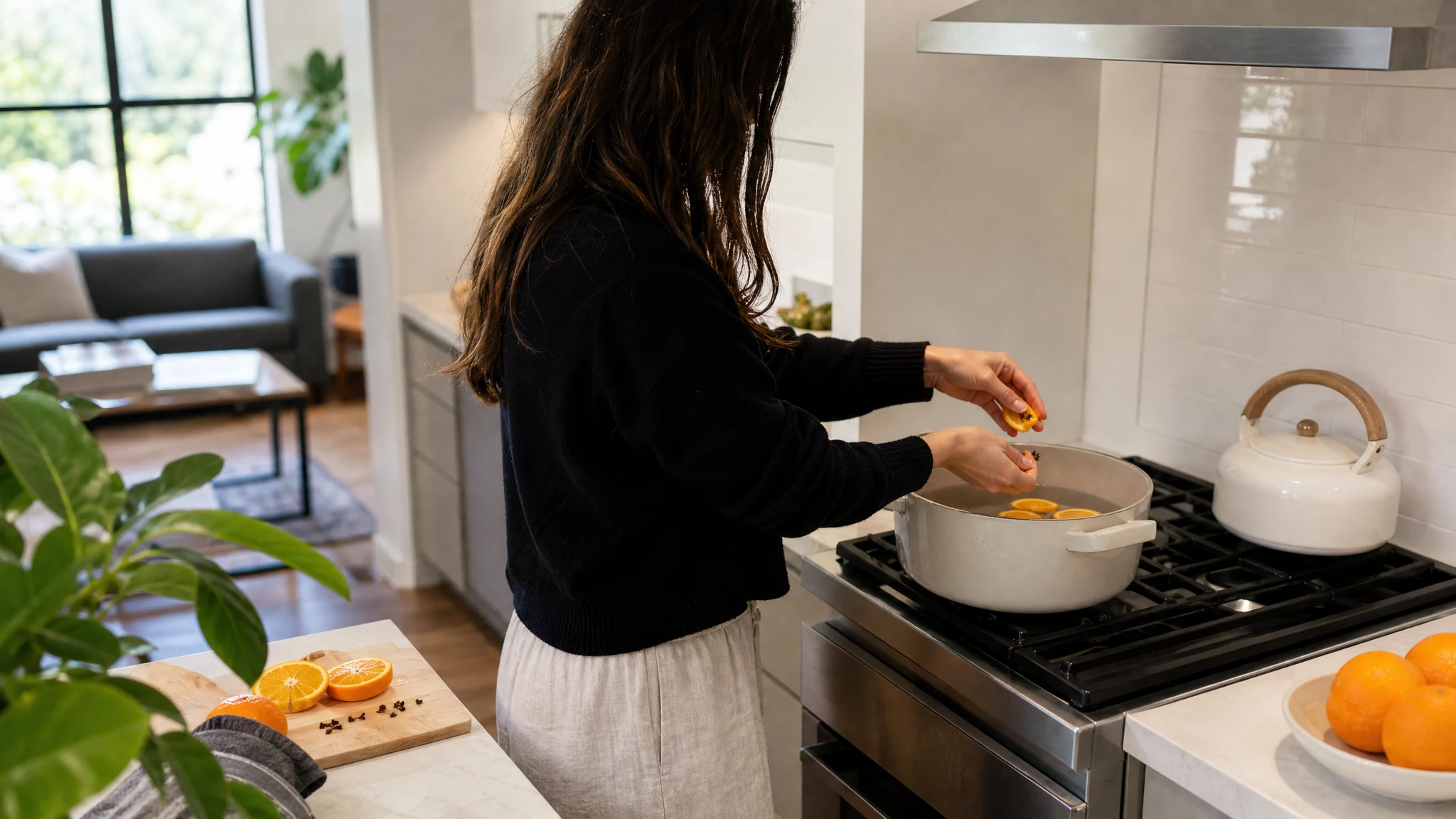
1. Clove and orange
- 1 orange, sliced or peeled in wide strips
- 12 to 15 whole cloves
- 2 cinnamon sticks
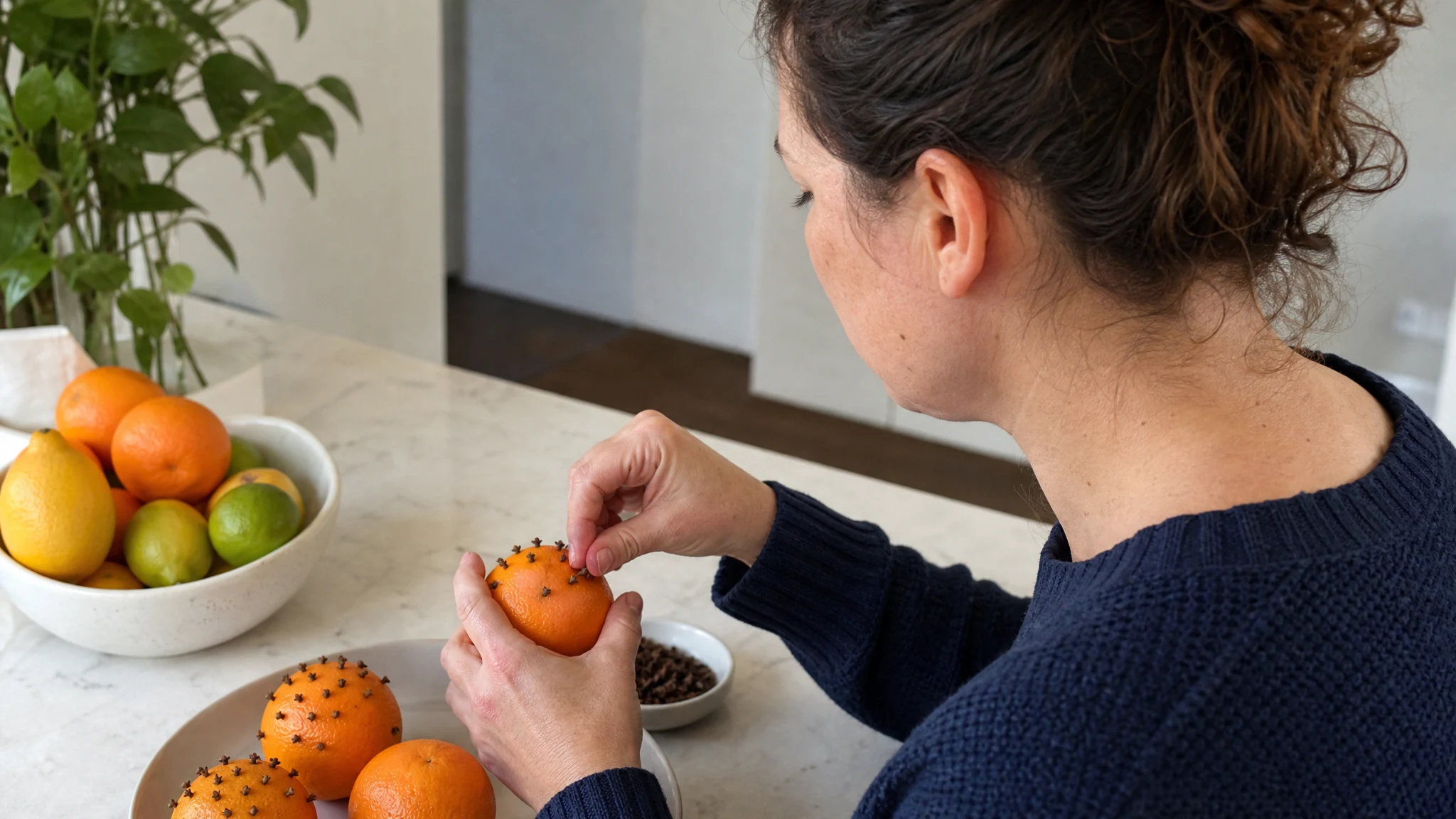
The classic. Its history is in our pomander post.
2. Clove and apple
- 2 apples, quartered, cores left in
- 8 whole cloves
- 1 cinnamon stick
- a thumb of sliced fresh ginger
Sweeter and rounder, because apple softens the clove edge. This is the one we would hand to a first-timer.
3. Cranberry and orange
- 1 cup fresh or frozen cranberries
- 1 orange, peeled
- 6 whole cloves
- 1 cinnamon stick
Bright and tart. We would leave conifer sprigs out of a pot, as a pot of water is something a curious pet can drink from.
4. Pear, vanilla and clove
- 2 pears, sliced
- 1 split vanilla pod
- 6 whole cloves
- 1 star anise
5. Dry spice only
- 15 whole cloves
- 3 cinnamon sticks
- 3 star anise
- strips of lemon peel
No fruit pulp means nothing to scorch, so this one forgives being topped up the longest.
Where a drop of oil fits
Our bud oil is warm, rich and sweetly spicy, and our leaf oil is bolder and smokier. Both are sold undiluted, and a stovetop simmer is one of the uses we have for them. Clove oil is heavier than water: the certificate of analysis we publish for one bud batch gives a relative density of 1.054, so a drop sinks to the bottom of the pot instead of floating. That is why we would put a single drop on the orange peel before it goes into the water, where the peel holds it near the surface and away from the hottest metal.
The arithmetic keeps it honest. A drop is about 0.05 ml by the usual rough convention of 20 drops to the milliliter, or about 0.053 g at that density. In a 1-litre pot that is around 0.005% by weight before any of it leaves with the steam. If one drop is enough, more is not a stronger recipe. If you want a deeper clove, add four more whole cloves instead.
Kitchen habits that keep it easy
- Keep an eye on the water. A pot that boils dry scorches fruit sugar into something nothing like clove. Set a timer, top up with hot water from a kettle, and switch the burner off when you leave the house.
- Think about the household. Clove oil is listed by EFSA's expert panel as an irritant to skin, eyes and airways, and a splash from a simmering pot lands on hands. The Pet Poison Helpline says cats and birds are at greatest risk from essential oils and lists clove among them, so a pot with oil in it belongs where they cannot reach, and a closed kitchen door suits households with birds.
- Use the back burner and turn handles inward if children are around. A slow cooker on low is a good no-flame alternative.
- If anyone at home has asthma or reacts to scented products, make the pot with whole ingredients only, with the door open. In a survey of 1,137 US adults, Steinemann (2018) found 64.3% of those with asthma or asthma-like conditions reported adverse effects from fragranced products generally.
Making it an event
A simmer pot is a good excuse to slow down. Put it on the back burner on the first properly cold afternoon, set a timer, and let the kitchen fill up while you read or wrap presents. If you want to give one as a present, layer the dry spices from recipe 5 in a jar with a tag that reads "simmer in water, do not eat", and add the fruit on the day. Whoever opens the jar gets the smell before they even lift the lid.
Running a pot
Start with recipe 2. Put the water in first, the cloves in second, and bring it to a bare simmer rather than a boil. After half an hour you will know whether you like it. When the pot cools, strain it and pour it away rather than keeping it for another day, because warm fruit and water is not something to store.
For other ways to bring clove into a house, see our home guide and the diffuser post. If you are weighing a jar of cloves against a bottle of oil, whole cloves versus the oil lays it out.
Few smells say "stay a while" as quickly as oranges and cloves on a low simmer, and you do not need a bottle to get there.
Clove Essential Oil
Clove Essential Oil from our own shop, in sizes from 0.5 oz to bulk.
From $10.99
Shop Now →Sources & Further Reading
- Haro-Gonzalez JN et al., 2021. Clove Essential Oil (Syzygium aromaticum L. Myrtaceae): Extraction, Chemical Composition, Food Applications, and Essential Bioactivity for Human Health. Molecules 26(21):6387. PMC8588428
- EFSA FEEDAP Panel, 2023. Safety and efficacy of feed additives from flower buds or leaves of Syzygium aromaticum. PMC10375362
- Pet Poison Helpline. Essential oils. petpoisonhelpline.com
- Steinemann A, 2018. Air Quality, Atmosphere & Health 11:3-9. PubMed 29391919