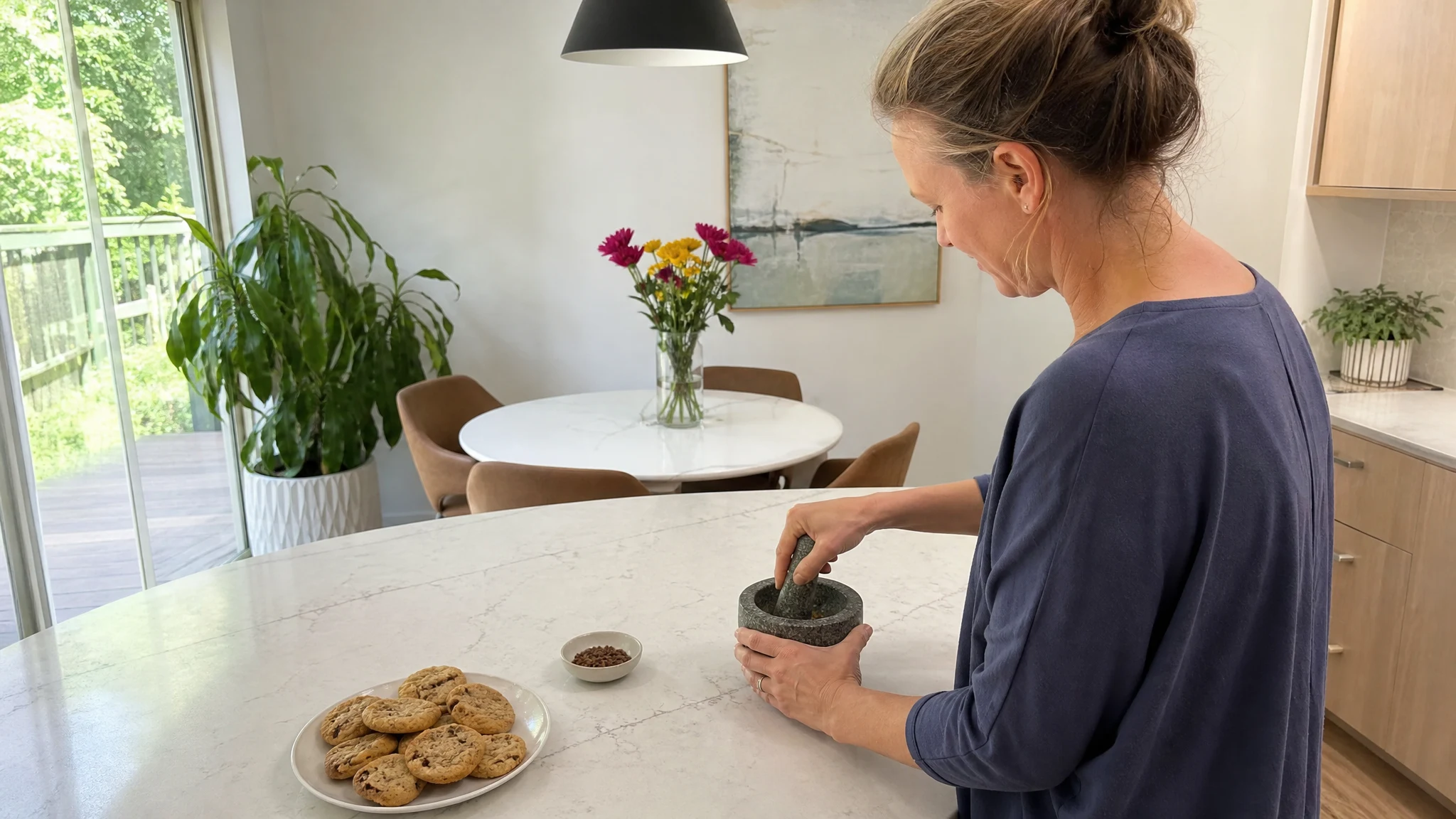
Clove Oil vs Whole Cloves: Which Do You Need?
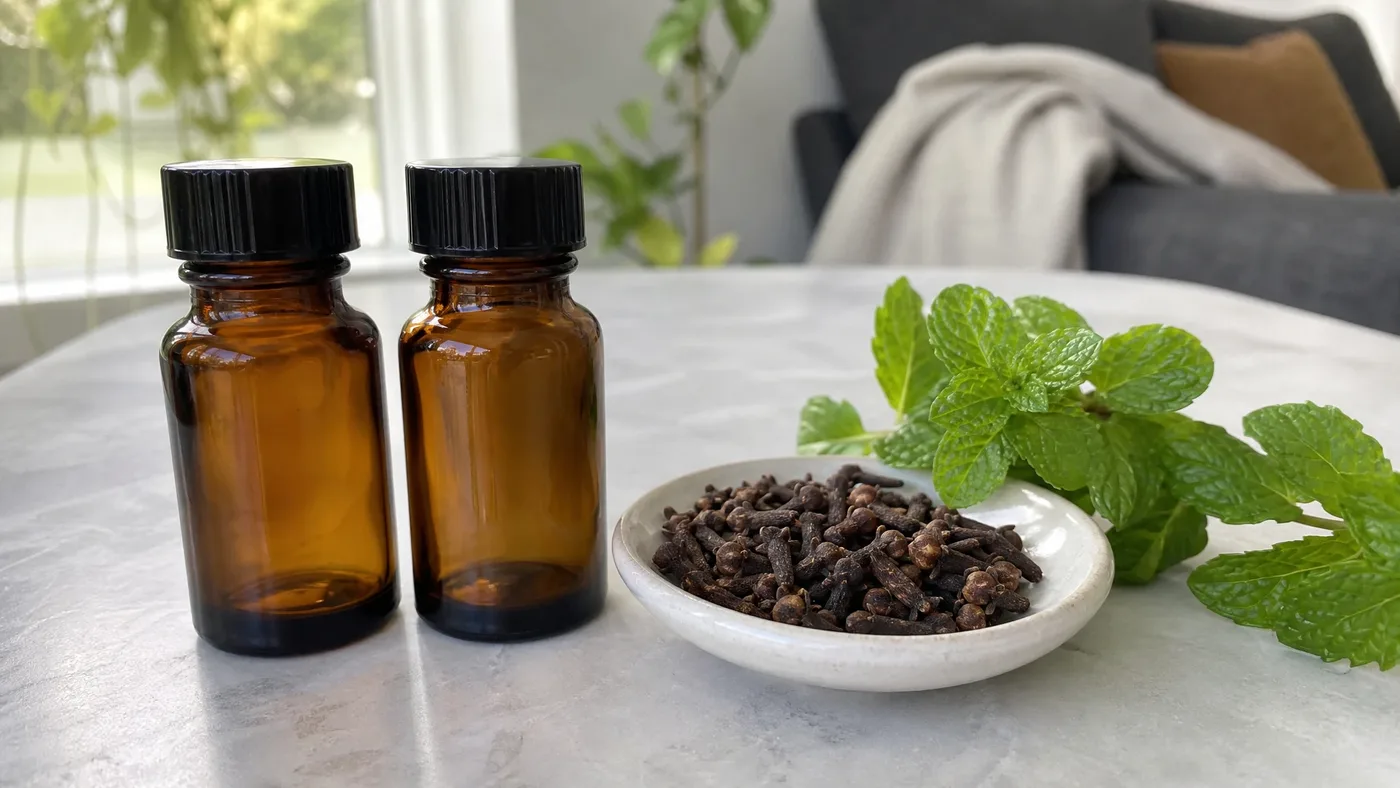
A whole clove and a drop of clove oil come from the same flower bud, so it is natural to wonder if they are interchangeable. They are not, and the reason is mostly arithmetic. A small bottle of oil is the distilled essence of a surprising pile of buds.
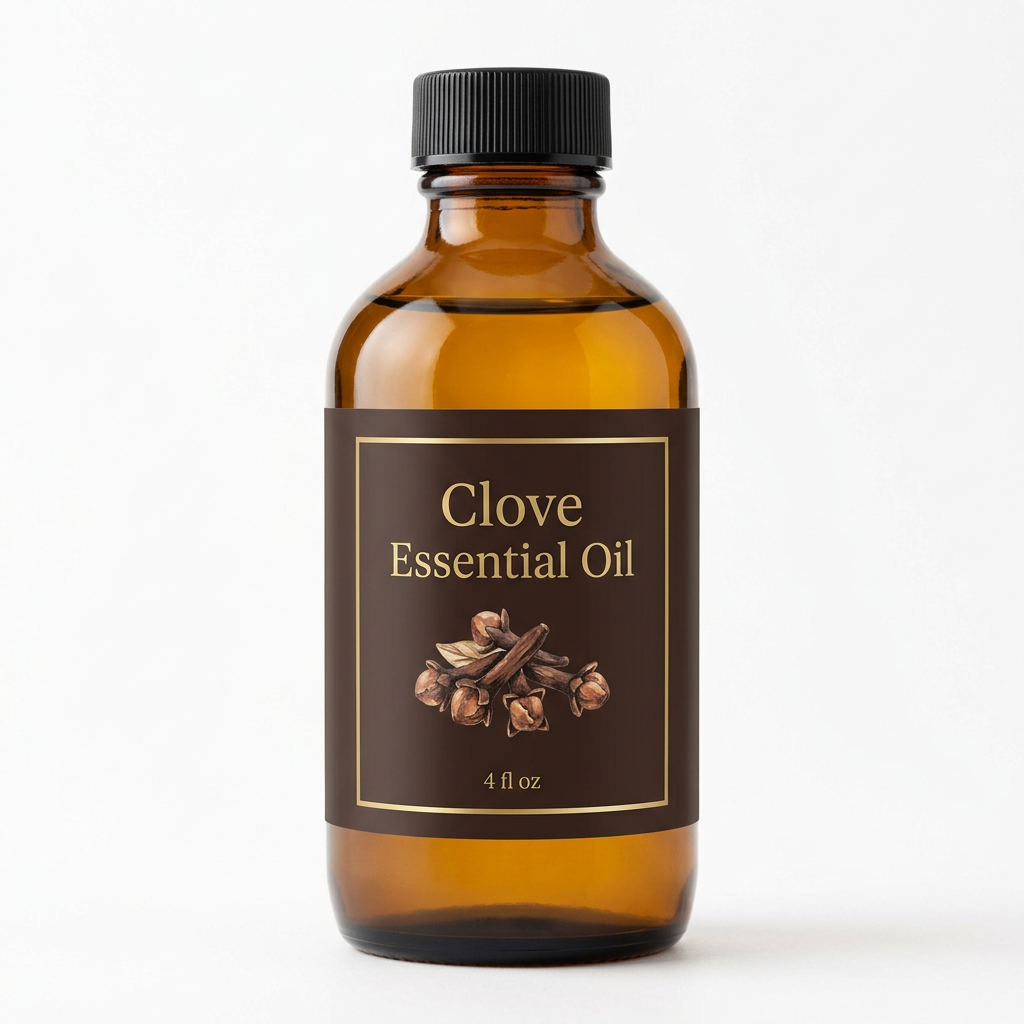
Clove Essential Oil
Our own Clove Essential Oil, in sizes from 0.5 oz to bulk.
From $10.99
Shop Now →How many buds are in a bottle
Cloves are the dried flower buds of Syzygium aromaticum, picked by hand, and they dry to about a third of their fresh weight (Kamatou, Vermaak and Viljoen, Molecules, 2012). One review of clove extraction reports bud oil yields of about 10.1% by steam distillation and 11.5% by hydrodistillation, within a wider range of 8.23% to 23.19% depending on method (Liñán-Atero et al., Antioxidants, 2024).
Here is the working. The Certificate of Analysis we publish for one bud batch gives a relative density of 1.054, so a millilitre weighs about 1.054 g. A 1 oz bottle holds 29.57 ml, which is about 31 g of oil. At a 10.1% yield, that is roughly 310 g of buds, and at 11.5% roughly 270 g. Real yields depend on the lot and the still, so read that as an order of magnitude, not a bill of materials. The point stands: a drop of oil is not a clove's worth. It is far more concentrated.
Holding one in your hand
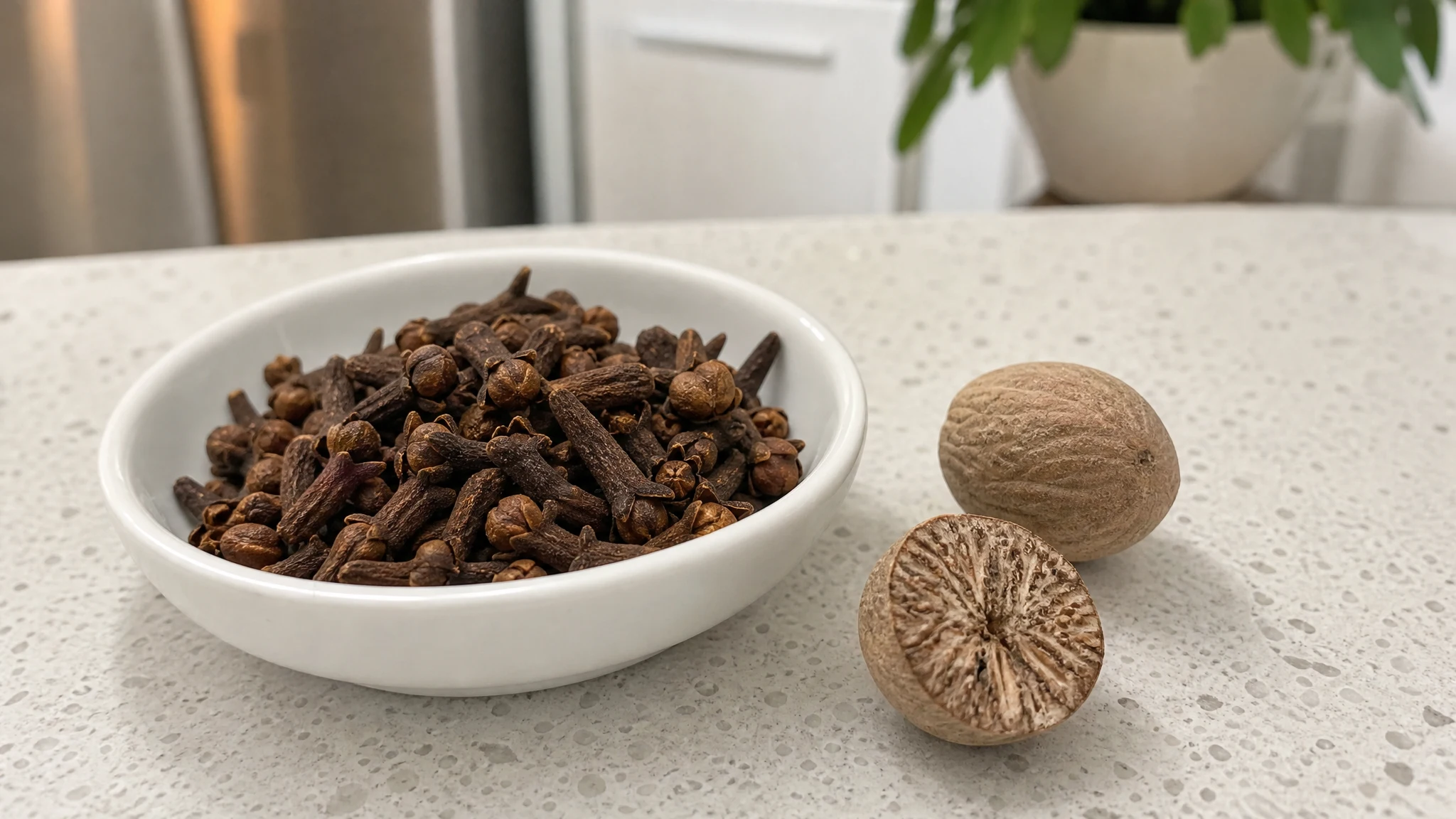
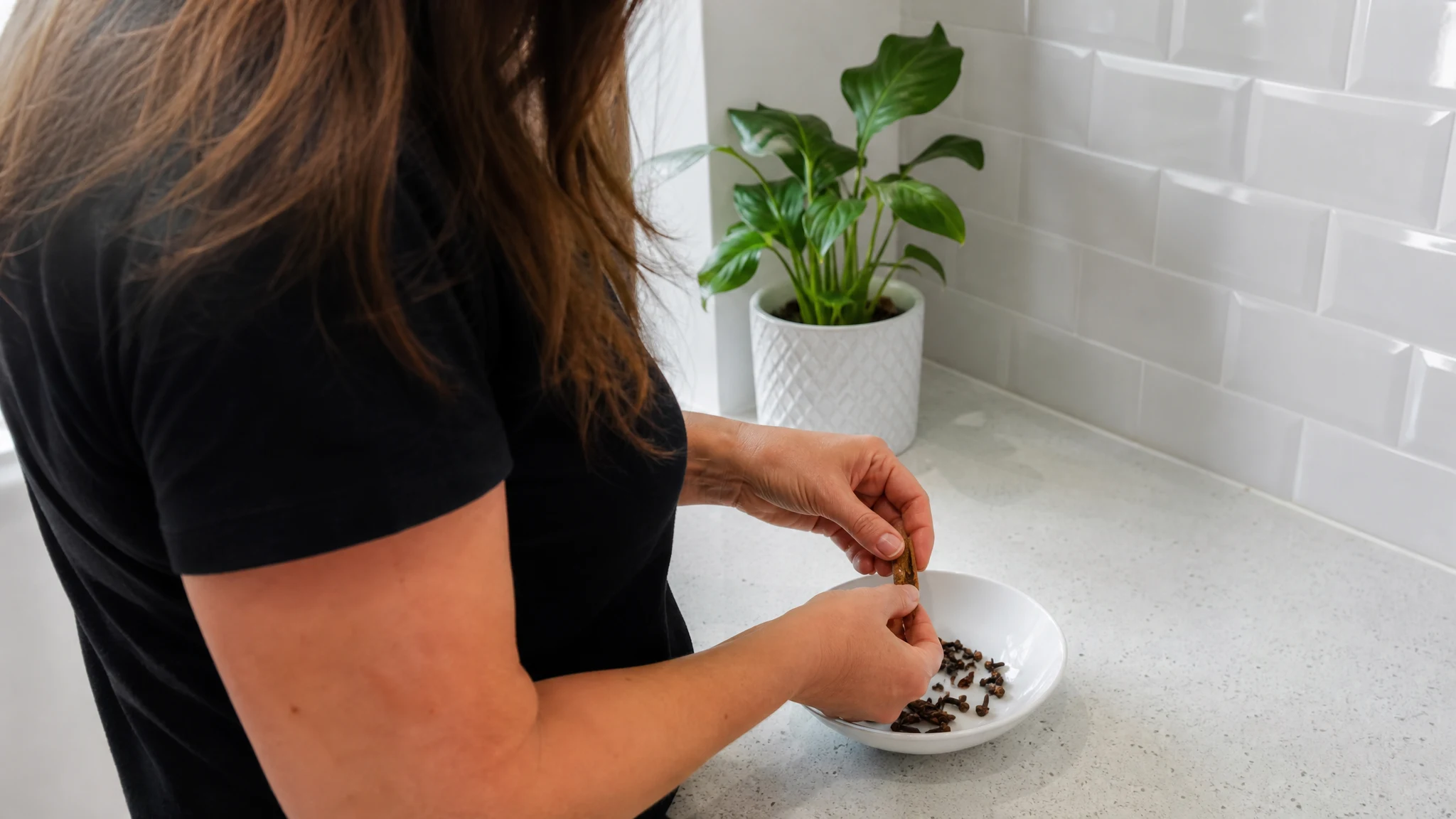
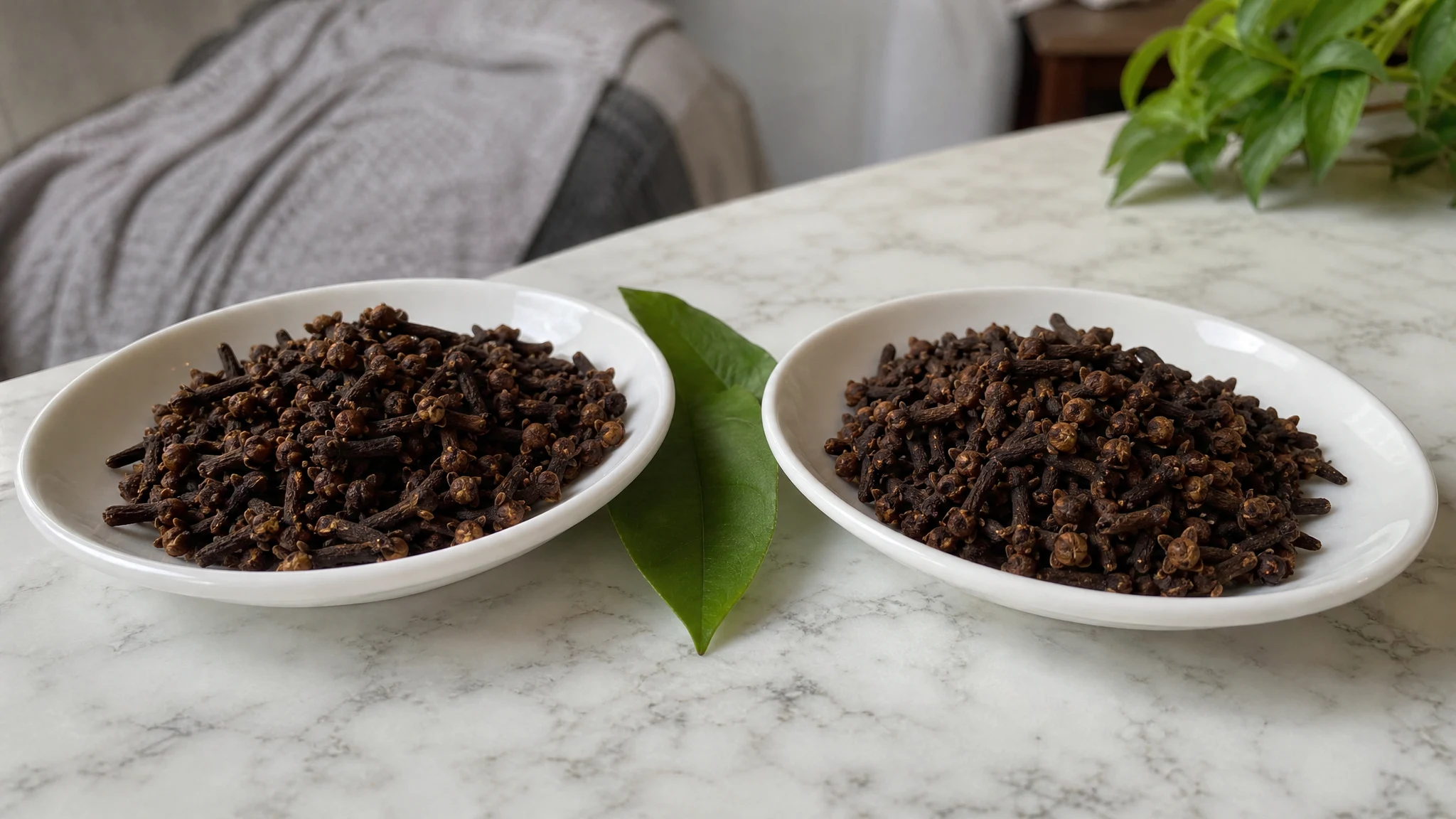
If you have a jar of whole cloves in the cupboard, take one out and look at it. It is small, dark and rough, with a little round head on a short stem, which is exactly why people compared it to a nail. Roll it between your fingers and the smell comes up a little, dry and woody and sweet. Now open a bottle of clove oil and hold it a hand's width from your nose. The aroma arrives all at once, rounder and much stronger. Side by side, you will notice that the clove is a quiet whisper and the oil is the same voice at full volume.
Cooking: reach for the spice jar
For mulled cider, a ham or a pie, buy whole or ground cloves from a spice seller. We do not sell them, and our oils are labelled for aromatic and cosmetic use, never internal use. Food manufacturers do use clove oil and oleoresin, but in tiny amounts because the flavour is so strong (Liñán-Atero et al.), and US rules list clove bud, leaf and stem oils as flavouring agents only at levels not exceeding good manufacturing practice (21 CFR 184.1257). A listing for food flavouring does not turn an aroma oil into a kitchen ingredient. Our post on swallowing clove oil goes into that.
Scent: where the oil does something buds cannot
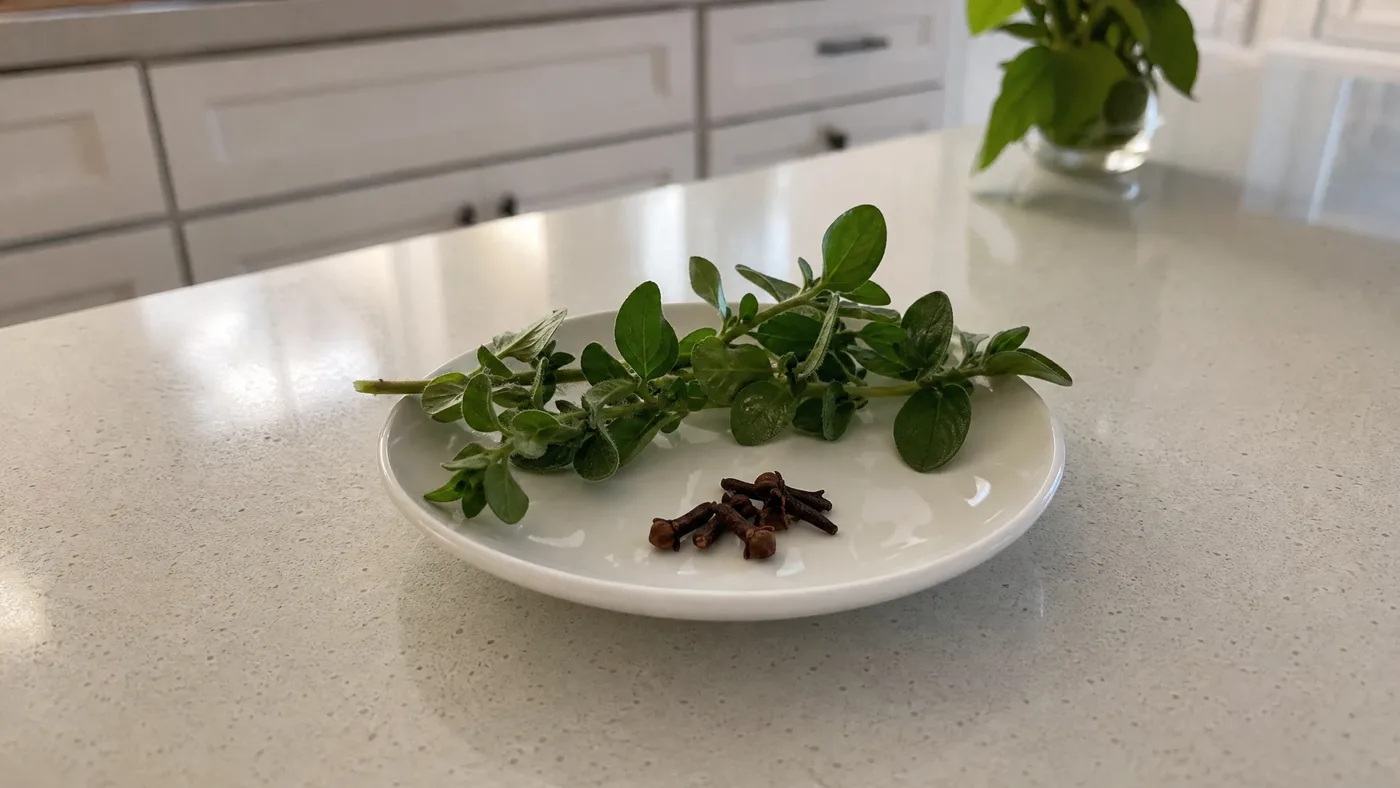
Whole cloves in a pot of water release their aroma slowly, as they soak. The oil acts fast and reaches further, which is why it suits diffusers, candle pours, potpourri, cold-process soap and cleaning blends. If you simmer on the stovetop, a very few drops go a long way, and because clove oil is a little heavier than water, undiluted drops tend to sink and sit at the bottom of the pot. Keep the pot where you can watch it, and away from small children and pets. Pet Poison Helpline lists cats and birds as the animals at greatest risk from essential oils (Pet Poison Helpline), so a household with either is a good reason to use whole spices in the pot. Our simmer pot recipes are written both ways.
A simple way to decide
When we are unsure which to reach for, we ask what the project needs. Here is the short version.
- Something you will eat or drink: whole or ground cloves from the spice aisle, every time.
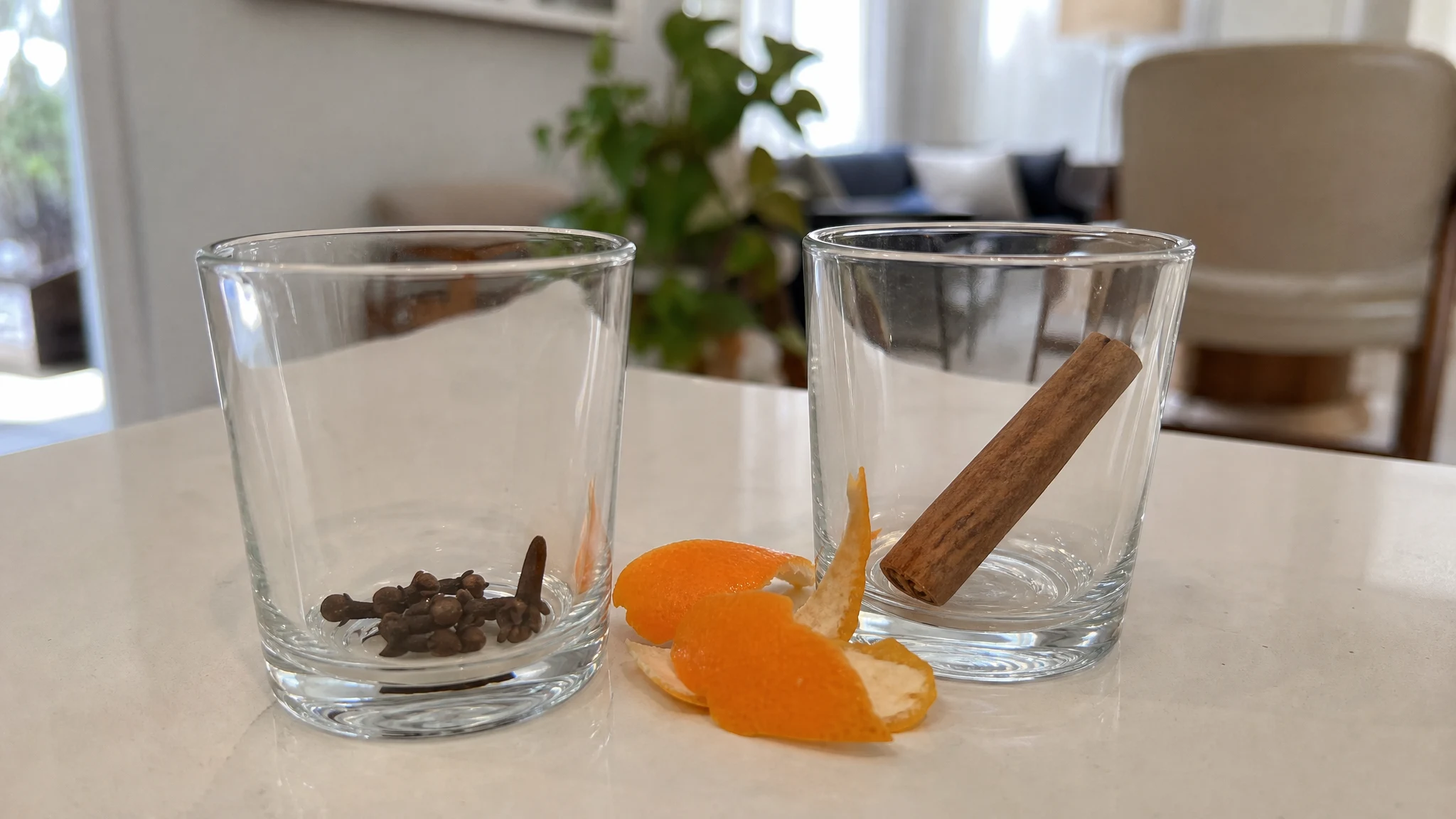
- A scented afternoon with an attended pot: whole cloves with orange peel and a cinnamon stick, and no oil at all unless you want extra.
- Scent that has to carry through wax, soap or a diffuser: this is where the oil earns its place, because a whole clove has no way to share its aroma with a candle or a bar of soap.
Plenty of people end up with both: the jar for the kitchen and the little bottle for the craft table.
Bud oil or leaf oil for the job
A whole clove is the bud, which makes bud oil the botanical match. We describe our bud oil as warm, rich and sweetly spicy, with baking-spice depth, and our leaf oil as bold, smoky and earthy-spicy, drier and less sweet. The two are distilled separately and never blended. If you are trying to recreate a clove-studded dish in a room, the bud oil is where we would start. We lay out the differences in bud versus leaf.
So keep a jar of whole cloves by the stove and a small bottle of oil for the projects where concentrated aroma is the point.
Clove Essential Oil
Clove Essential Oil from our own shop, in sizes from 0.5 oz to bulk.
From $10.99
Shop Now →Sources & Further Reading
- Kamatou, Vermaak and Viljoen, Molecules, 2012: clove harvest and eugenol
- Liñán-Atero et al., Antioxidants, 2024: bud oil yields and food uses
- 21 CFR 184.1257: clove oils as food flavouring agents
- Pet Poison Helpline, essential oils