Clove vs Oregano Oil: What Sets Them Apart
Open a bottle of clove oil and a bottle of oregano oil and the first thing you notice is that neither is subtle. That is not an accident of marketing. Each oil is dominated by a single phenol, and that one molecule explains most of what the two have in common.
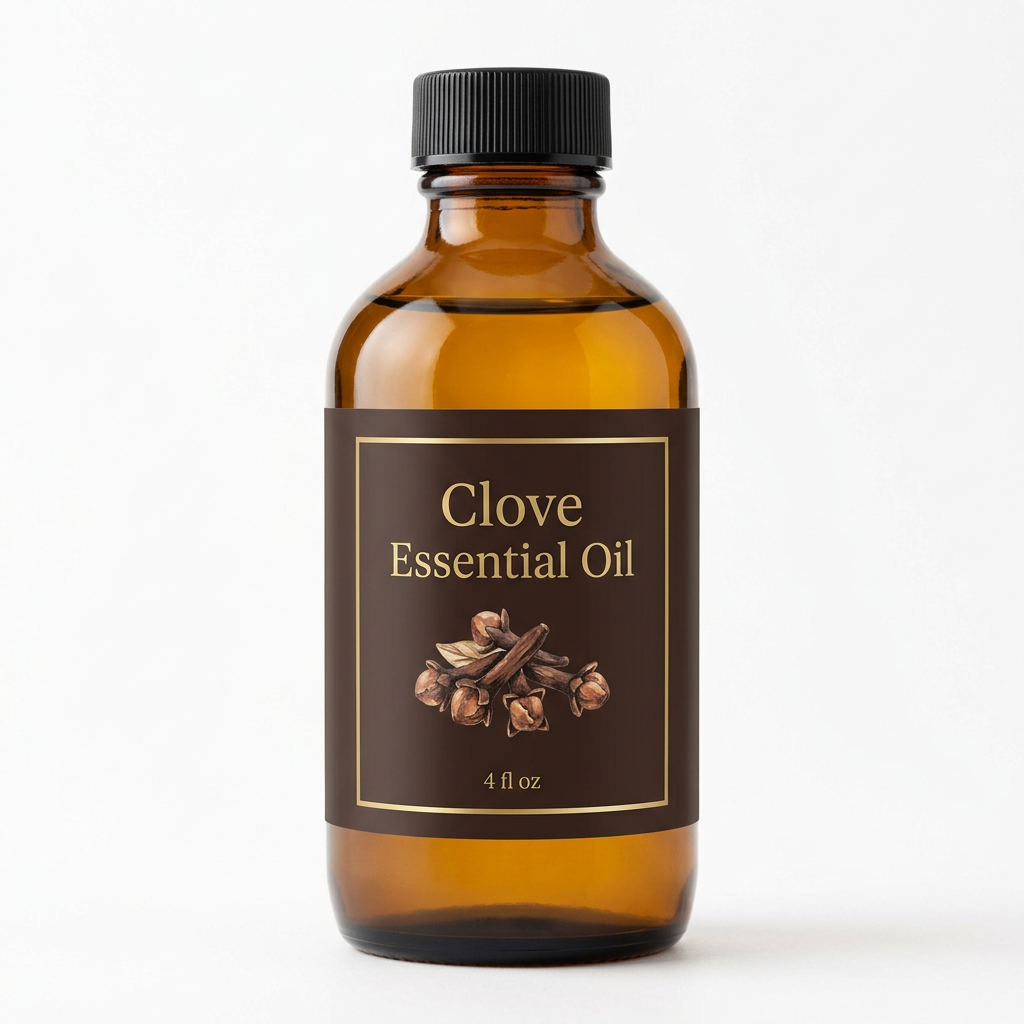
Clove Essential Oil
Our own Clove Essential Oil, in sizes from 0.5 oz to bulk.
From $10.99
Shop Now →Same family of molecule, different headline
In clove the headline compound is eugenol, the source of that warm, sweetly spicy smell. The GC-MS report we publish for our bud oil lists eugenol at 73.57% of the peak area and eugenyl acetate at 12.82%, with 98.68% of the oil identified. In oregano the headline is carvacrol. One study that analysed a commercial oregano oil found carvacrol at 78% of the oil (Han and Parker, Biochimie Open, 2017), though oregano species and chemotypes vary, so treat that as one oil rather than a rule.
So both oils are roughly three-quarters a single phenol. If you want to see how a number like that sits inside the full picture, our eugenol guide walks through it, and the GC-MS reading guide shows how to take a report apart.
What that concentration means in practice
A phenol at that share is the reason these oils are used in very small amounts. Eugenol is described as a primary irritant and sensitiser, and it is among the fragrance chemicals most often reported as a consumer allergen in the EU (Kamatou, Vermaak and Viljoen, Molecules, 2012). For clove bud oil the Tisserand Institute, eugenol page gives a recommended topical maximum of 0.5%, and we suggest working at or below that whenever clove goes near skin. We could not verify an equivalent published figure for oregano oil, so we do not offer one. Anyone formulating with it should check a current safety reference.
The arithmetic is friendly. In 30 ml of carrier, 0.5% is 0.15 ml of oil, which is only a few drops. Neat drops of either oil are far too strong for skin, which is why the dilution conversation matters more here than which oil has the better reputation.
The nose test
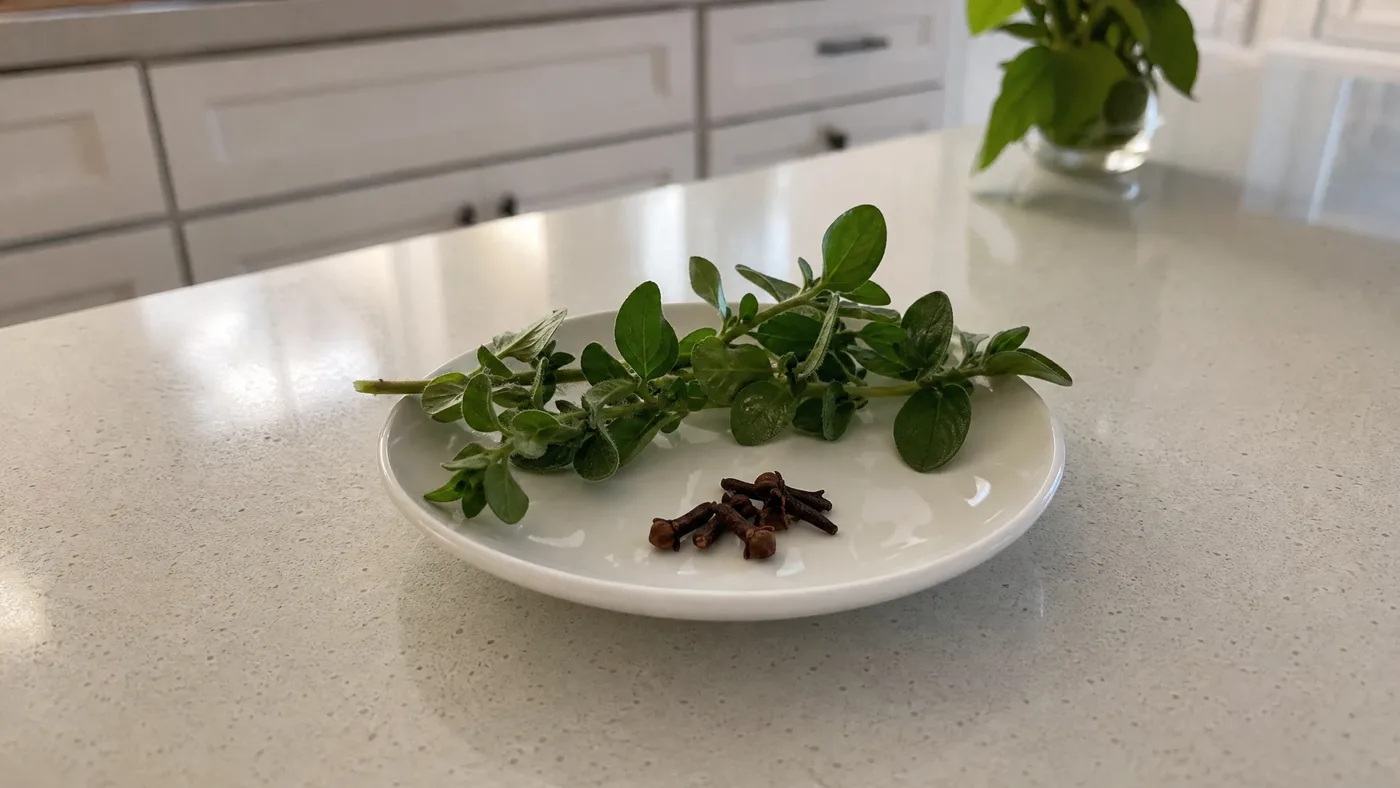
If you ever open both bottles one after the other, you will notice at once how different they are. Clove is warm, sweet and spicy, with a baking-kitchen feel. Oregano smells like the herb jar in your pantry, only much louder and sharper. Hold the bottle a hand's width from your nose and wave it gently, rather than sniffing straight from the neck, because both oils are strong enough to make your eyes water if you lean in.
Habits for strong oils
Whichever phenol-rich oil you handle, a few habits make life easier. Work on a tray so a spill stays in one place, and keep a paper towel handy to wipe the neck of the bottle before you close it. Cap it right away, wash your hands when you are done, and label any dilution you make with the oil, the carrier and the percentage. Store the bottles upright in a cool, dark spot where children and pets cannot get to them.
A label question worth settling first
"Oregano oil" turns up on two different kinds of shelf. One is an essential oil, a distilled aromatic material. The other is a capsule or liquid sold as a dietary supplement, which may be a diluted extract. They are different products governed by different rules, so a claim attached to one tells you little about the other. Our clove oils are aromatic and cosmetic oils, sold undiluted and never for internal use. If you are weighing a supplement, a pharmacist or physician is the right person to ask, especially alongside medications, pregnancy or breastfeeding.
Learning on clove
If you are new to strong oils, clove is a friendly place to start because it smells so pleasant. Put one drop on a paper strip, smell it at one minute and again an hour later, and you will see how the sweetness lingers while the sharp edge fades. That small exercise teaches you how to judge a strong oil by nose, and it carries over to every other oil you pick up.
Choosing between them for scent
If the goal is aroma, the two are not really substitutes. Clove brings sweet baking-spice warmth, and the bud oil in particular suits spiced blends with orange, cinnamon, cedarwood and vanilla. We do not sell oregano, so we will not tell you how to use it. What we can say is that clove is a good oil to start learning phenol-rich oils with, because its sweet profile makes the small amounts you need easy to judge by nose. For the bud-versus-leaf choice, see our bud and leaf comparison.
Whichever strong oil you pick up, the habit that serves you best is the same: measure small, dilute before skin, and keep the bottle capped and away from children and pets.
Clove Essential Oil
Clove Essential Oil from our own shop, in sizes from 0.5 oz to bulk.
From $10.99
Shop Now →Sources & Further Reading
- Han and Parker, Biochimie Open, 2017: composition of a commercial oregano oil
- Kamatou, Vermaak and Viljoen, Molecules, 2012: eugenol as irritant and sensitiser
- Tisserand Institute, eugenol: topical maximum for clove bud oil