Clove Oil vs Nutmeg Oil: Which Spice Fits Your Blend?
Clove and nutmeg land on the same shelf in every holiday kitchen, so it is natural to assume their oils are cousins. They are not. Clove oil is built around a single phenol, eugenol. Nutmeg oil is mostly terpene hydrocarbons, with a compound called myristicin whose share swings enormously from one sample to the next. We sell clove oil and no nutmeg, so this comparison rests on published analyses.
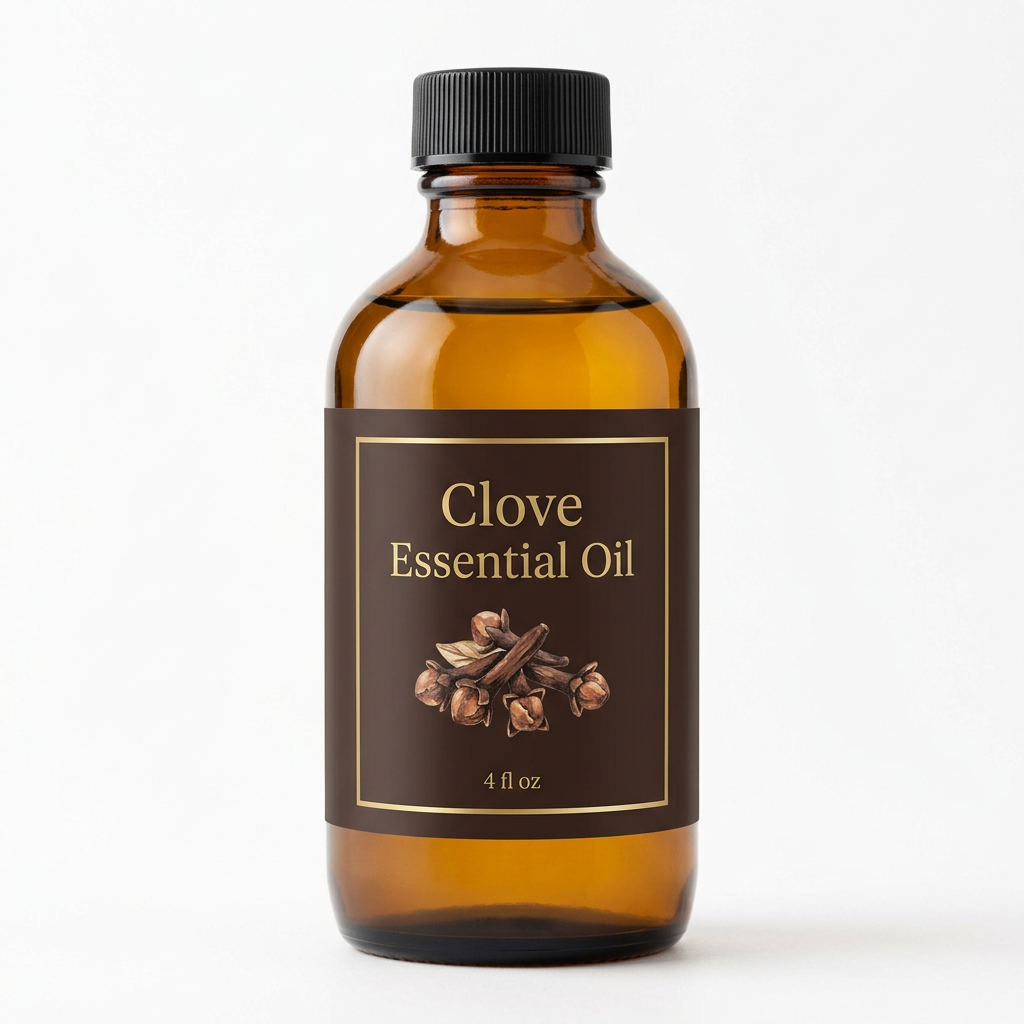
Clove Essential Oil
Our own Clove Essential Oil, in sizes from 0.5 oz to bulk.
From $10.99
Shop Now →A narrow oil and a wide one
Clove is consistent. The GC-MS report we publish for our bud oil lists eugenol at 73.57% by peak area, and the European Food Safety Authority's panel found 78% to 86% eugenol across seven bud batches and six leaf batches (EFSA FEEDAP, 2023). If a clove oil came in far outside that band, it would be a good reason to ask questions.
Nutmeg refuses to sit still. One 2025 study measured a commercial nutmeg oil at 33.0% myristicin, with alpha-pinene, sabinene and beta-pinene making up much of the rest (Parichanon et al., 2025). A 2026 study of nutmeg seeds from three Thai sites found myristicin at only 7.6%, with sabinene the leading compound at 23.4% (Khamnuan et al., 2026). Same plant, same compound, a fourfold spread. So there is no single honest "nutmeg oil composition" to quote, and a seller who gives you one should be able to tell you which sample it came from.
A species mix-up that clove avoids
That same Thai study also looked at Papuan nutmeg, Myristica argentea, a related species that can pass for nutmeg in the market. Its aril oil was dominated by safrole, roughly 19% to 33%, a compound the authors flagged for food-safety concern. Only a few samples were analyzed, so it is a pointer, not a market survey, but it explains a simple buying rule: for nutmeg oil, ask for the botanical name (Myristica fragrans), the plant part, and a GC-MS report for the lot. For clove, the sources we read describe a market where the main questions are bud versus leaf and natural versus synthetic eugenol (Kamatou et al., 2012). If you want paperwork for your own lot of our clove oil, ask us in writing through the contact page.
Which one for which job
When you want that holiday clove note
Then clove is the one. We describe our bud oil as warm, rich and sweetly spicy and the leaf oil as bold, smoky and earthy-spicy, and both are strong, so a little goes a long way. Nutmeg is a different instrument, so we suggest smelling a sample before building it into a blend. Our blending guide lists the partners we recommend for clove.
When it is going on skin
For clove we have a number to point to. The Tisserand Institute gives a recommended topical maximum of 0.5% for clove bud oil (Tisserand Institute), and we keep skin blends at or below that, as we explain in our safety basics post. We have no comparable figure for nutmeg oil, so for that one, consult the supplier's safety data and a cosmetic chemist.
When it is going in candles or soap
The right guide is the IFRA certificate from your supplier for the exact oil and your product type. It tells you the total fragrance level to stay under, and it is the document to ask for with either oil.
When you are thinking of the kitchen
The spice and the oil are different things in the rulebook. FDA lists nutmeg as a spice generally recognized as safe for its intended use (21 CFR 182.10), and clove oils as flavorings at levels not exceeding good manufacturing practice (21 CFR 184.1257). Neither is guidance for adding bottled essential oil to dinner; our swallowing post explains why. For any swallowing, call Poison Help at 1-800-222-1222 in the US.
Two spice jars on the counter
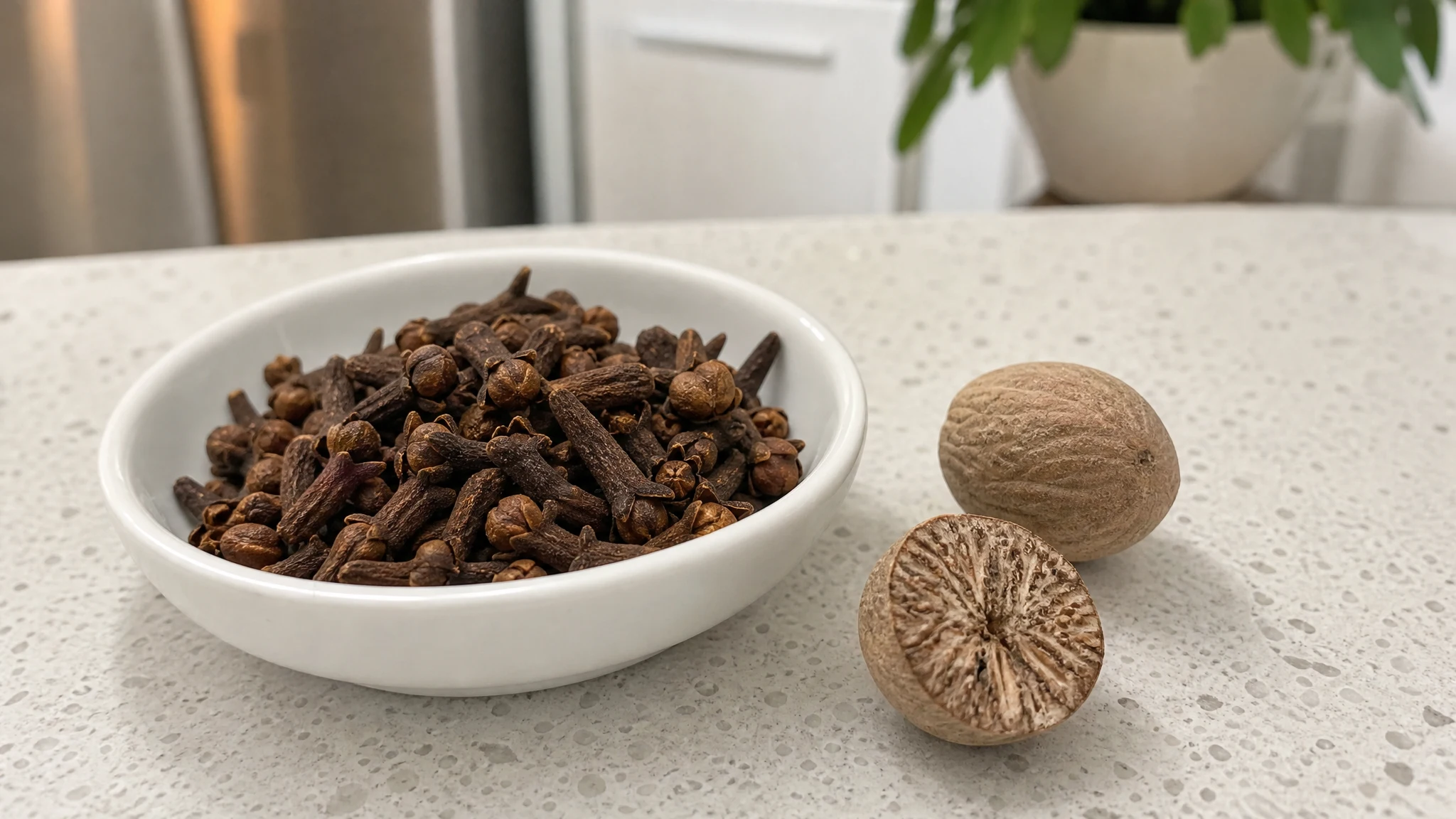
Here is a fun way to learn the difference. Take a whole nutmeg and a whole clove from the pantry and smell them one after the other. The nutmeg is sweet, woody and slightly creamy, and you usually have to grate it to get the full scent. The clove is sharper and drier, but still warm and spicy in the nose. Knowing the shape of each in its natural form makes it much easier to imagine how the oils will behave in a blend.
Thinking in seasons
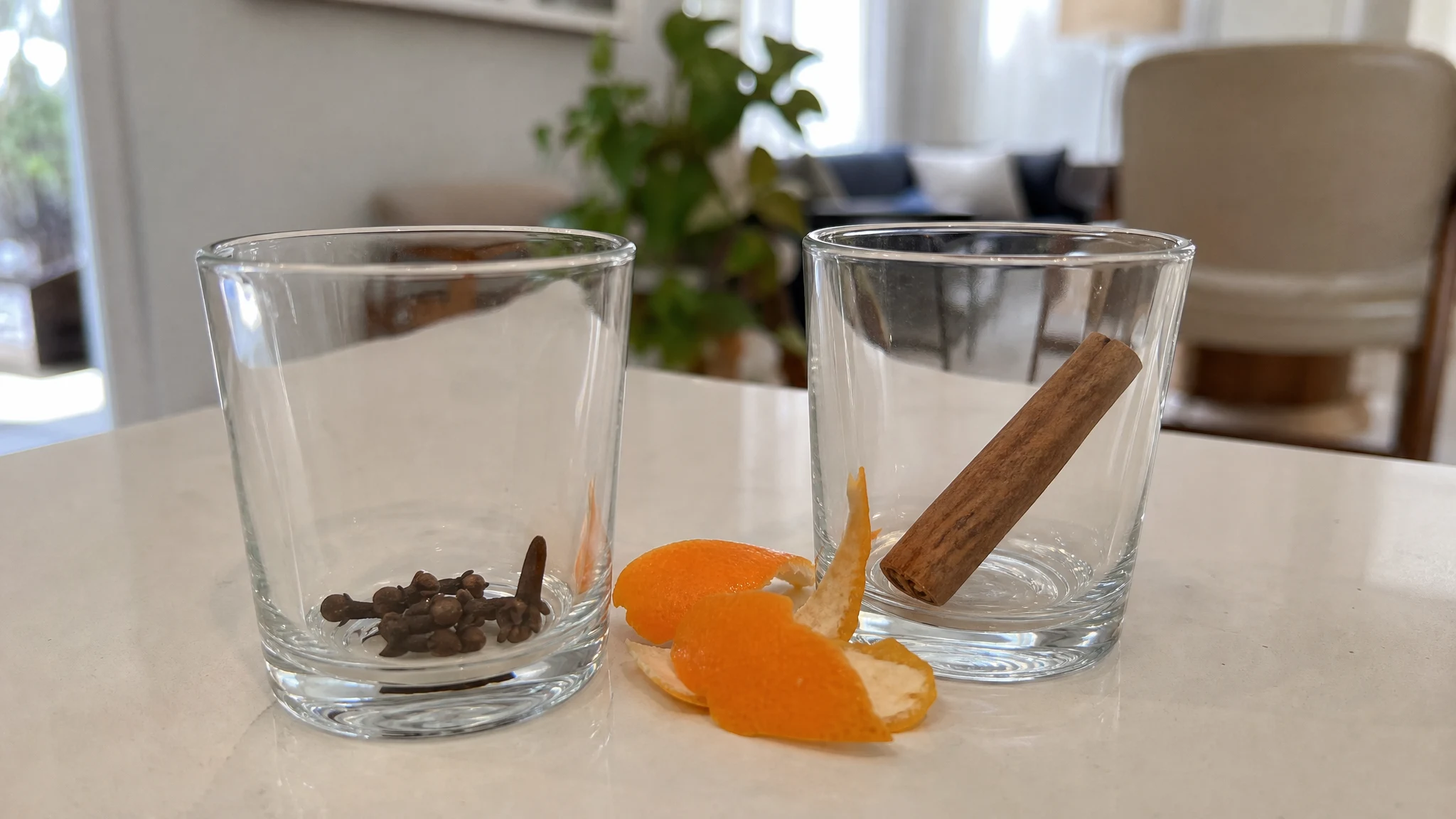
Both spices say autumn and winter, which is why they show up together on a holiday shelf. If you are planning a seasonal scent, begin with the one that matches your mood and treat the other as an accent. For our oils, the bud sits well with orange, cinnamon, cedarwood, frankincense and vanilla, so you have plenty to try before you need anything else.
A word on pets and children
The Pet Poison Helpline notes that essential oil poisoning can affect all species, with cats and birds at the greatest risk (Pet Poison Helpline). If a diffuser runs near a cat or bird, ask your veterinarian first, and keep every bottle well out of reach of children.
If you want one oil with a narrow, well-documented profile, clove is the simpler purchase, and our bud versus leaf post will help you choose between its two forms. Nutmeg is lovely too; just choose a seller who names the species and shows a report for the lot.
Clove Essential Oil
Clove Essential Oil from our own shop, in sizes from 0.5 oz to bulk.
From $10.99
Shop Now →Sources & Further Reading
- EFSA FEEDAP Panel, 2023. Safety and efficacy of feed additives from Syzygium aromaticum. EFSA J 21(7):e08183. PMC10375362
- Parichanon et al., 2025. Species-specific effects of nutmeg, cinnamon, and clove essential oils on Sitophilus oryzae. Molecules 30(17). PMC12430837
- Khamnuan et al., 2026. Comparative GC-MS fingerprint analysis of M. fragrans and M. argentea essential oils. Food Chem X. PMC12764438
- Kamatou GPP, Vermaak I, Viljoen AM, 2012. Eugenol: from the remote Maluku Islands to the international market place. Molecules 17(6):6953. PMC6268661
- Tisserand Institute. Eugenol: Essential Oil Constituents in Food, Part 4. tisserandinstitute.org/learn-more/eugenol
- U.S. eCFR. 21 CFR 182.10 and 21 CFR 184.1257. ecfr.gov
- Pet Poison Helpline. Essential Oils. petpoisonhelpline.com/blog/essential-oils