Can You Ingest Clove Oil? What the GRAS Rule Does Not Say
No. Do not swallow clove oil from a bottle sold for aroma, ours or anyone's, and do not try to work out a "small" amount. Both of our oils are labelled for aromatic and cosmetic use only, never internal use. The confusion comes from the fact that clove is a legal food flavouring, and the rest of this page explains why that fact does not make the bottle in your cabinet a food.
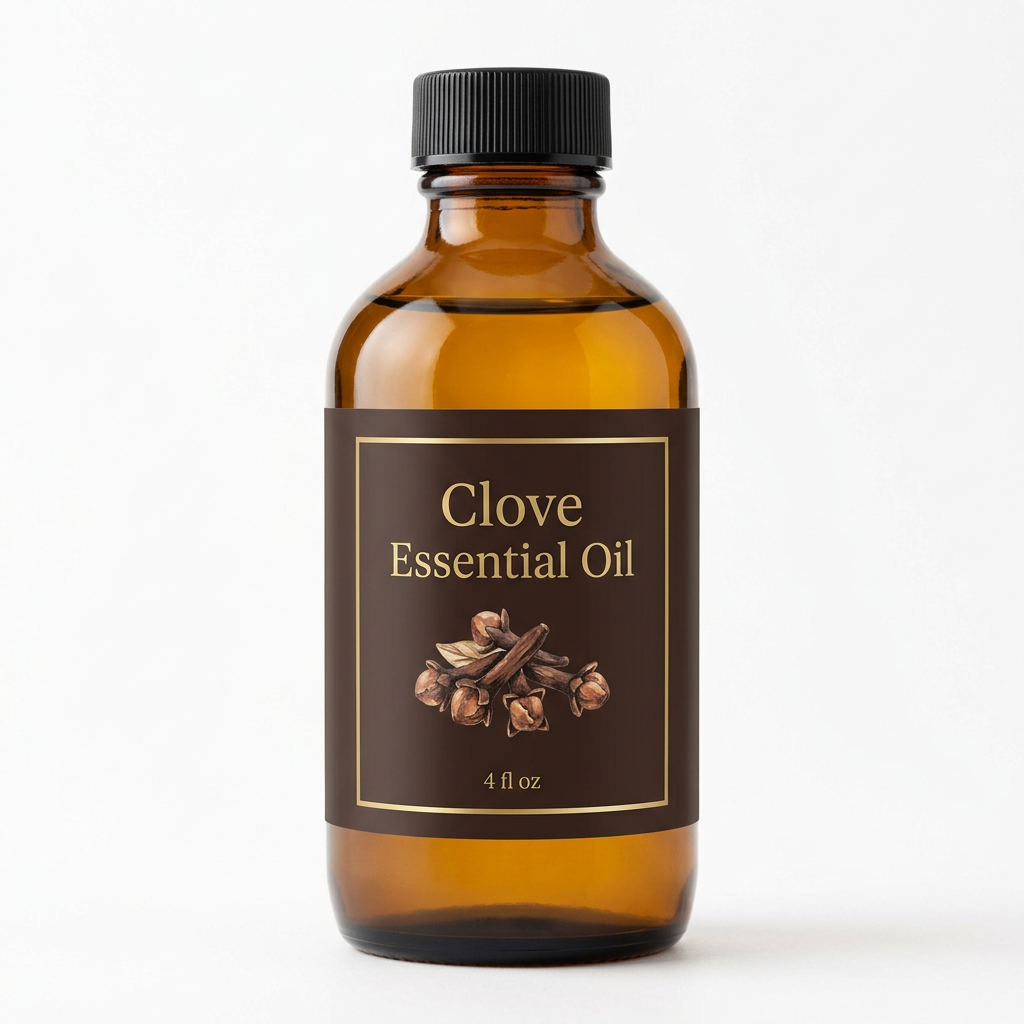
Clove Essential Oil
Our own Clove Essential Oil, in sizes from 0.5 oz to bulk.
From $10.99
Shop Now →"But clove is GRAS." What that rule says
This is the most common reason people give for swallowing the oil, so here is the actual text. Clove sits in the FDA's list of substances affirmed as generally recognised as safe at 21 CFR 184.1257, headed "Clove and its derivatives". The section defines cloves as the dried unopened flower buds, says the derivatives include the essential oils of buds, leaves and stems and eugenol, and then states the conditions: the ingredients are "used as flavoring agents and adjuvants" and "used in food at levels not to exceed good manufacturing practice" (eCFR, 21 CFR 184.1257). Clove is not in the general spice list (21 CFR 182.10) or the essential oil list (182.20); we checked both, and it has its own section instead.
Read what it does not say. It does not set a dose. It does not say a bottle of essential oil may be drunk. It describes a flavouring added by a food manufacturer to a finished food, with the food-grade specification the section refers to (the Food Chemicals Codex, 4th edition, 1996). A bottle sold under an aromatic label has not been put through that food-use framework by us, and we make no food-grade claim for either oil. We have not found a numeric acceptable daily intake for eugenol from JECFA that we could verify, so we are not quoting one.
The scale problem, in arithmetic
A pinch of ground cloves in a pie is a tiny fraction of a gram of plant material that contains a small share of oil. The oil is the concentrate: our published GC-MS report for the bud oil says 73.57% eugenol. Now look at the case reports. Janes et al., European Journal of Pediatrics, 2005 reported a 15-month-old boy who swallowed 10 mL of clove oil and developed fulminant hepatic failure, with ALT above 13,000 U/L at 24 hours; liver measures improved after intravenous N-acetylcysteine. Eisen et al., Journal of Toxicology: Clinical Toxicology, 2004 reported a 3-month-old girl who swallowed less than 8 mL, developed fulminant hepatic failure, and made a complete recovery. A half-ounce bottle holds roughly 13 to 15 mL depending on whether the ounce is read as weight or volume, so one small bottle is more than either child swallowed. That is our arithmetic, not a finding from the papers.
A third report, Hartnoll et al., Archives of Disease in Childhood, 1993, described coma, fits, a coagulopathy and acute liver damage after oil of cloves was swallowed, and compared it with the late stage of a large paracetamol overdose. Hartnoll's team proposed a paracetamol-style treatment regimen, and the Janes and Eisen teams gave intravenous N-acetylcysteine, so clinicians read the pattern as acute liver injury, not an upset stomach. Whether any amount of swallowed oil is tolerable for a child is not something these reports can answer, and they are not designed to.
The size of the bottle matters for storage too. Our own stated shelf life is 3 to 5 years unopened for the bud oil and 4 to 5 for the leaf oil, which means a bottle can sit in a cabinet for years within reach of a curious toddler. Reasoning from the case reports above, the safe-storage question is the same as for any medicine: high, closed, and out of sight.
What about adults?
Every ingestion case we fetched involved a child. We found no adult dose-response data we could verify, and we are not going to estimate a safe adult amount from the child reports, because that would be inventing a number. The absence of adult cases in what we read is not evidence that swallowing is harmless; it is evidence that we do not know a dose, and neither does the bottle label. Janes et al. also analysed a UK national poisons database and reported a 14-fold rise in aromatherapy-related home accidents between 1994 and 1999, and concluded that clove oil "warrants special attention".
The dental product is a different regulated thing
Readers often point to the fact that dentists and pharmacies handle eugenol. They do, in specified products. A UK general-sale clove oil dental product (100% clove oil) states that eugenol "may act as an irritant to skin and mucous membranes", lists hypersensitivity to clove oil, eugenol or Peru balsam as a contraindication, says safety in pregnancy and lactation has not been established, and does not recommend it under 2 years (Clove Oil BP summary of product characteristics, medicines.org.uk). A reviewed pharmaceutical label, a dentist's materials and an aromatic oil bottle are three different things. We do not sell any dental or oral product, and we will not give a home method for putting our oil in the mouth, on gums or on teeth, because the documented harms there (irritant and cytotoxic effects on oral soft tissue, per Sarrami et al., British Dental Journal, 2002) are exactly what a home method invites. Tooth or gum pain belongs with a dentist; for a medicine question, ask a pharmacist. Our oral health article says more about what dentists use.
If someone has already swallowed some
Call Poison Control at 1-800-222-1222 (US; free, confidential, 24 hours, per Poison Control's essential oils page) or your local emergency number, have the bottle in hand, and tell them the oil, the approximate amount and the person's age and weight. Do not wait to see whether symptoms appear, and do not try home remedies. Poison Control also notes that children have "thin skin and immature livers" that may make them more susceptible, and advises locking essential oil bottles out of sight and reach of children.
Where this leaves a clove oil buyer
Use our oils the way our pages say: diffused, or diluted in a carrier for cosmetic use with a patch test first. The whole-spice question, cloves in your baking versus the oil, is covered in clove oil versus whole cloves, and the wider list of harms is in our side effects guide. For homes with infants, read the teething article before the bottle goes on a shelf.
The short version: a flavouring rule tells you what a food company may add to a cake, not what is in your bottle or what a swallowed measure does. We sell aromatic oil, not food or medicine, and the honest answer to "can I swallow it" is the one on the label.
Clove Essential Oil
Clove Essential Oil from our own shop, in sizes from 0.5 oz to bulk.
From $10.99
Shop Now →Sources & Further Reading
- US eCFR. 21 CFR 184.1257, Clove and its derivatives. ecfr.gov/184.1257
- Janes SE et al., 2005. Essential oil poisoning: N-acetylcysteine for eugenol-induced hepatic failure and analysis of a national database. PubMed 15895251
- Eisen JS et al., 2004. N-acetylcysteine for the treatment of clove oil-induced fulminant hepatic failure. PubMed 15083943
- Hartnoll G et al., 1993. Near fatal ingestion of oil of cloves. PubMed 8215554
- Thornton & Ross. Clove Oil BP, summary of product characteristics. medicines.org.uk/emc/product/4817
- Sarrami N et al., 2002. Adverse reactions associated with the use of eugenol in dentistry. PubMed 12353045
- Poison Control. Essential oils. poison.org/articles/essential-oils