Clove Oil for Teething Babies: What AAP and FDA Say Instead
Do not put clove oil on a baby's gums, and do not use it as a teething remedy. Our oils are labelled for aromatic and cosmetic use only, never internal use, our bud oil page says to keep it away from children, and the one thing the case literature agrees on is that swallowed clove oil has caused liver failure in infants. We will not give a home protocol for this, and the rest of the page explains why and what pediatric sources recommend instead.
Clove Essential Oil
Our own Clove Essential Oil, in sizes from 0.5 oz to bulk.
From $10.99
Shop Now →What the pediatric guidance actually recommends
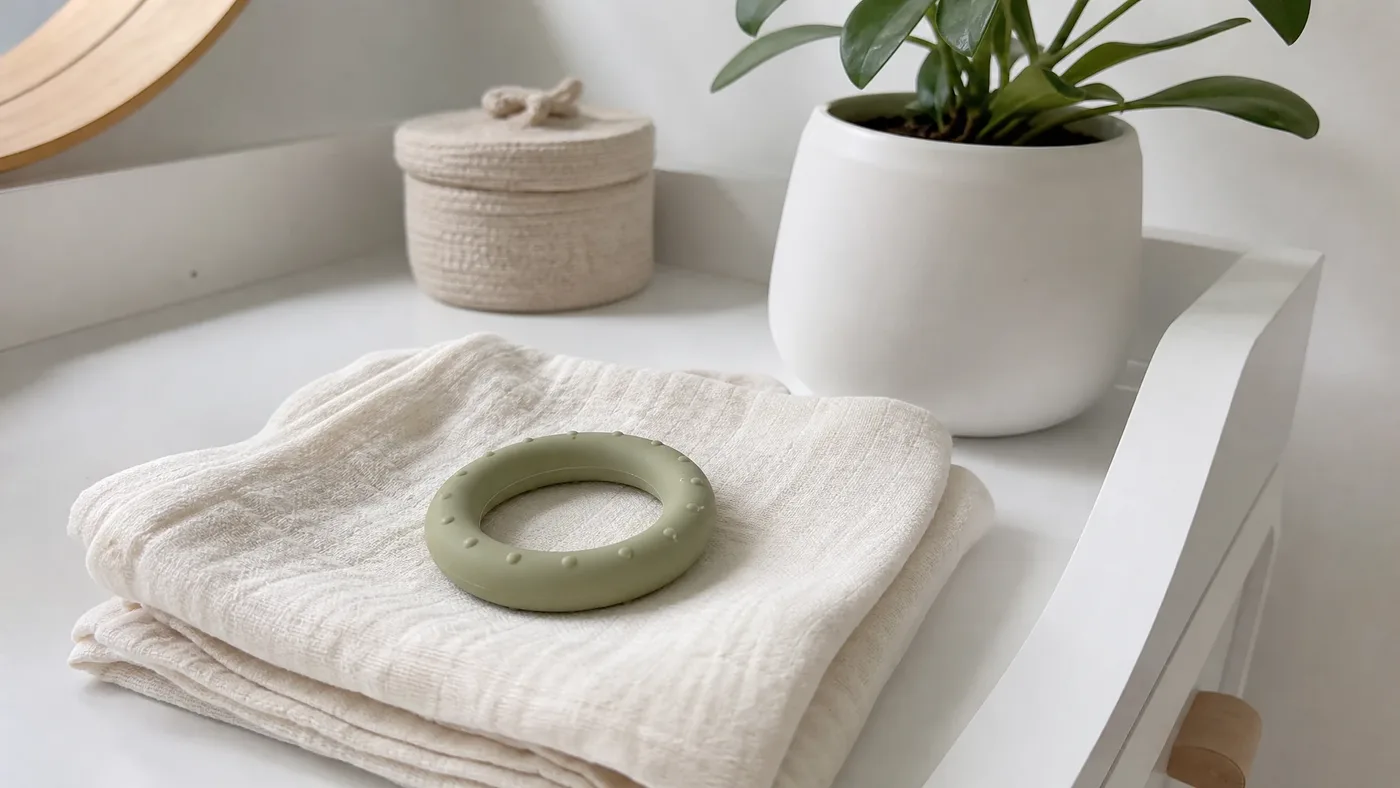
The American Academy of Pediatrics' parent site says first teeth typically appear between 6 and 10 months, with discomfort possibly as early as 3 months. Its advice is to massage the sore spots with a clean fingertip or knuckle, offer something safe to chew, never anything frozen solid, and avoid benzocaine, lidocaine and homeopathic teething tablets or gels. It also says numbing gels made for a baby's gums "usually aren't helpful" and warns about teething necklaces (AAP HealthyChildren, Teething Pain). The page does not mention clove or essential oils at all.
The FDA's consumer update on teething (page current to June 2024) is blunt: benzocaine products "should not be used for teething pain in children because they can be dangerous", prescription viscous lidocaine solution is not for teething pain in infants and young children, and homeopathic teething products "offer little to no benefit and are associated with serious risks". Its alternatives are gently rubbing the gums with a finger or a firm rubber teether that is not liquid-filled and not frozen, with supervision (FDA consumer update on teething pain in infants and children). Clove oil is not on the FDA's list of recommendations. We read that as meaning no regulator is steering parents toward it, though neither page assesses clove oil directly, so that is an inference from silence.
A common question is whether clove oil is the "natural" alternative to benzocaine. We cover that comparison in clove oil versus benzocaine; the short answer is that both categories carry documented infant harms, and the pediatric advice for both is the same: don't.
What a clove product's own label says about under-2s
A UK general-sale clove oil dental product (100% clove oil) says in its prescribing information that it is "Not recommended for use in children under 2 years of age due to lack of adequate data", and its overdose section reports life-threatening effects after oral ingestion of clove oil in children under 2. It also states that eugenol may irritate skin and mucous membranes and lists hypersensitivity to clove oil, eugenol or Peru balsam as a contraindication (Clove Oil BP summary of product characteristics, medicines.org.uk). So the manufacturer of a licensed clove oil product, whose purpose is dental, says not to use it in infants. A bottle of aromatic oil carries no such licence at all.
The documented harm: three infants and toddlers
None of these concern teething, but all concern swallowed clove oil by very young children:
- Janes et al., European Journal of Pediatrics, 2005: a 15-month-old swallowed 10 mL and developed fulminant hepatic failure (ALT above 13,000 U/L at 24 hours), improving after intravenous N-acetylcysteine. The authors also found a 14-fold rise in UK home accidents linked to aromatherapy products between 1994 and 1999.
- Eisen et al., Journal of Toxicology: Clinical Toxicology, 2004: a 3-month-old swallowed less than 8 mL, developed fulminant hepatic failure, and recovered completely.
- Hartnoll et al., Archives of Disease in Childhood, 1993: coma, fits, a coagulopathy and acute liver damage after ingestion of oil of cloves.
These are individual case reports, so they cannot give a threshold dose or a rate. A half-ounce bottle is roughly 13 to 15 mL depending on whether the ounce is weight or volume, which is our arithmetic: more than either child swallowed. A bottle on a nightstand is the realistic route, not a deliberate dose.
Why a baby's mouth in particular
Reasoning from the sources above, and not from any trial in infants, which we could not find: a clove oil dose is spread over a very small body; oral soft tissue is already documented to react to eugenol in adults, with irritative and cytotoxic effects and hypersensitivity (Sarrami et al., British Dental Journal, 2002); and anything placed in a baby's mouth gets swallowed. Poison Control says children have "thin skin and immature livers" that might make them more susceptible to essential oil toxicity (Poison Control, essential oils). We know of no pediatric clinical data for clove oil used on infant gums, so there is no evidence base to build a protocol on, ours or anyone's.
Diffusing and skin around a baby
We found no study of diffused clove oil exposure in infants, so we cannot report one. Our bud oil page says to keep the oil away from children and to dilute for skin use, and clove is a documented skin irritant (see our side effects guide). Reasoning from that, a pediatrician is the person to ask before diffusing near a baby or putting any clove dilution on a child's skin. For a bottle in a household with a crawler, the rule is storage out of reach and out of sight, in line with Poison Control's advice to lock essential oils away from children.
What to do instead, and who to call
- Rub the gums with a clean finger or knuckle, or offer a firm rubber teether that is not frozen, as AAP and FDA describe.
- If the baby is unusually distressed, feverish or not feeding, call your pediatrician or a pediatric dentist; teething is not the only reason a baby is unhappy.
- If any clove oil has been swallowed or got into a child's mouth, call Poison Control at 1-800-222-1222 (US, free, 24 hours) or emergency services immediately, with the bottle in hand. Do not wait for symptoms.
One more reason we will not offer a dilution for babies: the only published skin maximum we fetched, 0.5% for clove bud oil (Tisserand Institute, eugenol article), is a general topical figure, and nothing we found sets an infant figure or says a gum or mouth application can be calibrated at any strength. Any number we printed would be invented. Our own 0.5% to 2% range is for adult cosmetic use with a patch test, and our bud oil page says to keep the oil away from children.
Our ingestion article covers the food-flavouring rule and why it does not apply to a bottle, and our pregnancy article covers the other life stage where the answer is "ask first".
We sell clove bud and clove leaf oil for aroma and diluted cosmetic use by adults. They are not a teething product, and we would rather lose the sale than leave you with another answer.
Clove Essential Oil
Clove Essential Oil from our own shop, in sizes from 0.5 oz to bulk.
From $10.99
Shop Now →Sources & Further Reading
- American Academy of Pediatrics. Teething Pain (HealthyChildren.org). healthychildren.org/Teething-Pain
- US FDA. Consumer update on teething pain in infants and children. fda.gov/consumers/consumer-updates
- Thornton & Ross. Clove Oil BP, summary of product characteristics. medicines.org.uk/emc/product/4817
- Janes SE et al., 2005. Essential oil poisoning: N-acetylcysteine for eugenol-induced hepatic failure. PubMed 15895251
- Eisen JS et al., 2004. N-acetylcysteine for the treatment of clove oil-induced fulminant hepatic failure. PubMed 15083943
- Hartnoll G et al., 1993. Near fatal ingestion of oil of cloves. PubMed 8215554
- Sarrami N et al., 2002. Adverse reactions associated with the use of eugenol in dentistry. PubMed 12353045
- Poison Control. Essential oils. poison.org/articles/essential-oils