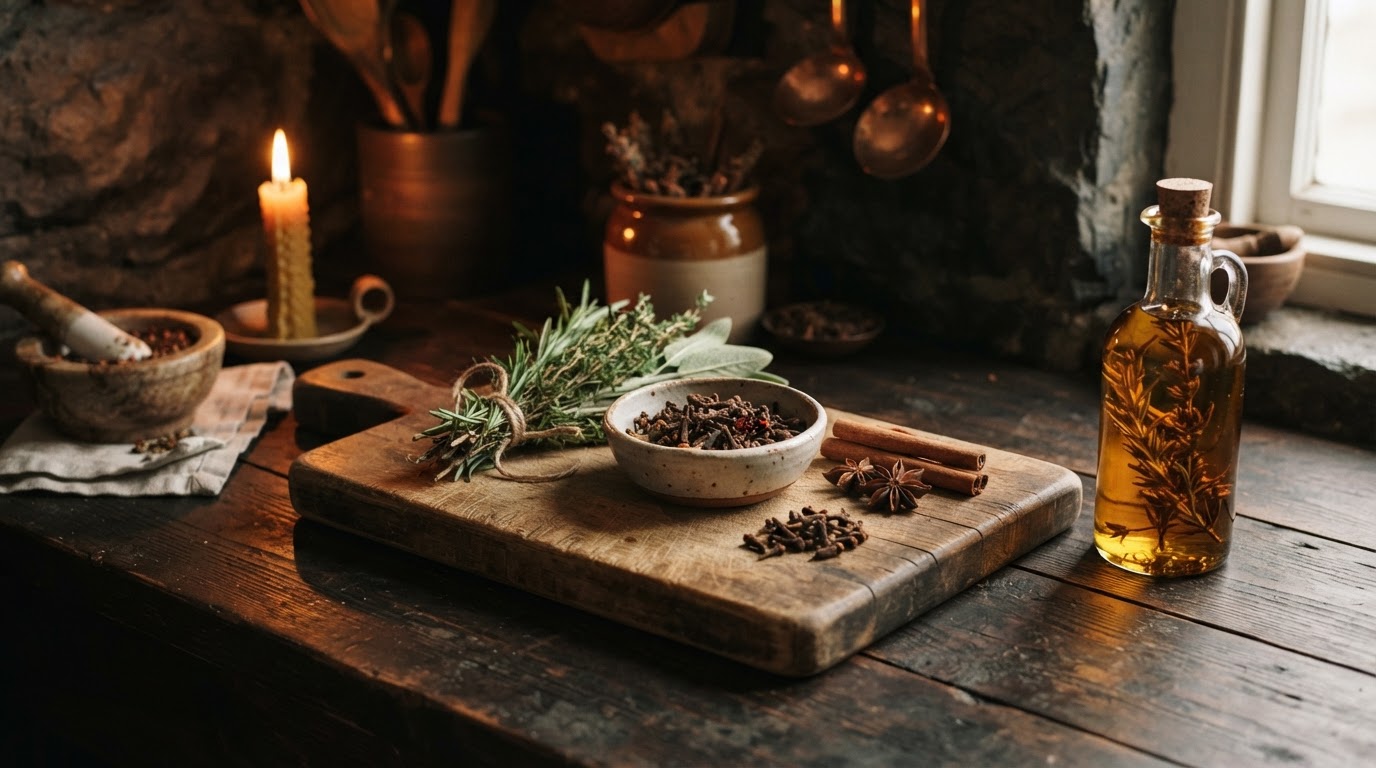
Clove Oil vs Whole Cloves: Which Belongs in Your Holiday Kitchen?
The scent hits you before you even open the jar. That deep, woody warmth that says November is here, that the mulled cider pot is coming out, that something good is about to simmer on the stove. Whether the source is a small bottle of golden oil or a handful of dried buds, clove is the anchor of the holiday spice rack. But clove oil vs whole cloves is a genuinely interesting comparison, because these two forms of the same plant behave very differently once you put them to work.
This guide breaks down the practical differences, the seasonal sweet spots, and the honest trade-offs. No hype, just a real look at clove forms compared so you can stock your kitchen and your diffuser shelf with confidence.
First, What Are We Actually Comparing?
Whole cloves are the dried flower buds of Syzygium aromaticum, a tropical evergreen tree native to the Maluku Islands of Indonesia. Harvesters pick the buds before they open, then dry them until they turn that familiar dark reddish-brown. The result is a shelf-stable spice that has traveled spice-trade routes for centuries.
Clove essential oil is steam-distilled from those same buds (or sometimes from the leaves or stems, which matters a lot for quality). A good bud oil concentrates the volatile aromatic compounds into a potent, amber-colored liquid. One small bottle can represent the aromatic weight of a surprisingly large quantity of dried spice. For a deeper look at sourcing and the different grades available, the complete guide to Syzygium aromaticum covers the botany and production process in detail.
Same plant. Very different tools.
Side-by-Side Comparison Table
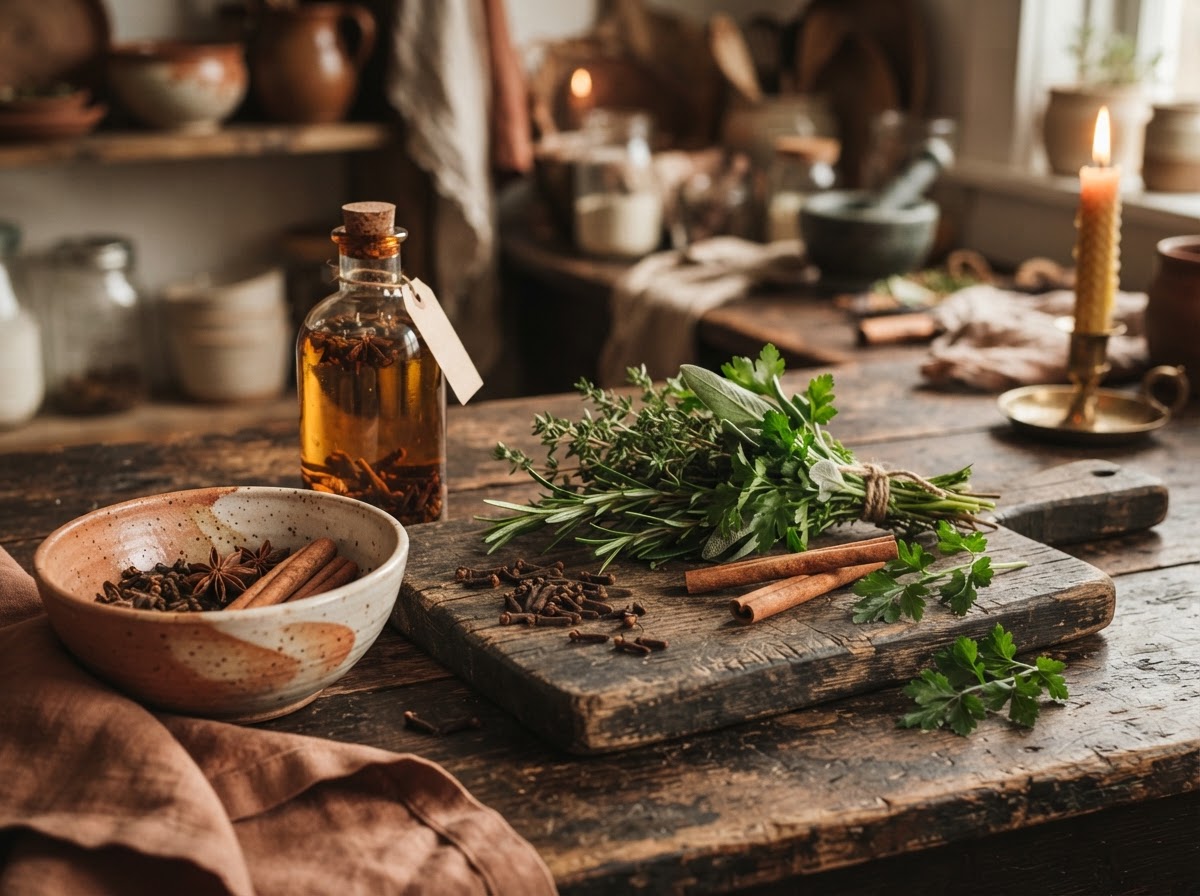
| Attribute | Whole Cloves | Clove Essential Oil |
|---|---|---|
| Primary use | Culinary (flavor infusion, spice blends) | Aromatic (diffusing, home fragrance, topical rituals with dilution) |
| Shelf life | 2 to 4 years, whole; 6 to 12 months, ground | 3 to 5 years in a dark, cool bottle |
| Concentration | Low to moderate per bud | Very high; a single drop is potent |
| Flavor in food | Complex, rounded, slow-releasing | Sharp and intense; culinary-grade only, used sparingly |
| Aromatic use | Limited; simmering or pomander craft | Excellent; mixes easily with carrier oils and diffuser blends |
| Cost per use | Very affordable for everyday cooking | Higher upfront cost, but a little goes a very long way |
| Safety notes | Safe in normal food amounts; avoid large quantities | Requires careful dilution; not for direct skin contact undiluted |
| Storage | Cool, dark pantry in an airtight jar | Dark glass bottle, away from heat and light |
| Sourcing transparency | Varies by brand; look for origin labeling | Varies widely; bud oil vs leaf oil matters significantly |
Whole Cloves: The Case for the Bud
What They Do Well
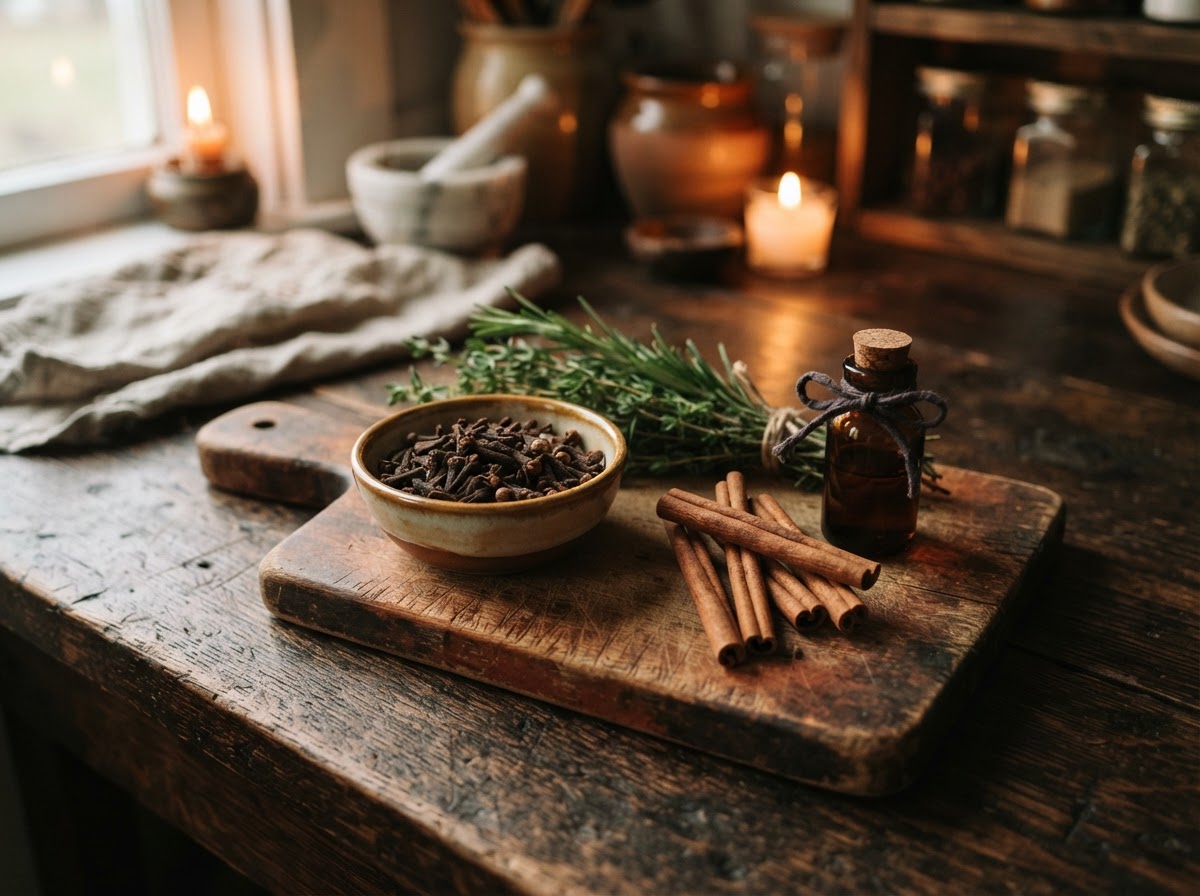
Whole cloves are kitchen workhorses with a long pedigree. Drop a few into a pot of simmering cider and they release their warmth slowly, building a layered depth you cannot rush. Press them into an onion for a classic French stock. Tuck them into a ham glaze. Grind them fresh for a gingerbread spice mix and notice the difference compared to a jar that has been sitting open since last December.
For holiday baking and savory cooking, whole cloves give you control. You can fish them out before serving. You can taste as you go. The slow infusion suits braises, mulled drinks, and poaching liquids beautifully.
Whole cloves are also the raw material for a beloved seasonal craft: the pomander ball. Studding an orange with cloves and rolling it in cinnamon and orris root is a centuries-old tradition. It fills a room with a gentle, natural fragrance that no synthetic air freshener really captures.
Pros
- Food-safe and familiar in any kitchen
- Easy to measure and control in recipes
- Affordable and widely available
- Versatile across sweet and savory applications
- Long shelf life when stored whole (not pre-ground)
Cons
- Limited use outside the kitchen
- Ground form loses potency quickly
- Aromatic reach is modest without simmering
- Quality varies widely; sourcing is often opaque on generic spice labels
Clove Essential Oil: The Case for the Bottle
What It Does Well
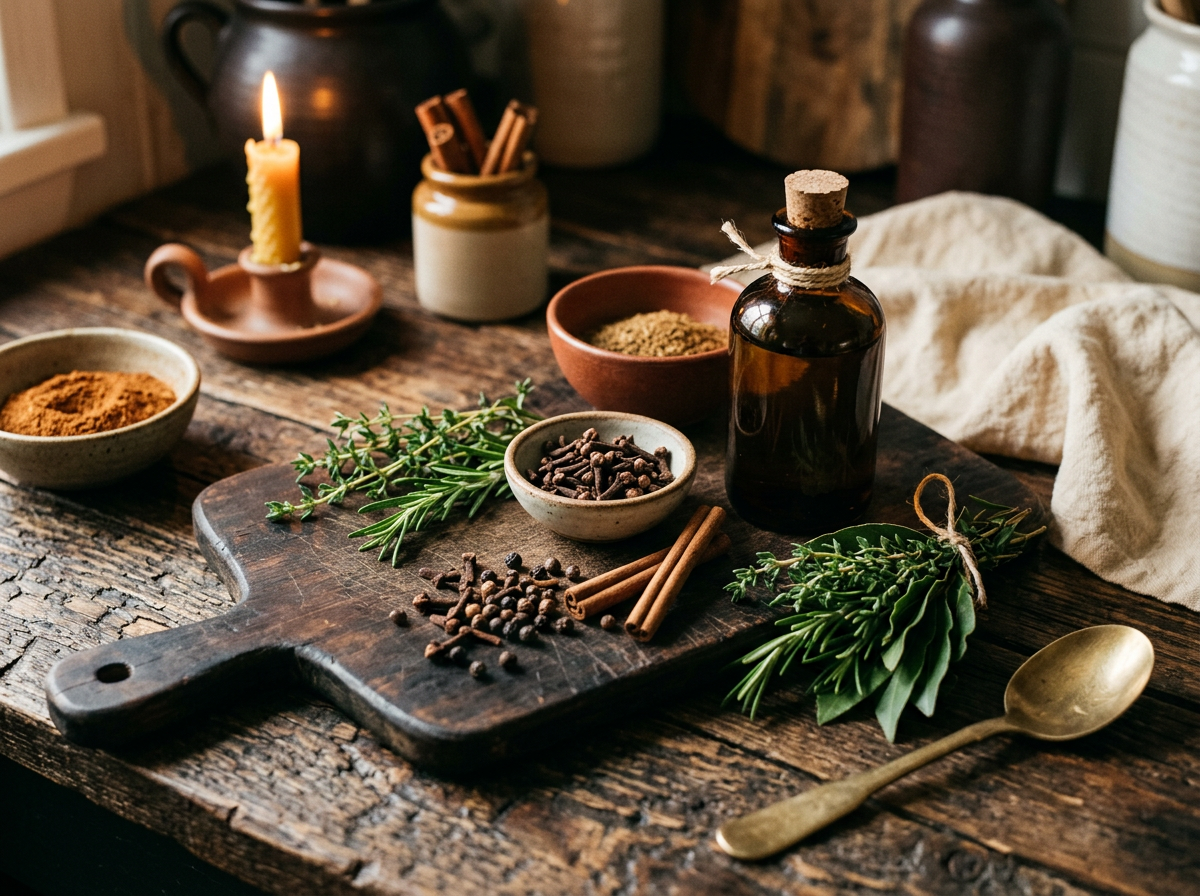
Clove essential oil brings intensity. A single drop in a diffuser can fill a medium-sized room with that signature spicy warmth. Blended with orange, cinnamon, and a touch of cedarwood, it creates one of the most evocative holiday scent combinations imaginable. People come through the door and immediately feel like the season has arrived.
For home fragrance rituals, clove oil is hard to beat. Add a few drops to unscented soy wax for a DIY candle project. Blend it into a potpourri refresh spray. Use it in a reed diffuser base. The concentration means a small bottle lasts through many weeks of seasonal use.
Clove bud oil also shows up in personal care crafting, though this requires real caution. It is a potent oil. Undiluted, it can cause significant skin sensitivity. Anyone exploring topical uses should stay well within safe dilution guidelines (typically 0.5 percent or lower in a carrier oil for skin application) and always patch-test on a small area first. People with sensitive skin, and anyone who is pregnant or nursing, should consult a qualified healthcare provider before any topical use. For common questions about safe usage, the clove oil FAQ is a practical starting point.
One sourcing note worth knowing: clove bud oil and clove leaf oil are not the same product. Bud oil is generally considered superior in scent quality and is the grade most often found in reputable aromatherapy and culinary-grade bottles. Leaf oil costs less but has a harsher, more medicinal profile. Always check labels.
Pros
- Exceptional aromatic reach for home fragrance and diffusing
- Long shelf life in proper storage
- Highly versatile in DIY blending projects
- A little goes a very long way
- Available in culinary-grade versions for precise flavor applications
Cons
- Requires careful dilution and safety knowledge for any topical use
- Higher upfront cost
- Quality variation between bud oil and leaf oil creates confusion
- Not a direct substitute for whole cloves in most recipes
- Culinary-grade oil is easy to over-use; the flavor is intense
Best For: Use-Case Recommendations
Holiday Cooking and Baking
Best choice: Whole cloves. The flavor profile is rounded and controllable. Whole cloves in a mulled wine, a pumpkin pie spice mix, or a braised pork shoulder are doing exactly what they have always done. If you want to experiment with clove oil in a recipe, use only food-grade oil and start with a toothpick-tip amount. It is genuinely that strong.
Home Fragrance and Diffusing
Best choice: Clove essential oil. Nothing competes with a well-balanced diffuser blend for filling your living room with cozy seasonal warmth. Try four drops of clove bud oil with three drops of sweet orange and two drops of frankincense for a classic holiday atmosphere blend.
Seasonal Crafts (Pomanders, Wreaths, Sachets)
Best choice: It depends on the project. Pomander balls are whole-clove territory, full stop. For sachets and drawer fresheners where you want concentrated scent on a cotton ball or wood chip, a few drops of clove oil works beautifully.
DIY Candles, Wax Melts, and Room Sprays
Best choice: Clove essential oil. Whole cloves are not practical for these applications. A quality bud oil disperses well in wax and alcohol-based spray formulas.
Gift-Giving (Spice Kits and Apothecary Sets)
Best choice: Both, together. A small cloth bag of whole cloves paired with a labeled bottle of clove bud oil makes a genuinely thoughtful gift for anyone who loves seasonal home rituals. Include a card with a simple mulled cider recipe and a diffuser blend suggestion.
A Note on Myths and Realistic Expectations
Clove in both forms carries a lot of folklore. Some of that heritage is genuinely fascinating from a cultural history standpoint. Some of it has drifted into overclaiming. It is worth knowing the difference between what research has observed and what is still anecdotal. The clove oil myths and facts guide separates the two clearly, which is useful reading before you see bold claims on product labels.
The short version: clove is a remarkable spice with a rich history and a genuinely compelling aromatic profile. Use it for the kitchen and the home atmosphere it provides, and enjoy it for exactly what it is.
The Verdict
Framing this as a competition misses the point. Whole cloves and clove essential oil are complementary tools, not rivals. Your holiday kitchen benefits from both, deployed in the right contexts.
Stock whole cloves for everything that goes into a pot or an oven. Keep a good bottle of clove bud oil for your diffuser, your craft projects, and those moments when you want the whole house to smell like a spice market in December. Buy the best quality you can afford in both cases, check your sources, and store them properly.
When people walk into your home during the holiday season and stop mid-sentence because something smells exactly right, you will know both forms earned their place on the shelf.