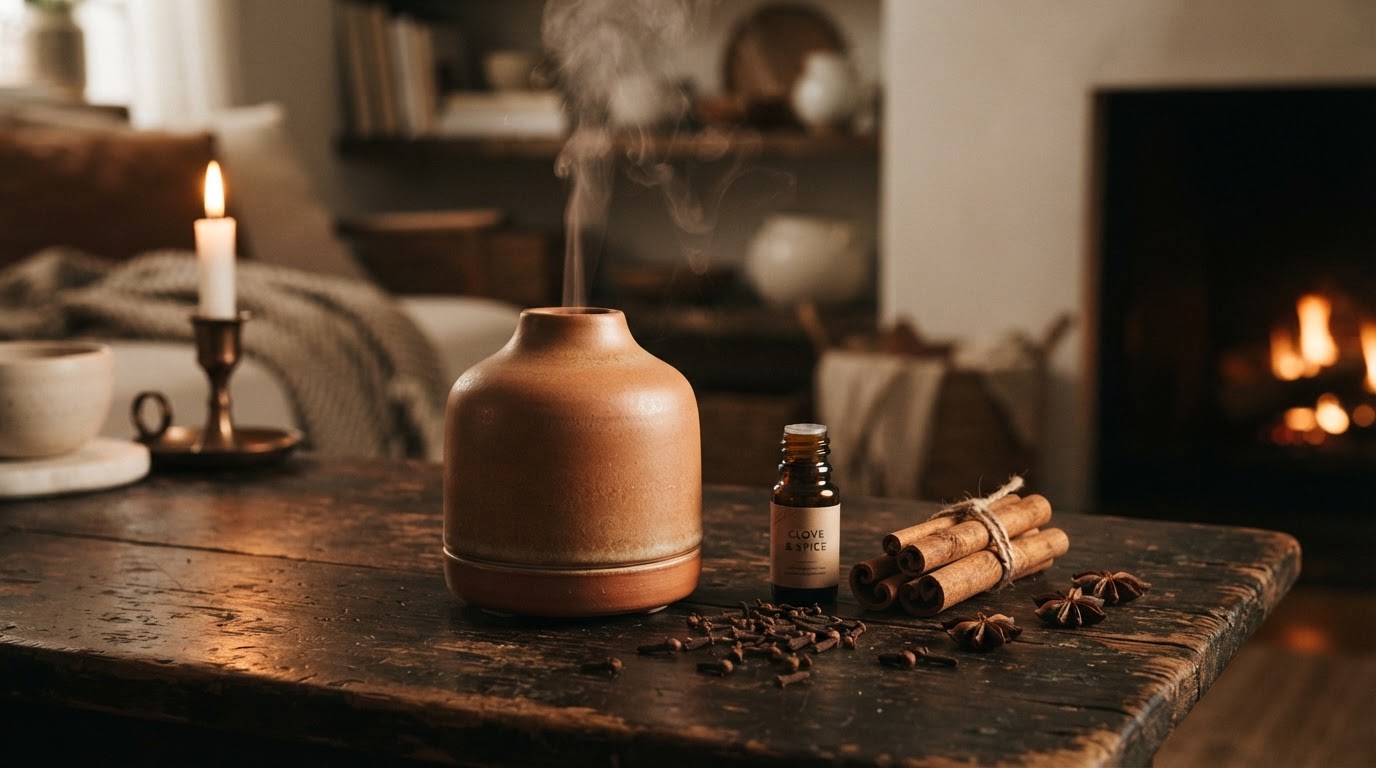
What Is Clove Oil? The Complete Guide to Syzygium Aromaticum
Key Takeaways
- Clove essential oil comes from Syzygium aromaticum, a tropical evergreen tree native to the Maluku Islands of Indonesia.
- Three distinct grades exist: bud oil, leaf oil, and stem oil. Each has a different chemical profile and a different place in your home ritual toolkit.
- The dominant compound, eugenol, accounts for 70 to 90 percent of bud oil and is responsible for its signature warm, spicy character.
- Clove oil is one of the most potent essential oils available. Proper dilution is non-negotiable before any skin contact.
- It has a remarkably long shelf life compared to most essential oils, often staying stable for four to five years when stored correctly.
- Sourcing and extraction method matter enormously to quality. Steam-distilled bud oil from a reputable supplier is the gold standard for home use.
Picture a Maluku Island market in the sixteenth century. Sacks of small, nail-shaped buds piled high, their rich, dark scent cutting through the sea air. Portuguese traders were willing to cross entire oceans for these buds. Wars were fought over the right to control the trees that produced them. Today, a small amber bottle of that same aromatic treasure sits on your bathroom shelf, costs less than twenty dollars, and can transform an ordinary winter evening into something that smells like a spice merchant's daydream.
So what exactly is clove oil? If you have searched for a clove oil explained resource that goes beyond a single paragraph, you are in the right place. This guide covers everything: the botany, the chemistry, the extraction process, how to read a product label, how to use the oil safely, and how to store it so it lasts for years. Consider this your clove essential oil guide from the ground up.
1. What Is Clove Oil, Exactly?
Clove oil is an essential oil derived from different parts of the clove plant, Syzygium aromaticum. Depending on which part of the plant is distilled, you get bud oil, leaf oil, or stem oil. The term "clove essential oil" most commonly refers to the bud oil, which is the most prized and most widely available grade for home use.
An essential oil is a concentrated, volatile aromatic compound extracted from plant material. The word "essential" does not mean "necessary for life." It refers to the "essence" of the plant: the characteristic fragrance compounds that give the species its distinctive scent and character. These compounds are produced in specialized glands within the plant tissue and serve various biological roles for the plant itself, from attracting pollinators to deterring certain insects.
Clove bud oil is remarkable for its concentration. It takes roughly four to seven kilograms of dried clove buds to produce just one kilogram of oil, which is part of why a quality product carries some price weight. It is also one of the most chemically potent essential oils commercially available, which is why the dilution conversation is so important with this particular oil.
People have been using clove preparations in one form or another for thousands of years. Historical records suggest use in Chinese courts as far back as 200 BCE, where attendants reportedly chewed cloves before addressing the emperor to sweeten their breath. Ayurvedic and traditional Indonesian practices incorporated cloves extensively. The modern essential oil industry simply extracted, refined, and bottled what generations of people already knew: this little bud has an enormous aromatic presence.
2. Botanical Origins: Getting to Know Syzygium Aromaticum
To truly understand what is clove oil, you need to spend a moment with the tree itself. Syzygium aromaticum is a tropical evergreen in the family Myrtaceae, the same botanical family that includes eucalyptus and tea tree. The genus Syzygium contains over 1,200 species distributed across tropical and subtropical regions of the world, but none are more commercially significant than this one.
Native Range and Historical Geography
The clove tree is indigenous to the Maluku Islands, historically called the Spice Islands, in what is now Indonesia. For centuries, Ternate and Tidore were the only places on earth where cloves grew. That geographic monopoly made the spice extraordinarily valuable and set the stage for the colonial-era spice wars that reshaped global trade routes.
By the eighteenth century, French botanist Pierre Poivre smuggled clove seedlings out of Dutch-controlled Maluku and established plantations on Mauritius and Réunion. From there, cultivation spread to Zanzibar, which became the world's largest clove producer for much of the nineteenth and twentieth centuries. Today, Indonesia, Tanzania (Zanzibar and Pemba), Madagascar, Sri Lanka, and India are the primary producing countries.
The Tree Up Close
A mature clove tree is a handsome thing. It typically reaches nine to twelve meters in height, though cultivated trees are sometimes kept shorter for easier harvesting. The leaves are broad, glossy, and deep green, with a naturally spicy fragrance when crushed. The bark is smooth and pale gray.
The clove you know from your spice rack is the dried, unopened flower bud. The name "clove" derives from the French word clou, meaning nail, a reference to the bud's shape. Harvest happens once or twice a year, depending on the region. Workers pick the buds by hand before they open, when the aromatic compounds are at their highest concentration. After harvest, the buds are sun-dried until they turn from green to dark brownish-red. That dried bud is then either sold as a spice or sent for distillation.
Growing Conditions and Sustainability Considerations
Clove trees are particular about their environment. They prefer humid, tropical climates with well-distributed rainfall, rich volcanic soils, and elevation between sea level and about 900 meters. A tree begins producing buds after five to seven years but can continue bearing for up to a century or more, making established plantations a genuinely long-term agricultural commitment.
Sustainability is a growing concern in the essential oil industry, and clove is no exception. Smallholder farmers in Indonesia and Tanzania produce the majority of the world's supply. Fair-trade certification and direct sourcing relationships are increasingly available and worth looking for when you purchase. A supplier who can tell you the specific origin country and ideally the farm cooperative they source from is a supplier taking quality and ethics seriously.
3. The Three Grades of Clove Oil: Bud, Leaf, and Stem
This is one of the most important distinctions in any clove essential oil guide, and it is often glossed over on product pages. Clove oil is not a single thing. Three botanically distinct parts of Syzygium aromaticum are distilled commercially, and they produce oils with meaningfully different chemical compositions, scent profiles, and appropriate uses.
| Grade | Source Part | Eugenol Content (approx.) | Scent Character | Common Use Context | Relative Cost |
|---|---|---|---|---|---|
| Bud Oil | Dried flower buds | 70 to 90% | Sweet, rich, warm, complex | Home aromatherapy, personal care DIY | Highest |
| Stem Oil | Stems and stalks | 90 to 95% | Sharp, woody, less sweet | Industrial fragrance, eugenol extraction | Moderate |
| Leaf Oil | Leaves | 82 to 88% | Harsh, green, rough | Industrial, sometimes fragrance blending | Lowest |
Clove Bud Oil
Bud oil is the grade you want for home use. The harvest process is labor-intensive (all hand-picked, before the bud opens), which drives the price up, but the resulting oil has a warm sweetness and depth that the other grades simply do not match. It contains a more complex array of aromatic compounds alongside its high eugenol content, including eugenyl acetate and beta-caryophyllene, which soften the profile and add nuance.
Clove Stem Oil
Stem oil has an even higher eugenol concentration than bud oil, which sounds like it might be more potent in a useful way. In practice, it comes across as sharper and less pleasant in home aromatic use. The pharmaceutical and fragrance industries use stem oil as a source of isolated eugenol. You will occasionally see it in lower-priced "clove oil" products. Check your label carefully.
Clove Leaf Oil
Leaf oil is the cheapest and least refined of the three. It is produced in large quantities because leaf harvest is easy and the trees produce abundant foliage. The scent is harsher and more medicinal-feeling. Some suppliers blend leaf oil with bud oil and sell the blend without full disclosure. This is one of the reasons sourcing transparency matters so much when you shop for clove oil.
4. How Clove Oil Is Made: Extraction Methods Explained
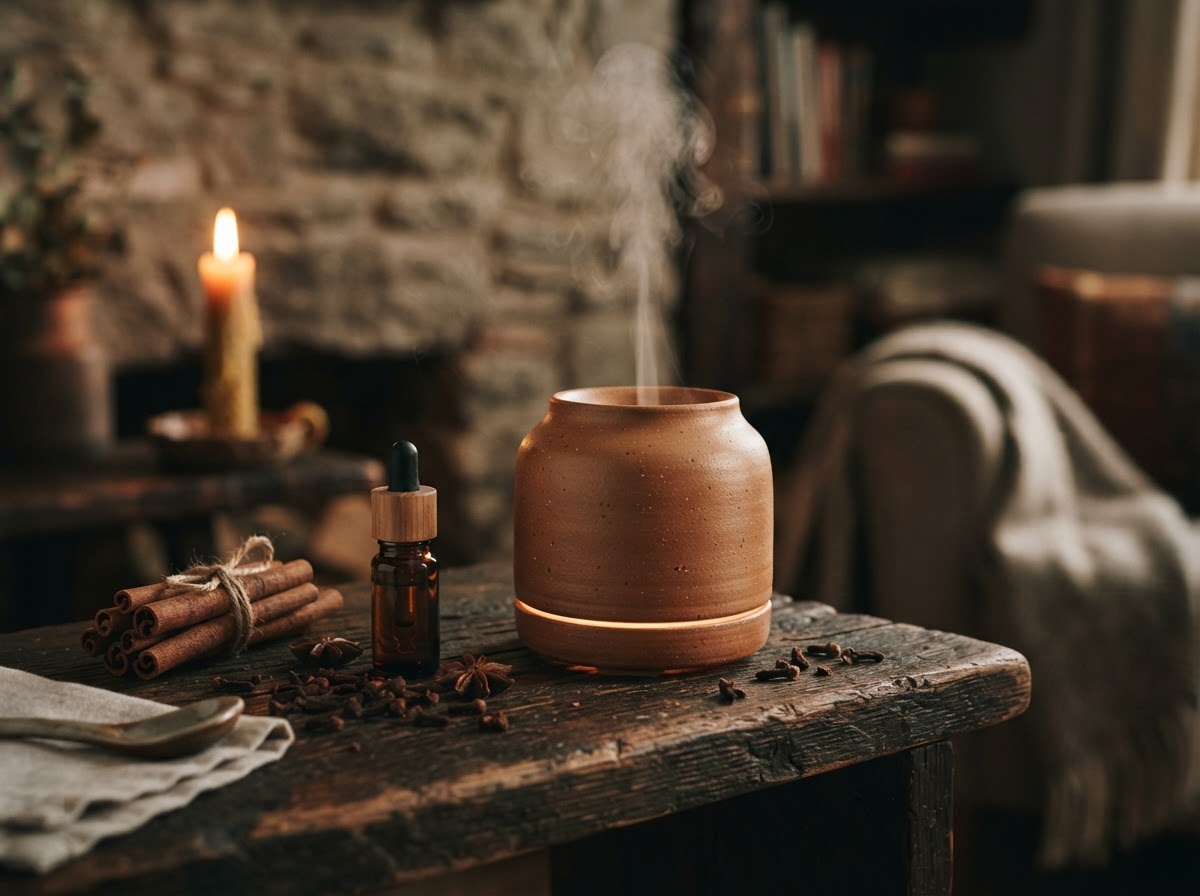
Understanding extraction gives you a meaningful lens for evaluating product quality. Not all extraction methods produce the same oil, and for a syzygium aromaticum oil that you plan to use at home, the method matters.
Steam Distillation
Steam distillation is the gold standard for clove bud oil. The process works like this: dried clove buds are placed in a distillation vessel, and steam is passed through the plant material. The heat causes the aromatic compounds in the buds to vaporize. That vapor travels through a cooling coil, condenses back into liquid, and separates into two layers: the essential oil (which floats) and the hydrosol (the water layer below). The essential oil is collected from the top.
The beauty of steam distillation is that it uses no chemical solvents. The resulting oil is considered "true" essential oil. For clove buds, distillation typically runs between two and four hours. Shorter distillation times may leave certain heavier compounds behind; overly long runs can degrade the lighter, more delicate aromatic fractions.
CO2 Extraction
Supercritical CO2 extraction is a newer technology. Carbon dioxide is pressurized until it behaves simultaneously as a liquid and a gas, becoming an excellent solvent for aromatic compounds. When the pressure is released, the CO2 evaporates cleanly, leaving behind a highly concentrated extract.
CO2 clove extracts tend to be fuller-spectrum than steam-distilled oils, capturing a wider range of the plant's aromatic compounds. Some enthusiasts argue that CO2 extracts smell closer to fresh clove buds. The trade-off is cost: CO2 equipment is expensive, which is reflected in the price of the finished product.
Solvent Extraction and Cold Press
Solvent extraction (using hexane or similar chemical solvents) is sometimes used for clove but is not common for the consumer essential oil market. It is more typical in industrial flavoring and fragrance applications. Cold pressing, while excellent for citrus peel oils, is not practical for clove because the aromatic compounds in the bud are not in a surface oil layer the way they are in a lemon rind.
What the Label Should Say
A quality clove bud oil label will state: the botanical name (Syzygium aromaticum), the plant part used (bud or flower bud), the extraction method (steam distilled), and the country of origin. If any of these details are missing, that is worth noting when you compare products.
5. The Chemistry Inside the Bottle: Eugenol and Beyond
Clove bud oil is a chemist's showcase. It contains dozens of identifiable compounds, but its character is dominated by a handful of major players. Understanding these compounds helps you make sense of everything from the scent to the appropriate dilution guidelines.
Eugenol: The Defining Compound
Eugenol (4-allyl-2-methoxyphenol) typically makes up 70 to 90 percent of clove bud oil by volume. It belongs to a chemical class called phenylpropanoids, which are known for their intense aromatic properties. Eugenol is the molecule responsible for the familiar warm, spicy, slightly sweet scent that you instantly recognize as clove. It is also found in lower concentrations in cinnamon leaf oil, basil, and bay leaf oil.
From a skin contact perspective, eugenol is classified as a potential sensitizer. This is a key reason why clove oil requires careful dilution. Repeated exposure to high concentrations can increase the likelihood of a sensitization reaction over time. The International Fragrance Association (IFRA) provides guidelines on eugenol concentrations in leave-on and rinse-off products, and reputable suppliers are aware of these standards.
Eugenyl Acetate
Eugenyl acetate accounts for roughly 5 to 15 percent of bud oil. It is the ester form of eugenol and contributes a softer, fruitier, slightly floral facet to the overall scent. Bud oil tends to have a noticeably higher eugenyl acetate content than stem or leaf oil, which is a significant reason why the bud grade smells more rounded and pleasant. When you smell a bud oil and find it more appealing than a cheaper clove product, eugenyl acetate is part of the reason.
Beta-Caryophyllene
Beta-caryophyllene is a sesquiterpene found in many plants, including black pepper, copaiba, and hops. In clove bud oil, it typically represents 5 to 12 percent of the composition. It contributes a woody, slightly peppery depth to the scent. Research into beta-caryophyllene has been growing steadily; some researchers note it may interact with certain biological receptors, though specific claims about outcomes fall outside the scope of this guide.
Minor Compounds and Their Roles
Beyond the three major players, clove bud oil contains a supporting cast of compounds including:
- Alpha-humulene: A woody, earthy sesquiterpene related to beta-caryophyllene.
- Methyl eugenol: Present in small quantities; contributes a sweet, rose-like facet.
- Chavicol: An aromatic phenol that adds a subtle anise-adjacent note.
- Acetyl eugenol: Sometimes listed separately from eugenyl acetate; adds to the ester fraction.
- Crategolic acid and oleanolic acid: Found in the plant material but typically present in very small concentrations in the distilled oil.
Gas chromatography-mass spectrometry (GC-MS) testing is the industry standard method for identifying and quantifying these compounds. A reputable supplier will either publish GC-MS reports for their batches or make them available on request. This data is your best assurance that what is in the bottle matches what the label claims.
6. Scent, Character, and How to Use It at Home
Even if you know every compound in the GC-MS report, nothing prepares you for that first proper inhale from a quality bottle of clove bud oil. It is bold. It fills the room. It has a warmth that feels almost physical, like the olfactory equivalent of a heavy wool blanket in November.
For a much deeper exploration of the scent profile, including how clove compares to other warm spice oils and which notes emerge at different stages, visit our dedicated guide: What Does Clove Oil Smell Like? A Warm, Spicy Scent Profile.
The Scent in Brief
Clove bud oil opens with an immediate, sharp spice note, then settles into something warmer and rounder. There is a slight sweetness underneath, courtesy of the eugenyl acetate. The dry-down (the scent as it fades) becomes woodier and more balsamic. Perfumers classify it as a middle-to-base note, meaning it does not evaporate as quickly as citrus top notes but does not anchor a blend the way heavy musks or resins do.
In perfumery, clove is categorized as spicy, warm, and sometimes oriental. It blends beautifully with:
- Citrus oils: sweet orange, bergamot, lemon
- Warm spices: cinnamon bark or leaf (use with dilution caution), cardamom, ginger
- Florals: ylang ylang, rose, geranium
- Woods and resins: cedarwood, sandalwood, frankincense, benzoin
- Vanilla absolute or CO2
Home Rituals with Clove Oil
Clove oil has earned its place in seasonal home rituals across many cultures. A few drops in a diffuser on a cold afternoon can shift the entire atmosphere of a room. It pairs naturally with the flavors and scents of autumn and winter: think mulled cider, simmering spice blends, and candlelit evenings.
Some of the most popular home uses include:
- Diffuser blends: Clove, sweet orange, and cinnamon create the classic holiday spice atmosphere. Start with a conservative amount since clove is potent; two to three drops in a standard diffuser is usually plenty.
- DIY candle or wax melt fragrance: Clove bud oil blends well with wood-based fragrance combinations. Note that flash point varies by wax type; always follow candle-making safety guidelines.
- Linen and room sprays: A properly diluted blend (in a water-and-dispersant base) can be misted into closets or onto curtains for a spiced, cozy ambiance.
- Potpourri refresher: A drop or two on dried orange peel and cinnamon sticks revives faded potpourri beautifully.
- DIY soap and craft projects: Clove has long been used in cold-process and melt-and-pour soap. Be aware of acceleration (soap batter can thicken quickly with certain spice oils).
For a comprehensive list of creative applications, our article Clove Oil Uses: 20 Warm and Spicy Ideas for Home and Hobby goes through two dozen specific project ideas with practical notes for each.
7. Reading the Label: Quality, Sourcing, and What to Look For
The essential oil market is not heavily regulated, which means the responsibility for evaluating quality falls largely on the consumer. A well-labeled, honestly described clove bud oil is out there, but you need to know what to look for.
What a Quality Label Includes
A trustworthy clove oil product label will typically display:
- Full botanical name: Syzygium aromaticum (not just "clove oil" or a generic name)
- Plant part: Should specify "bud" or "flower bud"
- Extraction method: Steam distilled is standard for authentic essential oil
- Country of origin: Indonesia, Madagascar, Sri Lanka, or Tanzania are all legitimate major producing regions
- Lot or batch number: Indicates traceability
- GC-MS testing: Either a QR code linking to the report, or a statement that reports are available upon request
- Net volume and company contact information
Red Flags to Watch For
Be cautious if you see:
- No botanical name, or just "clove fragrance oil" (fragrance oils are synthetic blends, not essential oils)
- Unusually low pricing with no transparency about sourcing
- "Clove oil" with no specification of plant part (could be leaf, stem, or a blend)
- No batch number or lot code
- Packaging in clear glass (essential oils degrade faster when exposed to light; amber or dark cobalt glass is appropriate)
- Extravagant health claims on the label (these are a regulatory concern and often signal a company that is not operating carefully)
Organic Certification
USDA Certified Organic clove bud oil is available and worth considering if you are using the oil in applications close to your body. Organic certification means the farming practices meet specific standards for pesticide and synthetic fertilizer avoidance. However, organic certification is not the only marker of quality. Some small-scale producers farm sustainably without the cost of formal certification. A supplier who can explain their sourcing relationships in detail is often as reassuring as a certification label.
The Price Question
Clove bud oil is not the most expensive essential oil on the market, but it should not be suspiciously cheap either. As of recent market data, expect to pay roughly eight to twenty dollars for a 10-mL or 15-mL bottle of quality bud oil from a reputable supplier. Prices outside that range (on either end) warrant a closer look at what you are actually getting.
8. Safety Essentials Before You Open the Bottle
Clove bud oil is genuinely one of the oils that deserves extra caution. Its high eugenol content makes it one of the stronger-acting oils in the essential oil family, and that potency demands respect. This section gives you a solid foundation; for a comprehensive deep-dive, read our full article: Clove Oil Safety Basics: Dilution Limits, Patch Tests, and Pets.
Dilution Is Non-Negotiable
Never apply undiluted ("neat") clove oil directly to skin. The eugenol concentration is high enough that neat application can cause immediate sensitization or a skin reaction in most people. The industry standard maximum dilution for clove bud oil in leave-on skin applications is 0.5 percent. That is half a percent, significantly lower than the one percent standard for many other essential oils.
To put that in practical terms: in a 10-mL bottle of carrier oil, 0.5 percent means approximately three drops of clove bud oil. For rinse-off applications like soap, slightly higher percentages may be appropriate based on IFRA guidelines, but starting conservative is always the right instinct.
Our detailed guide on how to dilute clove oil walks through the math, the carrier options, and the practical steps with specific examples.
Patch Testing
Even when properly diluted, perform a patch test before using clove oil blends on larger areas of skin. Apply a small amount of the diluted blend to the inside of your elbow or wrist, cover lightly, and wait 24 hours. If redness, itching, or any irritation appears, do not proceed with that formula.
Safety note: If you have a known sensitivity to eugenol (sometimes listed as an allergen in product disclosures), avoid clove oil entirely. Eugenol is also found in some dental products, certain perfumes, and clove-heavy spice blends, so cross-reactivity is possible.
Populations Who Should Take Extra Care
- Children: Essential oils in general require extra caution around young children. Clove oil in particular should be kept well out of reach of children, and use on or around children under ten should involve consultation with a qualified healthcare provider.
- Pregnant and nursing individuals: Consult a qualified healthcare provider before using clove oil during pregnancy or while nursing.
- Pets: Clove oil is considered potentially harmful to cats and dogs. Do not diffuse clove oil in enclosed spaces where pets live, and never apply it to or near animals. See our complete guide on clove oil safety for households with pets.
- People on blood-thinning medications: Eugenol may influence platelet activity according to some research observations. If you take any blood-thinning medications, speak with a qualified healthcare provider before using clove oil regularly.
Eye and Mucous Membrane Contact
Keep clove oil away from eyes, ears, and all mucous membranes. If accidental contact occurs, flush with a plain carrier oil (such as olive or coconut oil) first, then rinse with water. Water alone is not effective at removing essential oils because they are oil-based and water-repellent.
Ingestion
Do not ingest essential oils unless under the direct guidance of a qualified healthcare provider with specific expertise in essential oil use. This guide is written for aromatic and topical (diluted) applications only. The safety profile for internal use is significantly more complex and beyond the scope of general consumer guidance.
Always consult a qualified healthcare provider before using essential oils if you have any health conditions, take any medications, or have concerns about safe use for your specific situation.
9. Storage and Shelf Life
Here is some good news for the cautious shopper: clove bud oil has an exceptional shelf life compared to most essential oils. Where citrus oils may oxidize within one to two years, and some floral oils begin to shift character in eighteen months, quality clove bud oil stored correctly can remain stable for four to five years, and some sources suggest even longer.
Why Clove Oil Lasts Longer
The longevity comes down to chemistry. Eugenol is a phenol, a chemical class that is naturally more resistant to oxidation than the terpene-dominant oils (like lemon or frankincense). The high phenol content effectively slows the degradation process that causes most essential oils to go off.
That said, "lasts longer" does not mean "indestructible." Oxygen, light, and heat are still the enemies of any essential oil, and clove is no exception.
Ideal Storage Conditions
- Temperature: Store in a cool, consistent environment. A linen closet, pantry shelf, or dedicated essential oil storage box away from heat sources works well. Avoid storage near ovens, stovetops, or windows that receive direct sun.
- Light: Keep clove oil in its amber or dark glass bottle, stored away from direct light. If you buy from a supplier who ships in clear glass, transfer the oil promptly.
- Oxygen exposure: Always replace the cap or dropper insert tightly after use. Each time you open the bottle, some oxygen enters. Minimize the number of times the bottle is left open.
- Refrigeration: Some essential oil enthusiasts refrigerate their collection. This is generally fine for clove oil. If you do refrigerate, allow the bottle to come to room temperature before opening to avoid condensation forming inside.
For a comprehensive breakdown of shelf life by oil type, and how to tell when any essential oil has passed its prime, visit our full guide: How to Store Clove Oil: Shelf Life of a Long-Lasting Spice.
Signs Your Clove Oil Has Oxidized
Even phenol-rich oils eventually degrade. Signs that a bottle may have passed its prime include:
- A noticeably sharper, more acrid or chemical smell than you remember
- Cloudiness or unusual viscosity changes
- A skin reaction to a diluted application that previously caused no issues
Oxidized oils are more likely to cause sensitization reactions on skin. When in doubt, use an older bottle for non-skin applications (diffuser blends, candle-making) or retire it altogether.
10. Frequently Asked Questions
These are the questions that come up most often from people who are new to clove oil. For a much longer list covering twenty-five of the most common queries, visit our dedicated resource: Clove Oil FAQ: 25 Common Questions About This Spicy Classic.
Is clove essential oil the same as clove oil from the grocery store?
No. The clove oil you might find in a pharmacy or grocery store is often a different product: it may be diluted in a carrier oil, formulated for a specific application, or made from leaf or stem oil rather than bud oil. The essential oil sold by aromatherapy suppliers is typically pure, undiluted bud oil. Always read the label of whatever you purchase and understand what you are getting.
What is the difference between clove oil and clove bud oil?
Technically, "clove oil" is a broad term that could refer to bud, stem, or leaf oil. "Clove bud oil" is the specific grade distilled from the dried flower buds. When a product simply says "clove oil" without specifying the plant part, contact the supplier and ask. For home aromatic use, you want bud oil.
Can I use clove oil in a diffuser?
Yes, diffusing clove bud oil is one of the most popular home uses. Use a small amount: two to three drops in a standard ultrasonic diffuser is usually sufficient. Clove is potent, and more is not better in this context. Diffuse in a ventilated space and avoid prolonged continuous diffusion in the same room, particularly if children, elderly individuals, or pets are present.
Does clove oil have a use-by date?
Essential oils do not have mandatory expiration dates in most markets, but they do have a practical shelf life. Clove bud oil stored properly typically remains at its best for four to five years. Most quality suppliers include a batch date on the label; you can use that as your reference point.
Is clove oil safe for sensitive skin?
Clove bud oil requires very careful dilution for any skin application, and people with sensitive skin should be especially cautious. The 0.5 percent maximum dilution guideline is important to follow, and a patch test is essential. Those with known eugenol sensitivity should avoid it entirely. When in doubt, consult a qualified healthcare provider or a trained aromatherapist.
Can I make my own clove oil at home?
Home distillation of essential oils requires specialized equipment and is not practical for most people. What you can make at home is a clove-infused carrier oil: dried clove buds steeped in a carrier oil like jojoba or sweet almond oil over several weeks. This infused oil will have a mild clove character but is not the same as distilled essential oil. It has a much lower aromatic compound concentration and different usage considerations.
How is clove oil different from clove absolute?
A clove absolute is produced through solvent extraction rather than steam distillation. Absolutes are often richer and more complex in their aromatic profile, capturing a wider range of heavier compounds that steam does not pick up. They are more common in high-end perfumery than in the aromatherapy market. Absolutes may also contain trace amounts of solvent residue, which is worth knowing if that is a concern for you.
What carrier oils pair well with clove oil for skin blends?
Clove bud oil pairs well with most carrier oils. Jojoba is a popular choice because of its long shelf life and skin compatibility. Sweet almond oil is another good option for its light texture. For heavier formulations or those specifically for dry skin conditions, fractionated coconut oil or rosehip seed oil are worth considering. The carrier you choose will not change the dilution ratio requirement; the 0.5 percent maximum applies regardless of the carrier.
Putting It All Together
Clove essential oil is one of those rare aromatic materials with a genuine backstory. It shaped trade routes, built empires, and traveled across oceans long before it found its way into an amber bottle on your shelf. Understanding what it is, where it comes from, how it is made, and how its chemistry shapes its character gives you a real foundation for using it thoughtfully.
The core takeaways are simple. Choose bud oil over stem or leaf oil for home use. Buy from suppliers who provide botanical names, origin information, and batch testing data. Dilute carefully. Store in dark glass away from heat and light. Keep it away from children and pets. And if you have any health concerns or specific questions about whether clove oil is appropriate for your situation, loop in a qualified healthcare provider.
The spice traders of the sixteenth century would not recognize the amber bottle on your shelf, but they would absolutely recognize the scent that rises from it. Some things do not change. Enjoy the ritual.
Continue exploring:
- Clove Oil Uses: 20 Warm and Spicy Ideas for Home and Hobby
- How to Dilute Clove Oil: Why This Strong Oil Needs Extra Care
- What Does Clove Oil Smell Like? A Warm, Spicy Scent Profile
- Clove Oil Safety Basics: Dilution Limits, Patch Tests, and Pets
- How to Store Clove Oil: Shelf Life of a Long-Lasting Spice
- Clove Oil FAQ: 25 Common Questions About This Spicy Classic