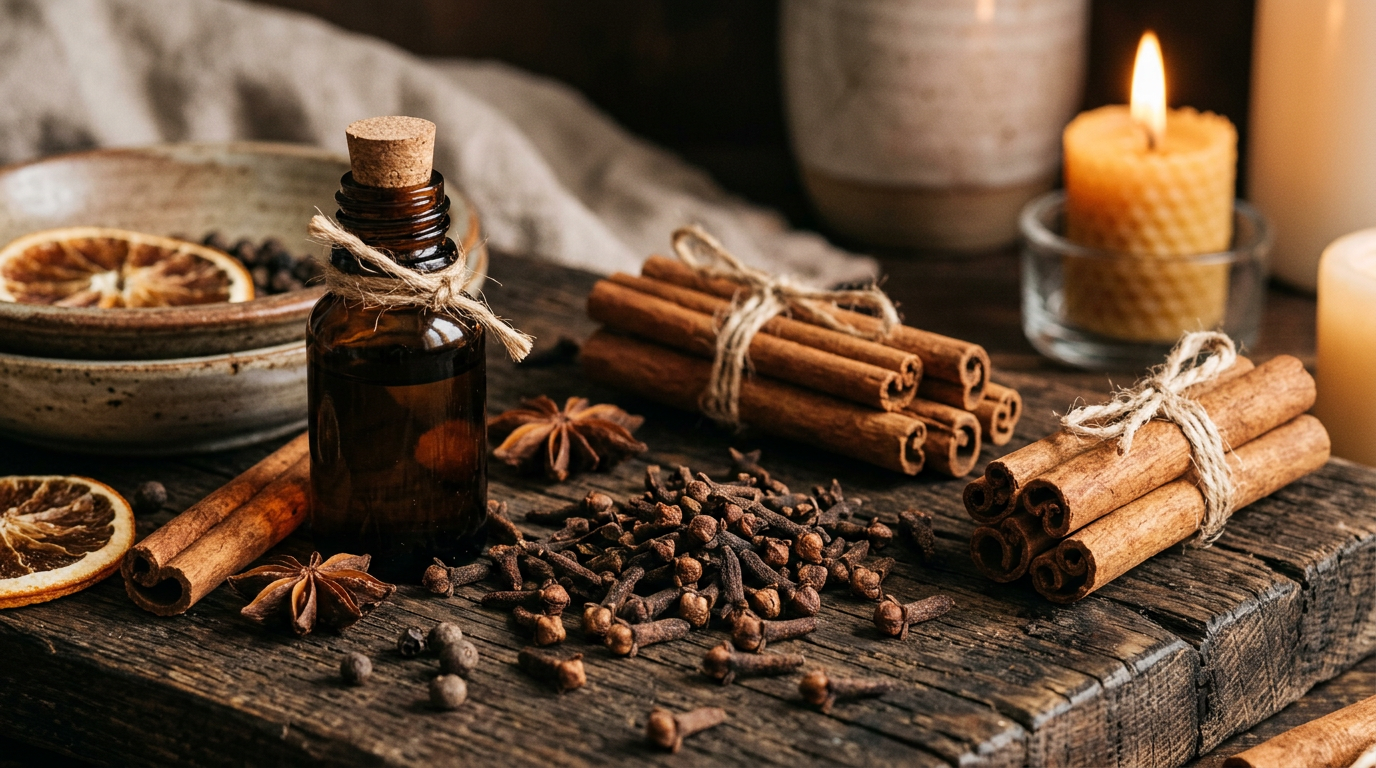
Clove Oil FAQ: 25 Common Questions About This Spicy Classic, Answered
Clove essential oil has been traded, prized, and debated for centuries. It shows up in spice markets, apothecary lore, holiday potpourri, and modern aromatherapy diffusers alike. With that long history comes a lot of questions. This clove oil FAQ gathers the most common clove oil questions we hear and answers them plainly, honestly, and with your safety in mind.
Whether you just bought your first bottle or you've been using clove oil for years, there's likely something here worth knowing. Let's get into it.
The Basics: What Clove Oil Actually Is
1. What is clove essential oil?
Clove essential oil is a concentrated aromatic extract derived from the Syzygium aromaticum tree, native to the Maluku Islands of Indonesia. The oil is extracted by steam distillation and carries the same warm, spicy scent you know from whole cloves in the kitchen. For a deeper look at the plant and its history, see our complete guide to Syzygium aromaticum.
2. What parts of the clove plant are used to make the oil?
Three parts of the clove tree yield essential oil: the buds, the leaves, and the stem. Bud oil is the most prized grade, with a cleaner, rounder scent and higher eugenol content. Leaf and stem oils are less expensive and more commonly used in industrial applications. Most quality aromatherapy products use clove bud oil.
3. What does clove essential oil smell like?
Think of the inside of a jar of whole cloves: warm, spicy, slightly sweet, with a faint woodsy undercurrent. Clove bud oil smells brighter and cleaner than stem or leaf oil, which tend toward a sharper, more medicinal edge. It blends beautifully with citrus oils, vanilla-forward bases, and earthy roots like vetiver.
4. What is eugenol and why does it matter?
Eugenol is the primary naturally occurring compound in clove bud oil, typically making up 70 to 90 percent of the total composition. It's responsible for the characteristic spicy scent. Some research observes that eugenol has interesting properties worth studying further, though applying those findings to everyday oil use requires caution and context.
5. Is clove oil the same as clove bud oil?
In most retail and aromatherapy contexts, yes. When a label simply says "clove essential oil," it almost always refers to bud oil. If you're buying from a supplier who lists clove leaf or clove stem oil separately, pay attention to which you're purchasing. They smell noticeably different and have different cost profiles.
Sourcing and Quality: How to Buy Well
6. Where does the best clove oil come from?
Indonesia remains the world's largest clove producer, particularly from the Maluku (Spice Islands) region and Zanzibar. Madagascar also produces well-regarded bud oil. Origin matters, but farming practices, harvest timing, and distillation quality all play a role too. A good supplier will share that information openly.
7. What should I look for on a clove oil label?
Look for the Latin name (Syzygium aromaticum), the plant part used (bud, leaf, or stem), the country of origin, and the extraction method (steam distillation). A GC/MS (gas chromatography/mass spectrometry) test report from a third-party lab is the gold standard for verifying purity. Reputable brands make these reports accessible.
8. Why does some clove oil cost so much more than others?
Clove bud oil requires more plant material and careful distillation compared to leaf oil, which drives up cost. Price differences also reflect testing practices, ethical sourcing relationships, and whether the supplier is selling a pure oil or a blend. Suspiciously cheap clove oil sometimes turns out to be diluted or made from lower-grade parts.
9. Can I trust "100% pure" claims on the label?
The phrase "100% pure" is unregulated in the essential oil industry, so it's not a guarantee on its own. Pair that claim with third-party GC/MS testing data, transparent sourcing information, and a company with a clear returns policy. Our article on clove oil myths and facts covers common sourcing misconceptions in more detail.
10. Does organic certification matter for clove oil?
Organic certification adds a meaningful layer of verification, especially for a crop grown in regions with varying agricultural standards. That said, some small farms follow clean growing practices without the resources to pursue certification. When in doubt, ask the supplier directly about pesticide testing in their GC/MS reports.
Safety: The Questions That Really Matter
11. Is clove oil safe to use on skin?
Clove oil is among the more potent essential oils and requires careful dilution before any skin contact. Undiluted ("neat") application can cause significant skin irritation or sensitization. Always dilute in a carrier oil and perform a patch test on a small area of skin before broader use. If irritation occurs, discontinue use and consult a healthcare provider.
12. What is the correct dilution ratio for clove oil?
Most aromatherapy guidelines recommend no more than 0.5 percent dilution for leave-on skin applications. That works out to roughly 3 drops of clove oil per 100 ml (about 3.4 oz) of carrier oil. For brief, rinse-off uses, slightly higher dilutions are sometimes cited, but clove oil's high eugenol content makes a conservative approach the wisest starting point. Always consult a qualified aromatherapist or healthcare provider if you're unsure.
13. What is a patch test and how do I do one?
A patch test involves applying a small amount of your diluted oil to the inside of your elbow or wrist, covering it lightly, and waiting 24 to 48 hours to check for redness, itching, or swelling. If any reaction occurs, don't use that blend on larger skin areas. It's a small step that prevents a lot of discomfort.
14. Is clove oil safe for children?
Clove oil is generally not recommended for use on or around young children, particularly infants and toddlers. The high eugenol content makes it especially intense for sensitive systems. Keep bottles stored out of reach, avoid diffusing in enclosed spaces with young children, and always consult a pediatric healthcare provider before introducing any essential oil into a child's environment.
15. Is clove oil safe during pregnancy?
Pregnancy calls for extra caution with essential oils generally, and clove oil is considered one to avoid during this time due to its potency. Please consult your OB, midwife, or a qualified healthcare provider before using clove oil while pregnant or nursing. This is not an area to navigate by general internet advice alone.
16. Can clove oil be ingested?
Internal use of essential oils is a specialized area with real risks, and it falls outside the scope of general aromatherapy guidance. Some practitioners with advanced training do work with internal applications, but this is never a DIY starting point. Do not ingest clove oil without direct guidance from a qualified healthcare provider familiar with essential oil pharmacology.
17. Are there people who should avoid clove oil entirely?
People with known sensitivities to eugenol (sometimes identified through dental product reactions) should avoid clove oil. Those on blood-thinning medications should also consult a healthcare provider, as some preliminary research observations suggest eugenol may have relevant properties. When in doubt, ask your doctor or pharmacist before starting use.
Using Clove Oil at Home: Practical Questions
18. How do I use clove oil in a diffuser?
Add 2 to 3 drops of clove bud oil to your diffuser per 100 ml of water. Clove oil is potent, and more is not better here. Diffuse in short sessions (30 to 60 minutes) with good ventilation rather than running it continuously in a closed room. It layers wonderfully with sweet orange, frankincense, or cedarwood for a warm seasonal atmosphere.
19. What does clove oil blend well with?
Clove bud oil is a natural fit for warm, spicy, or woody blends. It pairs especially well with sweet orange, bergamot, cinnamon bark, black pepper, ylang ylang, and sandalwood. In perfumery, it's often used as a heart note to add depth. Start with small amounts since its scent can easily dominate a blend.
20. Can I use clove oil in homemade cleaning products?
Clove oil shows up in many DIY cleaning blends, typically combined with water, white vinegar, and other essential oils for a spiced seasonal scent. Keep in mind that scent and cleaning efficacy are separate things: clove oil adds a lovely aroma to a surface spray but is not a substitute for proven sanitizing agents where hygiene is critical. For creative home uses beyond cleaning, our 20 warm and spicy ideas for home and hobby is a good place to browse.
21. How do I use clove oil for a cozy seasonal atmosphere?
A few drops on a diffuser, a simmering pot of water with whole cloves, or a drop tucked into a sachet all bring that warm spice-market feeling into a room. Clove oil also works beautifully in DIY soy candles and reed diffuser blends when properly incorporated at the right fragrance load. It's one of those scents that signals comfort and seasonal ritual almost instantly.
22. Can I add clove oil to a bath?
Bath use requires careful preparation. Essential oils do not disperse in water on their own, so clove oil can pool and come into direct, undiluted contact with sensitive skin if you simply drop it in the tub. Always pre-dilute in a carrier oil or an unscented bath dispersant before adding to bathwater, and use no more than 1 to 2 drops total given clove's potency. Avoid this use entirely if you have sensitive skin.
23. How should I store clove essential oil?
Store clove oil in a tightly sealed amber or dark glass bottle, away from light, heat, and humidity. A cool, dark cupboard or drawer works well. Properly stored, clove bud oil typically retains its quality for two to three years. If the scent shifts to something flat or sharp in an unpleasant way, it's likely oxidized and should be replaced.
Common Misconceptions
24. Is clove oil the same thing as clove extract or clove fragrance oil?
No, and the differences matter. Clove essential oil is a pure steam-distilled botanical extract. Clove fragrance oils are synthetic or semi-synthetic aroma compounds designed to mimic the scent, without the same natural composition. Clove extract (the kind used in food) is typically in an alcohol base and is not appropriate for aromatherapy use. For a full breakdown of what clove oil is and is not, see the complete Syzygium aromaticum guide.
25. Do I need to worry about the myths and exaggerated claims around clove oil?
Yes, a healthy skepticism is useful. Clove oil has a genuine and interesting history, and some research observes notable properties worth following. But the wellness space sometimes amplifies claims beyond what the evidence currently supports. Our clove oil myths and facts article separates the well-documented from the overblown so you can make informed decisions.
A Few Final Notes on Using This FAQ
These clove essential oil basics are a starting point, not a finishing line. Individual responses to essential oils vary considerably, and the information here is educational rather than personalized advice. If you have specific health conditions, take medications, or are pregnant, please bring any essential oil questions to a qualified healthcare provider before making changes to your routine.
Clove oil rewards the curious and the careful. Learn its history, respect its potency, source it well, and it becomes one of the most satisfying oils in any collection.