Clove Oil Uses: 20 Warm and Spicy Ideas for Home and Hobby
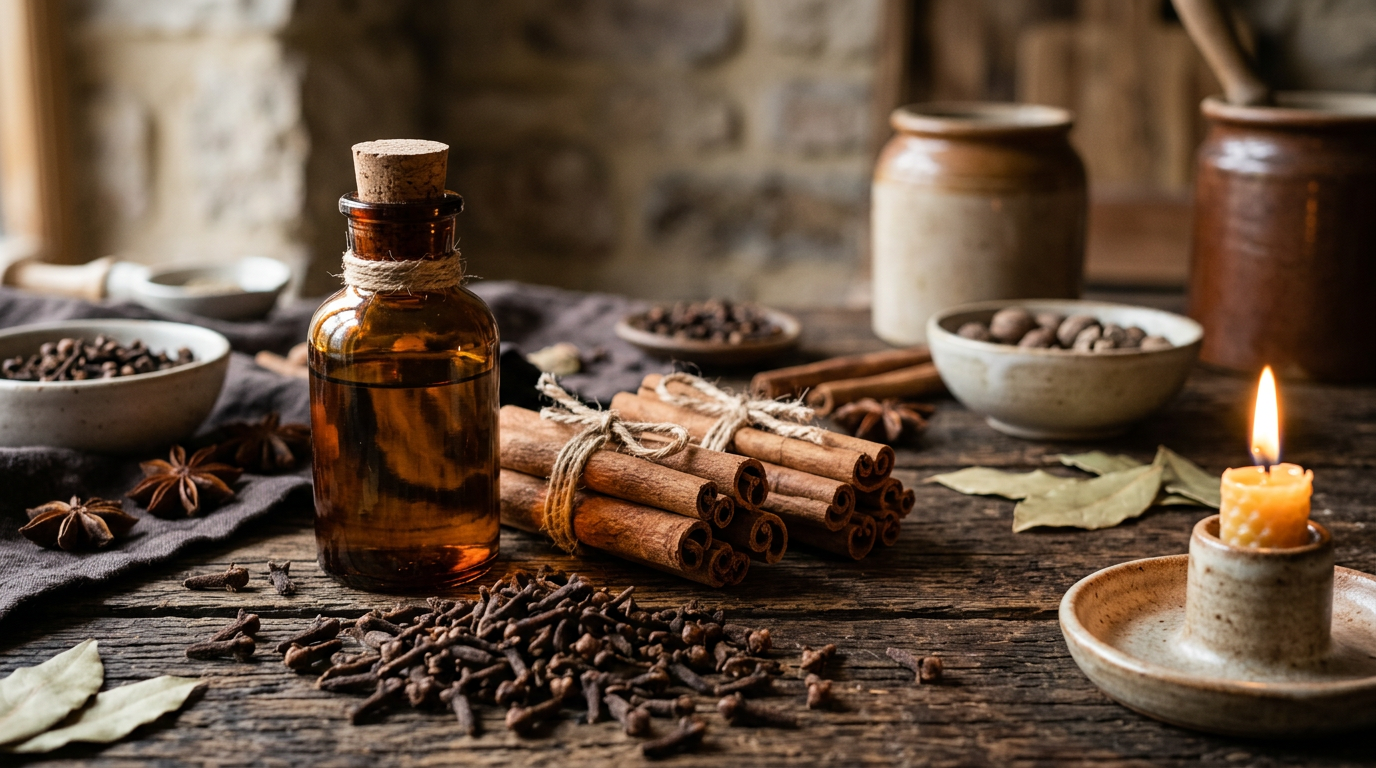
There is something about clove oil that feels like a story. It traveled ancient trade routes, perfumed the holds of merchant ships, and arrived in European kitchens long before most other spices did. Today, a small brown bottle of clove essential oil carries all of that history into your home, and it turns out the oil is remarkably versatile. If you have ever picked up a bottle and wondered what to do with clove oil beyond a vague sense that it smells wonderful, this list is for you.
Before diving in, one important note. Clove essential oil is one of the more potent oils in any collection. Its main constituent, eugenol, is present in concentrations that can irritate skin if the oil is used undiluted. Always dilute properly before any topical application, and check out our detailed guide on how to dilute clove oil and why this strong oil needs extra care before you start experimenting. With that foundation in place, here are 20 genuinely useful and creative clove essential oil applications to explore.
1. Autumn Diffuser Blends
Clove oil is a natural anchor for fall diffuser blends. Its deep, spicy warmth layers beautifully with sweet orange, cinnamon bark, and a drop or two of cedarwood. The result is something close to a baked apple scent that fills a room without any candle or potpourri required.
A simple starting ratio is 2 drops clove, 3 drops sweet orange, and 2 drops cinnamon leaf in a 100ml ultrasonic diffuser. Run it for 30-minute intervals rather than continuously, which helps the scent stay interesting rather than fading into the background of the room.
Practical takeaway: Build your blend in small batches in a dark glass rollerball bottle so you can add drops directly to the diffuser each session without measuring every time.
2. Homemade Potpourri Booster
Dried potpourri loses its scent within a few weeks. A drop of clove oil applied to a small wooden ornament or a dried orange slice tucked into the bowl revives the whole arrangement. The oil bonds to porous surfaces and releases slowly over several days.
This trick works especially well with traditional dried spice potpourri containing whole cloves, star anise, and nutmeg. The essential oil essentially echoes the natural scent already present in the mix, so nothing smells out of place or artificial.
Practical takeaway: Use a toothpick to apply a tiny, precise drop of oil to a single dried piece rather than drizzling across the whole bowl. This avoids over-scenting and keeps the mix looking tidy.
3. DIY Sachets for Drawers and Closets
Fabric sachets scented with clove oil are a classic wardrobe freshener. Fill a small muslin bag with dried lavender, cedar shavings, or dried rose petals. Add two drops of clove oil to the mixture and tie the bag closed. Tuck it among your sweaters or linens.
The spicy, warm scent of clove blends surprisingly well with lavender in a sachet context. The combination feels less "herbal" than lavender alone and adds a cozy, spice-market character to the drawer each time you open it.
Practical takeaway: Refresh the sachet every three to four weeks with one new drop of oil applied to the outside of the muslin rather than reopening the bag.
4. Scented Soy Candle Making
If candle making is your hobby, clove oil opens up some exciting fragrance territory. It blends well with vanilla essential oil (or fragrance oil), frankincense, and bergamot. The combination produces a candle that smells like a warm library on a cold afternoon.
A few technical notes for candle makers: clove essential oil has a relatively low flash point compared to some fragrance oils, so use it at cooler pour temperatures (around 120 to 125 degrees Fahrenheit for soy wax) and keep the fragrance load at or below 6 percent of the wax weight. This helps preserve the scent and reduces the risk of the oil evaporating before the wax solidifies.
Practical takeaway: Test small batches first. Clove oil can accelerate trace in cold process soap and can occasionally affect wax adhesion in candles, so a 4-ounce test pour before a full batch saves time and materials.
5. Reed Diffuser Oil Base
Commercial reed diffuser liquids often use synthetic fragrance. Making your own with clove essential oil gives you a natural alternative with far more character. Combine clove oil with a carrier such as fractionated coconut oil or dipropylene glycol (a commonly used, cosmetic-grade diffuser solvent) at a ratio of roughly 20 to 30 drops of essential oil per 100ml of carrier.
Clove works particularly well in reed diffusers because its heavier molecular weight means it diffuses steadily rather than burning off quickly like citrus oils tend to do. A reed diffuser with a clove and sandalwood blend in an entryway creates a genuinely welcoming first impression.
Practical takeaway: Flip the reeds every two to three days for the first week to establish the scent, then once a week after that to maintain it.
6. Spiced Room Spray
A room spray is one of the fastest clove oil uses to put together. Combine 10 to 15 drops of clove oil with 5 drops of cardamom, 5 drops of black pepper, and 80ml of water plus 20ml of high-proof vodka or witch hazel in a 100ml glass spray bottle. Shake before each use.
The alcohol helps the oil disperse into the water instead of floating on top, which gives you a more even mist. This kind of spice-forward room spray works beautifully in kitchens before cooking or as a linen spray for living room cushions on a crisp evening.
Practical takeaway: Store the spray away from direct sunlight and use within four to six weeks since water-based blends are more susceptible to microbial growth than pure oil blends.
7. Beeswax Wood Polish
Clove oil has a long history as a wood care addition. Crafters who make their own beeswax furniture polish sometimes add a small amount of clove essential oil to the blend. It contributes a warm, antique-shop scent and may help the polish feel more substantial on the nose than plain beeswax alone.
A basic recipe involves melting 30 grams of beeswax with 100ml of a light carrier oil such as jojoba or sweet almond. Once cooled to a soft solid, stir in 10 drops of clove oil and 10 drops of lemon essential oil. Apply to wooden furniture with a soft cloth and buff to a low sheen.
Practical takeaway: Always test on an inconspicuous area first. Some finishes, particularly lacquer or water-based varnishes, may react with oil-based polishes.
8. Scented Modeling Clay Projects
Craft enthusiasts who work with air-dry or homemade salt-dough clay can add a drop of clove oil to the dough for scented ornaments. Holiday ornaments, spice-scented drawer pulls, or fragrant beads for a necklace all take on a subtle warmth from a small amount of oil worked into the clay.
Because the clay surrounds and encapsulates the oil, the scent releases slowly over months. A few drops of clove and a few drops of cinnamon leaf in a batch of salt dough makes ornaments that still carry a faint spice note the following year when you unpack the holiday decorations.
Practical takeaway: Add oil at the end of the mixing process rather than at the start. This prevents it from evaporating during the kneading stage and distributes the scent more evenly.
9. Simmer Pot Fragrance
A simmer pot is one of the most comforting and low-tech home scenting methods around. Fill a small saucepan with water, add a few whole cloves, a cinnamon stick, and two or three drops of clove essential oil. Set it on the lowest burner setting and let the steam carry the scent through the kitchen.
The essential oil amplifies the natural scent of the whole spices, creating a layered fragrance that smells genuinely like something is baking. Never leave a simmer pot unattended, and top up the water regularly so the pot does not run dry.
Practical takeaway: Add the clove oil drops at the beginning rather than after the water heats up. Hot water causes oils to volatilize faster, so starting cool gives you a longer-lasting scent experience.
10. Scented Drawer Liners
Unscented kraft paper or plain shelf liner paper can be transformed into scented drawer liners with a few drops of clove oil. Apply the drops to the underside of the paper and let it dry for 24 hours before placing it in the drawer, linen closet, or pantry shelf.
The scent lasts surprisingly long on paper. Some crafters dilute the clove oil in a small amount of isopropyl alcohol first and spray it over the paper with a small misting bottle for a more even distribution. Either method works well.
Practical takeaway: Clove oil can leave a faint oil mark on some papers. Applying it to the underside keeps the top surface of the liner looking clean and unmarked.
11. Candle Ring and Wreath Scenting
Decorative dried-herb wreaths and candle rings made from rosemary, bay leaves, and dried citrus can be refreshed or enhanced with clove oil. A few drops applied with a small paintbrush to the denser, more porous parts of the wreath give the piece a warm, spiced dimension.
This works especially well for wreaths that are displayed near a heat source such as a mantelpiece or a warm entryway. Gentle ambient warmth helps the oil release slowly into the surrounding air, turning the wreath into a passive scent diffuser.
Practical takeaway: Apply oil to the back or inner sections of the wreath so the visible front of the arrangement stays looking fresh and dry.
12. Massage Oil Blend (With Careful Dilution)
Clove oil is occasionally added to massage carrier blends for its warming character. This application requires strict attention to dilution. Because clove oil is so potent, a safe dilution for occasional adult use is typically no more than 0.5 percent, which works out to roughly 1 drop per 10ml of carrier oil. Even at this low concentration, some people may find it warming on the skin.
It pairs well with ginger, black pepper, and a base of sweet almond or jojoba oil for a spiced, warming blend. Always perform a patch test on a small area of skin and wait 24 hours before broader application. This application is not suitable for children, people with sensitive skin, or during pregnancy. Consult a qualified healthcare provider before using any essential oil topically.
Practical takeaway: Read our full guide on how to dilute clove oil before preparing any topical blend. The math is straightforward, but the margin for error with this particular oil is small.
13. Spiced Bath Salts
Bath salts scented with clove oil make a popular handmade gift. Combine 2 cups of Epsom salt with 1 cup of sea salt, 2 tablespoons of fractionated coconut oil, and 5 to 8 drops of clove oil (with a complementary oil such as sweet orange or ylang ylang to round out the scent). Mix well and store in a sealed glass jar.
The carrier oil in the recipe helps the essential oil bind to the salt crystals rather than pooling at the bottom of the jar. When the salts dissolve in a warm bath, the oil disperses more evenly through the water. Always rinse the tub afterward since oil residue can make the surface slippery.
Practical takeaway: Clove oil is not recommended for bath use by those with sensitive skin. Keep dilution low and skip this application if you have any skin concerns. Again, patch testing and a conversation with a healthcare provider are wise steps before new topical experiments.
14. Scented Bookmarks and Paper Crafts
Paper crafters and journaling enthusiasts can add a tiny drop of clove oil to heavyweight cardstock, watercolor paper, or leather bookmarks. The oil soaks in slowly and leaves a lasting scent that makes flipping through a book or journal a sensory experience.
This is a genuinely charming application for handmade card makers who want their work to stand out. A faintly spiced card in a winter holiday envelope feels intentional and distinctive without requiring any additional design work.
Practical takeaway: Apply the drop to the back of the paper and press between sheets of plain paper for 30 minutes to blot excess oil. This prevents tide marks on the decorated front surface.
15. Natural Moth-Deterrent Sachets
Whole cloves have been used in wardrobes for generations as a moth deterrent, and clove essential oil amplifies this traditional practice. Combine clove oil with cedar essential oil and lavender on small cotton pads. Place the pads inside muslin bags and hang them in closets or tuck them into storage boxes with off-season woolens.
The combination of scents from these three oils appears to be less appealing to common clothes moths than single-scent applications, based on the logic that the overlap of strong aromatic compounds creates a more deterrent environment. This is a supportive measure for stored clothing, not a replacement for proper storage practices such as clean garments and sealed containers.
Practical takeaway: Refresh the cotton pads every four to six weeks. Scent fades faster in small enclosed spaces with fluctuating temperatures.
16. Scented Ink for Journaling
This is a niche but delightful application for fountain pen enthusiasts and journal keepers. A single drop of clove essential oil added to a small bottle of non-reactive ink (typically water-based dip pen inks work better than fountain pen inks for this experiment) can add a faint scent to written pages.
Test the oil's effect on the ink before committing to a full bottle. Some inks may change viscosity slightly with the addition of oil. The goal is a subtle aromatic note on the page, not an overpowering smell. Think of it as a personal, invisible signature on handwritten letters or journal entries.
Practical takeaway: Start with one small drop in a tiny ink sample (5ml or less) and test on scrap paper before adding it to your main ink bottle.
17. Scented Firelighters and Kindling Bundles
Tied bundles of dried rosemary, pinecones, and wood shavings make excellent natural firelighters for a wood-burning fireplace or fire pit. Adding two to three drops of clove oil to the bundle before it dries gives the first moments of a fire a warm, spiced fragrance that carries into the room.
Let the oiled bundles dry completely for at least 48 hours before use. The goal is to have the oil absorbed and set into the dry material rather than sitting on the surface, where it could create a brief flare when ignited. Always follow safe fireplace practices.
Practical takeaway: Wrap the bundles loosely in unbleached twine rather than synthetic string. Natural materials burn cleanly; synthetic ones do not.
18. Spiced Holiday Gift Wrap
Here is a genuinely simple and impressive wrapping table idea. Before wrapping holiday gifts, lightly mist plain kraft paper with a clove and orange room spray (see idea 6 above). Let the paper dry for 20 minutes before wrapping. The finished package carries a faint, warm scent that the recipient notices the moment they pick it up.
This works especially well for gifts destined for people who appreciate sensory details: bakers, gardeners, candle lovers, and anyone who describes their ideal home as "cozy." The scented paper elevates inexpensive kraft wrapping into something that feels considered and handcrafted.
Practical takeaway: Spray lightly. Too much oil can leave visible marks on kraft paper and may affect adhesive tape. A light mist from about 30cm away is plenty.
19. Linen Spray for Seasonal Bedding
Autumn and winter bedding, from thick duvet covers to flannel pillowcases, takes on a wonderful character with a light clove-and-vanilla linen spray. Use the basic room spray formula from idea 6, adjusting the blend toward warmer, softer notes by swapping cardamom for vanilla essential oil (or a small amount of vanilla fragrance oil).
Spray the bedding lightly and let it air dry completely before making the bed. Spraying damp fabric onto pillowcases and allowing them to dry in a warm room also helps the scent set into the fibers rather than just sitting on the surface.
Practical takeaway: Avoid spraying directly onto delicate or dry-clean-only fabrics. Test on an inconspicuous corner of any fabric before using the spray widely.
20. Personalizing Your Scent Story
One of the most rewarding clove essential oil applications is learning to blend it into a personal signature scent. Clove sits in the spice note family but has facets that shift depending on what it is paired with. With citrus, it smells like mulled wine. With florals such as geranium or ylang ylang, it becomes unexpectedly sophisticated. With resins like frankincense or myrrh, it goes deep and almost meditative.
If you are new to the oil, start by reading about what clove oil smells like and how its warm, spicy scent profile works in combination with other notes. Then, once you understand the oil's character, build your own blend journal. Note your ratios, your reactions, and the seasonal associations you form. Scent has a powerful relationship with memory, and a personally developed clove blend becomes something genuinely your own.
If you want to go deeper into the oil's origins, harvesting methods, and quality grades before you invest in a larger bottle, the complete guide to clove oil and Syzygium aromaticum covers everything worth knowing before you shop.
Practical takeaway: Keep a dedicated notebook for blending experiments. Write down every ratio, every oil used, and your honest first impression. Your future self will thank you when you want to recreate that perfect autumn diffuser blend from three seasons ago.
A Few Words Before You Start Experimenting
Clove essential oil is genuinely one of the more exciting oils to work with, but it earns its reputation as a strong oil. Keep dilutions conservative, always patch test before any topical application, and store your oil in a dark glass bottle away from heat and light to preserve its quality.
If you are pregnant, nursing, managing a health condition, or taking any medications, speak with a qualified healthcare provider before using clove essential oil in any topical or inhalation application. These 20 ideas are a starting point for exploration, not a formula. The best clove oil use is always the one that suits your home, your habits, and your personal sense of what "cozy" means.
Clove oil has been a kitchen and home staple across cultures for centuries. The modern bottle on your shelf is the latest chapter in a very long story. Make it a good one.