
How to Dilute Clove Oil: Why This Strong Oil Needs Extra Care
Clove oil is one of the boldest oils in any collection. It carries a deep, smoky warmth that fills a room almost instantly, and its rich eugenol content makes it noticeably more potent than lavender or sweet orange. That potency is exactly what makes it worth using. It is also exactly what makes proper dilution non-negotiable.
If you have ever applied a concentrated essential oil directly to your skin and felt a sharp, unwelcome burn, there is a good chance clove was involved. This guide walks you through the correct clove oil dilution ratio for different purposes, which carrier oils pair best with it, and the step-by-step process for blending safely at home. Whether you are making a massage oil, a room spray, or a seasonal diffuser blend, the principles are the same: go slow, dilute well, and test before you commit.
New to this oil entirely? Start with our complete guide to Syzygium aromaticum before diving in here.
Why Clove Oil Requires a Lower Dilution Than Most Oils
Most essential oils are used at a 2% to 3% dilution for adults. Clove sits in a different category. Aromatherapy educators and safety researchers generally recommend keeping clove oil at or below 0.5% for leave-on skin products, and no higher than 1% for short-contact applications. The reason is eugenol, the primary compound in clove bud oil, which makes up roughly 70% to 90% of its chemical profile.
Eugenol is what gives clove its characteristic heat. On the skin, undiluted eugenol is a known sensitizer. Repeated exposure at high concentrations can cause a progressively stronger reaction over time, even in people who showed no irritation at first. Once sensitization occurs, it tends to be permanent. Avoiding that outcome is simple: dilute properly from the very first use.
For a fuller picture of clove's scent profile and why the chemistry matters, see our article on what clove oil smells like.
Materials You Will Need
Gathering your materials before you start makes the process smoother and reduces the chance of measuring errors. Here is what to have on hand:
- Clove bud essential oil (steam-distilled, from a reputable supplier with GC/MS testing available)
- A carrier oil (see the section below for choosing the right one)
- Small glass measuring beaker or shot glass (at least 30 ml capacity)
- Dropper or pipette (calibrated droppers make small measurements far more accurate)
- A clean glass stirring rod or small spoon
- Amber or dark glass storage bottle (30 ml or 60 ml flip-top or dropper bottle)
- Labels and a marker (always label your blends with the date and dilution percentage)
- Notebook (track your ratios so you can repeat or adjust them later)
Avoid plastic containers for mixing or storage. Eugenol can degrade certain plastics over time and may absorb into them, weakening your blend.
Choosing Your Carrier Oil
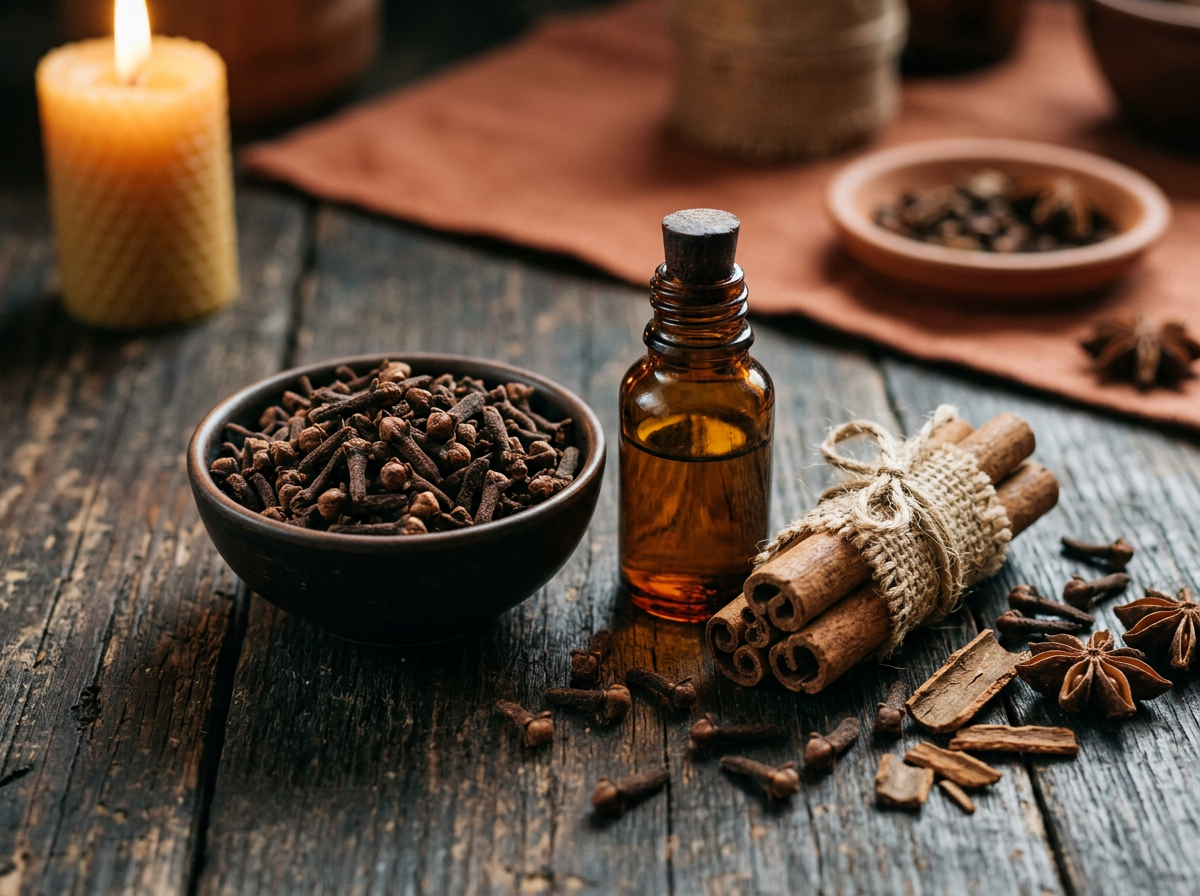
The carrier oil you choose affects more than just safety. It shapes the texture, the absorption rate, the shelf life of your blend, and how the scent of clove comes through on the skin. Here is a quick comparison of the most popular options for clove oil dilution:
| Carrier Oil | Texture | Shelf Life | Best For | Notes with Clove |
|---|---|---|---|---|
| Fractionated Coconut Oil | Very light, non-greasy | 2+ years | Everyday skin blends, roller bottles | Odorless base lets clove shine; resists rancidity |
| Jojoba Oil | Medium, silky | 2+ years (technically a wax ester) | Face and neck applications | Very stable; blends smoothly with spice oils |
| Sweet Almond Oil | Medium | 12 to 18 months | Massage blends | Slight nutty scent; avoid if nut allergies are a concern |
| Grapeseed Oil | Light | 6 to 12 months | Body oils, short-use blends | Affordable but oxidizes faster; store in the refrigerator |
| Sunflower Oil | Light to medium | 12 months | General body use | Good budget option; neutral scent |
For beginners, fractionated coconut oil is the easiest starting point. It has an almost indefinite shelf life, zero scent of its own, and a light texture that most skin types tolerate well.
Clove Oil Dilution Ratios: A Quick Reference
Before the step-by-step instructions, it helps to know your target dilution. The standard rule used by professional aromatherapists is to keep clove at 0.5% or below for products that stay on the skin. Here is how that translates into drops per ounce of carrier oil:
- 0.5% dilution (recommended maximum for leave-on skin use): 3 drops of clove oil per 1 oz (30 ml) of carrier oil
- 1% dilution (short-contact or rinse-off applications only): 6 drops per 1 oz (30 ml)
- For diffusing: 1 to 2 drops of clove in a standard 100 ml ultrasonic diffuser, blended with other oils. Clove is powerful and should not be diffused solo at full capacity.
- For room sprays (water-based): 10 to 15 drops total essential oil per 2 oz (60 ml) of distilled water plus a dispersant. Clove should make up no more than 1 to 2 of those drops.
These numbers assume use by a healthy adult. Children, older adults, pregnant or nursing individuals, and anyone with sensitive skin should use lower concentrations or avoid topical use entirely. Always consult a qualified healthcare provider before using clove oil on or around children or during pregnancy.
Step-by-Step: How to Dilute Clove Oil for Skin Use

-
Step 1: Decide on Your Batch Size
Start small. A 30 ml (1 oz) bottle is an ideal first batch. It gives you enough product to evaluate how you like the blend without committing to a large quantity. If anything feels off during patch testing, you have not wasted much material.
-
Step 2: Calculate Your Drops
For a 0.5% dilution in 30 ml, you need 3 drops of clove bud oil. Write this down before you start measuring. Small numbers are easy to lose track of mid-process, especially if you are blending with multiple oils.
-
Step 3: Measure Your Carrier Oil
Pour 30 ml of your chosen carrier oil into a clean glass beaker. Use a proper measuring tool rather than estimating. Getting the carrier volume right is just as important as counting drops accurately, because the ratio depends on both numbers being correct.
-
Step 4: Add the Clove Oil
Using a calibrated dropper or pipette, add 3 drops of clove bud essential oil directly into the carrier oil. Count slowly and out loud. If you lose count, start over. Three drops looks like almost nothing. That is the point.
-
Step 5: Stir Gently
Use a clean glass rod to stir the blend in slow circles for about 30 seconds. Essential oils and carrier oils mix well without much effort, but a brief stir ensures even distribution before you bottle the blend.
-
Step 6: Transfer to Your Storage Bottle
Pour or pipette your diluted blend into a labeled amber glass bottle. Write the date, the oil, and the dilution percentage on the label. Store in a cool, dark location away from direct sunlight and heat sources. Properly stored blends made with fractionated coconut oil or jojoba typically stay fresh for 12 to 24 months.
-
Step 7: Perform a Patch Test
Before applying the blend to a larger area, apply a small amount (roughly the size of a dime) to the inside of your forearm. Leave it uncovered for 24 hours. If you notice redness, itching, or irritation, wash the area with soap and water and do not proceed with that formula. A patch test is not optional when working with spice oils. For more detail on this process, see our guide to clove oil safety basics.
Common Mistakes to Avoid
Using an Uncalibrated Dropper
Not all droppers dispense the same drop size. An essential oil dropper and a cooking dropper can produce drops that differ by as much as 30% in volume. Use a dropper calibrated for essential oils, or better yet, a micro-pipette if you are making small batches frequently.
Eyeballing the Carrier Volume
Pouring carrier oil into a bottle by eye almost always results in inaccurate ratios. A beaker or measuring cylinder costs just a few dollars and removes that guesswork entirely.
Assuming More Means Better
With clove oil, a stronger concentration does not produce a proportionally stronger result. The eugenol in clove is highly volatile and bioavailable. Three drops in 30 ml is enough to produce a noticeable warmth. Doubling it dramatically increases irritation risk without offering meaningful added benefit.
Skipping the Patch Test
It is easy to skip this step when you are excited to use a new blend. Do not. Sensitization reactions can be delayed by up to 24 hours, and skipping the patch test on a spice oil is one of the more common ways people develop lasting sensitivities.
Storing Blends in Plastic
As noted earlier, eugenol interacts with many types of plastic. Even if the bottle appears intact, the integrity of the blend may be compromised. Dark glass is the right choice every time.
Using Clove Leaf or Clove Stem Oil Interchangeably with Clove Bud
These are not the same oil. Clove leaf oil contains significantly higher eugenol concentrations than bud oil and is considered more irritating. Clove stem oil falls somewhere in between. If you are working from a guide or recipe, confirm which part of the plant was used to produce your oil. Dilution ratios written for bud oil are not automatically safe for leaf oil at the same percentage.
Using Diluted Clove Oil in a Diffuser Blend
Diffuser blends work differently from skin applications. You are not calculating a percent dilution the same way. Instead, you are working with total drops in a water reservoir. For a 100 ml diffuser, most blends use 5 to 8 drops of essential oil total. Clove should make up only 1 or 2 of those drops at most.
A simple seasonal diffuser blend that allows clove to contribute warmth without overpowering the room:
- 2 drops sweet orange
- 2 drops cedarwood
- 1 drop clove bud
Diffuse for 30 to 60 minutes at a time with breaks in between, and always ventilate the room. People with respiratory sensitivities, as well as pets, may find concentrated spice oil diffusion irritating. See our safety guide for more on using clove oil around animals.
What to Expect from a Well-Diluted Clove Blend
A correctly diluted clove oil blend in a carrier oil carries a warm, gently spiced scent that stays close to the skin rather than announcing itself across the room. Applied to the wrists or chest, people often describe it as grounding and cozy. Some report that it makes a pleasing addition to an evening wind-down routine, particularly in the cooler months when that spice-trade warmth feels most welcome.
You may notice a mild, pleasant warmth on the skin after application. That is normal at low dilutions. A stinging or burning sensation is not normal and signals that the concentration is too high or that your skin is reacting to the eugenol. Wash off immediately with soap and water if that occurs.
With the right ratio, the right carrier, and a proper patch test behind you, clove oil becomes one of the more satisfying additions to a home aromatic routine. Take the few extra minutes to measure carefully. The oil rewards patience with a scent that is genuinely hard to replicate.