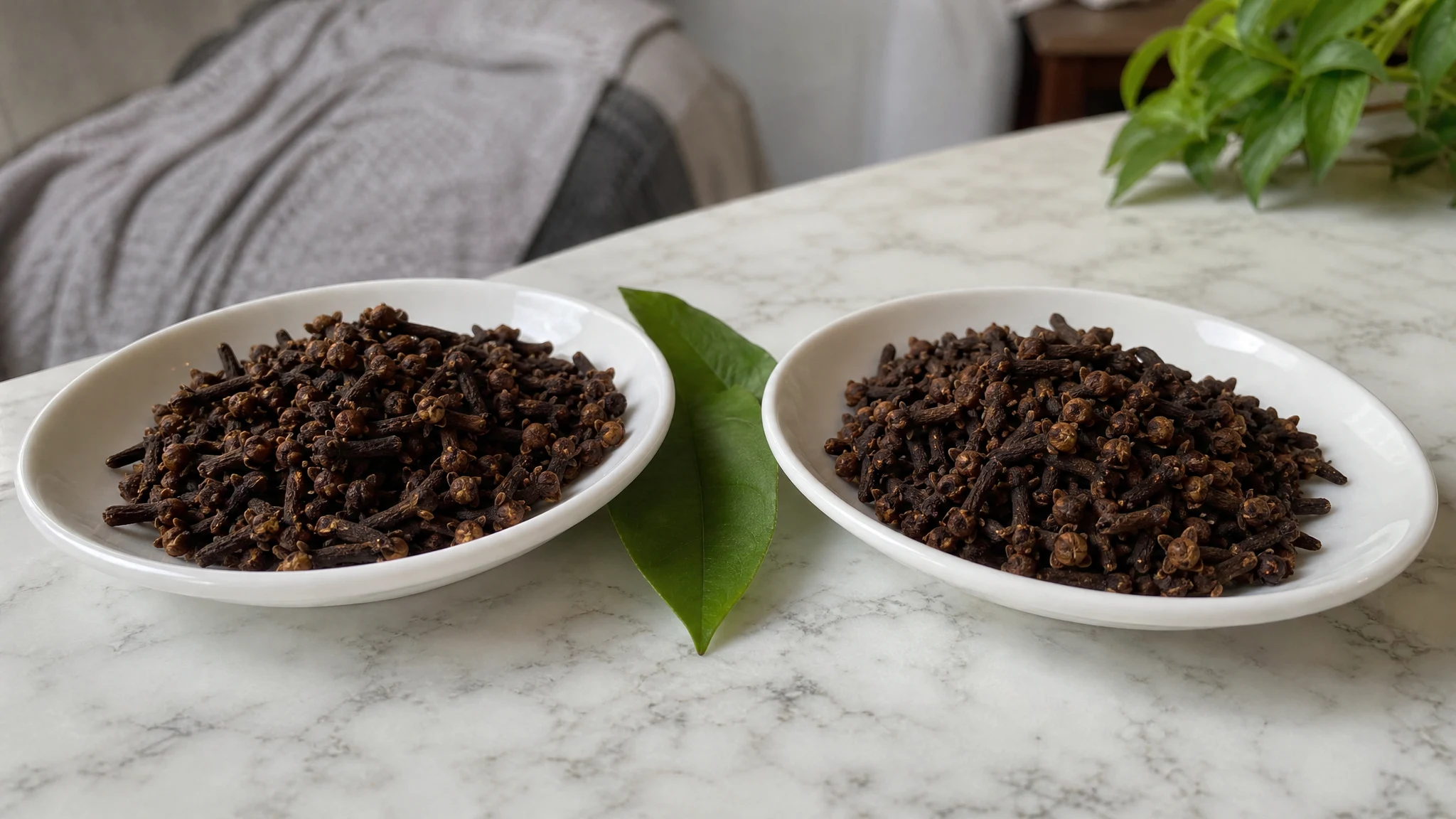
Is There Organic Clove Oil? What the Label Means
"Organic" is one of the most persuasive words on an oil label, and clove oil is no exception. It is also one of the narrower ones. The seal tells you something real about how a crop was grown and handled, and very little about how the oil smells, what is in it or how it behaves on skin. Our own clove oils are not sold under an organic label, so this is a plain look at what the word covers.
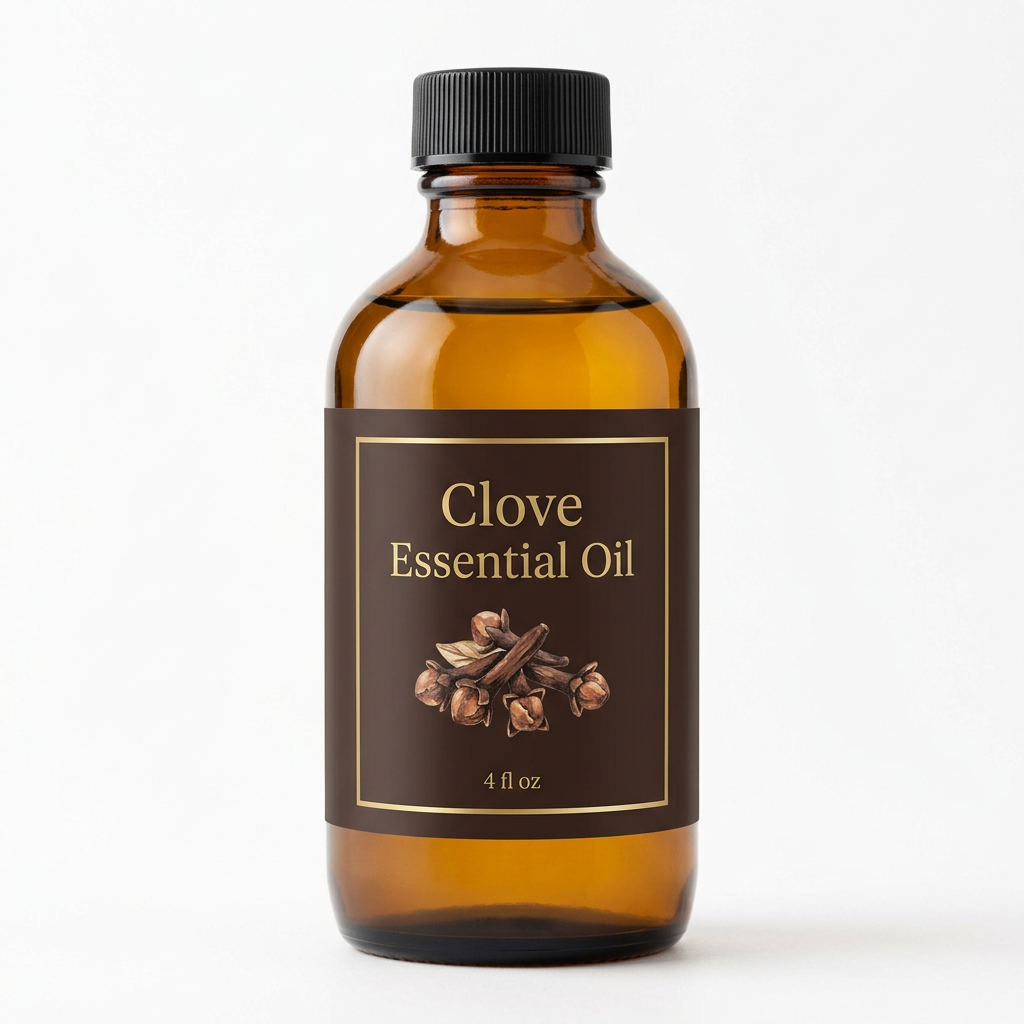
Clove Essential Oil
Our own Clove Essential Oil, in sizes from 0.5 oz to bulk.
From $10.99
Shop Now →What the word means in the United States
US rules require operations that produce or handle agricultural products sold with organic claims, such as "organic" or "100 percent organic", to be certified, with certain exemptions (7 CFR 205.100). In practice, a bottle labelled organic should name a certifier, and a seller who cannot say who certified it has given you a reason to ask. Other countries run their own schemes, and a seal from one is not a statement about another.
It also helps to know that "natural" is a different word. On many labels "natural" is a description rather than a certificate, and it does not name an inspector or a standard. If a bottle says natural and nothing else, you have learned that the oil came from a plant, which you probably guessed already.
What a seal does not tell you
Certification speaks to growing and handling. Reasoning from that scope, a seal on its own does not settle three things.
- Composition. Eugenol share and the rest depend on plant part, harvest and distillation. The GC-MS report we publish for our bud oil lists eugenol at 73.57% of peak area. Neither an organic nor a conventional oil comes with a guaranteed figure.
- Authenticity. Whether a bottle holds only clove oil is a question for laboratory analysis, not a farm certificate.
- Skin handling. Eugenol can irritate and sensitise whether or not the tree was grown organically. The Tisserand Institute, eugenol page gives a recommended topical maximum of 0.5% for clove bud with no organic exception, and 1.5% of patients patch-tested with clove oil in a large German network reacted (Uter et al., Contact Dermatitis, 2010), a group referred for suspected allergy rather than a general rate. Treat the dilution rules in our safety basics post the same either way.
Where organic could matter: residues
The measurable argument for organic is pesticide residue, and the best evidence we found is from a different oil. A study screened 49 orange essential oils from eleven origins for 75 pesticides. Conventional oils averaged 17 pesticides at a combined 5.1 mg/L, while organic oils averaged 4 at 0.087 mg/L, though none was pesticide-free (Fillatre, Gray and Roy, Analytica Chimica Acta, 2017).
Orange oil is cold-pressed from peel, while clove is steam-distilled from bud or leaf, so whether the same gap shows up in clove is an inference rather than a finding. Reasoning from the orange result, a premium for certified oil makes most sense when residues matter to you or when you must make an organic claim on a finished product, and least sense for an oil going into a candle burned in a room.
Questions for any seller who says organic
These follow from the legal definition. Who is the certifying body, and is the certificate current? Does it cover the oil itself or only the raw clove, since distilling is its own handling step? Does the certificate name the product and the facility that bottled it? Is there an analysis for the lot you are buying? An organic seal and a lab report answer different questions, and a good seller can show you both.
If you want a quick habit for reading a label, read it in this order. First the plant part and the botanical name. Then the origin, if any, and what it claims. Then any seal, and who stands behind it. Finally, the paperwork. By the time you reach the seal you already know most of what you need, and the seal becomes one more fact rather than the headline.
Freshness is a separate matter
In the end the question that matters most to many people is scent. Does the oil smell sweet or smoky? Does it smell fresh, or has it been sitting? Those are questions you answer by opening a bottle, and no seal can answer them for you.
A seal does not extend shelf life. Any clove oil kept warm and open will age, and capping the bottle and keeping it cool and dark helps regardless of how the crop was grown. Our storage post has the practical steps.
A last, more personal point: the best clove oil for your project is the one whose scent you like. Open the bottle and smell the bud oil's warm, sweetly spicy depth or the leaf oil's bold, smoky edge, and let your nose settle the question the label cannot.
In short, treat the seal as a statement about the farm and ask for the documents that speak about the bottle.
Clove Essential Oil
Clove Essential Oil from our own shop, in sizes from 0.5 oz to bulk.
From $10.99
Shop Now →Sources & Further Reading
- 7 CFR 205.100: certification requirement for organic claims
- Fillatre et al., Analytica Chimica Acta, 2017: pesticide residues in orange essential oils
- Tisserand Institute, eugenol: topical maximum for clove bud oil
- Uter et al., Contact Dermatitis, 2010: patch test results for essential oils