What Is Eugenol? The Compound Behind Clove's Scent
Smell a clove and you are smelling eugenol. It is the molecule that makes the spice taste and smell the way it does, and it makes up most of the oil we sell. Understanding it explains both the appeal of clove oil and the reason it deserves a measured hand.
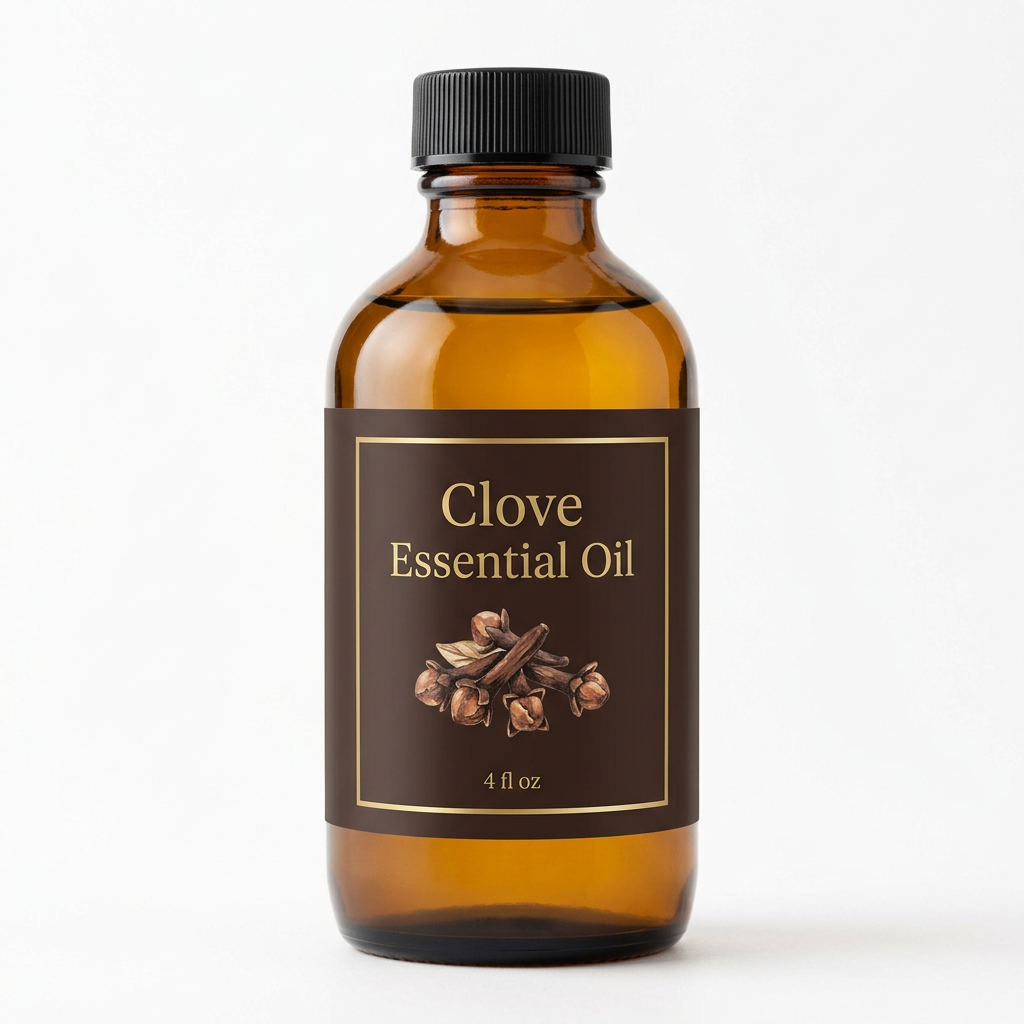
Clove Essential Oil
Our own Clove Essential Oil, in sizes from 0.5 oz to bulk.
From $10.99
Shop Now →A quick portrait
Eugenol is a phenol with the formula C10H12O2, and PubChem records its odor as "odor of cloves" and, in another reference, as warm, spicy and floral. It was first isolated in 1929, according to a 2012 review in Molecules, which also traces its many jobs: a flavoring in foods in restricted amounts, a perfumery ingredient, and in dentistry an ingredient in professionally applied cements. That last use is where clove's medical reputation began. A dental cement is a controlled product used by a professional, and it is a different thing from a bottle of oil. We sell our clove oils for their aroma, and we make no health claims for them.
How much is in the oil
Eugenol is the main compound of clove oil, but the share varies. The same review puts it at 45 to 90% across the literature. Among bud oils in one review table (Linan-Atero and colleagues, 2024), it ran from about 82% for a Moroccan hydrodistilled sample and a Slovakian steam-distilled one to roughly 98% for a Brazilian one, and 55% for a supercritical CO2 extract. The method and the sample both matter.
The GC-MS report we publish for our bud oil lists eugenol at 73.57%, with 98.68% of the oil identified. Eugenyl acetate follows at 12.82%, beta-caryophyllene at 7.95%, limonene at 1.56% and alpha-humulene at 1.08%. A higher number is not automatically better. The supporting compounds are part of what makes an oil read as rounded, so we would not choose a bottle on the eugenol figure alone.
Think of it the way you would think of a chord. Eugenol is the loud, low note that everyone hears first, and the eugenyl acetate, caryophyllene and the long tail of smaller compounds are the notes that make it sound like clove rather than a single hum. When you smell our bud oil, give it a moment: the first impression is bold and spicy, and then a softer, sweeter warmth comes up behind it.
How to read the number
A qualitative GC-MS run like ours separates the oil into its compounds and reports each as a share of the detected peak area. That is not quite the same as weight, because compounds respond differently in the detector. The practical reading is that 73.57% tells you eugenol clearly dominates, and the decimals add more precision than the method claims. For a full walkthrough of the report, see how to read a GC-MS report for clove oil.
What it means on skin
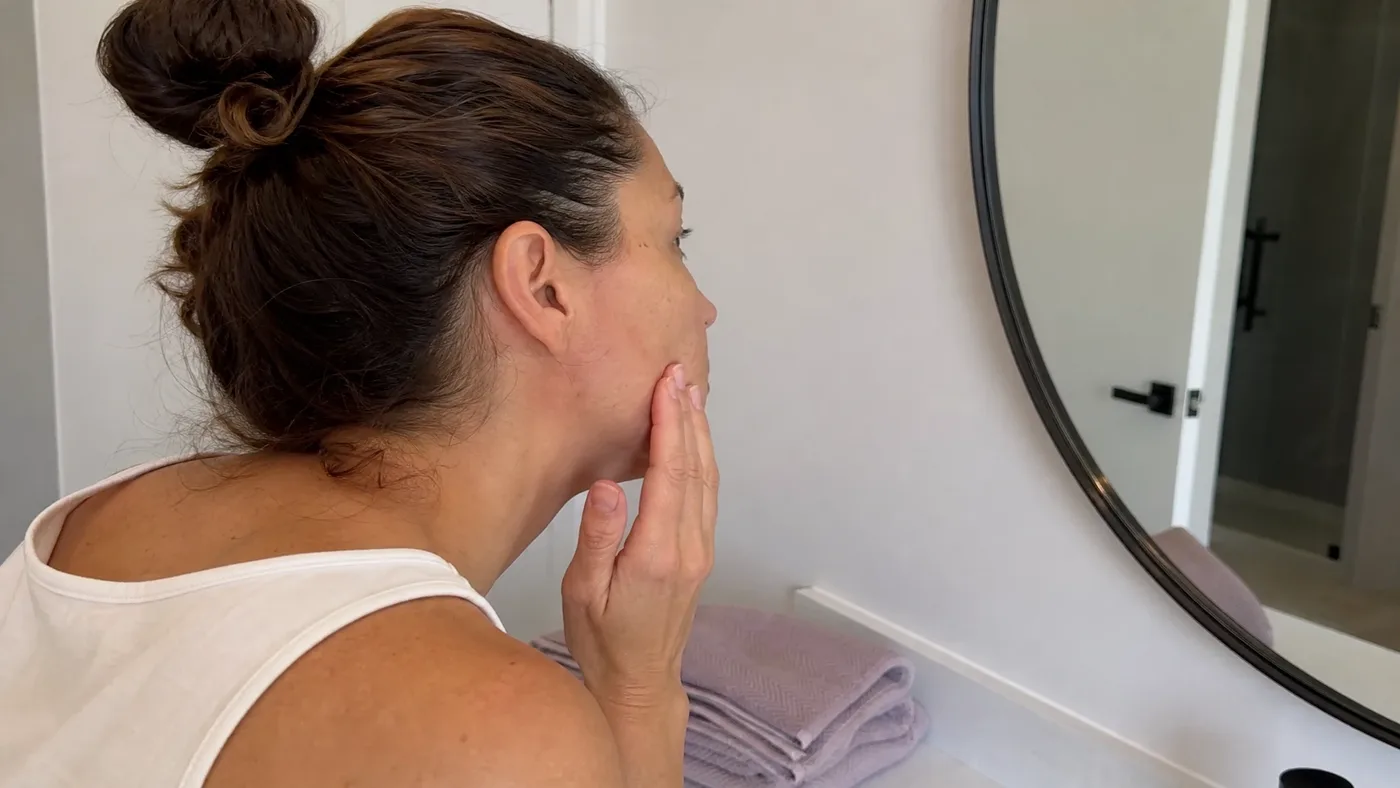
This is the part to keep in mind. The 2012 review calls eugenol a primary irritant and sensitiser, and a 2017 review in Allergologie Select by Uter rates it an established human contact allergen. A 2024 review (Sukakul and colleagues) adds that it is one of the seven fragrance chemicals in the standard fragrance mix used for patch testing, and that clove oil was among the entries added to the EU's declared-allergen list in 2023.
In practice that means someone who has reacted to a fragrance mix, a spice oil or a dental product before has good reason to avoid clove oil on skin, and nobody should assume that a past clean experience guarantees the next one. The Tisserand Institute gives 0.5% as its recommended topical maximum for clove bud oil, and that is the number we work to. A dermatologist or allergist is the right person to ask about skin conditions, children or pregnancy. Our safety basics cover dilution and patch tests.
Where else you meet it
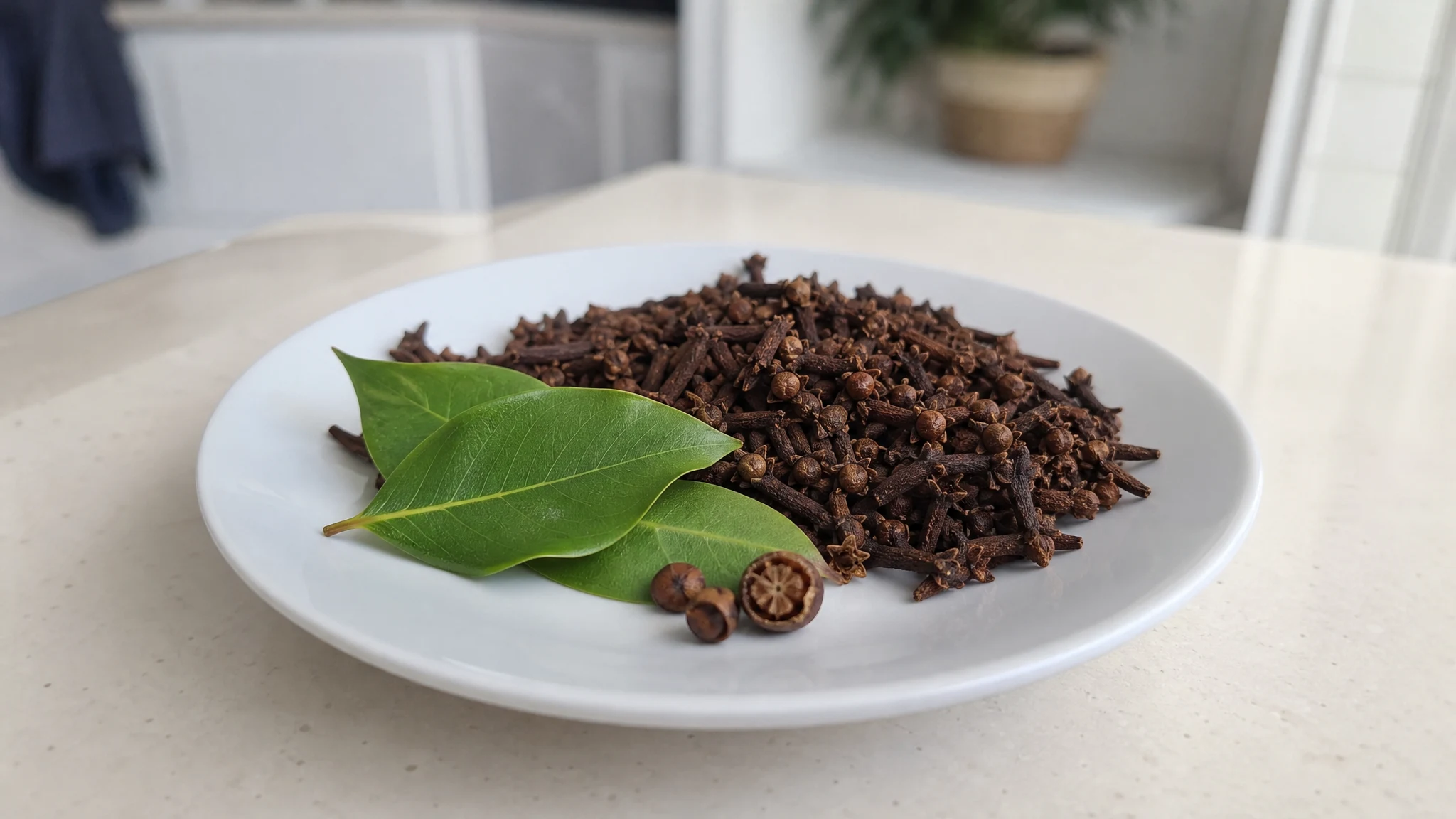
It helps to know where eugenol turns up outside the bottle. Clove is a kitchen spice, so you will meet that scent in a pot of mulled wine, a studded ham or a tin of gingerbread. Whole cloves in a pan of simmering water give off a gentle version of the same smell, and that is a lovely, low-effort way to enjoy it without opening a bottle at all.
What the number does not say
- It does not name the plant part. Bud, leaf and stem oils are all clove oils, and their minor compounds differ. We sell bud and leaf, and our comparison shows how they differ.
- It does not make the oil safe to swallow. The 2012 review cites a child who took 5 to 10 ml of clove oil and became severely ill, and ours is for aromatic and cosmetic use only.
- It does not make clove a twin of every phenol-heavy oil; clove versus oregano shows how another one works.
Eugenol is why clove is clove. Respect it, enjoy it, and either of our oils will hand you that warm, spicy scent.
If you are curious about the difference in person, put a drop of each of our oils on separate paper strips, wave them in the air and compare them a minute apart. The bud oil leans warm and sweet, while the leaf oil is drier, smokier and more earthy. Both carry the eugenol signature, and you will find your favorite quickly.
Clove Essential Oil
Clove Essential Oil from our own shop, in sizes from 0.5 oz to bulk.
From $10.99
Shop Now →Sources & Further Reading
- PubChem. Eugenol, CID 3314. pubchem.ncbi.nlm.nih.gov/compound/3314
- Kamatou GP, Vermaak I, Viljoen AM, 2012. Eugenol: from the remote Maluku Islands to the international market place. Molecules. pmc.ncbi.nlm.nih.gov/articles/PMC6268661
- Linan-Atero R et al., 2024. Clove Essential Oil: Chemical Profile, Biological Activities, Encapsulation Strategies, and Food Applications. Antioxidants. pmc.ncbi.nlm.nih.gov/articles/PMC11047511
- Uter W, 2017. Contact allergy to fragrances: current clinical and regulatory trends. Allergol Select. pmc.ncbi.nlm.nih.gov/articles/PMC6040011
- Sukakul T, Bruze M, Svedman C, 2024. Fragrance Contact Allergy: A Review Focusing on Patch Testing. Acta Derm Venereol. pmc.ncbi.nlm.nih.gov/articles/PMC11334351
- Tisserand Institute. Eugenol: Essential Oil Constituents in Food Part 4. tisserandinstitute.org/learn-more/eugenol