Clove Oil for Hair: What the Studies Actually Cover
Clove oil for hair is one of those trends that spreads faster than the research behind it. A video, a kitchen jar of cloves and a promise, and suddenly it is everywhere. We love clove, and we think the honest story is more interesting than the trend, so here is what the science does and does not cover.
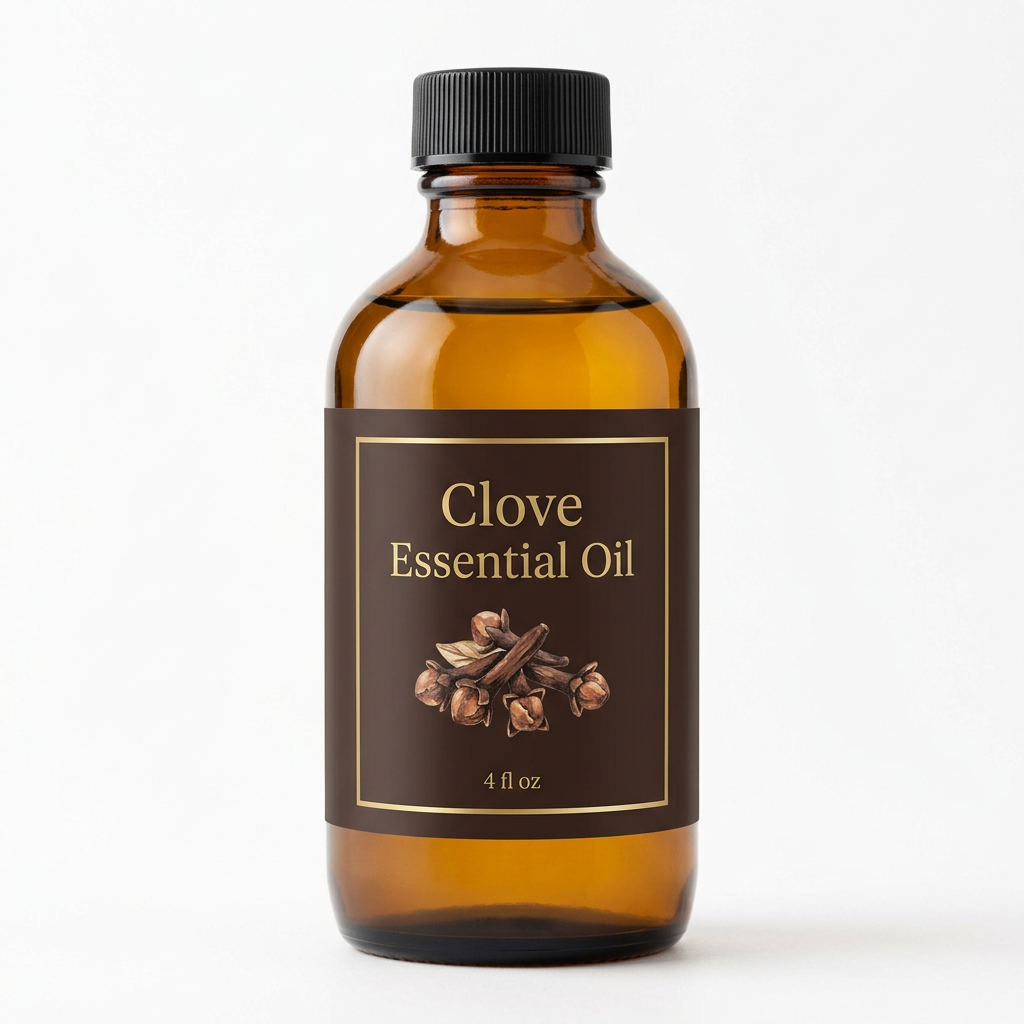
Clove Essential Oil
Our own Clove Essential Oil, in sizes from 0.5 oz to bulk.
From $10.99
Shop Now →Where the trend borrows its credibility
As far as we can tell, there is no human trial of clove oil on hair. The studies people usually point to are about other plants. A trial in Iran put 100 people with pattern hair loss on rosemary oil or 2% minoxidil for six months. Hair counts showed no significant change at three months in either group, rose at six months in both, and did not differ between groups, and the abstract does not describe a no-treatment group, so natural variation cannot be ruled out (Panahi and colleagues, 2015). A study in mice applied peppermint oil, minoxidil, jojoba oil or saline to the skin for four weeks and found more follicle activity with peppermint (Oh and colleagues, 2014). It was a mouse study, so it says little directly about people.
Neither study is about clove, and it would be a stretch to carry either across. Rosemary, peppermint and clove oils are very different mixtures. Our published GC-MS report for the bud oil lists eugenol as the dominant compound at about 74% by area, with eugenyl acetate at about 13%, and nothing like the profile of those other oils.
Why hair trends travel so fast
It is easy to see why a hair trend built around a kitchen spice catches on. The ingredient is familiar, the idea is simple, and a short video can make it look effortless. Clove has a warm, comforting smell that makes a routine feel like a treat. We understand the appeal, and we would rather you enjoy the scent than chase a promise. A trend that spreads quickly is not the same as a result that has been shown.
Clove water is its own question
Clove water, a steep of whole cloves, is a different material from distilled oil. The oil is the volatile, oil-soluble fraction, and the water carries other things. Studies of one do not transfer to the other, and we do not sell whole cloves, so we will not claim to know what the steeping jar does.
Enjoying clove without the scalp
If clove is what you love, there are plenty of ways to enjoy it that keep it away from your head. Scent a room with a drop or two in a diffuser, simmer a few cloves with orange peel on the stove, or build a spiced candle if you pour your own. Those all give you the cozy aroma without asking a strong oil to do something nobody has tested.
A sensible way to look at beauty claims
When a friend sends you a clip about a miracle ingredient, a calm habit helps. Read the caption, find out who the speaker is, and ask what they sell. Then think about whether a real study is mentioned or only a before-and-after photo. A great photo can come from lighting, a haircut or a good day. It does not take away from the fun of the kitchen, it just lets you enjoy the trend without handing it your trust.
What we can say about clove on skin
Because hair care means putting something on the scalp, it is worth knowing how clove behaves on skin. Eugenol is a recognised irritant and sensitiser. Tisserand's guidance lists 0.5% as the topical maximum for clove bud oil, and our own dilution advice starts at 0.5% in a carrier. Clove oil also turns up among the essential oils that cause positive patch tests in dermatology clinics, at 1.5% of tests in a large German network (Uter and colleagues, 2010). That is a reason for patch testing and low dilution on skin, and a reason not to pour the oil on the scalp.
If you are worried about thinning hair, a dermatologist can work out the cause, which is the part that decides what helps. Our guidance for how to read the next hair claim is simple. Ask whether it studied people or animals, whether it compared against a recognised option, and whether the plant in the study is the plant in the bottle.
We sell clove bud and clove leaf oil as aromatic and cosmetic oils. If you want to read more on clove and the scalp, we cover dandruff, and our carrier oil guide and safety basics explain dilution and patch testing.
Take your time with the claims, and keep the clove for the places where it shines.
A good trend is worth a question, and the best answer for clove is that its charm lives in the aroma of a warm, spicy room.
Clove Essential Oil
Clove Essential Oil from our own shop, in sizes from 0.5 oz to bulk.
From $10.99
Shop Now →