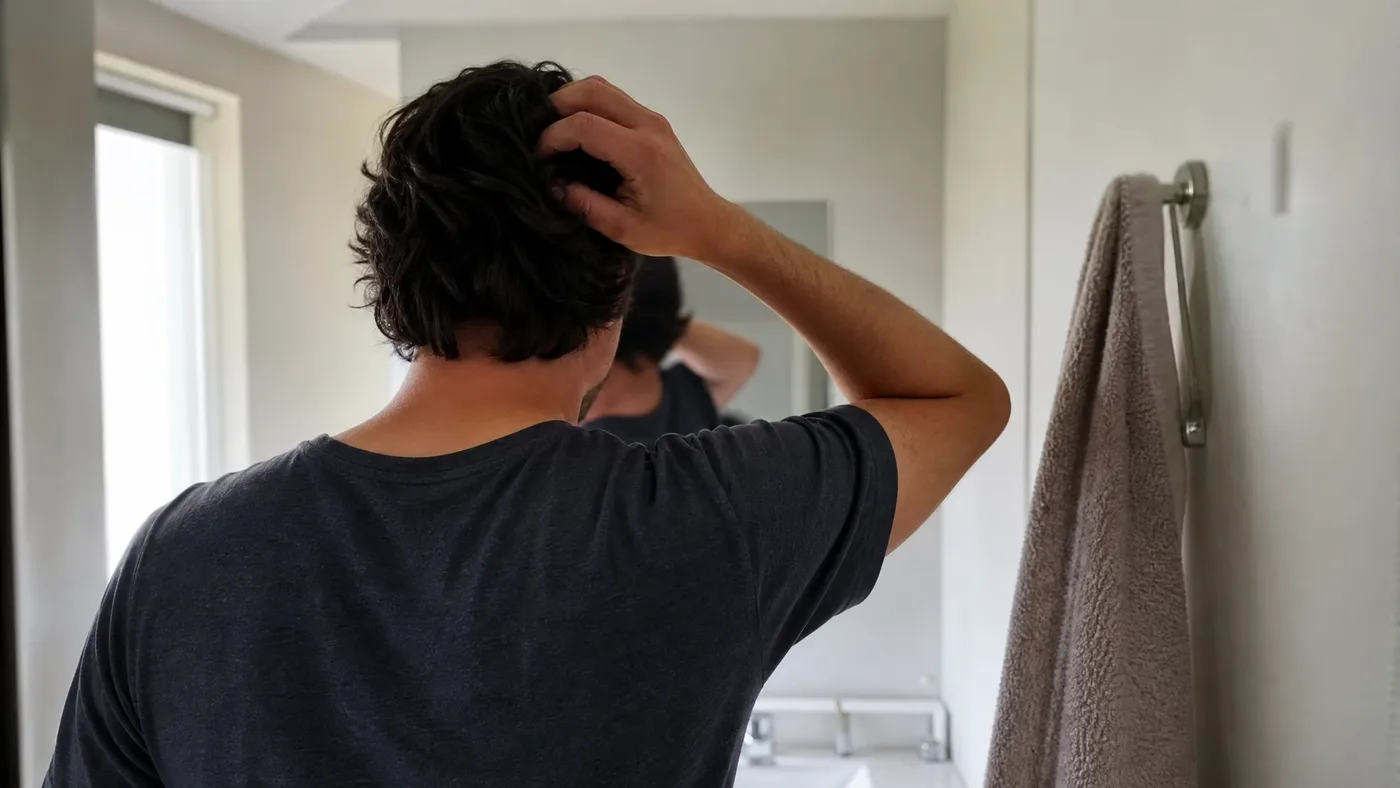
Clove Oil for Dandruff: Why We Say Use a Shampoo Instead
If you have flakes and an itch, the evidence-backed answer is a medicated shampoo, not an essential oil. The American Academy of Dermatology lists six shampoo actives for dandruff; clove oil is not one of them, and no trial we found has tested it on a human scalp. We sell clove bud oil and clove leaf oil for aroma, and this page explains why we do not suggest putting them on a flaking scalp.
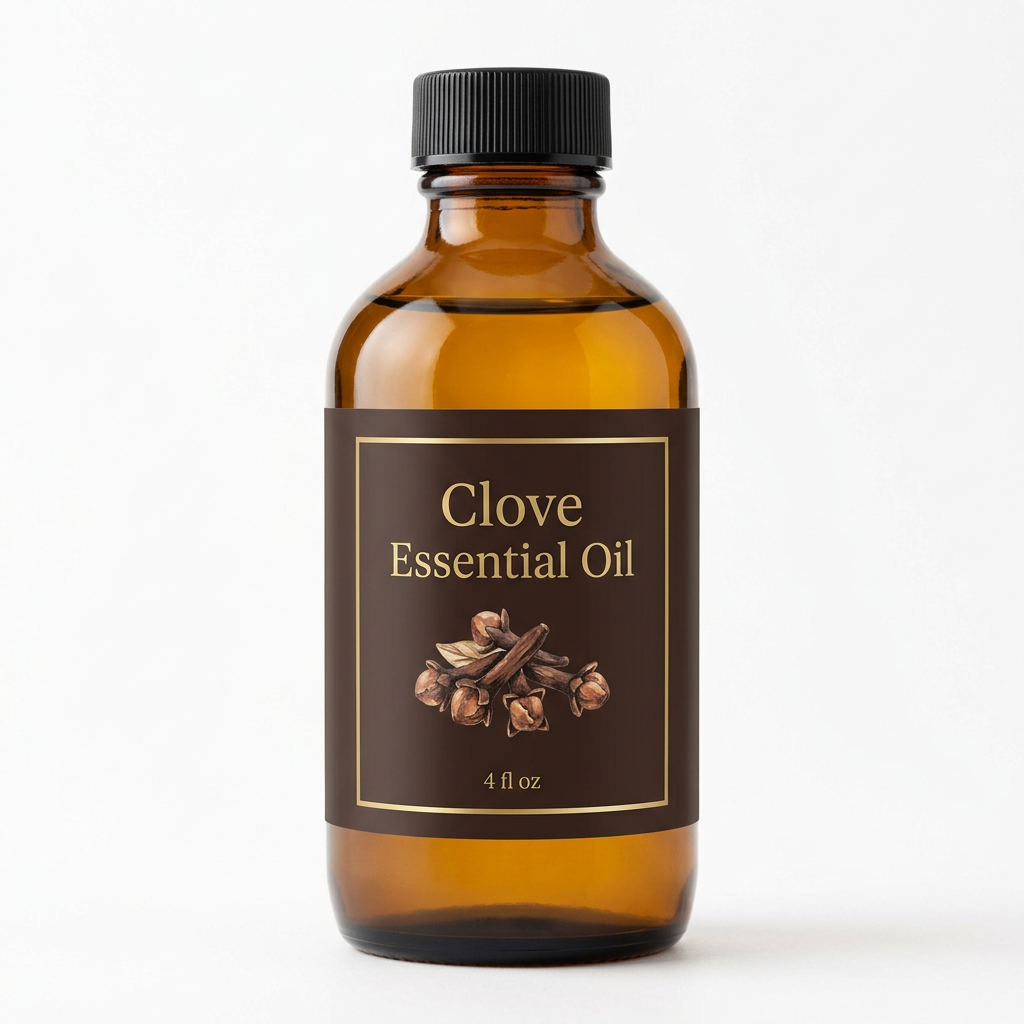
Clove Essential Oil
Our own Clove Essential Oil, in sizes from 0.5 oz to bulk.
From $10.99
Shop Now →Start with what the flakes might be
The AAD says dandruff "can develop due to multiple reasons, including some medical conditions, your hair care habits, or oily skin", and that a dermatologist can tell whether it signals seborrheic dermatitis, psoriasis, a scalp fungal infection or eczema. That matters for decisions: a product that suits oily-skin flaking can aggravate eczema or psoriasis. Working out which one you have is a clinician's job, and we have no one on staff who does it. A decision tree, then:
- Mild flaking, no sore skin: a shampoo with an AAD-listed active is the first step.
- Red, greasy, thick or painful patches, or flaking that continues after following the shampoo advice: the AAD says to see a board-certified dermatologist, who may prescribe stronger shampoo or medication.
- Sores, oozing, hair loss in patches, or a rash that spreads past the scalp: see a dermatologist before putting anything else on it.
What the standard answer looks like
The AAD's list of actives: zinc pyrithione, salicylic acid, sulfur, selenium sulfide, ketoconazole and coal tar. Its use notes: lather onto the scalp, leave some products for 5 to 10 minutes before rinsing, use about twice a week on fine, straight or oily hair and about once a week on coarse, curly or coily hair, apply only to the scalp because the actives can dry hair, and rotate to a different active if one stops working. We are repeating the AAD, not adding to it; for a specific product and schedule, a pharmacist or dermatologist is the right person.
What exists for clove, and what it did
The nearest research is in vitro. A 2024 paper by He et al. (indexed in the agricultural literature, Europe PMC record) tested a combination of clove essential oil and thyme essential oil against Malassezia furfur, a yeast that lives on skin. It measured growth, cell shape and membrane fluidity in culture and reported a synergistic effect of the mixture, and concluded it "may have potential applications in seborrheic dermatitis". Three limits matter. It was a lab culture, not a scalp. It tested a two-oil mixture, so the share due to clove is not separable. And in-dish activity against a microbe tells you nothing about whether a leave-on oil reaches the right layer of skin, at what concentration, or without inflaming it. The conclusion is the authors' hope, not a result.
Plant-based scalp products do have trials, which makes the clove gap more noticeable. A 2024 double-blind trial (Sadati et al., Dermatology Practical and Conceptual) randomised 42 people with scalp seborrheic dermatitis to rosemary extract lotion or 2% ketoconazole lotion, twice daily for two months. Flaking scores fell significantly more with ketoconazole; itching fell significantly more with rosemary. The authors called both effective. That is a rosemary extract lotion, not an essential oil, and it is not clove. It also shows what a real comparison looks like: a named standard treatment as the control, a validated flaking score, a stated duration. Nothing equivalent exists for clove that we located.
What a real test of clove on a scalp would need
Reasoning from the two trials above, a credible clove study would need the features they had: a flaking or hair-count measure taken by a blinded rater, a comparison arm that is an accepted product, a duration of at least two months, and a record of itching and reactions as outcomes in their own right. It would also need a stated concentration. Most plant-oil claims online skip the concentration, and that is the number that decides between a possible effect and a reaction. Until that study exists, "clove for dandruff" is a hypothesis built from a dish experiment.
The scalp problem with eugenol
Clove bud oil is mostly eugenol (our published GC-MS report for the bud oil lists 73.57% eugenol and 12.82% eugenyl acetate). The Tisserand Institute's eugenol page says eugenol "can be a skin irritant or allergen if not used in proper dilutions" and gives a 0.5% topical maximum for clove bud oil, citing Essential Oil Safety, 2nd edition. Our own product pages say 0.5% to 2% with a patch test. These disagree at the top end, and on skin that is already inflamed we would not use the higher figure.
Reasoning from the figures: 0.5% of a 100 ml shampoo-sized bottle is 0.5 ml of oil, which is about ten drops if you assume 20 drops per ml (drop size varies by bottle). That arithmetic is shown only to illustrate how little oil the ceiling allows; it is not a recipe, and we have not tested any scalp preparation. A leave-in oil on a scalp is the form with the longest contact time, and none of the studies above tested it.
There is also the problem of confounding. Itching is the symptom you are trying to explain, and it is also what irritation or allergy to an applied oil produces. If you add clove and your scalp itches more, you cannot tell whether the dandruff worsened or the oil caused a reaction. In the 2015 rosemary-versus-minoxidil trial (Panahi et al.), scalp itching went up from baseline in both treatment arms, so even the studied preparations were not free of it. The sensitisation record on eugenol is mixed: a 1983 industry survey of 11,632 patch tests found very low potential at consumer-product concentrations, while a 1999 case report describes occupational allergic contact dermatitis to eugenol, cinnamon oil and clove oil in a physiotherapist. Both can be true.
One more piece of arithmetic on the product side: our oils are sold undiluted, so any percentage is something you would have to measure yourself. 1% of 30 ml is 0.3 ml, and a measuring error of a few drops moves the result by a large fraction of the target. That is one more reason we do not hand out scalp ratios.
Where our oils fit
Our clove bud oil and clove leaf oil are sold undiluted, with nothing added, for aromatic and cosmetic use, never internal use. They are not shampoos, and we sell none. If you want clove in your life, the plain use is scent in a room. Our hair-growth article covers the other scalp trend, our skin article covers general skin use, and side effects describes what a reaction looks like. For persistent flaking, see a dermatologist or ask a pharmacist about the AAD's actives.
Clove Essential Oil
Clove Essential Oil from our own shop, in sizes from 0.5 oz to bulk.
From $10.99
Shop Now →Sources & Further Reading
- American Academy of Dermatology. Dandruff shampoo advice. aad.org/public/everyday-care/hair-scalp-care
- He D et al., 2024. Synergistic activity of clove essential oil and thyme essential oil against Malassezia furfur and other microbes. europepmc.org/article/AGR/IND608483509
- Sadati MS et al., 2024. Efficacy of topical rosemary extract lotion versus topical 2% ketoconazole lotion in seborrheic dermatitis. pubmed.ncbi.nlm.nih.gov/39652968
- Panahi Y et al., 2015. Rosemary oil vs minoxidil 2% for androgenetic alopecia. pubmed.ncbi.nlm.nih.gov/25842469
- Rothenstein AS et al., 1983. Eugenol and clove leaf oil: a survey of consumer patch-test sensitization. pubmed.ncbi.nlm.nih.gov/6686576
- Sanchez-Perez J, Garcia-Diez A, 1999. Occupational allergic contact dermatitis from eugenol, oil of cinnamon and oil of cloves in a physiotherapist. pubmed.ncbi.nlm.nih.gov/10617221
- Tisserand Institute. Eugenol: Essential Oil Constituents in Food Part 4. tisserandinstitute.org/learn-more/eugenol