Clove Oil Antioxidant Claims: How to Read the Score
Clove oil shows up near the top of nearly every antioxidant chart, and it is a good party fact. It is also one of the most over-stretched numbers in the oil world, because a score from a test tube gets carried into claims about skin that the test never examined. Here is how to read it.
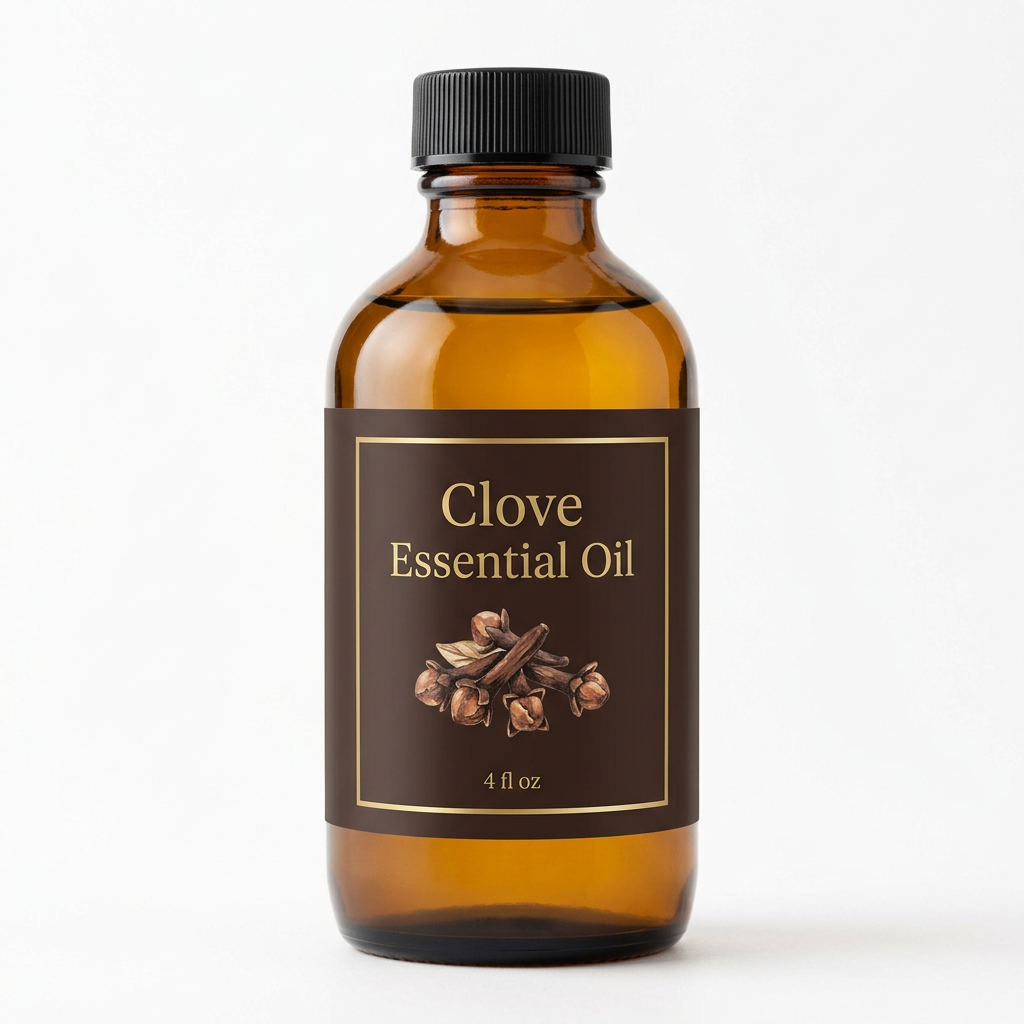
Clove Essential Oil
Our own Clove Essential Oil, in sizes from 0.5 oz to bulk.
From $10.99
Shop Now →What the lab number is
A review of eugenol (Kamatou, Vermaak and Viljoen, Molecules, 2012) collects the antioxidant results for clove oil and eugenol, which is the main compound in the oil. The numbers are strong. They also come from chemical assays: a substance is mixed with a stable test radical in solution, and the test records how much of it gets neutralized. Nothing in that setup involves skin, living cells or a person.
The score sellers quote most, ORAC, has an official footnote. In 2012 the US Department of Agriculture withdrew its ORAC database from public use, citing, as Nutraceuticals World reported, mounting evidence that the values have no relevance to the effects of bioactive compounds in the body, and noting that they were routinely misused to promote products. That was about foods and supplements, so applying it to an essential oil is our own step. It still shows why a high laboratory score is not the same thing as an outcome.
A question to ask of any chart
Whenever you see a ranking, from oils to berries to teas, a useful habit is to ask what was measured and in what. A score in a test tube tells you something about a reaction in a test tube. It does not tell you what will happen on a face, in a body or in a bottle on your shelf. That one question takes the air out of a lot of impressive-sounding numbers, and it makes you a calmer shopper.
The mouse study people point to
The nearest thing to skin research we know of is a 2024 paper in Nutrients (Geng and colleagues). It fed isoeugenol to hairless mice that were exposed to chronic UVB light, and also examined cultured skin cells. The authors describe isoeugenol as the main aromatic compound isolated from clove oil, though the GC-MS report we publish for our bud oil names eugenol, at 73.57%, as the lead compound, and lists isoeugenol at 0.08%. The compound was eaten, not applied, and the work was in mice. It is interesting science, and it is not about a clove oil on a human face.
Why we keep clove oil off the face
This is the part where we have a firm view. Eugenol is a recognised skin sensitiser, and the face is the place where a reaction is hardest to hide and most unpleasant to deal with. The Tisserand Institute lists 0.5% as the topical maximum for clove bud oil, and its dilution guide suggests facial products generally sit between 0.5% and 1.2%, with lower numbers for reaction-prone skin. Clove bud oil sits at the bottom of that facial range, and that is before you account for how irritating its main compound can be.
Some sums make the point. At 0.5% oil, a finished product carries about 0.37% eugenol, since 0.005 multiplied by 73.57% comes to 0.0037. That is not a trace. Our answer is simple: we do not recommend clove bud or leaf oil as a face product, and we do not make skin-appearance claims for either oil. They are aromatic oils, and cosmetic oils for careful, diluted use on the body.
The pleasure of a good fun fact
There is nothing wrong with enjoying a fun fact. Clove has an impressive laboratory profile, and that is a nice thing to mention while you are stirring a pot of cider. The only trap is letting the fact walk off with a promise attached. If you keep the two apart, the number stays charming and the oil stays what it is, a fragrant, strong ingredient to handle with care.
Where clove shines
What clove does beautifully is smell like clove. It is warm, rich and sweetly spicy in our bud oil, and bolder and smokier in our leaf oil. Open a bottle on a cold morning and you will see why people have loved the spice for centuries. That is plenty to recommend it, with no chart required.
What skin care questions need instead
If your real question is about how your skin looks, a dermatologist is the person to ask. Dermatology guides start with gentle, well-formulated products made for the face, and we do not sell those. Our job is to be honest about what we do offer: two clove oils with a warm, spicy aroma.
If you want to go deeper on how clove oil behaves on skin, clove oil for skin and side effects cover it, and the safety basics explain dilution and patch tests.
A big lab score is a fun fact about clove. It is a reason to enjoy the scent, and nothing more than that.
Clove Essential Oil
Clove Essential Oil from our own shop, in sizes from 0.5 oz to bulk.
From $10.99
Shop Now →Sources & Further Reading
- Kamatou GP, Vermaak I, Viljoen AM, 2012. Eugenol: from the remote Maluku Islands to the international market place. Molecules. pubmed.ncbi.nlm.nih.gov/22728369
- Nutraceuticals World, 2012. ORAC database withdrawn (reporting the USDA statement). nutraceuticalsworld.com/exclusives/orac-database-withdrawn
- Geng R et al., 2024. Dietary isoeugenol supplementation attenuates chronic UVB-induced skin photoaging and modulates gut microbiota in mice. Nutrients. pubmed.ncbi.nlm.nih.gov/38398805
- Tisserand Institute. Eugenol: Essential Oil Constituents in Food Part 4. tisserandinstitute.org/learn-more/eugenol
- Tisserand Institute. Dilution for essential oils. tisserandinstitute.org/dilution-essential-oils