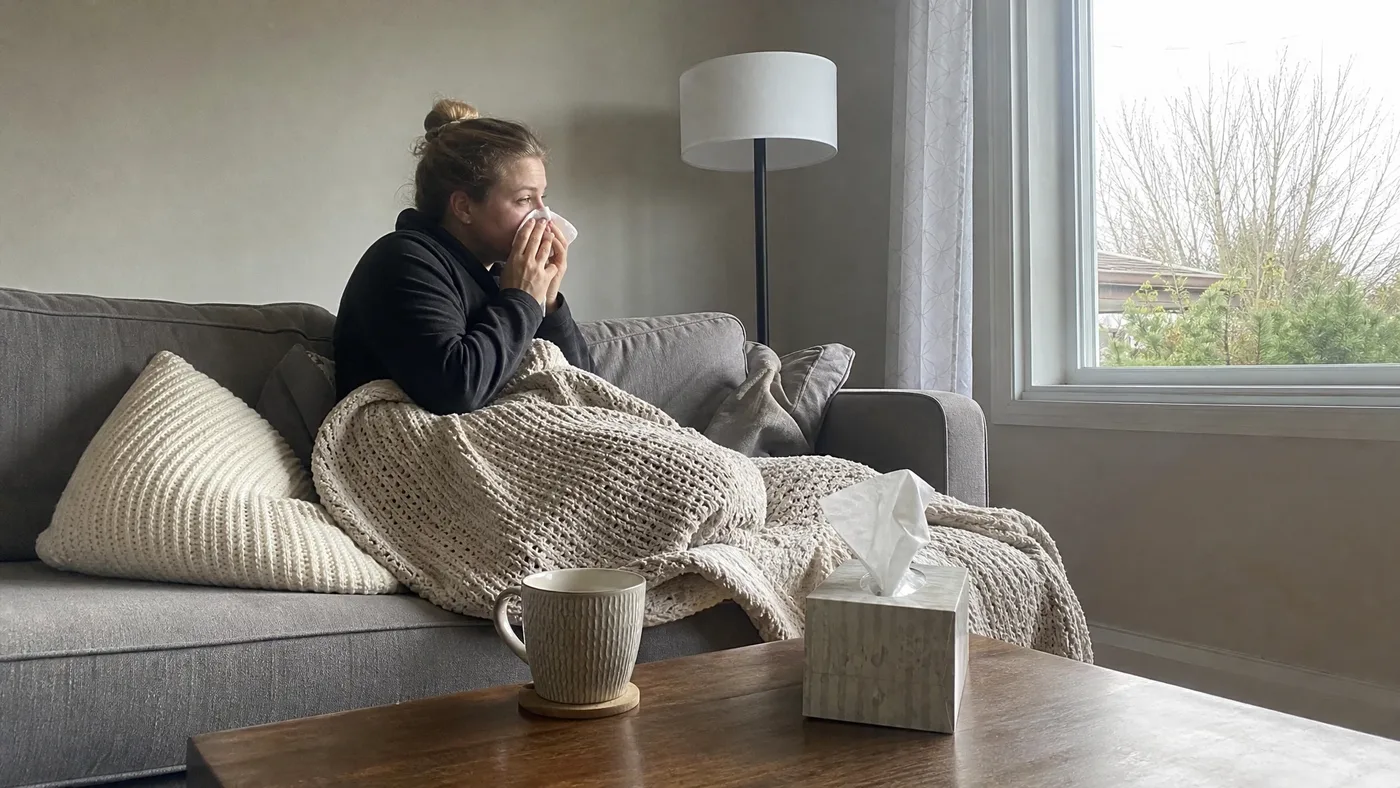
Clove Oil for Congestion: No Evidence, Real Steam Burns
We found no trial showing that clove oil clears a blocked nose, and we found plenty of evidence that a bowl of steam can scald, so we do not recommend putting our clove oil in a steam bowl. Our clove bud and clove leaf oils are aromatic oils for a diffuser, a simmer pot or a diluted skin blend, and nothing about their aroma makes them a cold product. Here is what the sources say, in the order you would need it: does the idea have evidence, what does the steam itself do, and when does a cold need a clinician.
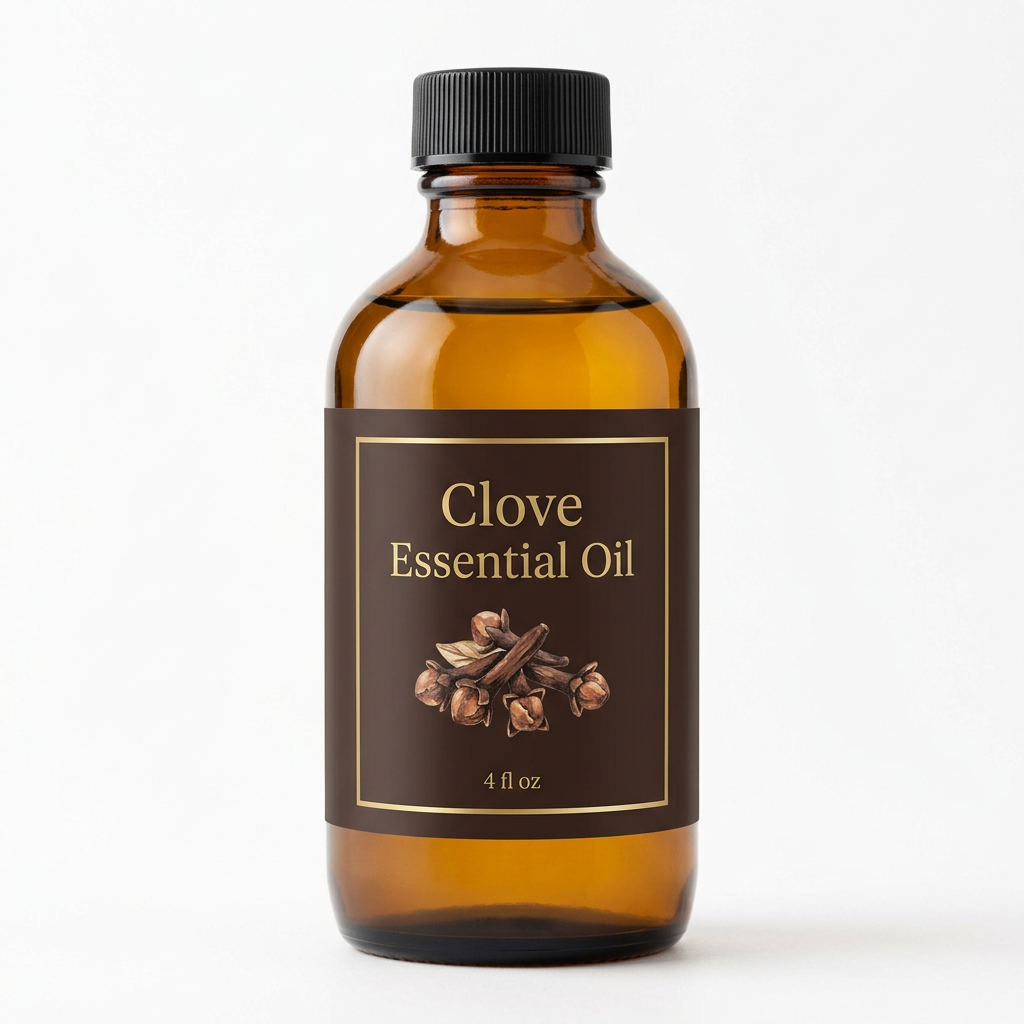
Clove Essential Oil
Our own Clove Essential Oil, in sizes from 0.5 oz to bulk.
From $10.99
Shop Now →Step 1: is there evidence that clove oil helps a cold?
My searches of the medical literature turned up no randomised trial of clove essential oil, by inhalation or any other route, for cold or congestion symptoms. The one inhalation trial of clove oil we found tested a different outcome: a 2025 trial (Dehghan et al., Health Science Reports) in 90 urology patients compared clove and lavender aromatherapy with standard care for headache after spinal anaesthesia. The reduction versus control was not statistically significant (p>0.05). That trial says nothing about a stuffy nose, and we mention it only because it is the closest inhalation trial we could find. The practical consequence is simple: when a page promises that clove oil clears congestion, there is no trial behind the sentence that we could locate. This is a statement about my search, and a physician or pharmacist can tell you more.
Step 2: what does steam itself do?
The nearest evidence is for hot water vapour with no oil in it. The 2017 Cochrane review "Heated, humidified air for the common cold" (Singh et al.) pooled six trials with 387 participants. Its result is an honest shrug, and worth reading closely because the two statistical models disagree:
- Fixed-effect analysis: odds ratio 0.30 (95% CI 0.16 to 0.56; 2 studies, 149 participants), which would favour heated air.
- Random-effects analysis: odds ratio 0.22 (95% CI 0.03 to 1.95), which crosses 1 and shows no significant difference.
- The number of participants reporting resolution of symptoms was not significantly higher with heated air (OR 0.58, 95% CI 0.28 to 1.18; 2 studies, 124 participants).
- The authors graded the evidence as low quality, noted minor adverse events such as nasal discomfort or irritation, and concluded the evidence does not show benefits or harms from heated, humidified air delivered through the RhinoTherm device.
That is a device, not a bowl, and not clove oil. Applying it to a pot of water with essential oil is an inference, and the inference is that the evidence for benefit is, at best, uncertain.
Step 3: what steam does to the people who use a bowl
The harm side has numbers. Hospital burn units have published their cases:
- A UK burns-centre review (Scarborough et al., Burns, 2021) found 19 patients admitted over two years (age 2 weeks to 91 years), 84% burned on the lower body, six needing surgery, 83 total hospital days. A national database enquiry found 201 cases in the same two years, and the authors say the true total is higher because they captured only admissions.
- A Swansea study (Al Himdani et al., Br J Gen Pract, 2016) counted 16 children admitted over five years, average age 7.4, most commonly for a cold. 17 of 21 GPs surveyed still recommended steam inhalation, and the authors concluded that the practice should no longer be recommended.
- A Paris paediatric burn unit series (Tobalem et al., J Burn Care Res, 2026) counted 33 children over five years, median age 6; 51.5% went through intensive care and 51.5% needed surgery.
- A UK adult series (Dearden et al., JPRAS Open, 2022): 12 adults needing inpatient care, averaging 8 nights, with scarring, skin sensitivity, pain or psychological effects in the long-term follow-up.
Reasoning from those figures: the usual mechanism is spilling the bowl, which clove oil does nothing to change. Our reasoning on top: our oils are sold undiluted and the surface of a bowl of hot water is where an undiluted oil would sit, so a spill puts the oil and the scald on skin together. We cannot cite a study of that combination, so treat it as reasoning, not as a finding.
What the health agencies recommend instead
The NHS common cold page says breathing steam, such as sitting in a bathroom with a hot shower running, may ease a blocked nose, and that children should not breathe steam from a bowl of hot water because of the scalding risk. It says to ask a pharmacist about decongestants, and that nasal sprays shouldn't be used for more than a week. It says colds usually improve in 1 to 2 weeks. The CDC treatment page lists rest, fluids, saline spray and humidified air, and does not recommend cough and cold medicines for children under 6.
Notice what is on both lists: water, rest, a pharmacist. Neither mentions an essential oil.
When it is not a simple cold
See a doctor or pharmacist, not a bottle, for these (NHS and CDC lists, combined): trouble or rapid breathing or chest pain; a high temperature beyond 3 days (NHS) or fever beyond four days (CDC); symptoms not improving after 10 days; symptoms that improve and then worsen; a cough lasting more than 3 weeks (NHS); a long-term condition such as asthma getting worse; a weakened immune system; signs of dehydration; or worry about a child. Babies and small children deserve their own call to a pediatrician: neither agency suggests essential oils for them, and we found no source here that we could cite on clove oil vapour near an infant, so we say nothing reassuring about it.
Where our oils do fit: scent, not symptoms
If you simply like the smell of clove in a sick room, that is a fragrance decision. A diffuser does not ask anyone to lean over a bowl of hot water. Our guide to clove oil in the diffuser covers that use as a scent, and makes no cold claims here. We will also say the limits plainly: clove is a documented skin sensitiser and our oils are strong, so start with less than you think. A strong eugenol aroma in a closed room can be unwelcome for someone with asthma or a sensitive airway; we did not find a source quantifying it, so that is a precaution from first principles, and your physician is the person to ask. For skin use see dilution limits and pets and side effects; pets and children in the room are a reason for more caution, not less.
In short: we sell clove oil for its aroma, we cannot point to evidence that it clears congestion, and if you want steam, a hot shower is what the NHS names.
Clove Essential Oil
Clove Essential Oil from our own shop, in sizes from 0.5 oz to bulk.
From $10.99
Shop Now →Sources & Further Reading
- Singh M et al., 2017. Heated, humidified air for the common cold. Cochrane Database Syst Rev. PMID 28849871
- Scarborough A et al., 2021. Steam inhalation: more harm than good? Perspective from a UK burns centre. Burns. PMID 32943275
- Al Himdani S et al., 2016. Home remedy or hazard? Paediatric steam inhalation therapy burn injuries. Br J Gen Pract. PMID 26917659
- Tobalem B et al., 2026. Homemade steam inhalation therapy devices: a neglected cause of severe pediatric burns. J Burn Care Res. PMID 40657784
- Dearden AS et al., 2022. Severe scalds sustained during steam inhalation therapy in an adult population. JPRAS Open. PMID 35198720
- Dehghan M et al., 2025. Aromatherapy with clove and lavender on headache caused by spinal anesthesia. Health Sci Rep. PMID 40012817
- NHS. Common cold. nhs.uk/conditions/common-cold
- CDC. Treating the common cold. cdc.gov/common-cold/treatment