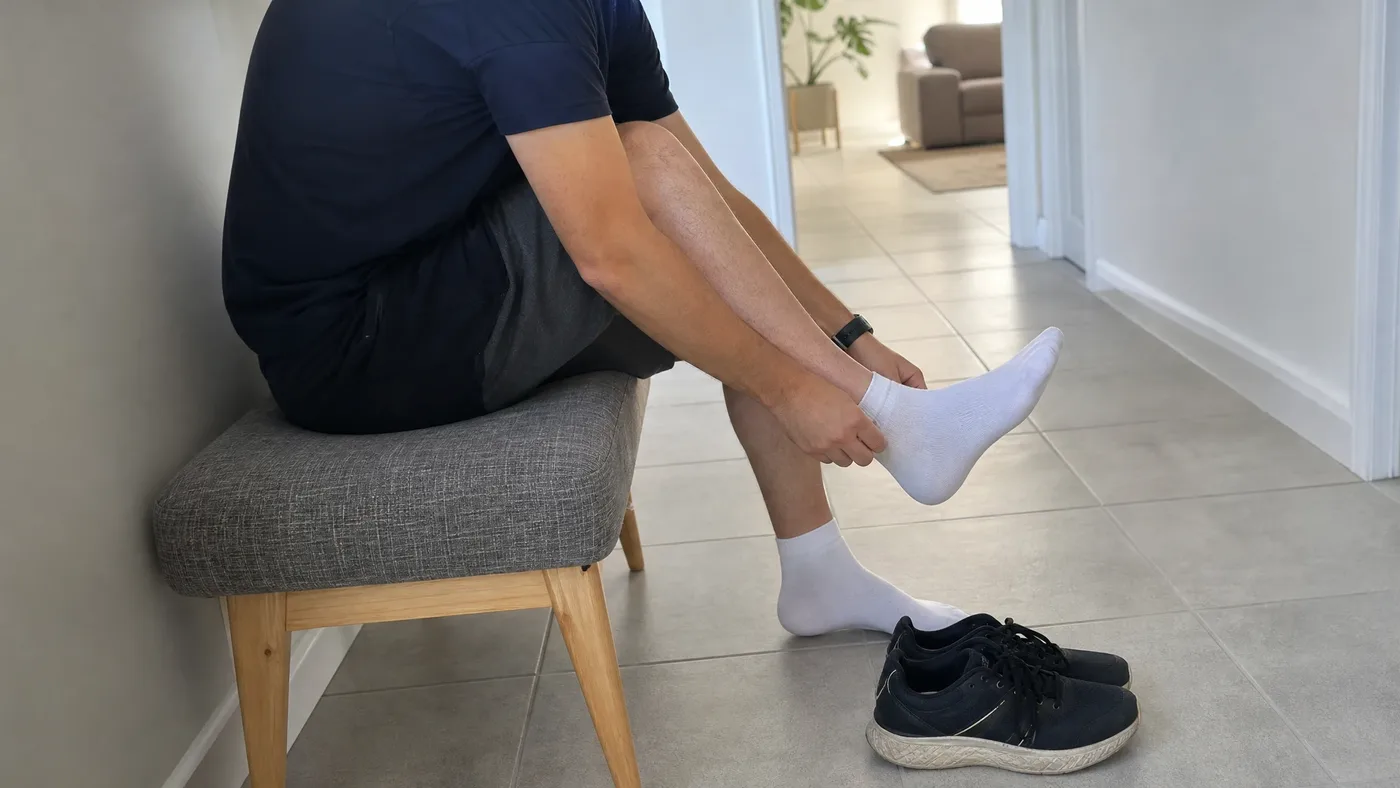
Clove Oil for Athlete's Foot and Ringworm: Dish vs Foot
Clove oil does stop dermatophytes from growing in a dish, and that sentence is the whole basis of "clove oil for athlete's foot." The step from a dish to a foot has never been tested in a trial we could find. We sell clove bud and clove leaf oil for aromatic and cosmetic use, and we do not offer a foot or ringworm routine. What follows is what the dish study did, what the CDC lists instead, and why cracked, itchy skin is the worst place to experiment with an eugenol-rich oil.
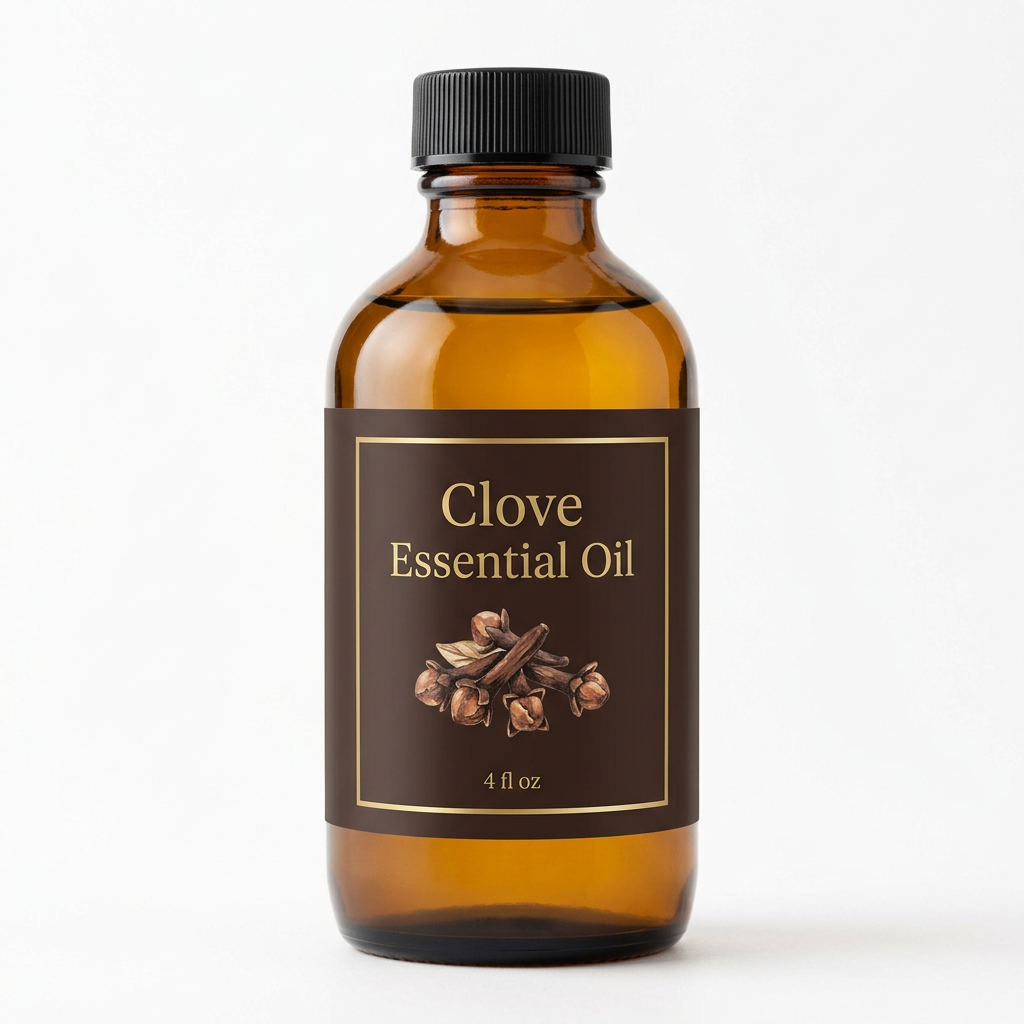
Clove Essential Oil
Our own Clove Essential Oil, in sizes from 0.5 oz to bulk.
From $10.99
Shop Now →What the lab study did
Pinto et al., Journal of Medical Microbiology, 2009, a Portuguese pharmacy-faculty group, analysed a commercial clove oil by GC-MS (85.3% eugenol) and tested the oil and eugenol alone against Candida, Aspergillus and dermatophyte strains, both clinical isolates and reference strains, using the standard Clinical and Laboratory Standards Institute method for finding the minimum concentration that inhibits growth. Both preparations inhibited all strains tested, including fluconazole-resistant ones. The authors reported that the effect appeared to come from membrane damage and reduced ergosterol, a fungal membrane component, and wrote that the oil deserved "further investigation for clinical application."
Read that for what it is: a test of a specific oil in contact with fungus in liquid. No person's foot was involved, no carrier oil, no sweat, no sock, and no measure of what the oil did to human skin cells at the concentrations that stopped the fungus. Our abstract-level reading does not include the individual MIC numbers, so we will not quote one.
What the CDC lists for the foot
The CDC's ringworm treatment page says ringworm of the skin, which includes athlete's foot and jock itch, is usually managed with non-prescription antifungal creams, ointments, lotions or powders applied for 2 to 4 weeks, and that you should keep going even when symptoms begin to improve. The over-the-counter active ingredients it names are clotrimazole, miconazole, terbinafine and ketoconazole. It also gives two cautions that matter more than any oil:
- Avoid creams containing steroids on ringworm or on any undiagnosed rash, because "steroid creams can make ringworm infections worse."
- See a healthcare provider if symptoms are more severe or widespread than usual, or do not go away after treatment. The page also says to go to a provider for testing, since similar conditions can look alike (CDC, About Ringworm).
The second point deserves emphasis. Reasoning from the CDC's look-alike warning: a foot rash that is not fungal, such as a contact reaction, has no reason to respond to an antifungal oil, and an irritant oil could add to it. A pharmacist can talk through the over-the-counter options, and a clinician can confirm what is going on.
The skin barrier problem, with numbers
If the skin is cracked or sore, as it can be in a foot rash, it is a damaged barrier, and that is a poor surface for an irritant. The sourced facts about eugenol:
- The Tisserand Institute's eugenol article says eugenol "can be a skin irritant or allergen if not used in proper dilutions" and lists 0.5% as the topical maximum for clove bud oil (Tisserand and Young, Essential Oil Safety, 2nd edition). It gives no figure for leaf oil.
- Kamatou et al., Molecules, 2012 reviews eugenol's toxicity "with special reference to contact dermatitis" and notes eugenol can enhance the skin permeation of other drugs.
The range on our own product pages is 0.5% to 2%. The arithmetic for 30 ml of carrier is about 3 drops at 0.5% and about 12 at 2% (assuming 20 drops per ml; drop size varies). With our bud oil's published 73.57% eugenol, that is 0.37% and 1.47% eugenol. We have not tested these blends on anyone, and we state them to show scale, not to suggest them for a foot. The Tisserand figure is the lower end, and the foot with a barrier break is a poor place to move up the range.
How to read a "kills fungus" claim
When a page says clove oil "kills" a foot fungus, it is nearly always quoting a minimum inhibitory or fungicidal concentration from work like Pinto's. Those are expressed against a volume of liquid in a tube. A foot is not a tube: the oil is diluted in a carrier, spreads across a large area, evaporates (eugenol is volatile), and meets skin that reacts to it. Nobody has published what dose a toe web would receive, or how that compares with the dish figure. A number with no bridge to the real setting is a lead for researchers, and Pinto's own wording says as much.
Why "natural" is not a free pass here
The question in the search box is usually "will this work?" A better question is "what does it cost if it does not?" With a prescription-free antifungal cream, the CDC says a 2 to 4 week course. With clove oil, no trial defines the course, and the cost of a wrong guess is contact dermatitis stacked on a fungal infection, which is two problems sharing the same toes. Weeks spent on an untested oil are also weeks in which an infection that needed a proper product is not getting one, which is the reasoning behind the CDC's advice to see a provider if symptoms do not go away.
Who should see a clinician first
- Anyone with diabetes or poor circulation. A foot skin problem in this group is a podiatrist or physician question first. The CDC separately notes that people with diabetes are at increased risk for returning nail infections.
- Anyone whose rash is spreading, blistering, weeping, or has not improved after the 2 to 4 weeks the CDC describes for non-prescription antifungals.
- Anyone with a scalp rash. The CDC says scalp ringworm needs prescription oral medication for 1 to 3 months and that creams, lotions or powders do not work for it. By extension, a diluted oil on the scalp is not an answer either.
- Children, and anyone pregnant or breastfeeding. Our safety copy says to keep clove oil away from children. Ask a pediatrician, or an OB-GYN or midwife.
Where clove oil and your feet do meet
Honestly, in a diffuser or a shoe-cupboard scent, and in no other way we can document. We sell oil by the bottle; we do not sell antifungal creams, powders or foot products, and the pharmacy aisle does. If your question is about nails, we cover it in clove oil for nail fungus. For the broader skin picture see clove oil for skin, and for how this oil compares with the tea tree oil that gets the foot-fungus headlines, see clove oil vs tea tree oil.
If you take one number away, make it the CDC's 2 to 4 weeks: that is the timeframe a standard antifungal is given to show whether it is working, and it is also the point at which a clinician should be involved.
Clove Essential Oil
Clove Essential Oil from our own shop, in sizes from 0.5 oz to bulk.
From $10.99
Shop Now →Sources & Further Reading
- Pinto E et al., 2009. Antifungal activity of the clove essential oil from Syzygium aromaticum on Candida, Aspergillus and dermatophyte species. pubmed.ncbi.nlm.nih.gov/19589904
- CDC. Ringworm Treatment. cdc.gov/ringworm/treatment
- CDC. About Ringworm. cdc.gov/ringworm/about
- Tisserand Institute. Eugenol: Essential Oil Constituents in Food Part 4. tisserandinstitute.org/learn-more/eugenol
- Kamatou GP et al., 2012. Eugenol: from the remote Maluku Islands to the international market place. pubmed.ncbi.nlm.nih.gov/22728369