Clove Oil for Nail Fungus: What a Dish Study Can't Tell You
No trial we could find has tested clove oil on a fungal nail, so anything you read promising results is borrowing from somewhere else. We sell clove bud and clove leaf oil as aromatic and cosmetic oils, and for a thick, discolored toenail our advice is to see a podiatrist or dermatologist before reaching for any bottle. This article walks through the questions in the order we would want them asked: is it really fungus, what does the nearest trial show, and why a lab result for clove does not carry over to the nail.
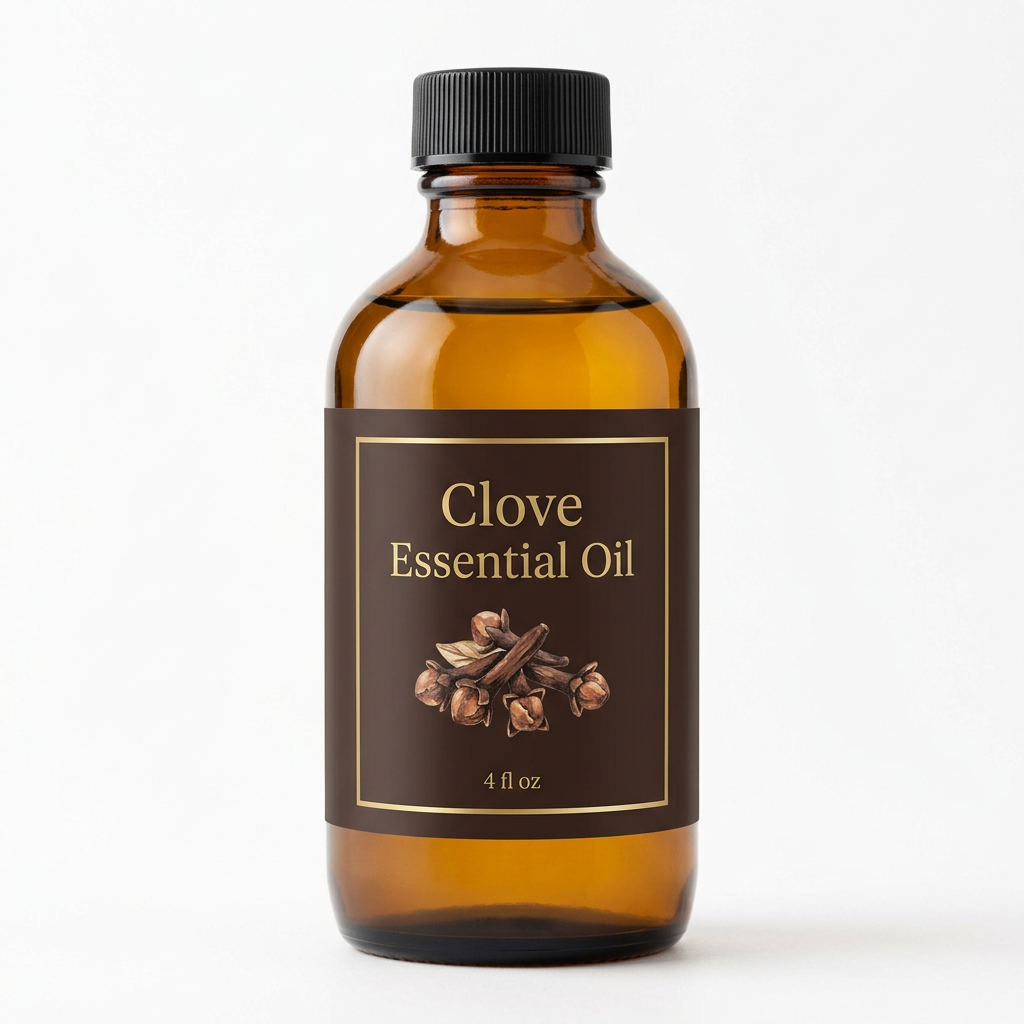
Clove Essential Oil
Our own Clove Essential Oil, in sizes from 0.5 oz to bulk.
From $10.99
Shop Now →Step one: is it fungus at all?
The CDC calls fungal nail infections a form of ringworm (onychomycosis) and says that if you have a nail infection or symptoms of ringworm you should "go to a healthcare provider for testing," because similar conditions can look alike and testing helps you get the right treatment. The CDC does not list the look-alikes on that page; a clinician can. Source: CDC, About Ringworm. This matters for our oils specifically: if the nail is not fungal, an eugenol-rich oil on the nail fold is all risk and no possible reason.
Step two: what do the standard options look like?
The American Academy of Dermatology's nail fungus page describes prescription terbinafine tablets, taken for 12 weeks for toenails, with liver blood tests before and about 6 weeks after starting. It lists prescription nail solutions and lacquers applied daily, and notes that the non-prescription terbinafine cream sold for skin is not an option for nails. It adds that nails grow slowly, that the infection may clear in 6 to 12 weeks on tablets but full regrowth can take a year or longer, and that nail fungus can return a year or more after clearing. The CDC treatment page agrees that oral prescription antifungals are usually the best option, that clearing "can take several months to a year," and that infections can return. It also says people with diabetes are at increased risk for returning nail infections. Sources: AAD, Nail fungus: treatment and CDC, Ringworm Treatment.
Notice the timescale. Even approved products are measured in months, so any home oil that seems to be working at day ten is not telling you much about the fungus under the plate.
Step three: the nearest trial is tea tree, and it is modest
The study people cite is Buck, Nidorf and Addino, Journal of Family Practice, 1994. It enrolled 117 patients with culture-proven distal subungual onychomycosis of the toenail, randomized them double-blind to 1% clotrimazole solution or 100% tea tree oil, twice daily for 6 months, with debridement (trimming back the diseased nail) at each visit. The results as reported: negative cultures at six months in 11% (clotrimazole) and 18% (tea tree oil), partial or full clinical resolution in 61% and 60%, and about half of each group reporting continued improvement three months later. The authors note that all current therapies have high recurrence rates.
Three things to take from it. First, this is tea tree, not clove: a different oil dominated by a different compound. Applying it to clove is an inference, and a weak one. Second, the comparator was 1% clotrimazole solution, and by the culture measure neither arm did much: 11% and 18% negative at six months, so "comparable" here means comparably modest. Third, 100% oil was applied to the nail in a supervised trial, and the AAD page says tea tree oil has been studied only in small trials, with unknown effectiveness and side effects. The trial does not make neat essential oil on feet a recommendation, and we do not read it that way. We do not sell tea tree; for the comparison of the two oils, see clove oil vs tea tree oil.
Step four: what we do know about clove and fungi
Pinto et al., Journal of Medical Microbiology, 2009 tested a commercial clove oil (85.3% eugenol by GC-MS) and eugenol against Candida, Aspergillus and dermatophyte strains, which are the group that includes common nail and foot fungi. Both inhibited every strain tested, and the authors reported damage to the fungal cell membrane and reduced ergosterol. They concluded the oil "deserv[es] further investigation for clinical application." That is a dish study of strains in liquid culture, with the oil in direct contact with the fungus.
Reasoning from the nail's structure, the practical consequence is that a dish and a nail are not the same problem. In distal subungual infection the fungus sits under and inside the keratin of the nail plate, and a drop on the surface has to cross it. We found no study measuring how much clove oil or eugenol reaches that depth, so we cannot tell you any amount does. The one thing we can say is that the broader eugenol literature (Kamatou et al., Molecules, 2012) discusses eugenol's contact dermatitis potential, and the skin around the nail is where that would land.
The risk you can count: the skin around the nail
The Tisserand Institute's eugenol page lists 0.5% as the topical maximum for clove bud oil and describes eugenol as a possible irritant or allergen when not diluted. Our bud oil's published GC-MS report shows 73.57% eugenol, so a 0.5% dilution is about 0.37% eugenol. A trial dose of 100% oil is therefore about 200 times the figure Tisserand cites. We are not suggesting any of these doses for a nail. We are showing the gap so the "neat oil" folk advice reads as what it is.
One more number worth holding: the CDC says a typical skin ringworm course with non-prescription antifungals runs 2 to 4 weeks, while nails are a months-long problem. The difference in timescale is itself a clue that the nail is the harder target, and that a few weeks of a home oil, whatever the nail looks like at the end, cannot be read as a result.
Who needs a clinician first
- Anyone with diabetes, poor circulation or a weakened immune system. The CDC flags higher risk of nail infections returning in diabetes, and a podiatrist or physician should manage any foot problem.
- Anyone with pain, swelling, pus, a red streak, or a nail lifting off the bed. That is no longer a cosmetic problem.
- Anyone who has not had it confirmed. Ask for a nail clipping test.
- Children and anyone pregnant. Our safety copy says to keep clove oil away from children; for pregnancy, ask an OB-GYN or midwife.
Where our oil does fit
Both of our oils are labelled for aromatic and cosmetic use, and our pages say to dilute to 0.5% to 2% and patch test, which for the bud oil already sits above the Tisserand figure at the top of the range. If you buy clove oil, buy it for its warm smell. For the fungal nail, the useful purchase is an appointment. A related read on the skin version of the same problem is clove oil for athlete's foot and ringworm, and the overview is in clove oil for skin.
Clove Essential Oil
Clove Essential Oil from our own shop, in sizes from 0.5 oz to bulk.
From $10.99
Shop Now →Sources & Further Reading
- CDC. About Ringworm. cdc.gov/ringworm/about
- CDC. Ringworm Treatment. cdc.gov/ringworm/treatment
- American Academy of Dermatology. Nail fungus: Diagnosis and treatment. aad.org/public/diseases/a-z/nail-fungus-treatment
- Buck DS, Nidorf DM, Addino JG, 1994. Comparison of two topical preparations for onychomycosis: tea tree oil and clotrimazole. pubmed.ncbi.nlm.nih.gov/8195735
- Pinto E et al., 2009. Antifungal activity of the clove essential oil from Syzygium aromaticum on Candida, Aspergillus and dermatophyte species. pubmed.ncbi.nlm.nih.gov/19589904
- Kamatou GP et al., 2012. Eugenol: from the remote Maluku Islands to the international market place. pubmed.ncbi.nlm.nih.gov/22728369
- Tisserand Institute. Eugenol: Essential Oil Constituents in Food Part 4. tisserandinstitute.org/learn-more/eugenol