Clove Oil Muscle Rub: Why Your Skin Tingles
Anyone who has put a little clove oil on their fingertip knows the sensation: a quick warmth, a prickle, sometimes a flush. It feels like something is happening. What is happening is that skin is reacting to a strong phenol, and that distinction is worth understanding before clove oil goes anywhere near a massage routine.
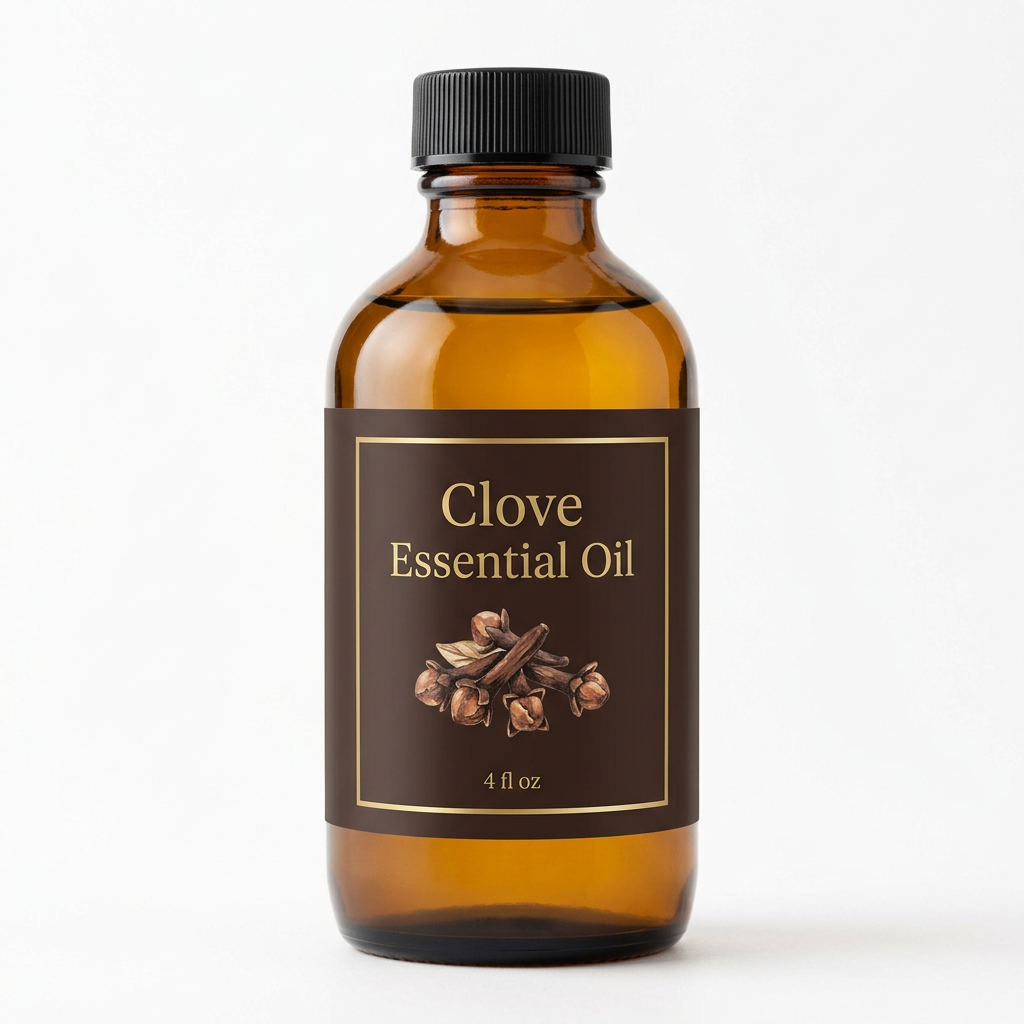
Clove Essential Oil
Our own Clove Essential Oil, in sizes from 0.5 oz to bulk.
From $10.99
Shop Now →Why clove oil feels warm
Most of clove oil is eugenol. The GC-MS report we publish for our bud oil lists it at 73.57% by area, and that concentration is what gives clove its big, spicy character. It is also why the Tisserand Institute describes eugenol as something that can irritate skin or cause an allergic reaction if it is not used in proper dilutions. Put those two things together and the tingle makes sense: the warmth is the skin noticing the oil. Reasoning from that, a stronger tingle means a stronger exposure, not a better result, and it is a good cue to use less, not more.
This is why we describe our clove bud and leaf oils as aromatic and cosmetic oils and leave it there. We sell them for their scent, and we are not a source for advice on aches, injuries or joints.
What the research on joints actually covers
Clove does turn up in laboratory work on inflammation, and it is fair to say what that work is. A 2026 study in Inflammopharmacology (El Faqer and colleagues) used a clove oil that was 77.67% eugenol. In the dish, the oil and eugenol quieted the activity of immune cells called neutrophils. In mice given an arthritis-inducing injection, treatment reduced paw swelling and tissue damage, and a computer docking model predicted interactions with two inflammation-related proteins.
That is real science, and it is also several steps away from a person rubbing diluted oil on a sore shoulder: it is cells and mice, the abstract does not describe a massage-style application, and docking is a prediction rather than a measurement. A study like this tells researchers where to look next. It does not tell you what an oil from a bottle will do, and we would not draw that line for you.
The dilution numbers, worked out
If you are going to use clove oil on skin at all, the first decision is the percentage. The Tisserand Institute lists 0.5% as the recommended topical maximum for clove bud, citing Essential Oil Safety (2nd edition), and that is the figure we work to. Here is what it looks like in practice:
- 30 ml of carrier oil at 0.5% holds 0.15 ml of clove oil.
- 100 ml at 0.5% holds 0.5 ml. A common rule of thumb is about 20 drops to a milliliter, so that is roughly ten drops, though drop sizes vary from bottle to bottle.
- Going from 0.5% to 2% means four times as much clove oil in the same bottle, which is a big jump for an oil this eugenol-rich.
Our oils are sold neat, so any dilution is yours to measure. Carrier oils are not something we sell, but any craft supplier or grocery will have them, and our carrier oil guide covers how to choose one. A patch test on a small area of skin comes first, and clove oil stays away from broken skin, eyes, children and pets. Our safety basics have the full routine.
A note for people who give massages
Repeated hands-on contact is a different exposure from the occasional drop. There is a published case report of occupational allergic contact dermatitis from eugenol, cinnamon oil and clove oil in a physiotherapist (Sanchez-Perez and Garcia-Diez, 1999). It is a single report, but it points at something sensible: the more often skin meets eugenol, the more it matters to keep the dose low. If you work with clients, a massage or physical therapy association is the right place for guidance on oils, not an oil seller.
If you love the smell, put it in the room
Many people reach for clove after a long day on their feet because the scent feels like warmth and comfort. We understand that pull. The simplest way to have it is also the gentlest: let the aroma fill the room instead of your skin. A diffuser with a drop of bud oil and a little sweet orange, or a simmer pot on the stove, gives you the cozy spiced air without a single drop touching a sore spot.
Open the bottle and you will notice that bud and leaf smell different. Bud is rounder and sweeter, almost like mulled cider, while leaf is drier and smokier. Either one reads as warm, and neither needs to go anywhere near your shoulders to do its job as a fragrance.
When aches need a professional
Pain after an injury, a swollen or hot joint, numbness, or aches that keep coming back are all jobs for a doctor or physical therapist. Putting an irritating oil on a sore area can also make it harder to tell what your skin and body are doing. For what clove oil is good at, think scent: bud oil is warm and sweetly spicy, and leaf oil is bolder and smokier. If you want to see how it behaves on skin more generally, clove oil for skin and clove oil side effects go deeper.
The warm tingle is clove oil introducing itself. It is a good reason to start with very little.
Clove Essential Oil
Clove Essential Oil from our own shop, in sizes from 0.5 oz to bulk.
From $10.99
Shop Now →Sources & Further Reading
- El Faqer O et al., 2026. Dual anti-inflammatory and immunomodulatory effects of clove essential oil and eugenol: targeting neutrophil functions and experimental arthritis. Inflammopharmacology. pubmed.ncbi.nlm.nih.gov/41348260
- Tisserand Institute. Eugenol: Essential Oil Constituents in Food Part 4. tisserandinstitute.org/learn-more/eugenol
- Sanchez-Perez J, Garcia-Diez A, 1999. Occupational allergic contact dermatitis from eugenol, oil of cinnamon and oil of cloves in a physiotherapist. Contact Dermatitis. pubmed.ncbi.nlm.nih.gov/10617221