Clove Balm Recipe: A 60 Gram Tin in One Pot
A tin of spiced balm is one of the nicest things you can make with a little clove oil: warm, sweet-spiced and gone in a few minutes of melting. It is also a recipe where almost nothing goes in, and that is exactly the point. A 60 gram tin needs about 0.3 grams of clove oil, and getting that small number right is the whole craft.
Clove Essential Oil
Our own Clove Essential Oil, in sizes from 0.5 oz to bulk.
From $10.99
Shop Now →Why half a percent
Clove oil is rich in eugenol, which gives it that baking-spice smell and also makes it one of the more skin-active oils. The Tisserand Institute lists a topical maximum of 0.5% for clove bud oil, and that is the ceiling we keep our own formulas under. Our shop dilution range runs from 0.5% to 2%, and for a balm that stays on the skin we would always sit at the bottom of it. Leaf oil is a different oil from the same tree and has no figure on that page, so we hold it to the same 0.5%.
The reassuring side of such a low number is that clove is a strong oil, so 0.5% still smells like clove. You are not giving anything up.
The balm, in grams
This is a formulation built from a common balm ratio of roughly one part wax to three or four parts oils and butters, with the clove arithmetic worked out for a 60 g tin. Wax, butter and carrier oil come from a craft or soapmaking supplier, since we sell only the clove oil.
| Ingredient | Grams | Share |
|---|---|---|
| Beeswax pastilles | 12.0 | 20% |
| Shea or cocoa butter | 12.0 | 20% |
| Liquid carrier oil (sweet almond, jojoba or similar) | 35.7 | 59.5% |
| Clove oil | 0.3 | 0.5% |
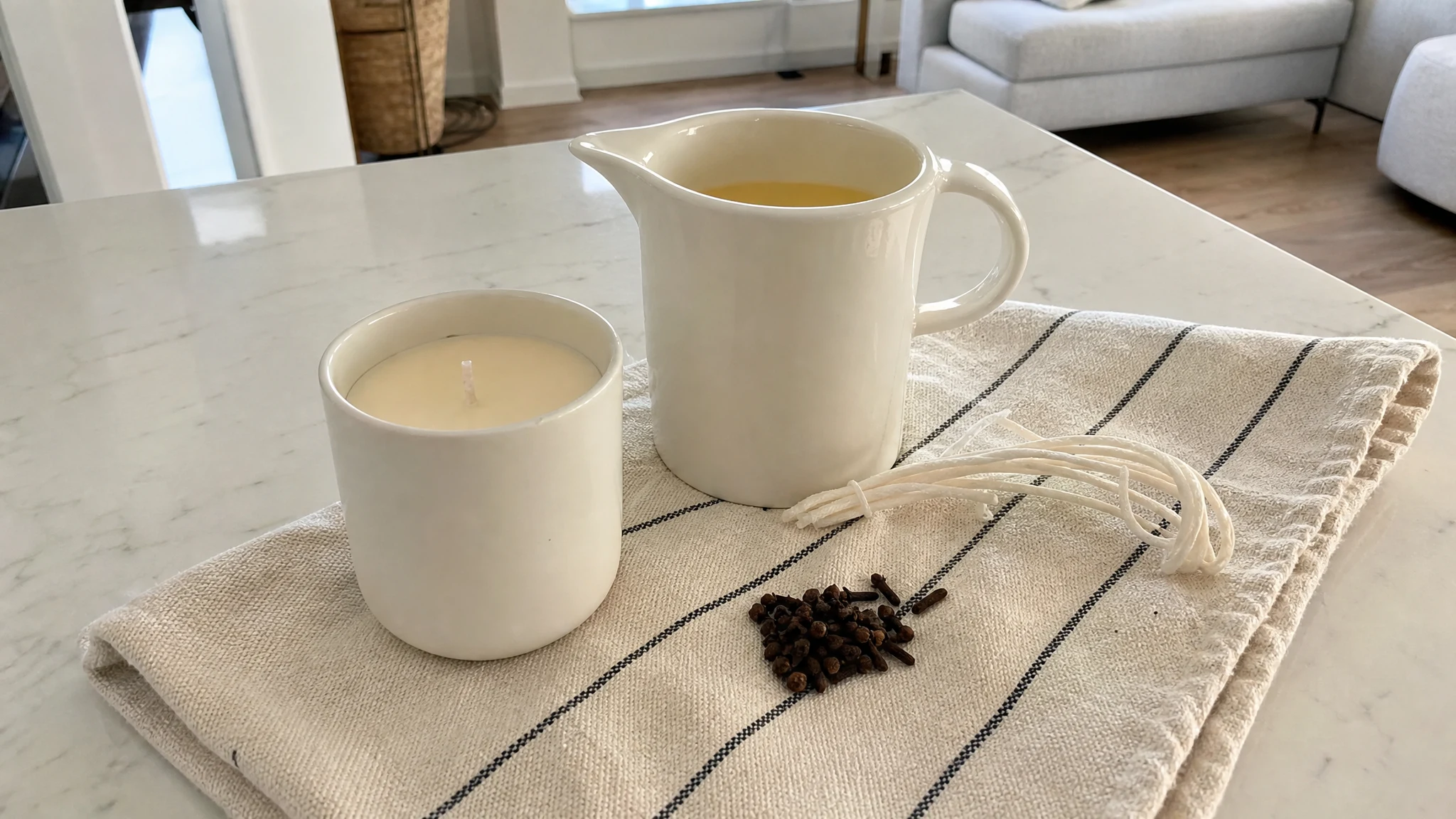
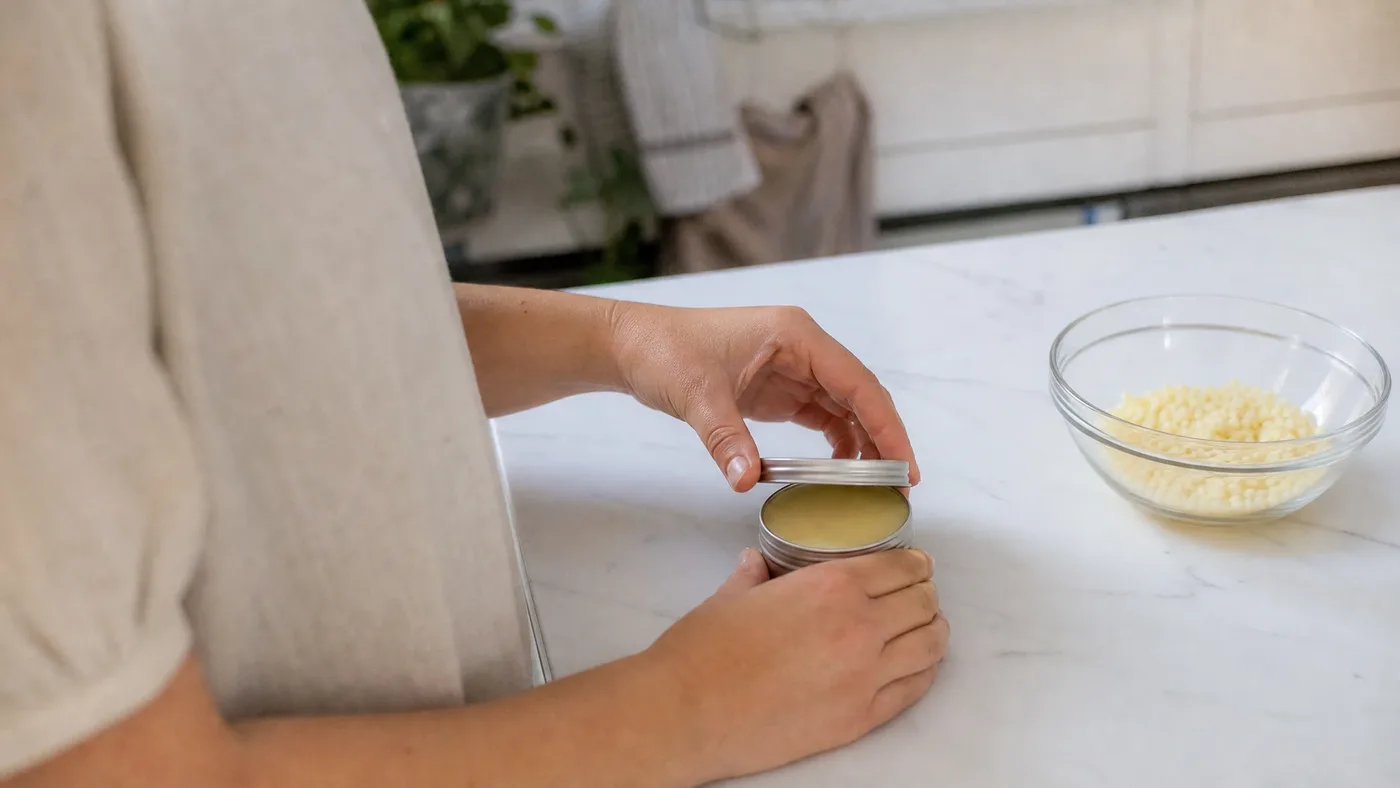
Melt the wax, butter and carrier oil together in a heatproof jar set in a pan of barely simmering water. Lift it out and let it cool for a minute or two until it is warm, not steaming, then stir in the clove oil and pour straight into your tin. Adding the oil last keeps more of its aroma in the finished balm. Leave it to set undisturbed; if it comes out too firm for your taste, remelt with a little more oil, and if too soft, a little more wax.
A few tips on the pour
Have your tins lined up and open before you start melting, because the balm begins to set as soon as it cools. Pour slowly in one steady stream, and tap the tin gently on the counter to bring any bubbles to the top. Then leave it alone. Moving it while it sets can cause a dimple or a ripple on top. In a cool room it will be ready in about an hour, though we would give it a full day before you put a lid on and pack it away.
Weigh it, do not count drops
For a recipe this small, a drop is a loose unit. The Tisserand Institute reports that 20 drops averaged 0.66 g across three studies, and that drops per millilitre vary from about 20 to 40. On that average, 0.3 g is about nine drops, but one drop either way moves a 60 g balm by roughly 0.05 percentage points. A kitchen scale that reads to 0.01 g takes the guessing out. If you do not have one, make a larger batch so a stray drop matters less.
What to expect from the texture and scent
A balm like this sets to a soft, spreadable feel that melts at the touch of your fingers. Beeswax gives it a faint honey note, shea or cocoa butter adds a creamy body, and the clove sits on top as a gentle spice. When you open the tin, the first thing you smell is that clove, and then the warm sweetness of the wax underneath. Because the clove is so low, the balm smells like a spice cupboard instead of a pharmacy, which is exactly the effect to aim for.
Where it goes, and where it does not
A spiced balm suits forearms, hands, shoulders and feet. Keep it off the face, lips, eyes and any broken or freshly shaved skin, and try a little on the inner forearm and wait a day before using it more widely. If anything stings, itches or turns red, wash it off and stop. Clove appears among the oils that people react to more often than most; in one German clinic dataset it was positive in 1.5% of patients tested with it. If you have eczema or reactive skin, ask a dermatologist first. Keep the tin away from children and pets.
For more on how much of an oil belongs in a leave-on product, our clove safety basics go through it, and our carrier oil shortlist helps with the base. If you are weighing bud against leaf for the scent, this comparison covers it.
Pour a few tins at once if you like, as small gifts tied with twine, and write the clove percentage on every label.
Make it small, label the tin with the date and the clove percentage, and keep it somewhere cool and dark. A balm that smells like a spice cupboard in December is a very good thing to have made.
Clove Essential Oil
Clove Essential Oil from our own shop, in sizes from 0.5 oz to bulk.
From $10.99
Shop Now →