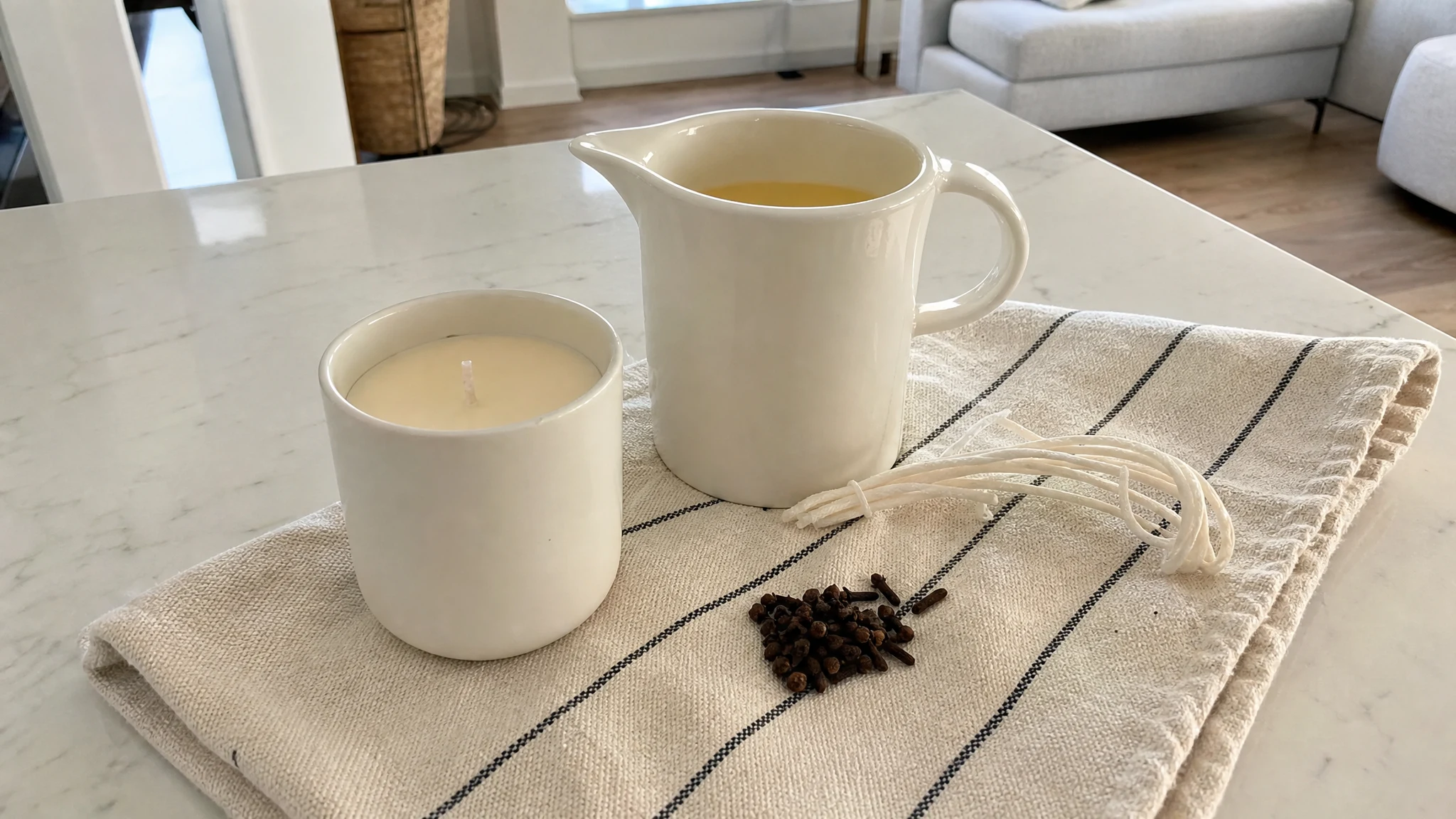
Clove Spice Candle: A Start to Finish Guide
A clove candle should smell like the inside of a spice tin: warm, sweet and slightly peppery. Getting that scent into a jar without overdoing it is mostly a matter of arithmetic and patience, and the person who knows your wax best is the company that made it.
Clove Essential Oil
Our own Clove Essential Oil, in sizes from 0.5 oz to bulk.
From $10.99
Shop Now →Your wax sets the ceiling
Every candle wax comes with a data sheet, and that sheet states the maximum fragrance load for that wax, usually as a percentage of wax weight. Treat that number as a ceiling for all fragrance oils combined, not a target for clove alone. Clove oil is mostly eugenol, a strong aromatic compound, so a lot of its character comes through at modest loads. We also suggest checking the IFRA standards for your product category, which are the fragrance industry's own limits. We sell no wax or wicks; those come from a candle supplier.
The arithmetic for 100 g of wax
The Certificate of Analysis we publish for one bud batch gives a relative density of 1.054, so clove oil is a little heavier than water and 1 g of it is about 0.95 ml. At the rough convention of 20 drops per millilitre, that gives:
| Load | Oil per 100 g wax | Roughly in drops |
|---|---|---|
| 1% | 1 g | 19 |
| 2% | 2 g | 38 |
| 3% | 3 g | 57 |
Drop counts are only a guide, since drops vary from about 20 to 40 per millilitre according to the Tisserand Institute. Weigh the oil if you can. Where you land inside your wax maker's limit is a matter of taste, and our recommendation is to start at the lower end, especially because clove makes a strong impression.
A recipe that makes the scent richer
Clove on its own can read as sharp. Blended with something sweet and round it becomes the heart of a holiday candle. Our bud oil sits well alongside orange, cinnamon, cedarwood, frankincense and vanilla, and our leaf oil with sweet orange, cinnamon leaf, cedarwood, patchouli, black pepper and vanilla. We sell only clove, so the partners come from a supply shop, and the combined load of every oil must stay within the wax maker's limit. Our spice pairing guide goes through the pairings.
Setting up the bench
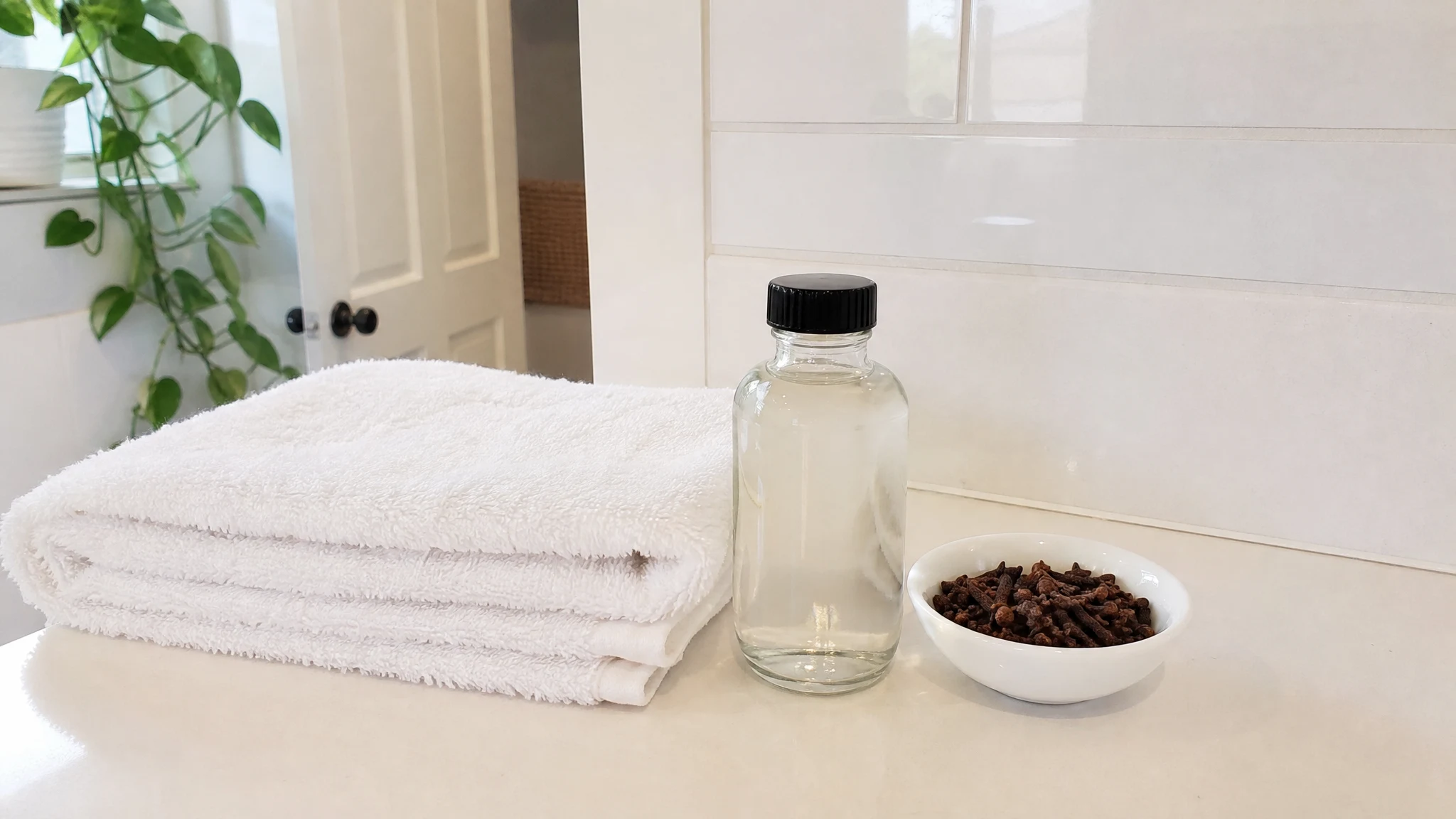
Candle making goes smoothly when everything is within reach before the wax goes on the heat. Lay out a clean jar, your scale, a pouring jug, a spoon, a thermometer if your wax maker recommends one, paper towels and a pencil for the label. Wipe the jar until it is spotless, since dust and fingerprints show once the wax sets. Keep the clove bottle capped until you need it, and put it away the moment the oil is in.
Pour one test jar first
Before you pour six candles, pour one. Weigh your wax, melt it as the data sheet directs, add the oil at the temperature the sheet recommends, stir well and pour into a jar with a correctly sized wick. Let it cure for as long as the maker advises, since scent develops as the wax settles. Then burn it in a ventilated room on a heat-proof surface, away from curtains and pets, and stay in the room. Judge it at the one-hour mark: if the room smells strong, the load is high enough, and raising it is not the cure for a weak scent in a candle that has not yet cured. A big, sooty or flickering flame means the wick or the load does not suit that wax.
What about the oil catching fire?
It is a common worry, and the numbers are calming. PubChem lists the closed-cup flash point of eugenol above 100 C, well above the temperatures at which most waxes are poured. That figure is for eugenol alone, so follow your wax maker's guidance on pour temperature. The more useful safety habits are about the candle itself: trim the wick, keep it away from anything flammable, and never leave a flame unattended. Burning candles also release fine particles, and in a 2026 chamber study of paraffin candles the better-ventilated conditions measured lower levels, so a cracked window helps.
Waiting is the hard part
When the wax has set, resist lighting it on the spot. Take the lid off and sniff the cold candle, which will smell sweet and a little spicy, and write down what you notice. Check it again after the cure the maker suggests, then light it and judge how it fills the room. Label each jar with the date, the wax, the percentage of oil and the wick, so if you love the result you can make it again exactly the same way.
For other ways to scent a room without a flame, see our home fragrance crafts and simmer pot posts. A single, carefully made jar of clove candle is a lovely thing to light when the evenings draw in.
Clove Essential Oil
Clove Essential Oil from our own shop, in sizes from 0.5 oz to bulk.
From $10.99
Shop Now →