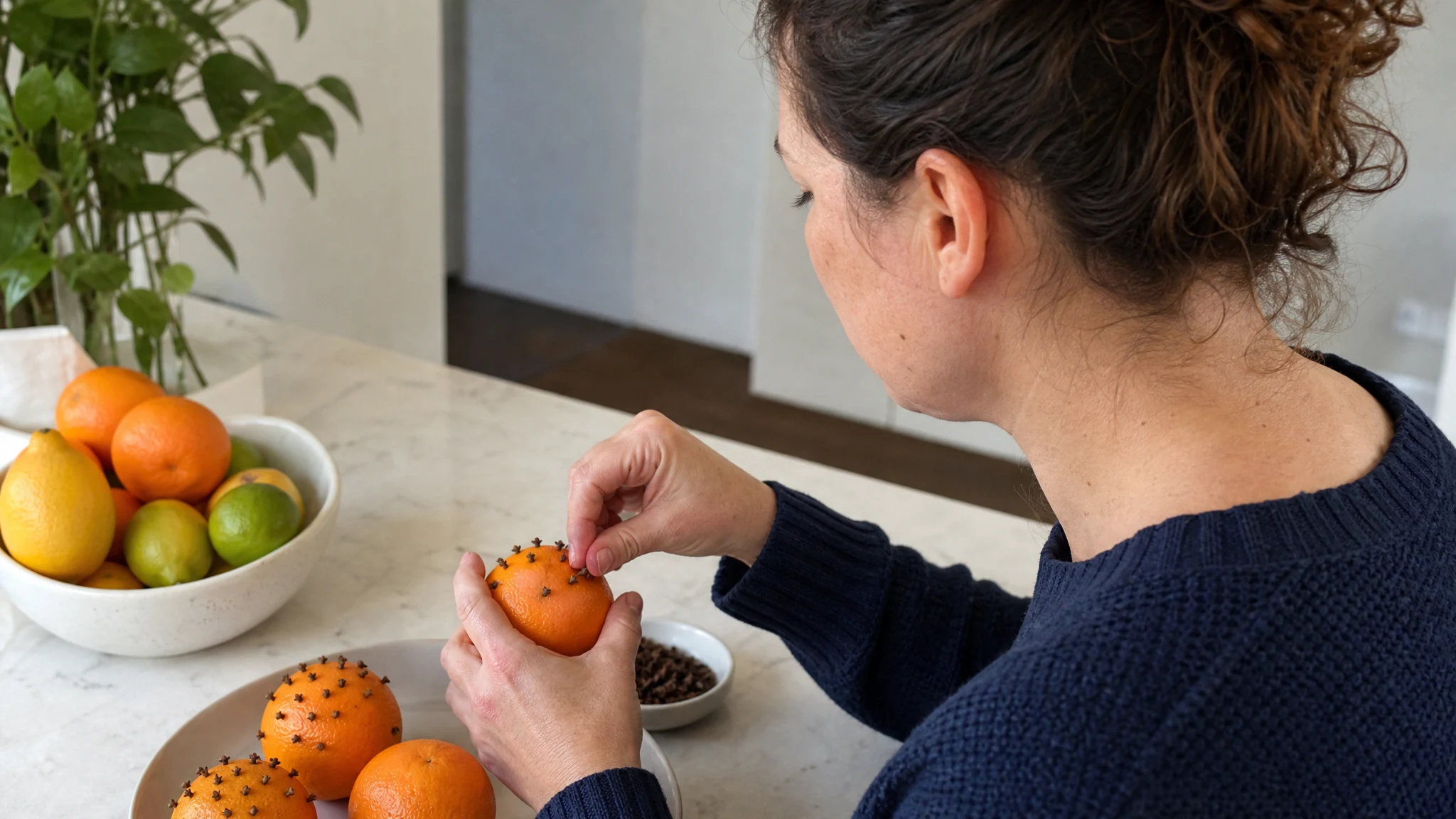
Clove and Orange Room Spray: A Pomander Style Mist
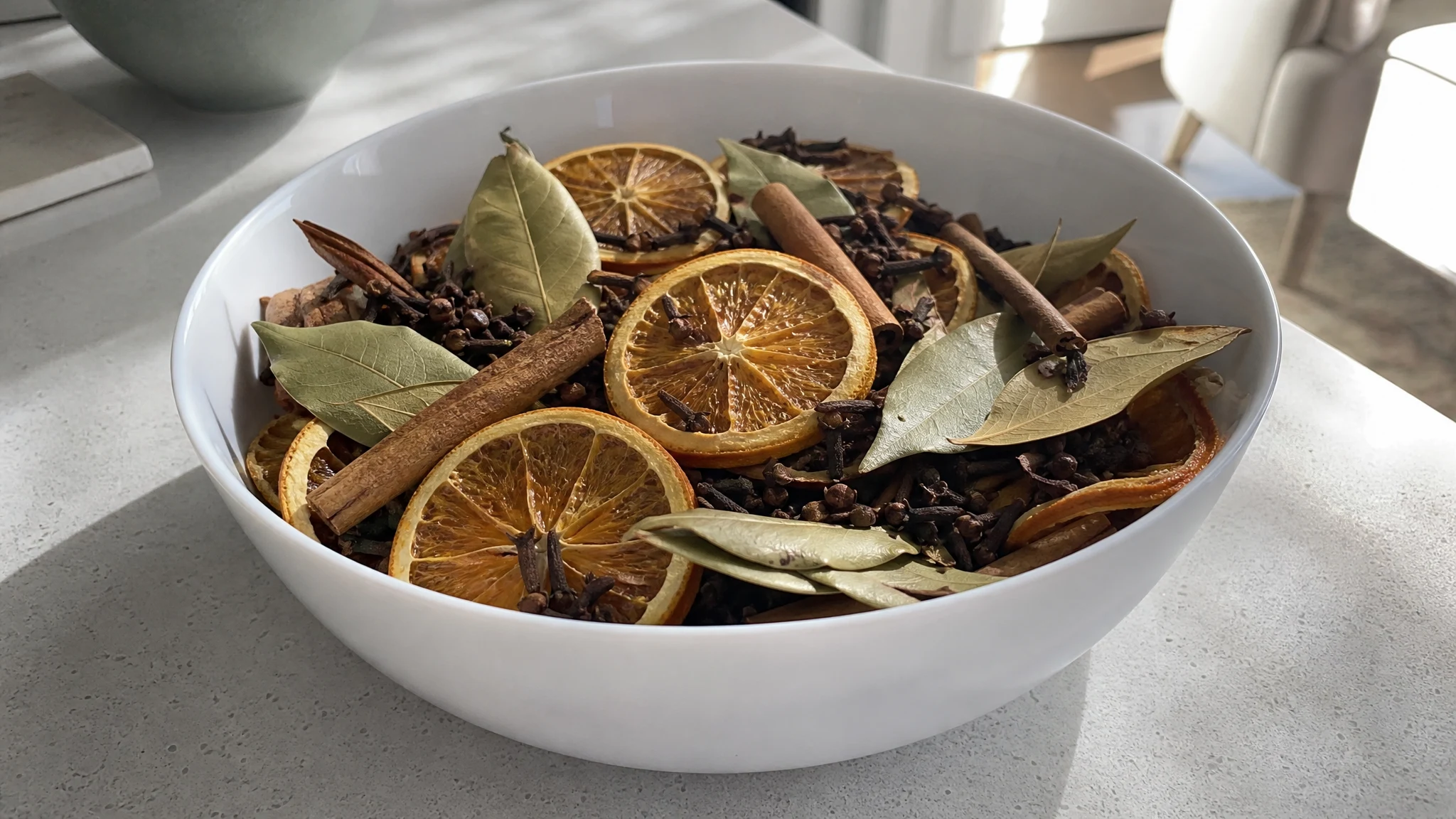
The smell behind a pomander is an orange with cloves pressed into its peel, and the easiest way to get it is to make the real thing. If you would like that smell as a mist, a little chemistry shapes the recipe: clove oil barely mixes with water, so a spray wants alcohol, and alcohol wants a room without a flame.
Clove Essential Oil
Our own Clove Essential Oil, in sizes from 0.5 oz to bulk.
From $10.99
Shop Now →Why this spray starts with alcohol
Eugenol is the main compound in clove oil, listed at 73.57% by area in the GC-MS report we publish for our bud oil. PubChem gives its water solubility as about 2,460 mg/L at 25 C, roughly 0.25%, and describes it as miscible with alcohol, with 1 ml dissolving in 2 ml of 70% alcohol. In practice, a "water and a few drops of oil" spray does not work well. Our bud oil has a relative density of 1.054 on its certificate of analysis, so it sinks, and what does not dissolve ends up at the bottom of the bottle against the dip tube. Dissolving the oil in alcohol first and thinning with a little water solves that.
Those figures are for eugenol itself, not for a whole oil blended with orange, so look at the finished spray: cloudy liquid or droplets mean the oil has not dissolved.
An alcohol-based pomander spray
This is a formulation worked out from the numbers here, and the amounts are deliberately low. Quantities are for a 100 ml bottle.
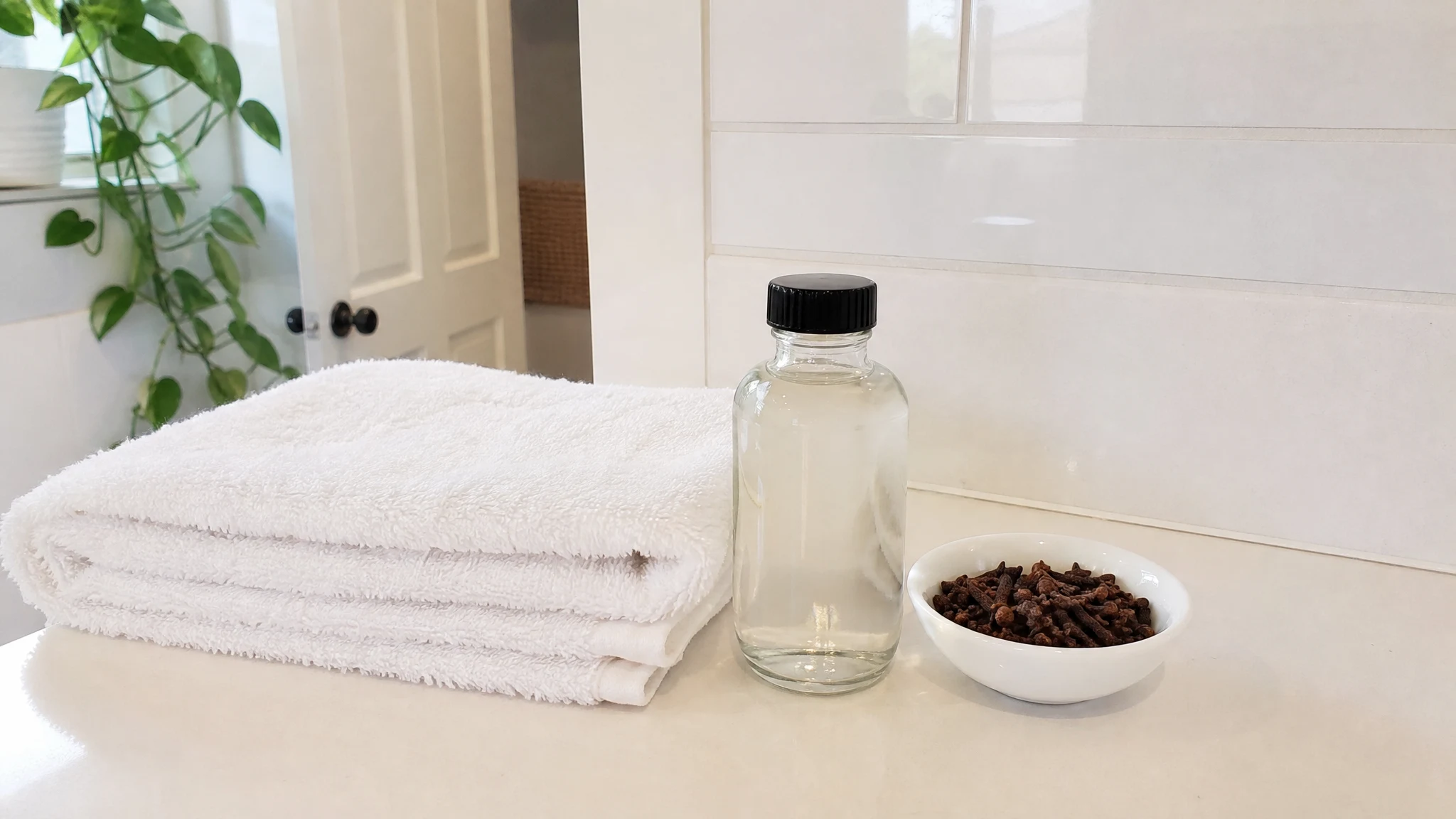
- Ethanol, 70% or stronger, from a craft or perfumery supplier (not isopropyl rubbing alcohol): 90 ml
- Sweet orange essential oil from an aromatherapy supplier, as we do not sell it: 16 drops, about 0.8 ml
- Clove bud or clove leaf oil: 4 drops, about 0.2 ml
- Distilled water: 10 ml
The arithmetic: at the usual rough convention of 20 drops to the milliliter, 4 drops of clove oil is 0.2 ml, which is 0.2% of 100 ml, and all the oils together come to about 1%. Our bud oil is warm, rich and sweetly spicy and our leaf oil is bolder and smokier, so choose by mood; bud is the closer match to the sweetness of a real pomander.
Put the alcohol in the bottle first, add the clove oil, then the orange, swirl, and add the water last. Shake before each use and spray a cloud into the air above head height, then walk out of it. Keep it off skin, hair, wood finishes, electronics and fabrics you care about.
Smell the bottles before you mix
Open the sweet orange and the clove oil one after the other, and breathe in gently from a hand's width away. You are looking for the balance you want: orange bright and juicy at the front, clove warm and spicy in the background. If you want more clove in the finished spray, the answer is to choose the bud oil, not to add drops, since bud is the one we describe as sweetly spicy. Then make your 100 ml bottle exactly as written, and resist the urge to adjust it before the first test.
Give it a minute
Spray a card or a scrap of paper from arm's length and wait a few minutes before you judge it. The alcohol leaves first and the smell changes as it goes, so what you sniff at the first second is not what the room will smell like. Label the bottle with the date, the list of ingredients and the word flammable, so anyone who finds it knows how to treat it.
Flame is the thing to plan around
Ethanol is flammable. PubChem lists closed-cup flash points for pure ethanol of about 12 to 14 C, which means it gives off ignitable vapor at ordinary room temperature (PubChem ethanol). Our spray is a dilute mix and will behave differently, but the sensible habit is to use it away from candles, fireplaces, stoves and gas heaters. That matters in a holiday room, where candles tend to be lit, so spray, let the air settle, and light the candles after.
We would not make a water-only version at home. Water-based sprays need a preservative once there is plenty of water in them, and that is a job for a cosmetic chemist's recipe rather than a kitchen improvisation.
Who and what to spray around
Droplets get breathed in. EFSA's expert panel describes both clove oils as irritants to the respiratory tract, skin and eyes and as skin sensitisers (EFSA FEEDAP, 2023). In a survey of 1,137 US adults, Steinemann (2018) found 64.3% of those with asthma or asthma-like conditions reported adverse effects from fragranced products. That was about fragranced products in general, but it is a good reason to put the bottle away when a guest says they react to sprays. The Pet Poison Helpline says cats and birds are at the greatest risk from essential oils and lists clove among them, so do not mist a room where a bird lives or spray toward a pet.
It is a pleasant room scent and nothing more: it covers odors with a nicer smell and does not clean or disinfect. For cleaning, see our cleaning post.
The no-oil version
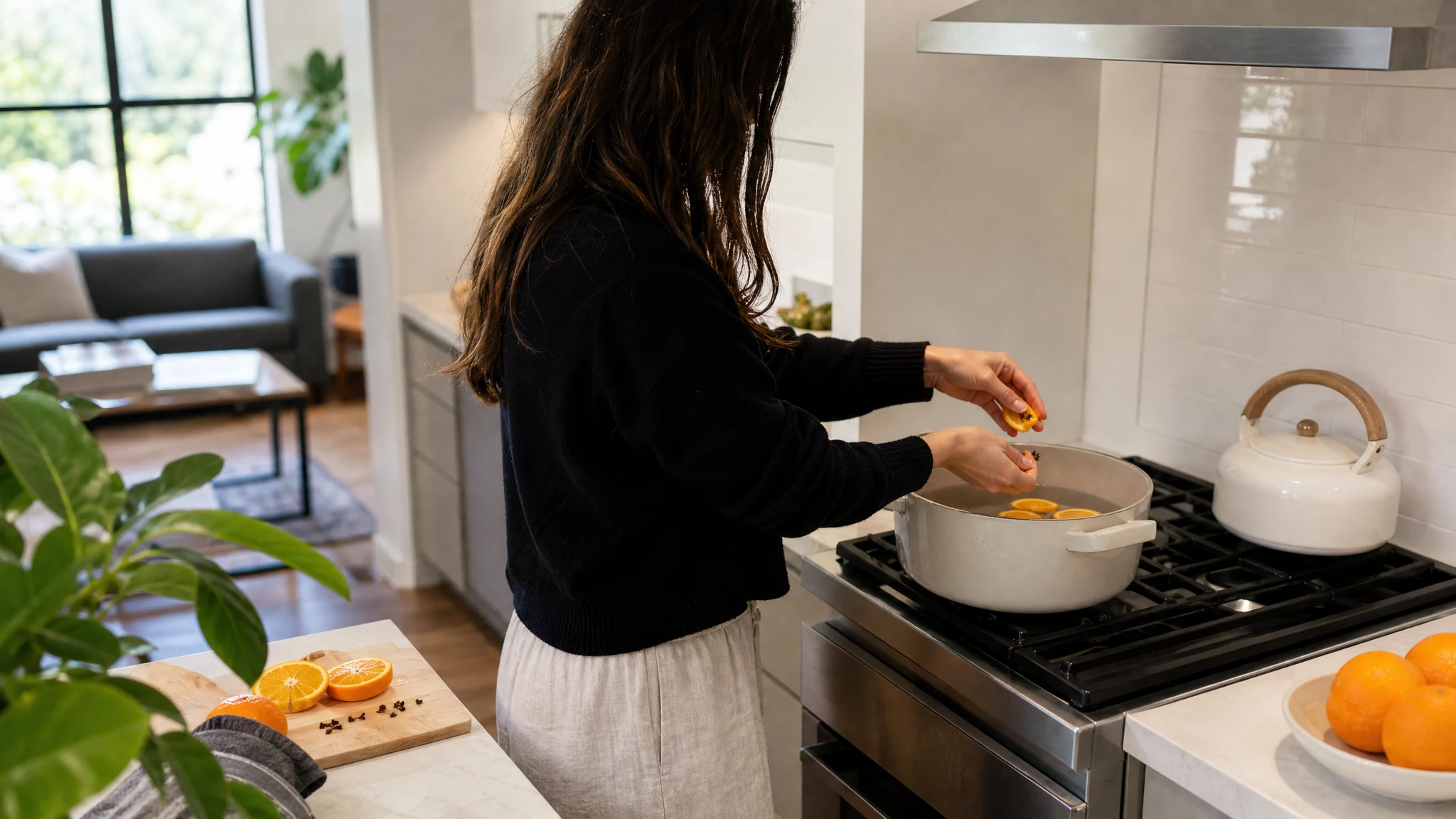
A real pomander is an orange studded with whole cloves, and its story is in our pomander history. For the same scent with no alcohol at all, try an orange-and-clove pot from our simmer pot lists, and for further seasonal ideas see the home guide.
Make 100 ml, label the bottle, keep it away from heat, and spray sparingly: the best pomander smell is a light one.
Clove Essential Oil
Clove Essential Oil from our own shop, in sizes from 0.5 oz to bulk.
From $10.99
Shop Now →Sources & Further Reading
- PubChem. Eugenol, CID 3314 (solubility and miscibility). pubchem.ncbi.nlm.nih.gov/compound/3314
- PubChem. Ethanol, CID 702 (flash point). pubchem.ncbi.nlm.nih.gov/compound/702
- EFSA FEEDAP Panel, 2023. Safety and efficacy of feed additives from flower buds or leaves of Syzygium aromaticum. PMC10375362
- Steinemann A, 2018. Air Quality, Atmosphere & Health 11:3-9. PubMed 29391919
- Pet Poison Helpline. Essential oils. petpoisonhelpline.com