Clove Oil Cleaning Spray: Scent It the Easy Way
Open a bottle of clove oil near a freshly wiped counter and the kitchen starts to smell like mulled cider. That is the job clove does in a cleaning spray, and it does it well. The cleaning itself comes from the soap, vinegar or alcohol in the bottle, so the fun part is getting the scent right and the sensible part is knowing where to stop.
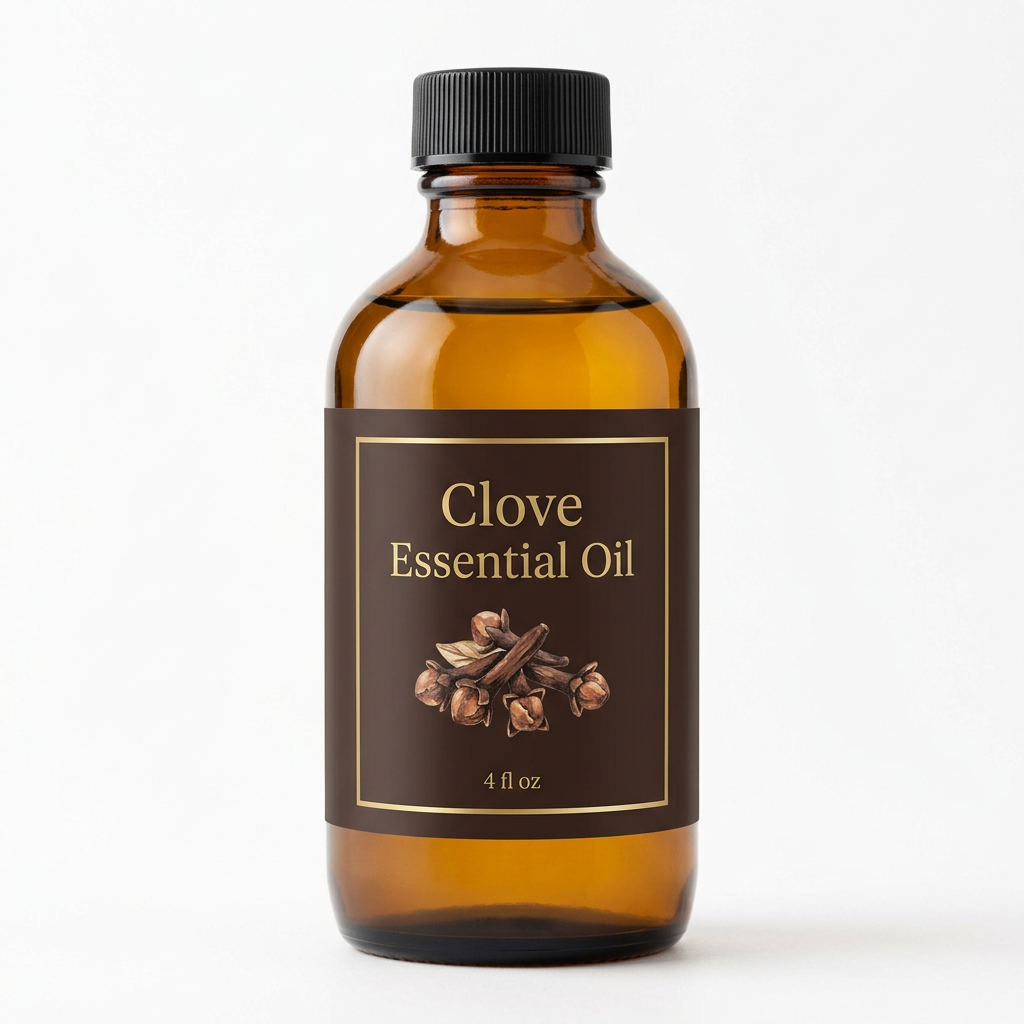
Clove Essential Oil
Our own Clove Essential Oil, in sizes from 0.5 oz to bulk.
From $10.99
Shop Now →Scent, not disinfectant
Clove oil does appear on a US EPA list: 40 CFR 152.25(f) names "Cloves" and "Clove oil" (CAS 8000-34-8) among the active ingredients allowed in exempt "minimum risk" pesticide products (eCFR via Cornell LII). The conditions are tight, though. Labels may not state or imply that a product controls organisms that threaten human health, and wording such as disinfect or sanitize is off limits (EPA, conditions for minimum risk pesticides). We follow the same line. We sell clove as an aromatic and cosmetic oil and we describe it by its scent, so if you need a surface disinfected after raw meat or illness, reach for a product registered to do that and follow its label.
How clove behaves in a spray bottle
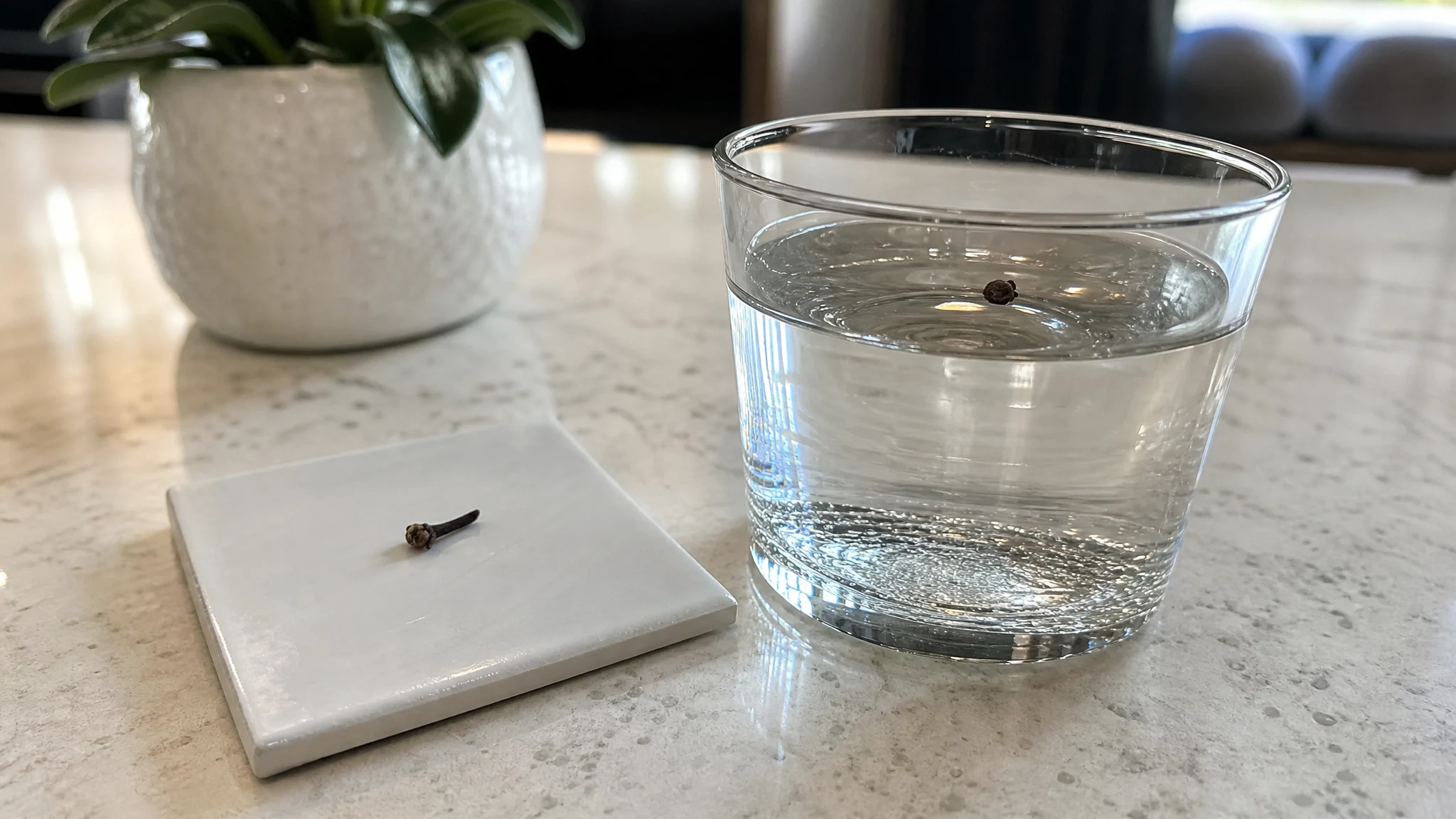
Two habits make a better spray. First, clove oil is heavier than water. The Certificate of Analysis we publish for one bud batch gives a relative density of 1.054, which means a drop sinks. In a bottle that has been standing, the oil collects near the bottom and the first squeeze can be mostly oil, so shake before every use. Second, essential oils do not dissolve in water. In practice a splash of alcohol, or a solubiliser from a cleaning-supply or soapmaking shop, helps the scent spread evenly. Vinegar will not do it.
A light-handed formula
Here is a starting point built from simple arithmetic, for a standard 500 ml bottle:
- Begin with a base that cleans: warm water with a little unscented liquid soap, or equal parts water and white vinegar for glass and counters.
- Add 5 to 10 drops of clove oil last. At roughly 20 drops to the millilitre, that is 0.25 to 0.5 ml in 500 ml, between 0.05% and 0.1%. It gives a gentle spice, and a little goes a long way because the oil is concentrated (eugenol is 73.57% of the bud oil in our published GC-MS report).
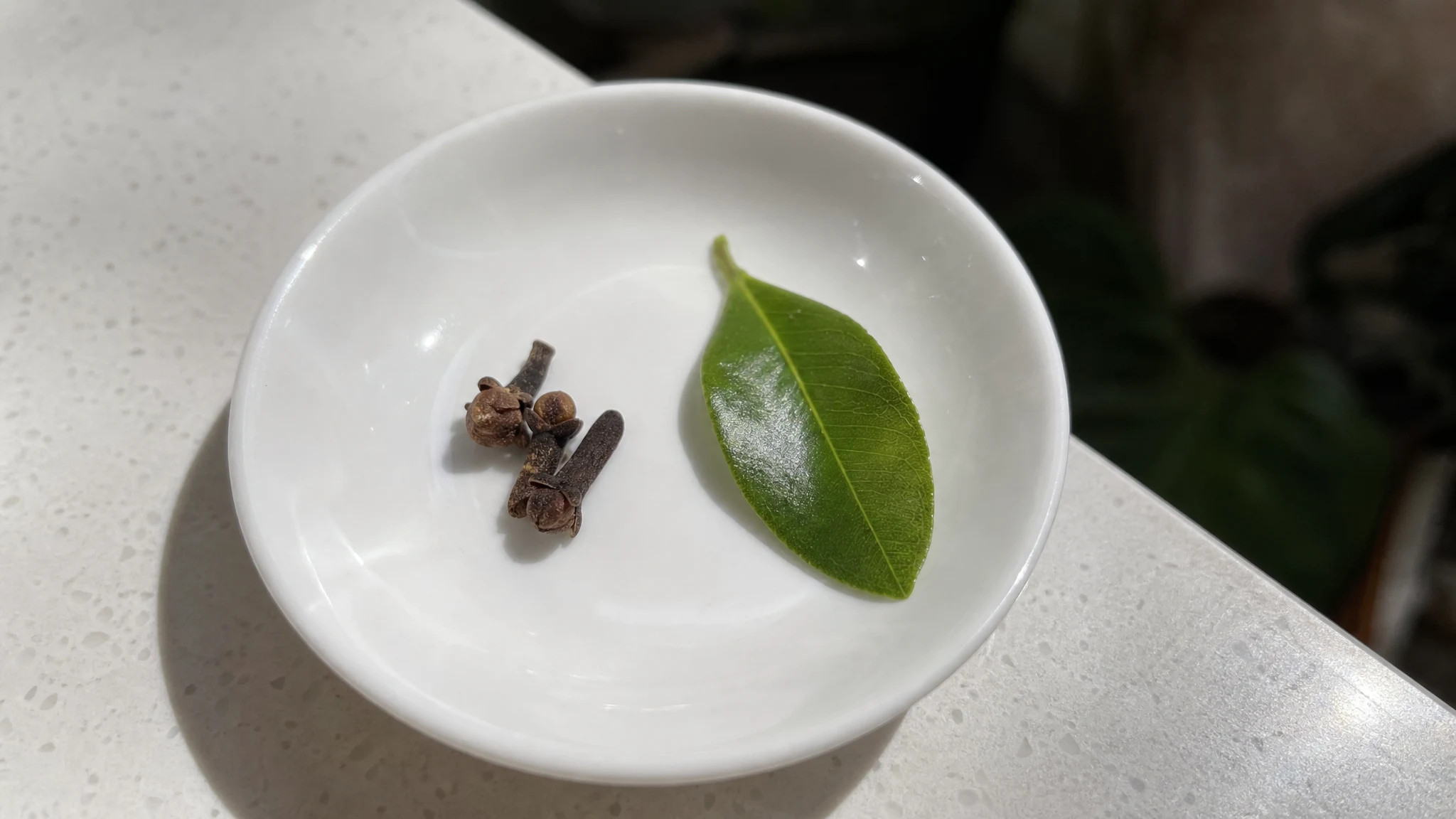
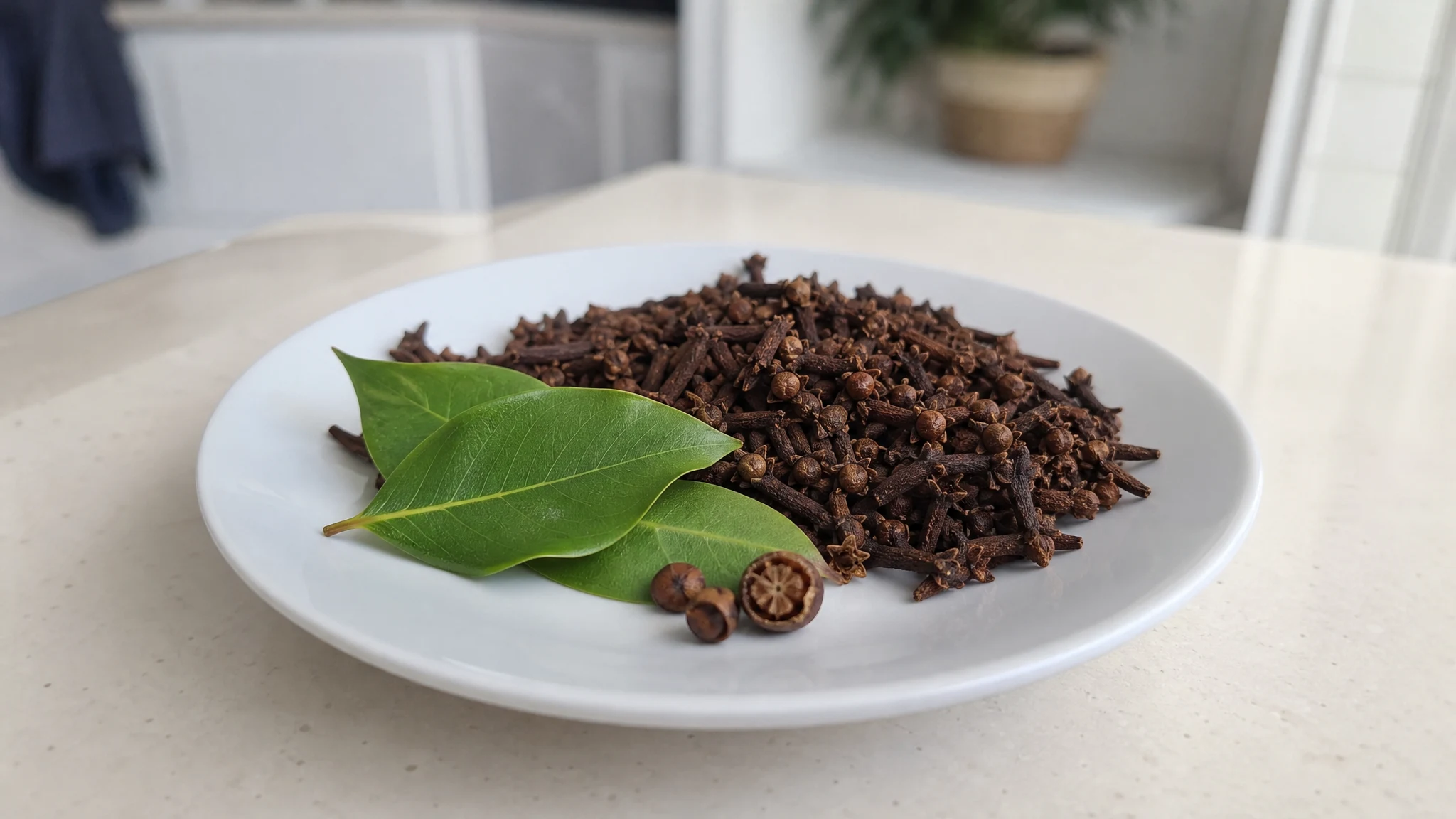
- Round out the scent if you like. Our bud oil blends well with orange, cinnamon, cedarwood and vanilla. Our leaf oil, bold, smoky and earthy-spicy and the more economical clove oil, is the formulator's pick for cleaning blends, and pairs well with sweet orange or cedarwood.
- Label the bottle, keep it away from food storage, children and pets, and mix small batches. A water-based spray has no preservative, so make only what you will use in a few weeks.
Making it a pleasure to use
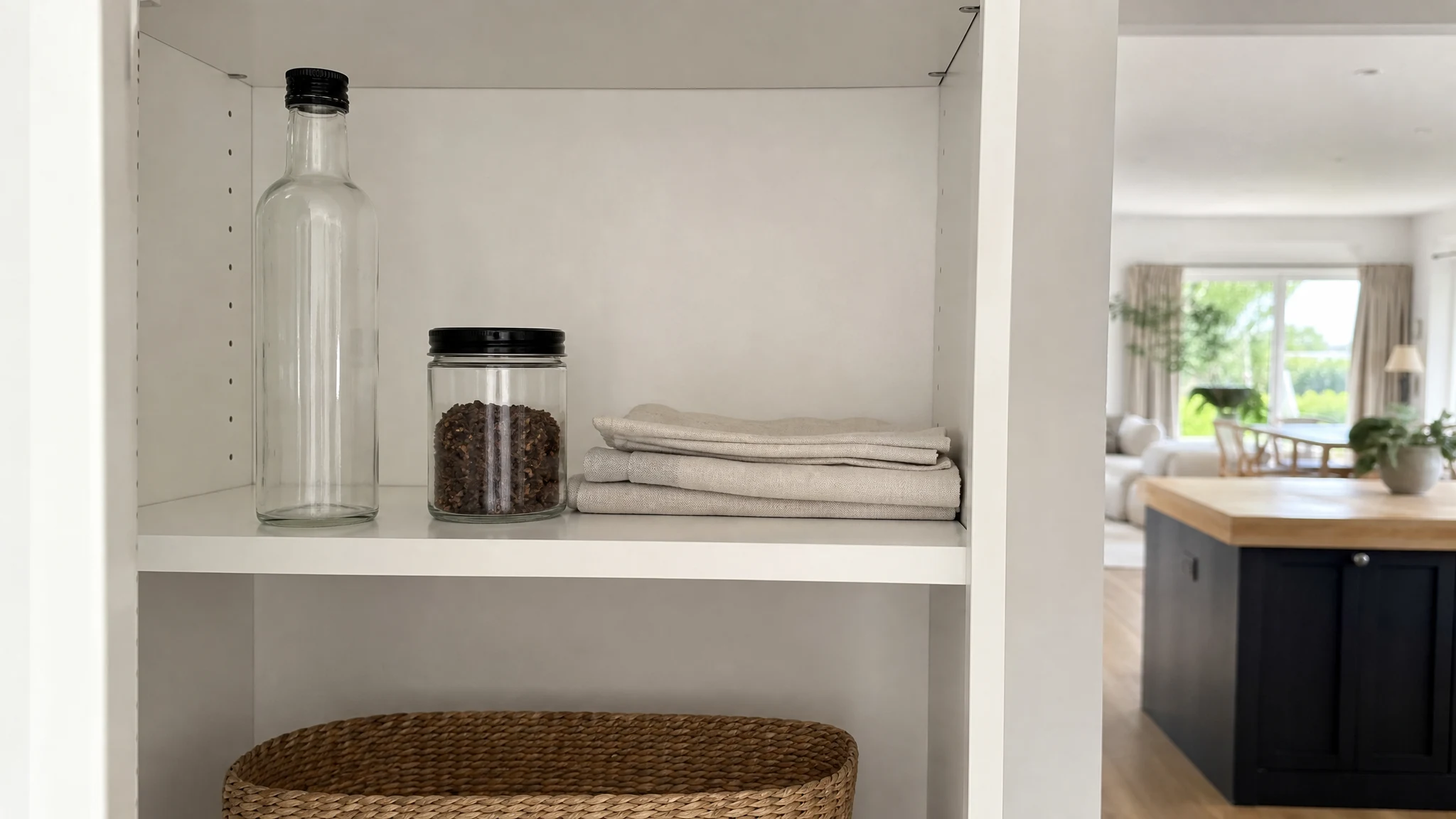
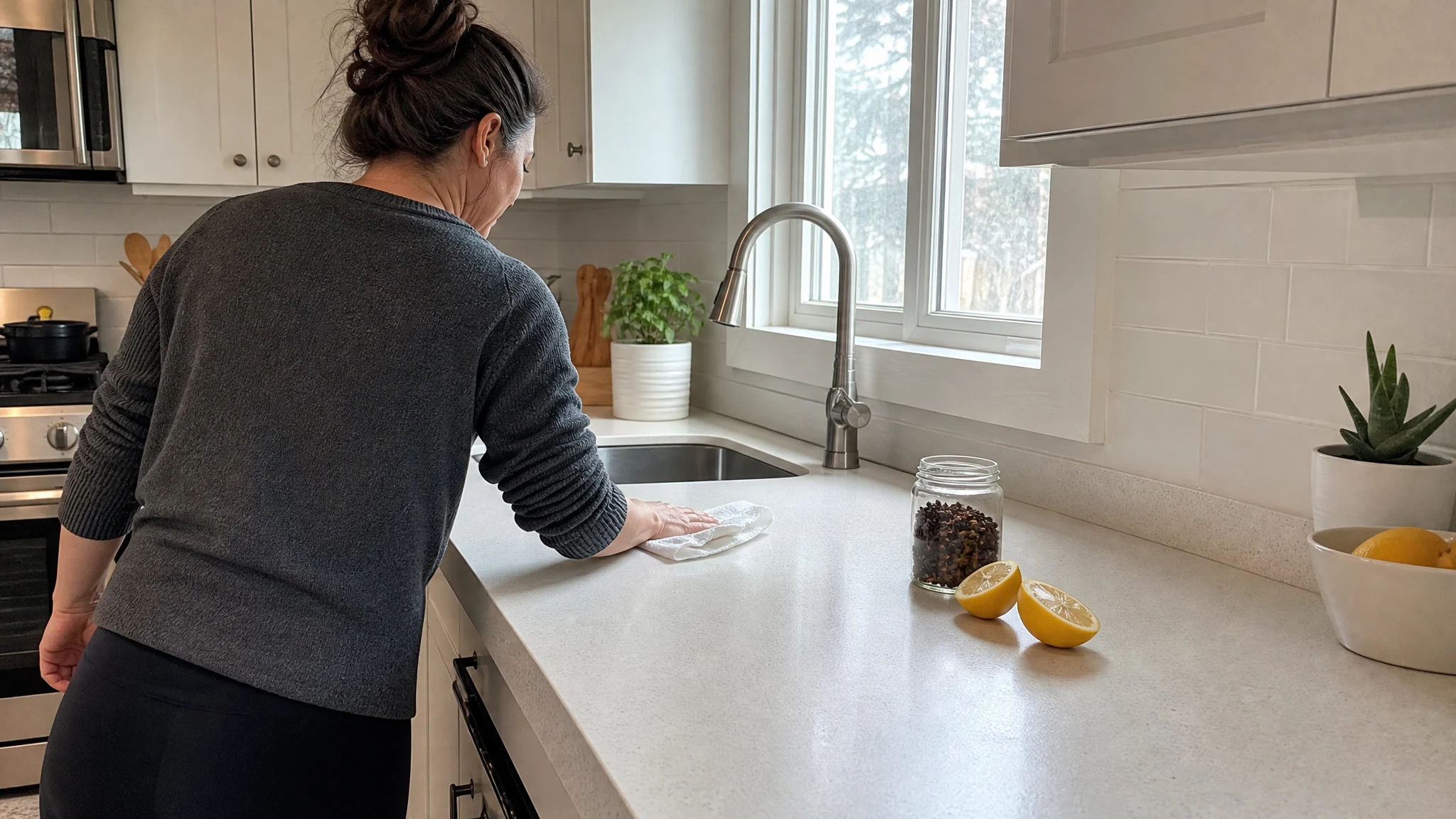
Pick a spray bottle with a fine mist and a trigger that closes snugly, and keep a marker handy to write the date on the label. An amber or opaque bottle keeps the mix out of sunlight, which is kinder to the scent. If you want the room to smell like a bakery, spray the surface. If you want just a hint, spray the cloth and wipe.
Make half a bottle the first time. Smell it the next morning, because a closed-up kitchen makes any new scent seem louder right after you mix it. If it is still too bold, top up with more of the base and shake.
Where to be careful
Spot-check on a hidden corner first and wait a day, particularly on sealed wood, stone or painted surfaces, because a concentrated phenolic oil is not something to meet a good tabletop undiluted. Skip food-prep surfaces unless you finish with a plain-water rinse, and keep sprayed surfaces away from toys and pet bowls. Cats are the reason for extra care at home: Pet Poison Helpline lists clove among oils that can poison pets and singles out cats and birds as the greatest risk (Pet Poison Helpline). Your veterinarian can advise on your own animals.
Wiping with a damp cloth puts dilute oil on your hands, so gloves are a good idea if your skin is sensitive. Eugenol is a recognised fragrance allergen, and clove oil is among the essential oils that show up in patch-test clinics. A survey of 1,137 US adults found that 64.3% of those with asthma or asthma-like conditions reported adverse effects from fragranced products (Steinemann, 2018). It is a self-reported survey about scented products in general, not clove, but if anyone in your home reacts to scented cleaners, an unscented spray is the kinder choice.
A note on scrubs and mould
A baking soda paste with a few drops of oil is a scented scrub, not a stronger one: the soda scrubs and the oil perfumes. Stir the oil into a little liquid soap first, then add the soda. And if mould is what you are fighting, the right place to start is our mould article, because a scented spray is not a mould treatment. For wider ideas on scenting a home, see scenting your home with clove oil, and for the skin side of handling a strong oil, our safety guide.
A bottle of clove spray, shaken and used within a few weeks, is a small, cheerful thing: soap does the work and the spice makes the chore smell like the holidays.
Clove Essential Oil
Clove Essential Oil from our own shop, in sizes from 0.5 oz to bulk.
From $10.99
Shop Now →