Clove Oil for the Workbench: Scent Projects to Try
A bottle of clove oil on a workbench invites ideas. Some are lovely, such as a warm spicy smell in a cold shed or a dried sachet that scents a drawer of tools. Others have grown up in hobby lore, like wood oil that repels borers or ink that never molds. Our rule for the bench is simple: ask what the oil is doing in the project. If the answer is "making it smell like cloves," it fits beautifully.
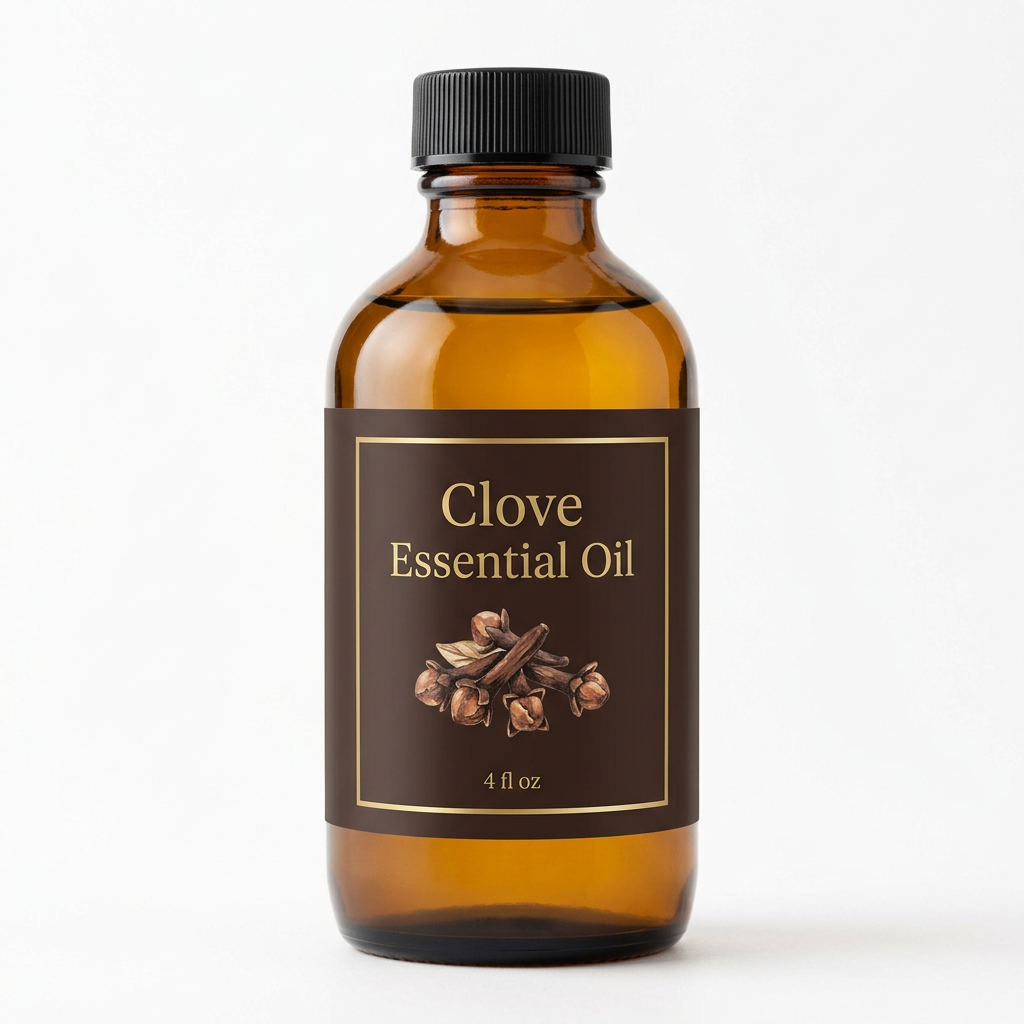
Clove Essential Oil
Our own Clove Essential Oil, in sizes from 0.5 oz to bulk.
From $10.99
Shop Now →Where clove is a natural fit
We sell two clove oils, bud and leaf, both steam-distilled and sold undiluted. We describe the bud as warm, rich and sweetly spicy, and the leaf as bold, smoky and earthy-spicy, drier and less sweet. Both suit scent projects, and a workshop is a good place to use them.
- A heated shop, scented. A stovetop simmer or a diffuser takes the edge off a cold, resinous workshop. Our simmer pot recipes and diffuser blends show how little you need.
- Dry craft materials. Cedar shavings, dried herbs, paper and air-dry clay ornaments can all carry a drop of oil purely as fragrance. Try a scrap first, since every material takes scent differently, and adjust by nose.
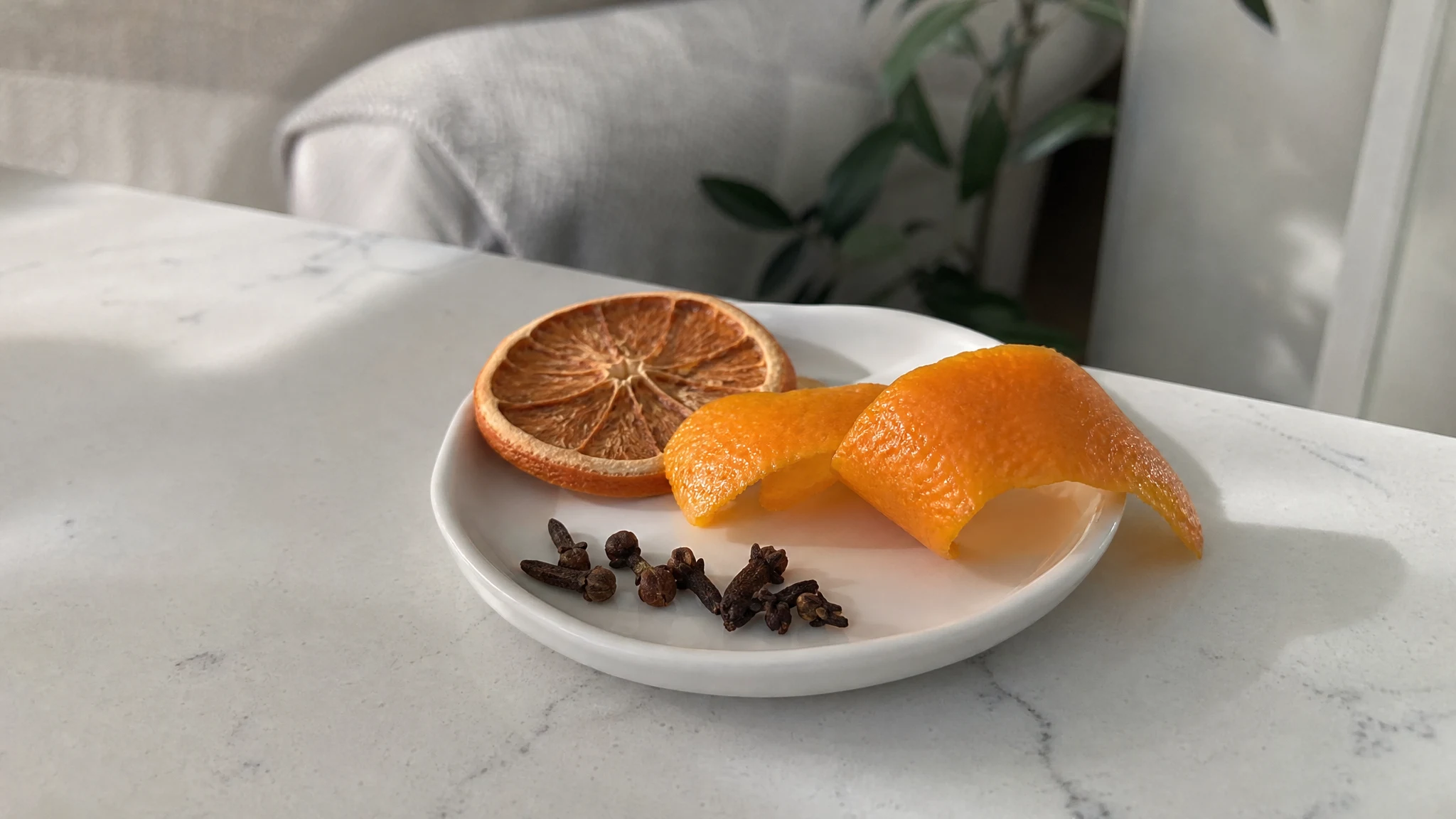
- Potpourri and orange projects. Whole cloves and dried peel take a drop of oil well. See our potpourri recipes.
- Candle pouring. Both our oils are listed for candles, and the soy candle tutorial covers wax and flame handling.
- Cleaning bench scent. Spiced sprays and scrubs where the oil is perfume. Our spray post goes through it.
For the full menu of ideas, our guide to home uses covers it room by room.
A scrap-board test card
Before any drop goes onto a real project, we like the idea of a test card. Cut a small scrap of the material you plan to scent, whether that is cardboard, a cedar offcut or a square of felt, and write the date and the number of drops on it in pencil. Leave it overnight on a clean plate. In the morning you will see how the material took the oil, whether it left a mark, and how the smell has changed. Cheap, quick and much kinder than finding out on the finished piece.
A little sachet for the tool drawer
This one is purely for fragrance. Take a small square of cotton or muslin, add a spoonful of dry cedar shavings or plain sawdust from untreated wood, and put a single drop of clove oil on the shavings. Tie it up with string and tuck it in a drawer. Each time you slide the drawer open you will get a soft puff of spice. It is a scent keepsake and nothing more, so do not expect it to do a job for your tools, and refresh it by adding a drop once the smell fades.
Bud or leaf at the bench
If you will use a lot of it, the choice is practical. Bud is the sweeter, rounder oil and leaf is the drier, smokier one, and we call the leaf the formulator's pick for soap, candles and cleaning blends. A 2023 EFSA panel opinion found both oils sit in the same eugenol range (batches of steam-distilled bud oil ran 81.78 to 84.00% and leaf oil 78.68 to 86.01%), so the handling advice below applies to either. Our bud versus leaf comparison goes deeper.
Handling at the bench
Eugenol can irritate and sensitise skin. The Tisserand Institute's eugenol page gives a topical maximum of 0.5% for clove bud and notes it should be used in proper dilutions. That figure is for skin products, but it is a sensible guide to how much you want on your hands: wear nitrile gloves when you pour the neat oil, and wash up before you touch your eyes. For anything that goes on skin, such as a balm, see the safety basics.
Measuring by drop works for small jobs. Tisserand's drop size page reports an average of 20 drops weighing 0.66 g across three studies. Clove oil is heavier than water (the Certificate of Analysis we publish for one bud batch gives a relative density of 1.054), so a milliliter weighs a little over a gram. For anything you will repeat, weigh it on a gram scale. A bench is also where bottles get left on shelves, so put the oil up high and out of reach of children and pets. Poison control guidance at poison.org says to store essential oils where children cannot reach them.
What the oil is not
We sell clove oil as an aromatic. Borer-proof wood oil, moth-proof sachets and mold-proof ink are claims about pests and preservation, and we make none of them for our oil. In the United States a product sold to repel or kill pests is regulated as a pesticide. EPA does list clove oil among the ingredients eligible for its "minimum risk" exemption (40 CFR 152.25(f)), but the conditions are strict about labelling and claims. For a real pest problem in a garden or outbuilding, your county extension office is the best first call, and airtight storage protects wool and seed better than any scent.
Keep the oil doing what it does best, which is making a cold workshop smell like a spice cupboard in winter.
Clove Essential Oil
Clove Essential Oil from our own shop, in sizes from 0.5 oz to bulk.
From $10.99
Shop Now →