Clove Folklore and Customs With a Real Source
"He has an orange and rosemary, but not a clove to stick in it." Ben Jonson put that line in a Christmas masque, and it is one of the oldest bits of clove folklore you can actually point to on a page. Online lists of clove traditions are packed with sacred trees and ceremonial charms, but most never say where they came from. We prefer the customs with a text behind them, and there are more charming ones than you would guess.

Clove Essential Oil
Our own Clove Essential Oil, in sizes from 0.5 oz to bulk.
From $10.99
Shop Now →An orange, studded with cloves, given at New Year
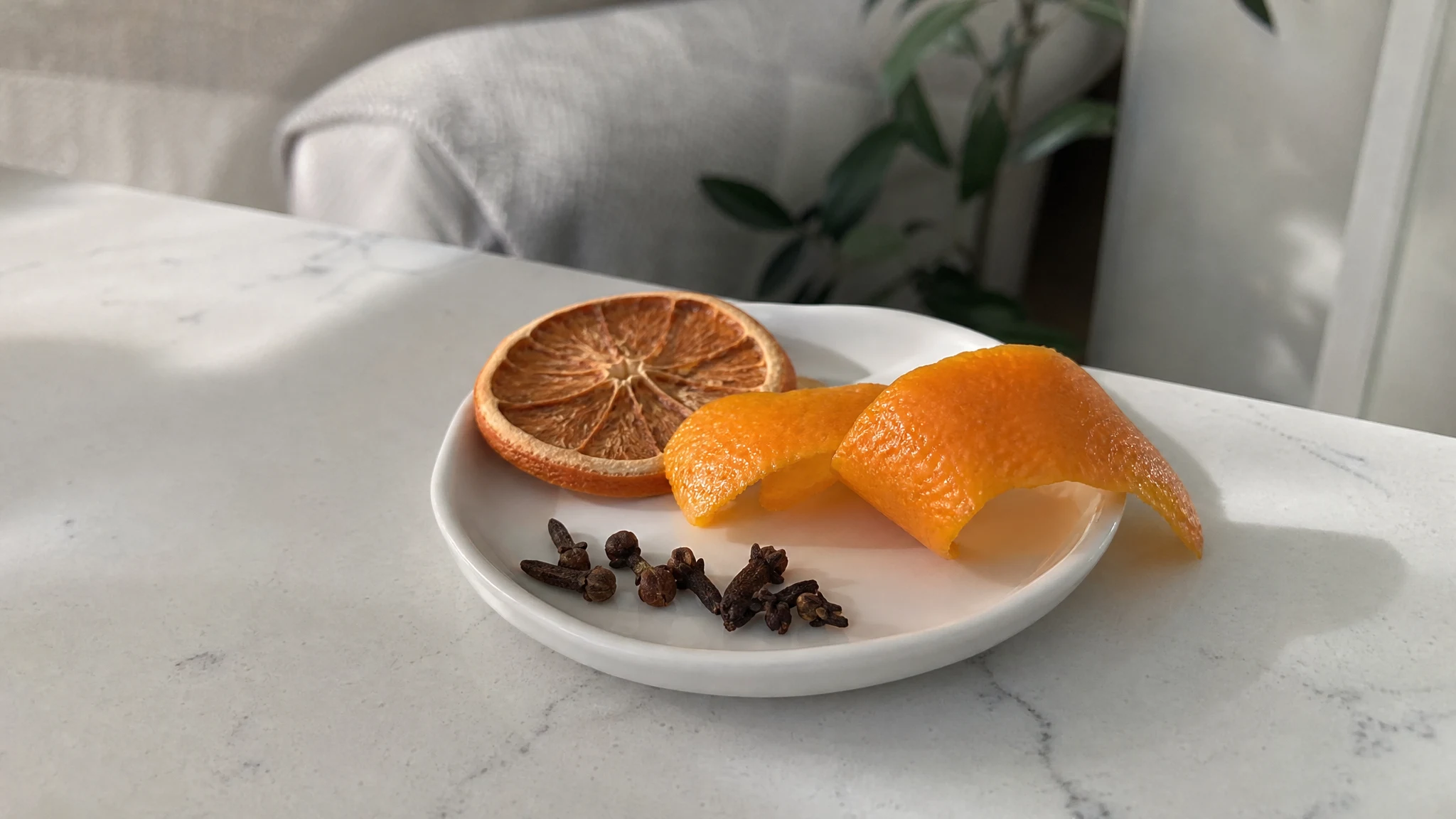
Isabella Beeton's Book of Household Management, published around 1861, has a one-paragraph entry titled "Orange and Cloves." It says it appears to have been the custom formerly in England to make New Year's presents of oranges stuck full with cloves, and it quotes Jonson's line as proof. Beeton hedges (it "appears" to have been the custom) and she files it under the past, even in her own day. It is still a lovely image: a piece of citrus, a handful of spice, and a gift that cost very little and smelled wonderful. If you like the idea, our pomander history follows it further.
A spice that reached Rome as a curiosity
The same book says cloves were little known to the ancients and that Pliny seems to be the only classical writer to mention them. As Beeton retells it, some were carried to Rome, looking like peppercorns but a little longer. They grew only in India, in a wood consecrated to the gods, and went into the making of perfumes. This is secondhand, with Beeton reporting Pliny, but it is a sweet detail: the first Roman clove was something to scent a room or a person, not something to cook with.
What the name tells you
The word itself is a small piece of folklore. Beeton notes that "clove" comes from the Latin clavus or the French clou, both meaning nail, to which the dried bud bears a real resemblance. The Concise Oxford Dictionary of English Etymology, quoted on Encyclopedia.com, traces it to Old French clou de girofle, "nail of clove-tree." The clove pink, Dianthus caryophyllus, the flower that gave us carnations, carries the same root and a similar spicy scent in its name.
Cloves in the everyday kitchen
The best documented clove customs are domestic. Beeton's recipes call for an onion stuck with cloves in stocks and sauces, a clove pushed into each apple before the apple snowballs go in the pot, and cloves alongside grated nutmeg and cinnamon or mace in mulled wine. Nobody put those on a charm or a coin. They are habits of the stove, and they are why the smell of clove feels like home to so many people. For more on how households used it, see cloves in Victorian holiday traditions.
Cloves against bad air
Pomanders were carried against infection in earlier centuries, and the 1911 Encyclopaedia Britannica entry on the pomander says so. Linda Dyett, writing in Metalsmith in 2003, adds that people believed carrying one could guard against evil and disease. Both are describing a belief about the object, and neither names cloves as the key ingredient, so we treat it as part of the scented-trinket story rather than a clove story. We make no health claim for pomanders or for clove oil.
Why these stories stick
Clove is one of those ingredients that sits at the point where a kitchen meets a story. It is small, dark, fragrant and shaped like a tiny nail, and people have always had something to say about it. The customs in this article last because they ask so little of us: a piece of fruit, a handful of spice, a kind gesture. Folklore like that does not need to be grand. It only needs to be shared, and a bowl of oranges on a winter table is a very good place to start.
How to repeat a custom well
If you want to pass one of these along, a small habit makes it better: name the text, give the date and say whether it describes something people did or only something they believed. "Beeton, writing around 1861, says oranges stuck with cloves were once a New Year gift" is accurate and charming. "Cloves bring luck in many cultures" is neither. Stories about clove trees planted at a child's birth or officials sweetening their breath before the emperor circulate widely, and they may well be true somewhere, but we have not found a text to cite for them, so we leave them to the people who can.
Try one at home
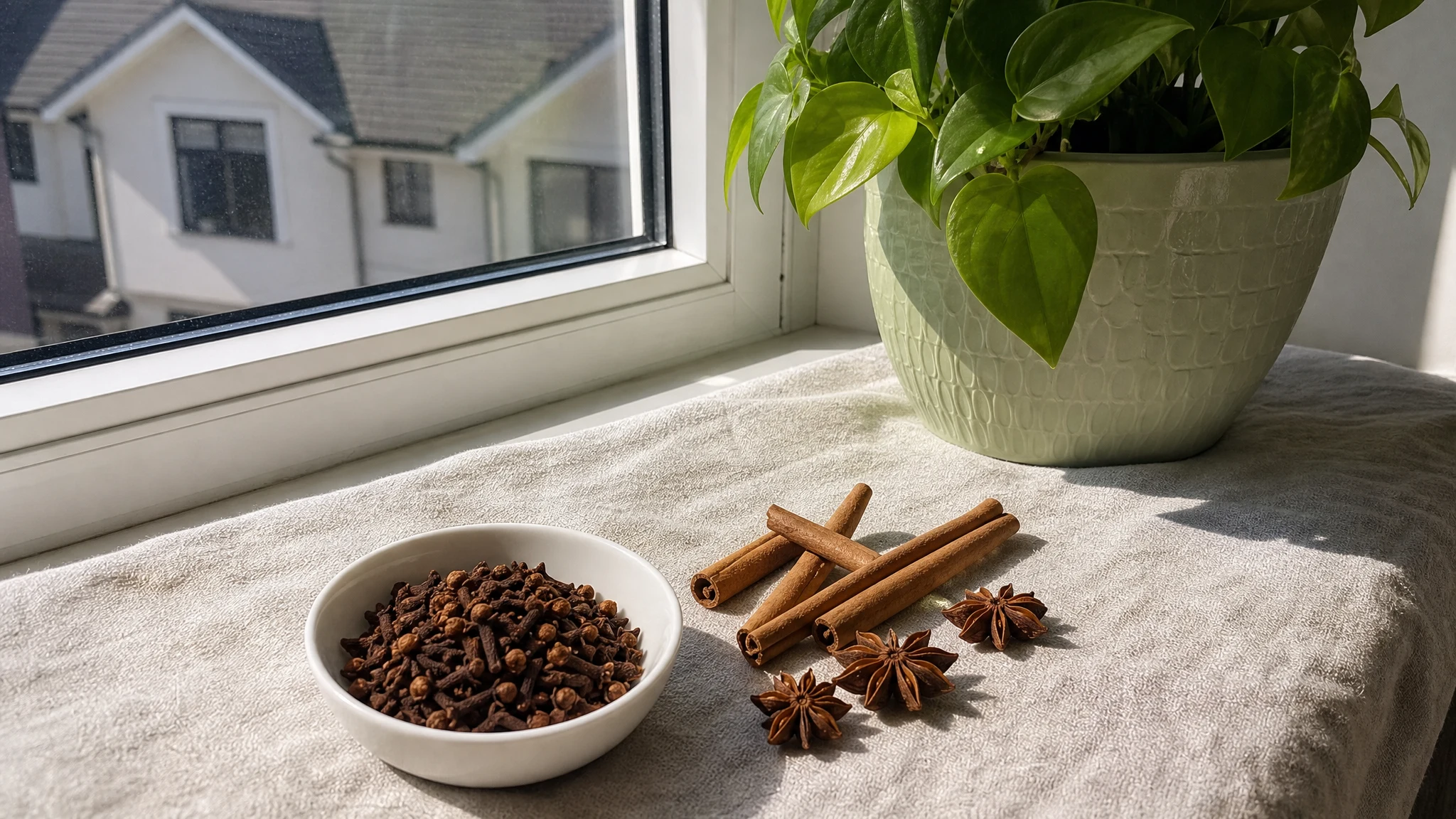
The orange and clove custom is the easiest one to try, and it costs almost nothing. Choose a firm orange, press whole cloves into the skin in a pattern, whether rows, spirals or just a scatter, and set it in a bowl. The smell is warm and citrusy, and it carries through a room for days. Use whole cloves from the spice aisle for this, since the project is built around the dried bud and not the oil.
A note on the oil
These customs belong to the whole dried bud, which is far gentler than distilled oil. Eugenol, the main component of clove oil, is a recognised skin irritant and sensitiser, and the bud oil GC-MS report we publish lists it at 73.57% by area. So the folklore is a lovely guide to scent and to the kitchen, and not a guide to using the oil neat or near skin. If you scent a room with clove, a drop or two in a diffuser or a simmer pot goes a long way.
The oldest clove tradition we have found is also the simplest: take an orange, push in the cloves, and give it to someone.
Clove Essential Oil
Clove Essential Oil from our own shop, in sizes from 0.5 oz to bulk.
From $10.99
Shop Now →