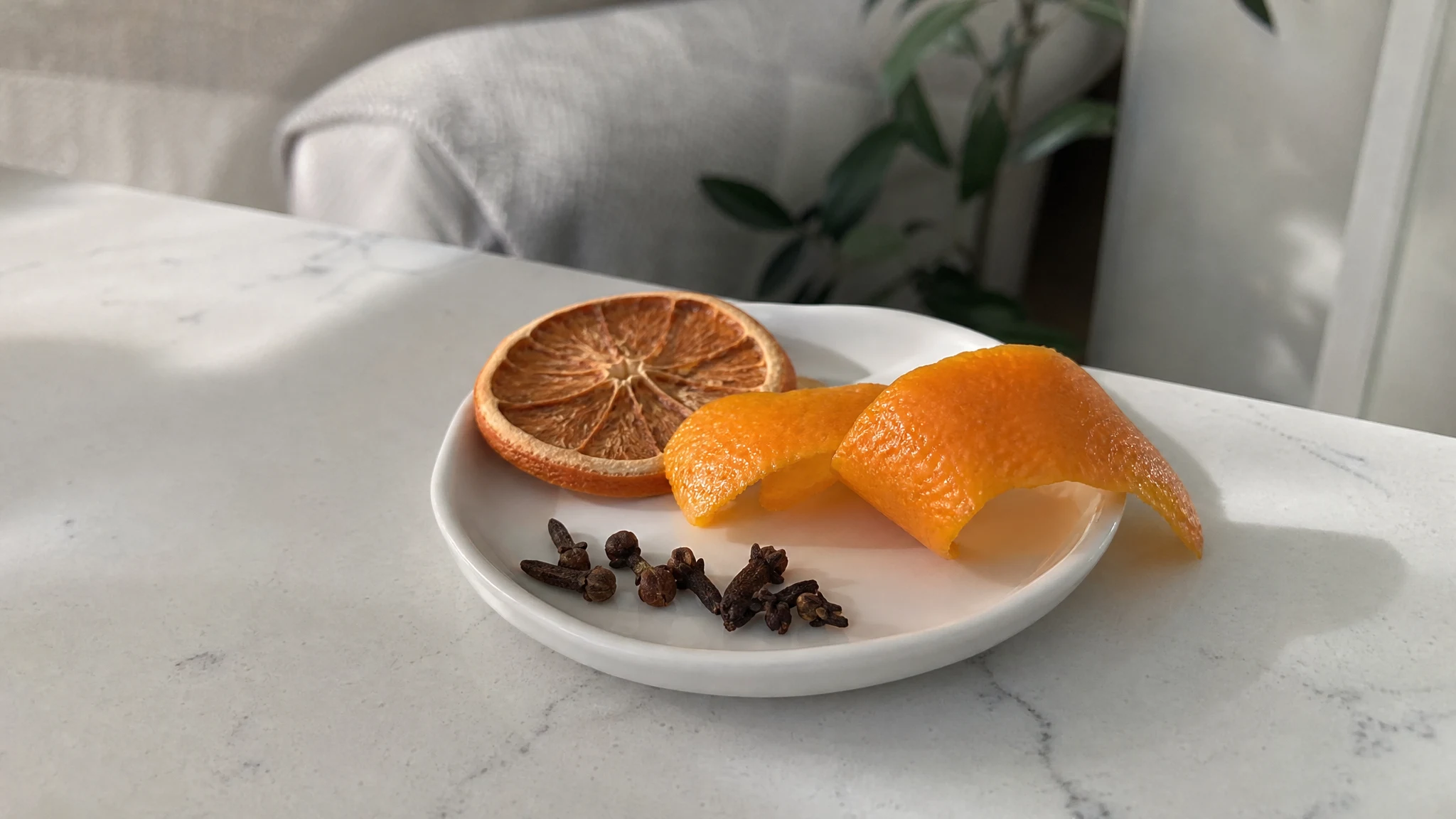
Clove Oil Blends: Simple Recipes Built on One Drop
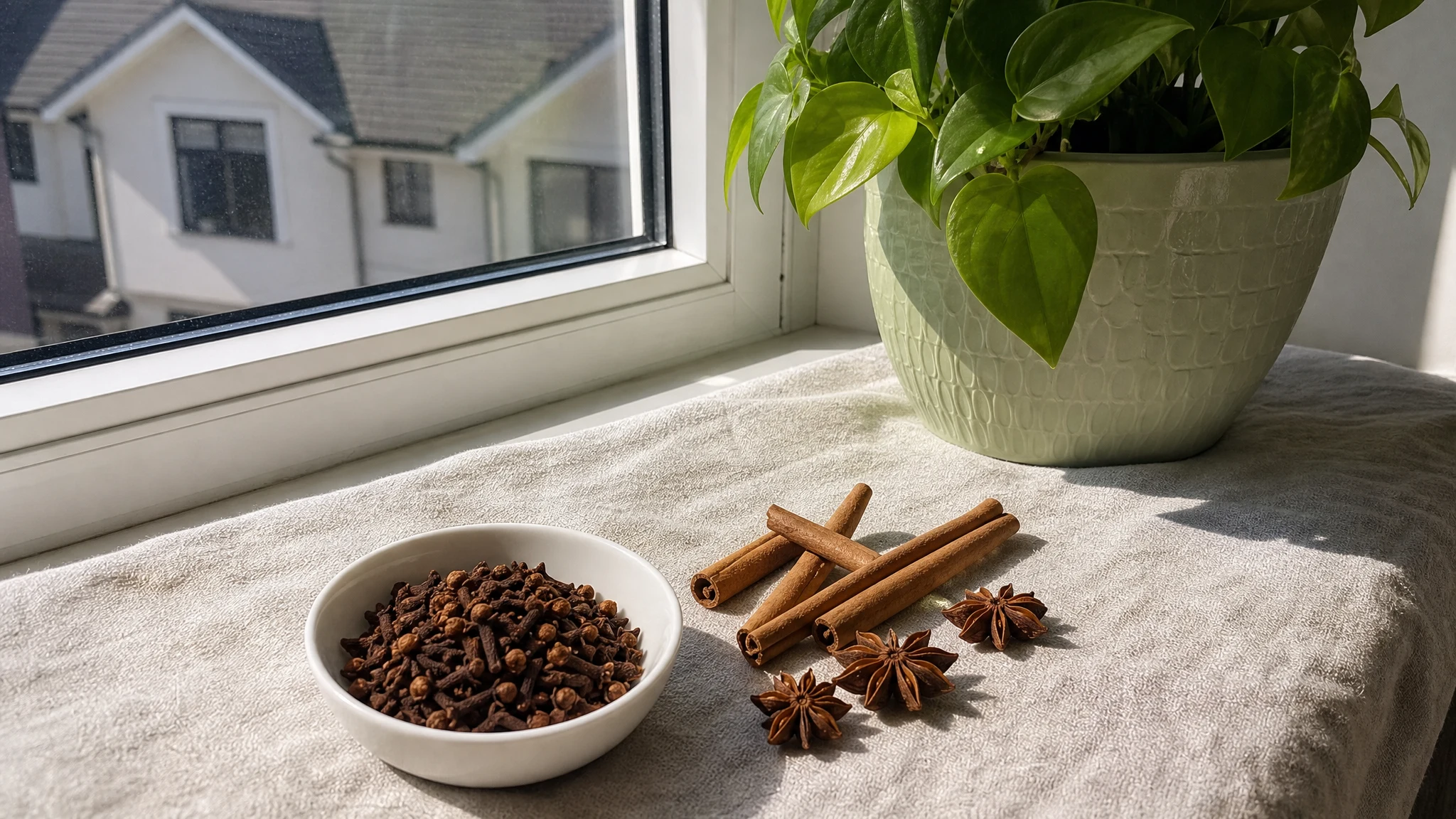
Most people add too much clove the first time. It is a loud oil, and in a good blend it plays the part of the pinch of spice in a pie: you would miss it if it were gone, but you should never be able to point at it. The easiest way to build that habit is to write each blend as a ten-drop stock bottle with exactly one drop of clove in it.
Clove Essential Oil
Our own Clove Essential Oil, in sizes from 0.5 oz to bulk.
From $10.99
Shop Now →Why ten drops, and why only one of them is clove
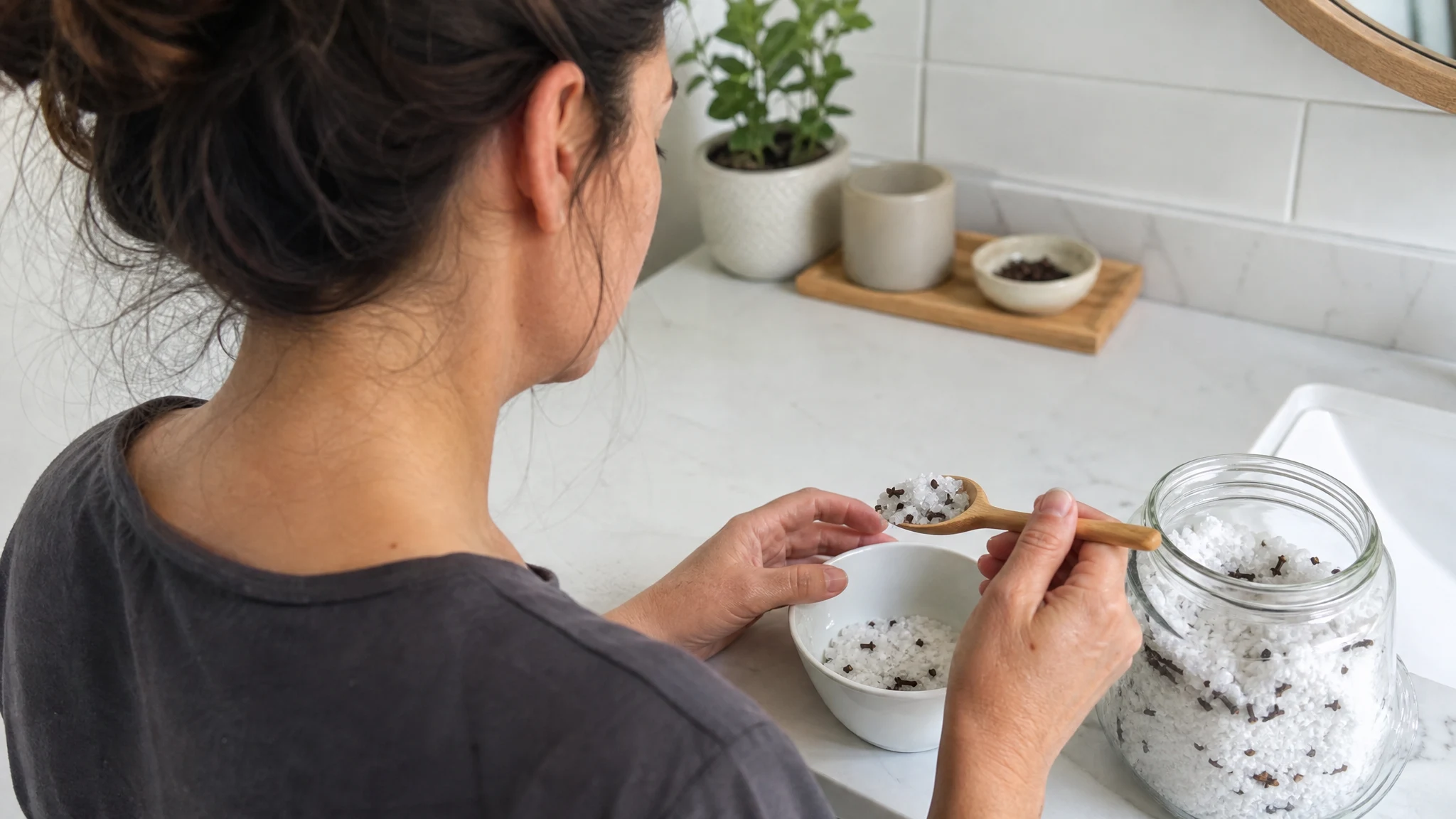
A stock bottle is a small blend you mix once and draw from, so the proportions never drift. With one clove drop in ten, clove is 10% of the stock, and that single number does a lot of work. Clove oil is rich in eugenol (the GC-MS report we publish for our bud oil lists it at 73.57% by area), and the Tisserand Institute's eugenol page gives a recommended topical maximum of 0.5% for clove bud oil. A 10% clove stock used at no more than 5% of a finished skin product keeps clove at or under that 0.5%, which is the line we follow too.
For a diffuser the arithmetic is gentler and the limit is simply your nose. A few drops of stock in a small diffuser brings in a fraction of a drop of clove, which is usually just right.
How long each oil stays around
Perfumers talk about top, middle and base notes, meaning how fast an oil fades from a smelling strip. Zarzo's 2012 survey of perfumery materials scores that on a scale where under 15 is a top note, 15 to 60 a middle note and over 60 a base. Florida orange oil scores 11, clove bud oil 22, cinnamon leaf oil 22, and patchouli and black pepper oils both reach 100. So on paper orange is gone first, clove lingers a little longer, and patchouli and pepper hold the floor underneath. That one idea explains most of the ten blends below.
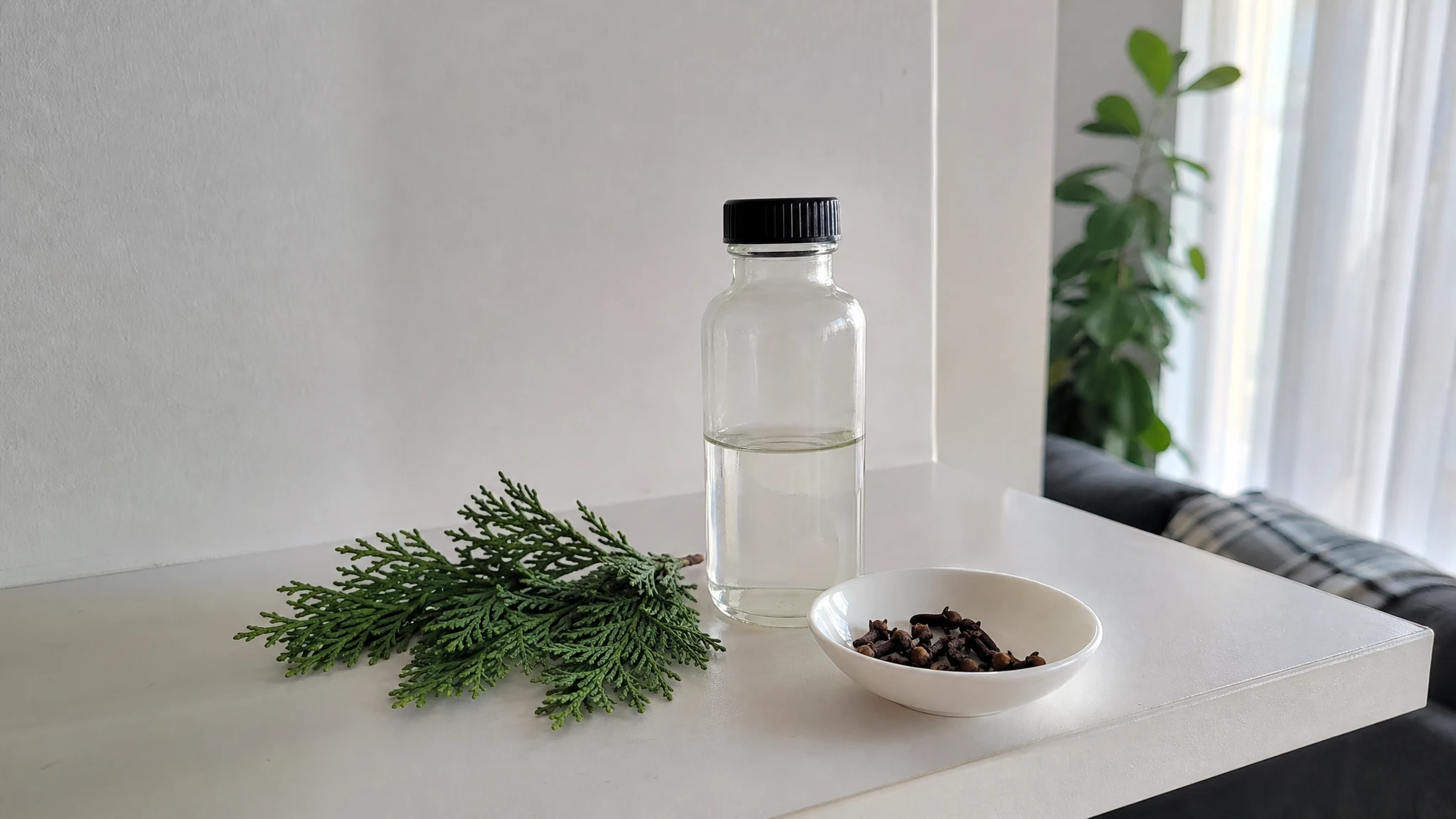
A practical note: we sell clove bud and clove leaf oil only. Orange, vanilla, cedarwood, frankincense, patchouli, black pepper and cinnamon leaf are all oils to pick up from a supplier you like. They are the partners we suggest for our own oils, bud with orange, cinnamon, cedarwood, frankincense and vanilla, and leaf with sweet orange, cinnamon leaf, cedarwood, patchouli, black pepper and vanilla.
Citrus: bright and quick
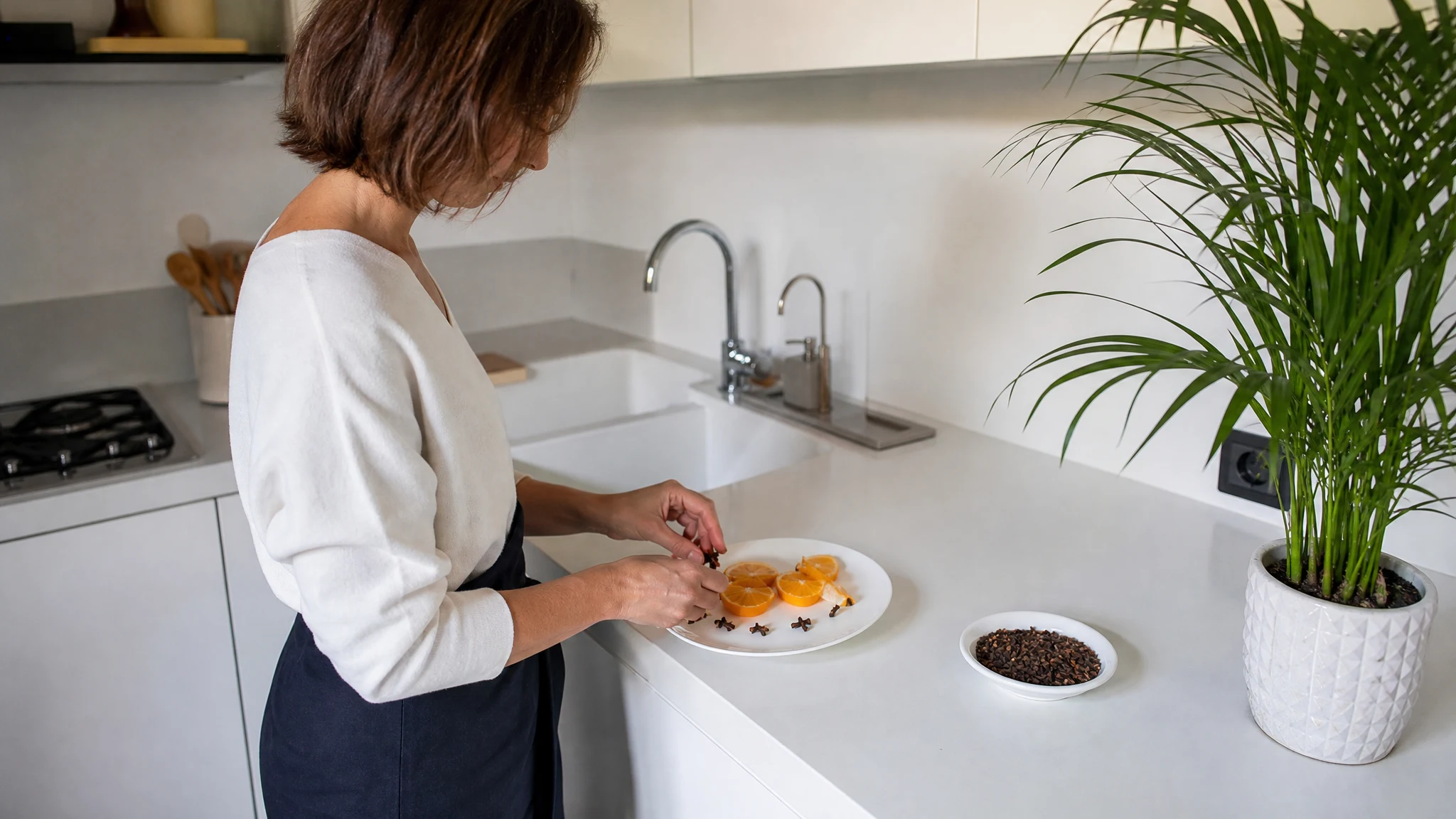
- Orange 9, clove bud 1. The simplest clove blend there is, and a good test of whether you like the oil at all. The orange leaves first and the clove is what remains, which is the quickest route to the scent of a studded orange.
- Orange 6, black pepper 3, clove leaf 1. Our leaf oil is the bold, smoky, earthy-spicy one, drier than the bud. Pepper doubles down on that dryness and stays after the orange has gone.
- Orange 6, cinnamon leaf 3, clove bud 1. A classic holiday pairing, with one catch in the sums. Cinnamon leaf at 3 drops is 30% of the stock, and Tisserand's figure for it is 0.6%, so for skin the finished product can hold only about 2% of this stock. That brings the clove down to 0.2%.
Sweet: soft and round
- Vanilla 5, orange 4, clove bud 1. Cream and peel with a thin line of spice. Vanilla is the variable here, since an absolute, a CO2 extract and a fragrance oil smell different from one another, so read the ingredient line. We take the vanilla and clove pairing further in our clove and vanilla post.
- Vanilla 6, patchouli 3, clove leaf 1. Sweet and earthy materials both sit low, so this blend barely changes over an evening. It is a lovely room scent and a poor choice if you want a bright opening.
Wood and resin: dry and steady
- Cedarwood 8, black pepper 1, clove leaf 1. The reverse of most clove recipes, with the wood in charge. If clove has ever felt sharp to you, start here. Cedarwood is a family of oils from different trees, so note the botanical name on your bottle.
- Cedarwood 5, frankincense 4, clove bud 1. Dry wood over resin, with the bud supplying the only sweetness.
- Patchouli 5, black pepper 4, clove leaf 1. Earth and spice with clove as seasoning. It runs dark, and if it feels heavy, swap a drop of patchouli for something lighter.
- Orange 4, cedarwood 3, frankincense 2, clove bud 1. A beginning, a middle and a dry finish, in that order on paper. Four oils can get muddy, so smell it for a few days before you scale it up.
Small habits that help
Label every stock bottle with the date and the recipe the moment you mix it, because three weeks later two amber bottles of spice look exactly alike. Keep a small notebook beside them and jot a word or two about what you smell: too sharp, lovely on the second sniff, needs more wood. After a few batches the notebook will teach you more than any recipe card. And smell with your arm extended first, then bring it closer, since a blend reads very differently at a distance.
If a blend smells sharp on day one, wait. Spice oils often soften and round out as the stock bottle rests, so give it a day or two before you change anything.
Making the most of a ten-drop recipe
Mix a stock bottle, give it a day, then smell it fresh before you judge it. Keep clove at one drop and change the supporting cast: move a drop from one partner to another and you get a new blend with the same backbone. If you want to scale a recipe up or turn percentages into drops, our blending guide does the arithmetic, and the diffuser post covers how much to run. Anything that goes on skin should follow the safety basics, and the bud versus leaf comparison helps you pick which of our two to start with.
Start with the first blend and be patient with the clove. One drop is nearly always enough.
Clove Essential Oil
Clove Essential Oil from our own shop, in sizes from 0.5 oz to bulk.
From $10.99
Shop Now →Sources & Further Reading
- Zarzo, Sensors, 2012: perfumery material substantivity scores
- Tisserand Institute, eugenol: topical maximums for clove bud and cinnamon leaf