Clove and Vanilla Blend: Choose the Vanilla First
Sweet against spicy is about as classic as pairings get, and vanilla and clove take to each other like cookies and a hot drink. The catch, which is really an opportunity, is that "vanilla" on a label can mean several very different things. Choose that bottle with care, and the clove only needs one part in ten.
Clove Essential Oil
Our own Clove Essential Oil, in sizes from 0.5 oz to bulk.
From $10.99
Shop Now →What is in the vanilla bottle?
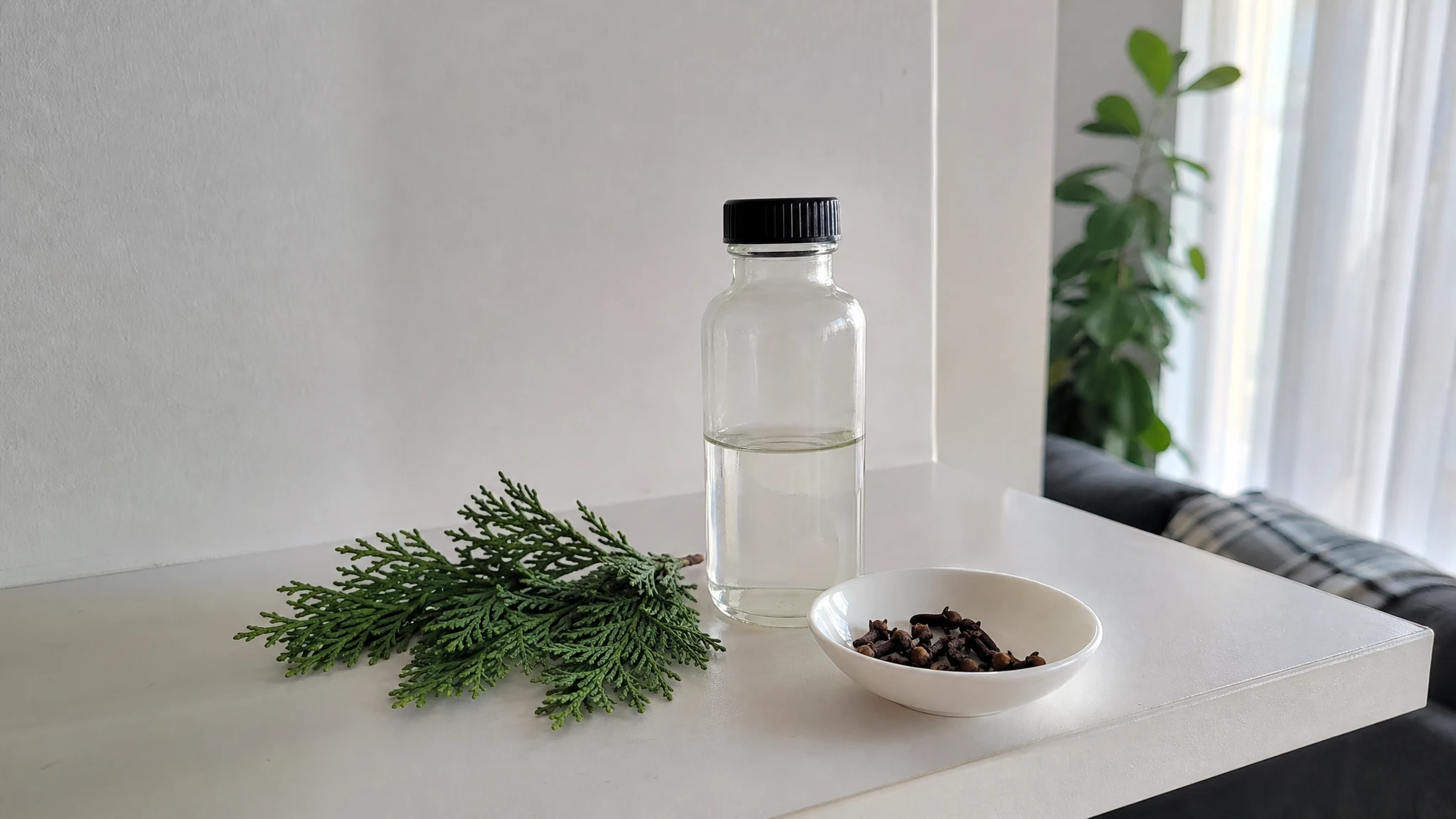
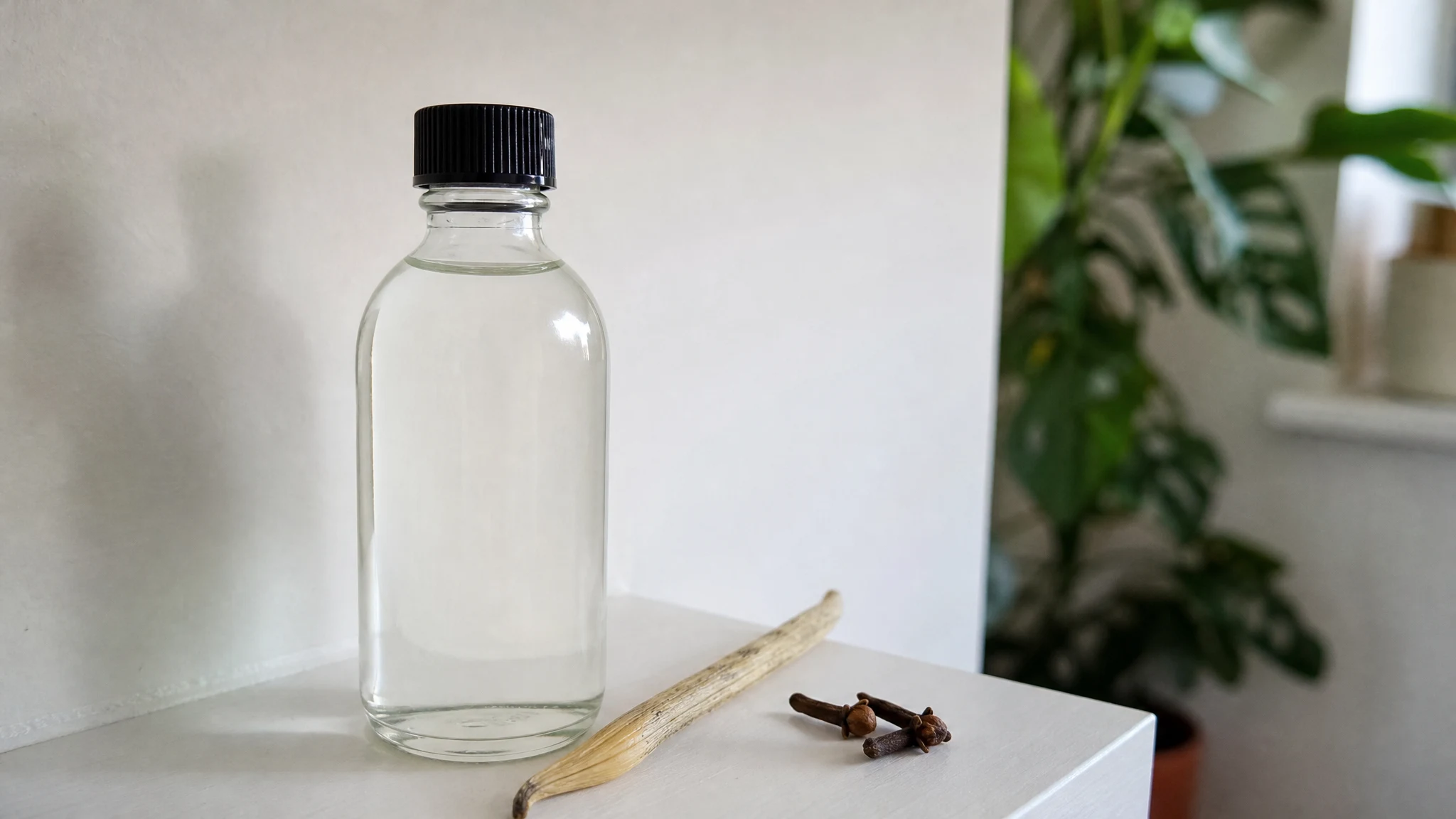
A bottle labelled vanilla might be an absolute, a CO2 extract, an oleoresin diluted in a carrier, an alcohol-based extract, synthetic vanillin or a vanilla fragrance oil. They behave differently in a blend. Alcohol extracts do not mix into an oil blend the way a diffuser needs, and a fragrance oil is a manufactured scent with its own formula, not a botanical oil. Read the ingredient list, ask the seller for the safety data sheet, and keep the vanilla in a bottle labelled with exactly what it is. We do not sell vanilla, so your supplier is the one to ask.
Whatever you pick, perfumers' data agrees on one thing. In Zarzo (2012), vanillin has a perfumers' note index of 100, as base-like as it gets, and sweet scents in general score high at the base end. Clove bud oil scores 22 on the paper-strip scale, which makes it a middle note. So the vanilla outlasts the clove. As the hours go by the blend smells more and more like vanilla, which is the pleasant way round.
How much clove can it carry?
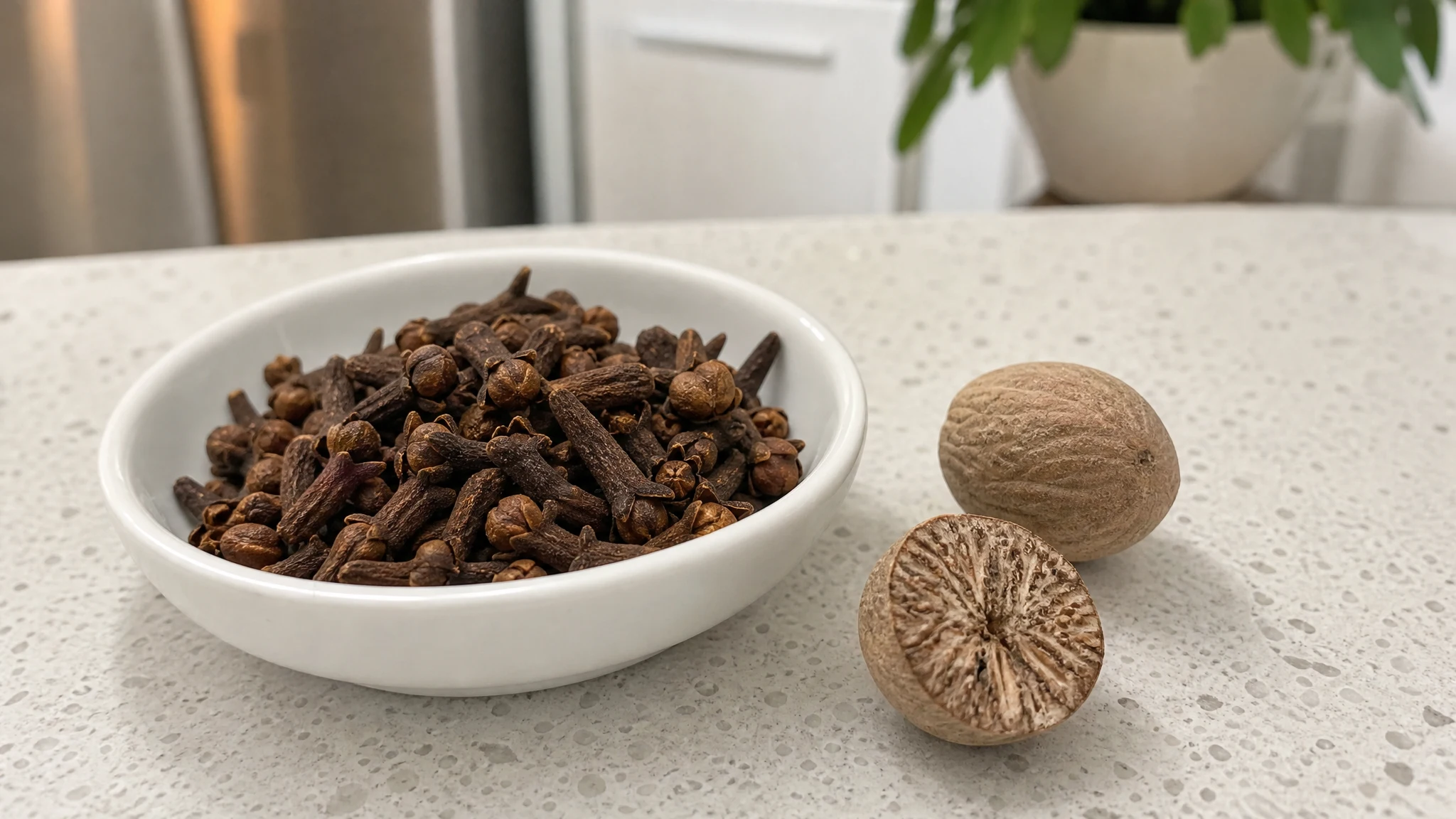
The clove bud oil we publish a GC-MS report for lists eugenol at 73.57% by area, so a small amount is plenty. A good body for the blend is a few parts of vanilla, a resin or wood for depth, and clove as the accent:
| Part of the blend | Parts | Role |
|---|---|---|
| Vanilla material | 6 | the sweet body |
| Frankincense, cedarwood or patchouli | 3 | depth, so it does not turn sugary |
| Clove bud | 1 | the spice |
That puts clove at 10% of the blend. For a diffuser or a paper strip it is a taste decision. The blend is for the air and not for skin, because the Tisserand Institute's eugenol page advises keeping eugenol-rich oils well diluted, and a vanilla material brings its own safety notes. In drops, the density of 1.054 on the Certificate of Analysis we publish for one bud batch, together with the usual 20 drops to the ml, gives about 0.053 g a drop. Clove is therefore a bit heavier in a blend than a drop count suggests, which is one more reason to keep it small.
Bud rather than leaf
We describe our bud oil as warm, rich and sweetly spicy, and our leaf oil as bold, smoky and earthy-spicy, drier and less sweet. In a vanilla blend you want the sweet one. The EFSA panel recorded eugenyl acetate at 7.90 to 9.09% in bud oil batches and 0.02 to 1.47% in leaf. Eugenyl acetate is an ester, and our reading is that it contributes to the bud's rounder profile, though the panel did not say so. Clove leaf with vanilla works too, but expect a drier, smokier result, and plan to rebalance the ratio.
A small trial
- Smell the vanilla alone for a minute. If it smells burnt or sharp, the blend will not fix it.
- Mix a 10-drop trial: 6 vanilla, 3 resin or wood, 1 clove. Drops are coarse, so a small trial keeps the ratios honest.
- Judge it on a paper strip at one minute, one hour, and the next morning.
- If you diffuse it, follow the maker's manual and keep the run short.
Smell them side by side
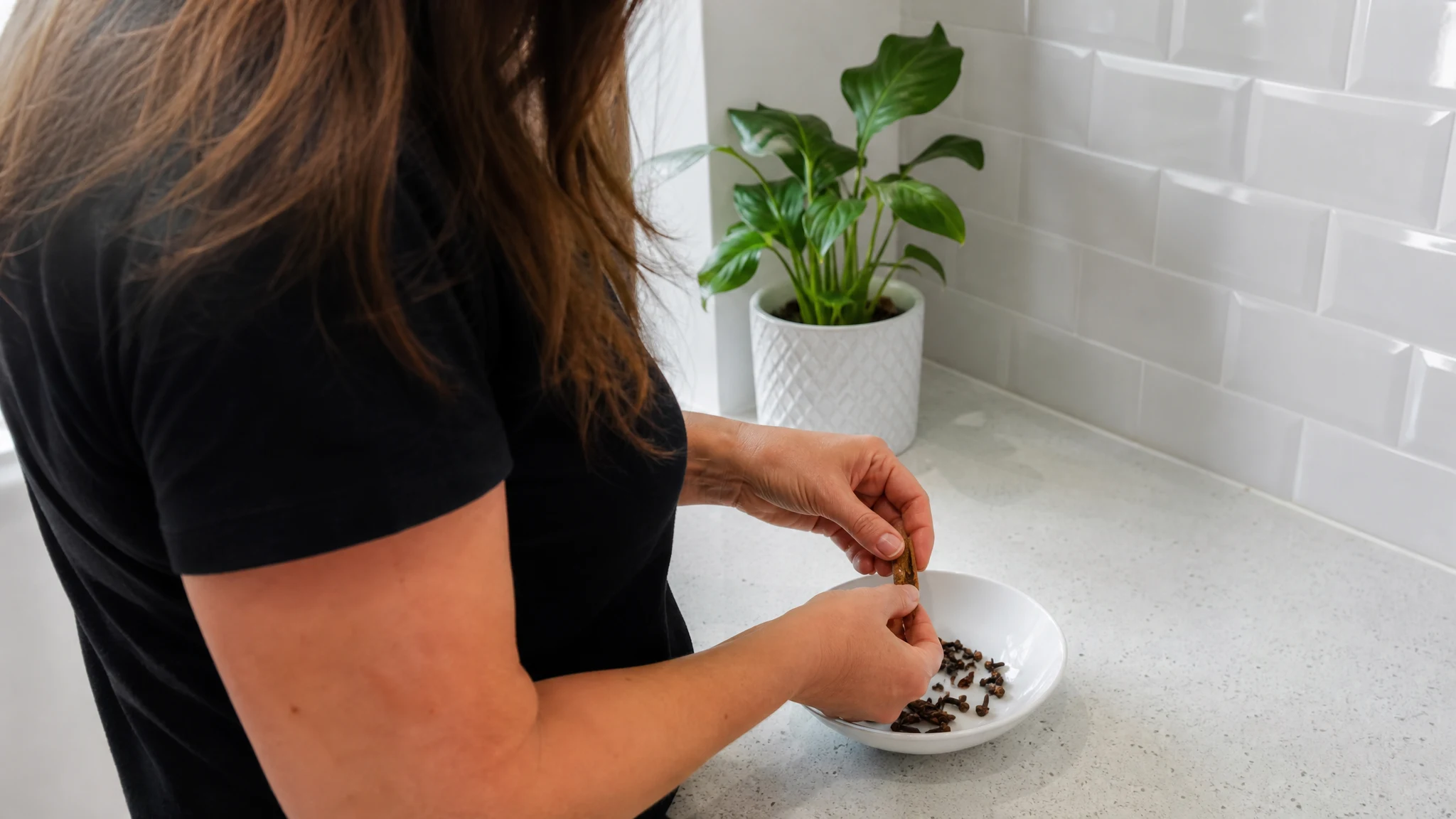
Before you measure anything, open the vanilla and the clove one after the other and breathe in slowly. Vanilla smells soft, round and sweet; clove is warmer, drier and spicier. Notice how each one feels in your nose, then put a drop of each on the same paper strip and sniff again. You will often find the pairing smells like something baked, which is exactly why the two sit together so comfortably.
Keep notes as you go
Blending is much more fun when you can repeat what you liked. Write down the ratio on a label, along with the date and the brand of vanilla you used, and add a few words about the smell at one minute and the next morning. Over a few trials you will build a little library of recipes, and you will quickly see how small changes in the clove move the whole blend.
A chai-style twist
Cinnamon leaf is the obvious addition for a chai-like version. Since cinnamon leaf and clove are both eugenol-rich, the Tisserand page lists them together, and we treat them as sharing one spice allowance. Give the cinnamon a share of the clove's one part and the blend stays balanced and sweet instead of turning hot. More pairing ideas are in our blending guide and our ten blends on paper. If you want the full room-by-room setup, the diffuser post covers it.
Clove Essential Oil
Clove Essential Oil from our own shop, in sizes from 0.5 oz to bulk.
From $10.99
Shop Now →Sources & Further Reading
- Zarzo, M., 2012. What is a fresh scent in perfumery? Sensors 12. PMC3574685
- Tisserand Institute (R. Tisserand), Eugenol: Essential Oil Constituents in Food Part 4. tisserandinstitute.org/learn-more/eugenol
- EFSA FEEDAP Panel, 2023. Safety and efficacy of feed additives from flower buds or leaves of Syzygium aromaticum. EFSA Journal 21(7):e08183. PMC10375362