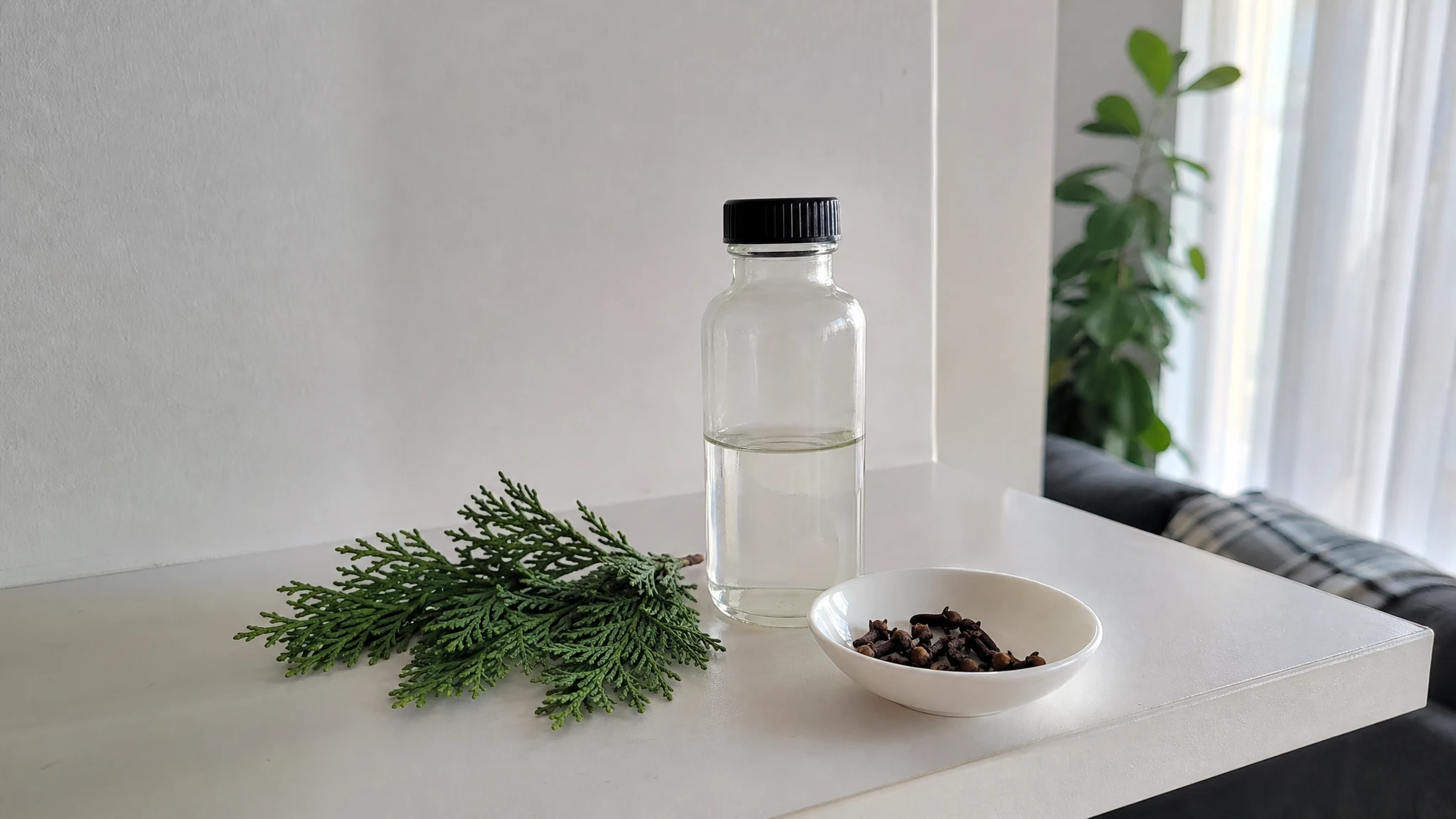
Clove, Cedarwood and Orange Blend: A Simple Ratio
Put a bottle of clove, a bottle of cedarwood and a bottle of sweet orange on a table, and the question is not how many drops of each. It is which one will take over. Clove will, by a wide margin. That is exactly what makes this trio fun to build, because the whole art is letting orange and cedarwood hold up the room while clove adds the spice.
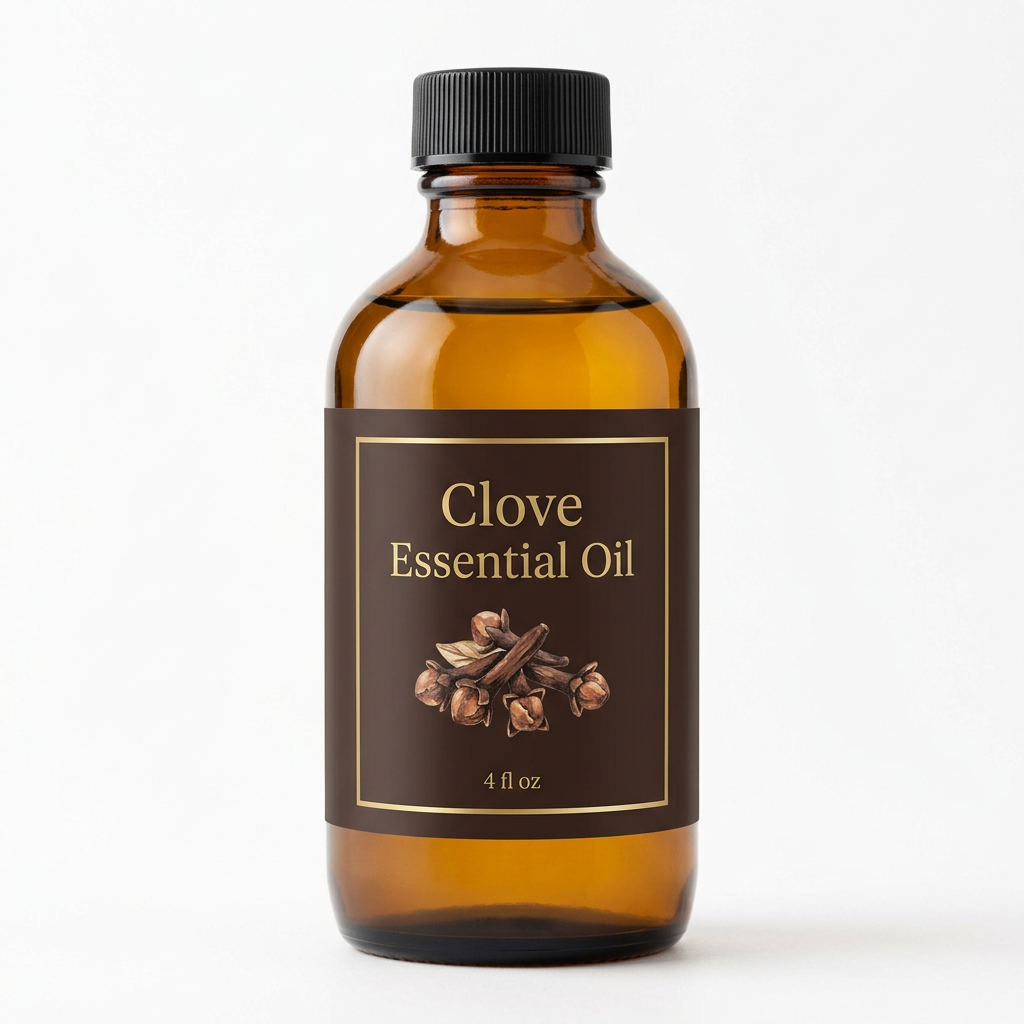
Clove Essential Oil
Our own Clove Essential Oil, in sizes from 0.5 oz to bulk.
From $10.99
Shop Now →Know which bottle is the loud one
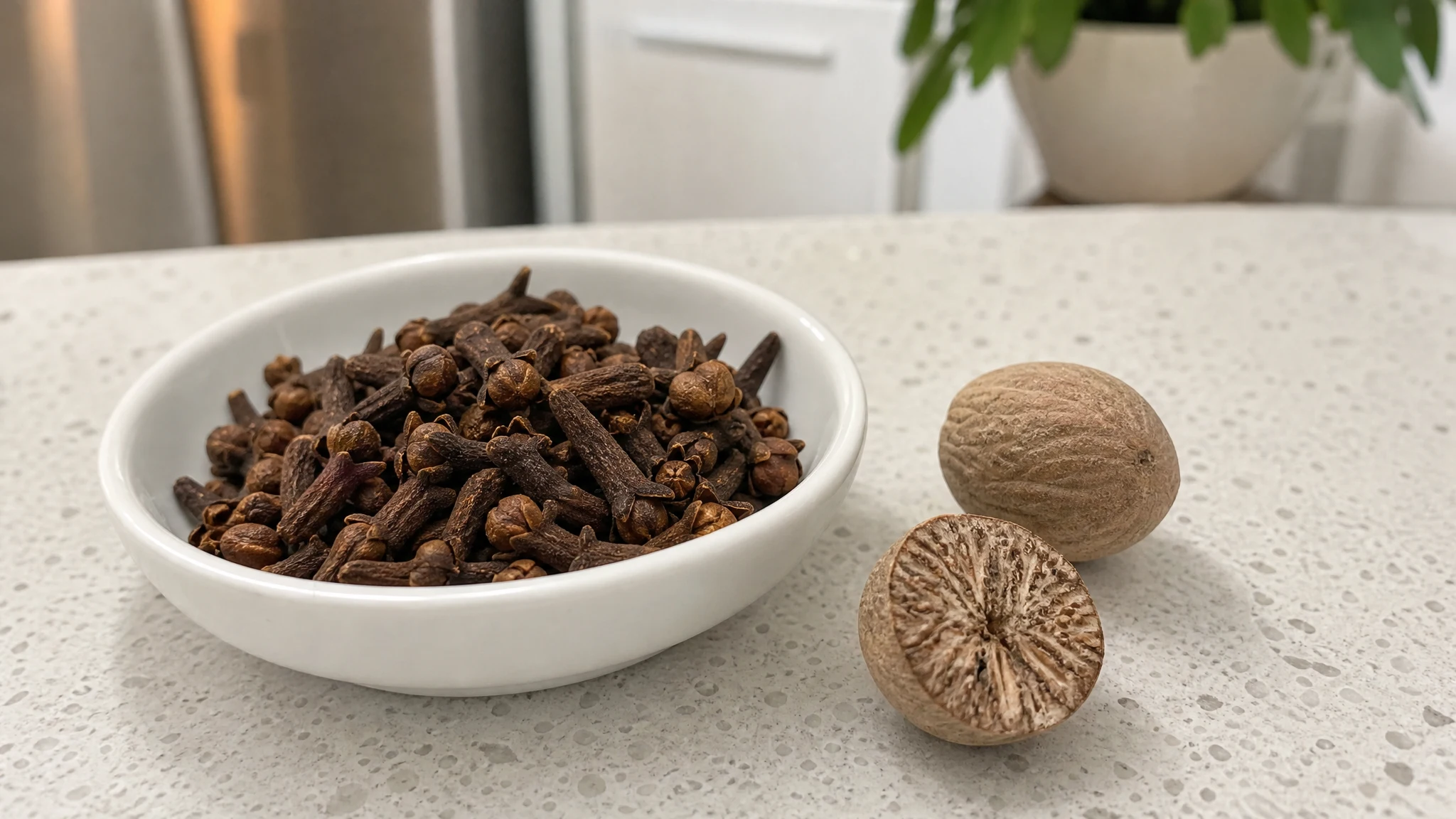
The GC-MS report we publish for our bud oil is strongly eugenol-led: 73.57% eugenol by area, with eugenyl acetate at 12.82% and beta-caryophyllene at 7.95%. These are qualitative area percentages for that report, so read them as a portrait of the profile and not a promise for every lot. Eugenol is what gives clove its unmistakable smell, and it is why a single drop outweighs three of almost anything else. It is also the compound the Tisserand Institute's eugenol page advises handling in proper dilutions, so we keep this accord as a scent blend for the air and for paper strips.
Give each oil a job
Zarzo (2012) compiled how long fragrance materials last on a paper strip: under 15 is a top note, 15 to 60 a middle note, over 60 a base note. Lemon scores 8 and bergamot 6, both top notes, and clove bud oil 22, a middle note. Sweet orange was not among the figures we extracted, so calling it the opener is reasoning from its citrus family rather than a measured score. Cedarwood is the wild card, since the same paper gives it a perfumers' base-note index of 85 but a paper-strip score of only 8. Cedarwoods also differ a lot by species, so keep the botanical name on your formula notes.
- Orange takes the first ten minutes. It brings brightness, and it is the part that leaves first.
- Clove is the middle. We describe our bud oil as warm, rich and sweetly spicy, and our leaf oil as bold, smoky and earthy-spicy.
- Cedarwood is the dry floor under both.
Write the formula in parts
| Oil | Parts | Share of blend |
|---|---|---|
| Sweet orange | 6 | 60% |
| Cedarwood | 3 | 30% |
| Clove bud | 1 | 10% |
Why 10% clove? Because it is the point where the spice is clearly there without crowding out the other two. It is a scent-balance choice for diffusing, not a dosage, and the blend is not meant for skin. The orange and cedarwood come from an essential oil supplier, since clove is the only oil in this blend we sell.
Scale it in drops
Drops are a rough convention, about 20 to the ml, and they vary with every dropper. The Certificate of Analysis we publish for one bud batch lists a relative density of 1.054, so a drop of that oil weighs about 0.053 g. That means clove is a larger share by weight than by count. If you want to build by weight, a 0.01 g scale and a pipette will do it, or just write the drop counts on the label so the next batch can match.
- A small trial of 10 drops: orange 6, cedarwood 3, clove 1.
- A 30-drop version: orange 18, cedarwood 9, clove 3. For a diffuser, follow the maker's manual for the oil quantity.
Smell before you commit
- Dip three paper strips: clove alone, orange alone, and the blend. Smell at one minute, one hour, and the next morning.
- If clove leads at the first minute, halve it rather than remove it.
- If the blend feels flat after an hour, the orange has gone and the middle is doing the work. Add half a part of cedarwood before you add clove.
- Jot down what changed so you can repeat it.
A paper strip is also the easiest way to judge clove, with no skin contact and no room-wide commitment while you decide.
What the finished blend smells like
On a fresh strip, the first thing you will notice is the orange, juicy and bright, like zest on a cutting board. A few minutes later the cedarwood shows up, dry and pencil-shaving woody, and then the clove slides in underneath with that baking-spice warmth. The magic is the handoff between them. Give it an hour and what is left is mostly wood and spice, a cozy, settled smell that feels like a cabin in winter.
Variations that keep the balance
Change the ratio before you add a fourth oil. A drier version moves a part from orange to cedarwood, giving 5-4-1. A brighter one goes 7-2-1. In both, clove stays at one part. If you want a bolder, smokier version, our leaf oil can stand in for the bud, and the EFSA panel recorded eugenyl acetate at 7.90 to 9.09% in bud oil batches and 0.02 to 1.47% in leaf batches, so expect a drier result and adjust the ratio. Cinnamon leaf is a natural fourth voice, and since both it and clove are eugenol-rich, give it a share of the clove's one part rather than a part of its own.
Blends change with time, and citrus changes first, so mix only what you will use over the next few weeks and keep the clove and cedarwood in their own bottles. For more pairing ideas, see our blending guide and the lineup of ten clove blends on paper, and for how this accord fits a room, the diffuser post. For handling, storage and pets, read our safety basics.
Clove Essential Oil
Clove Essential Oil from our own shop, in sizes from 0.5 oz to bulk.
From $10.99
Shop Now →Sources & Further Reading
- Zarzo, M., 2012. What is a fresh scent in perfumery? Sensors 12. PMC3574685
- Tisserand Institute (R. Tisserand), Eugenol: Essential Oil Constituents in Food Part 4. tisserandinstitute.org/learn-more/eugenol
- EFSA FEEDAP Panel, 2023. Safety and efficacy of feed additives from flower buds or leaves of Syzygium aromaticum. EFSA Journal 21(7):e08183. PMC10375362