How Is Clove Oil Made? From Green Bud to Bottle
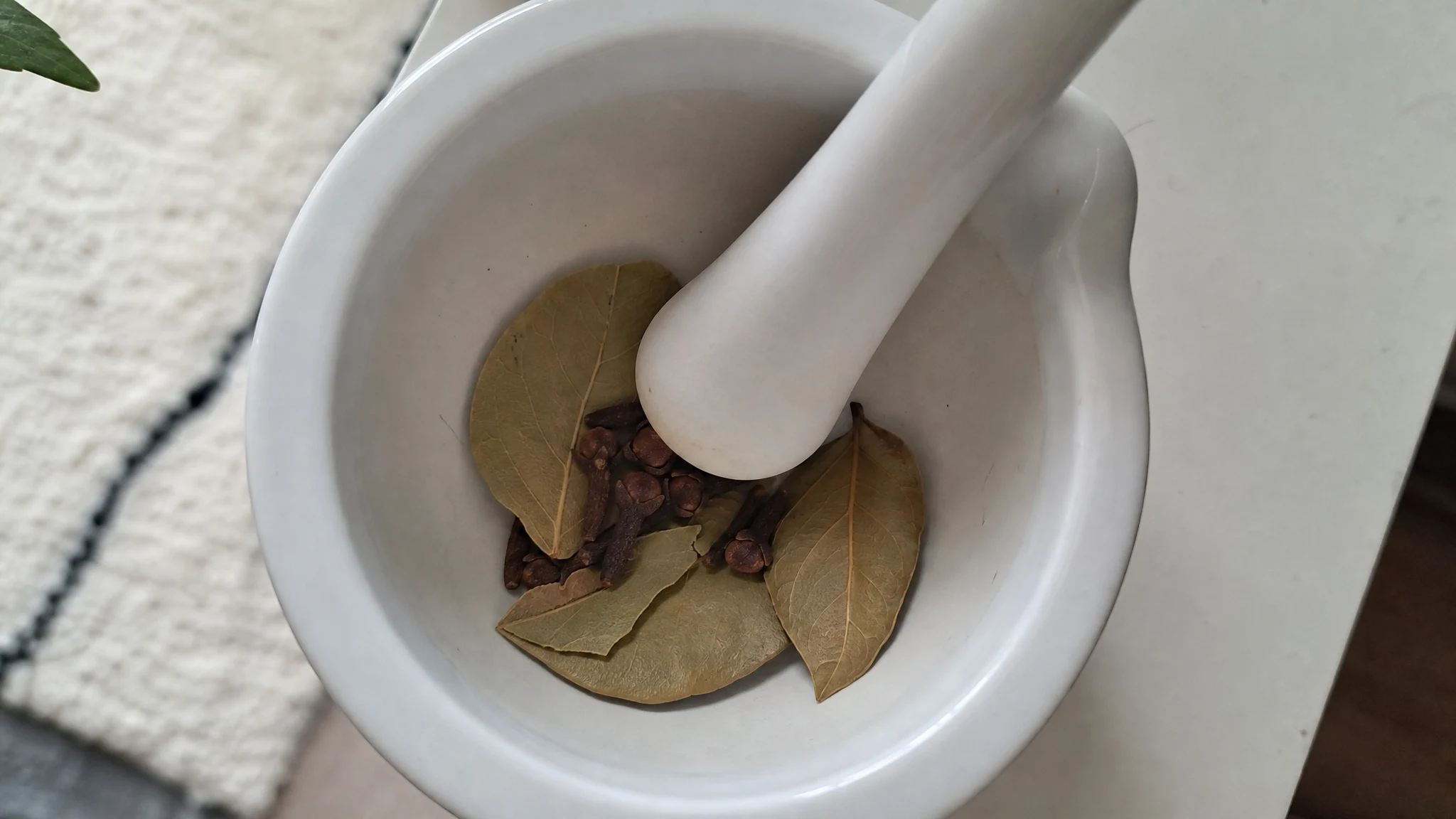
A clove is a flower that never got to open. Pickers take the buds while they are still green, the buds are dried to a russet brown, and the oil in them is coaxed out with steam. That short route explains a lot about why two bottles labelled clove oil can be quite different.
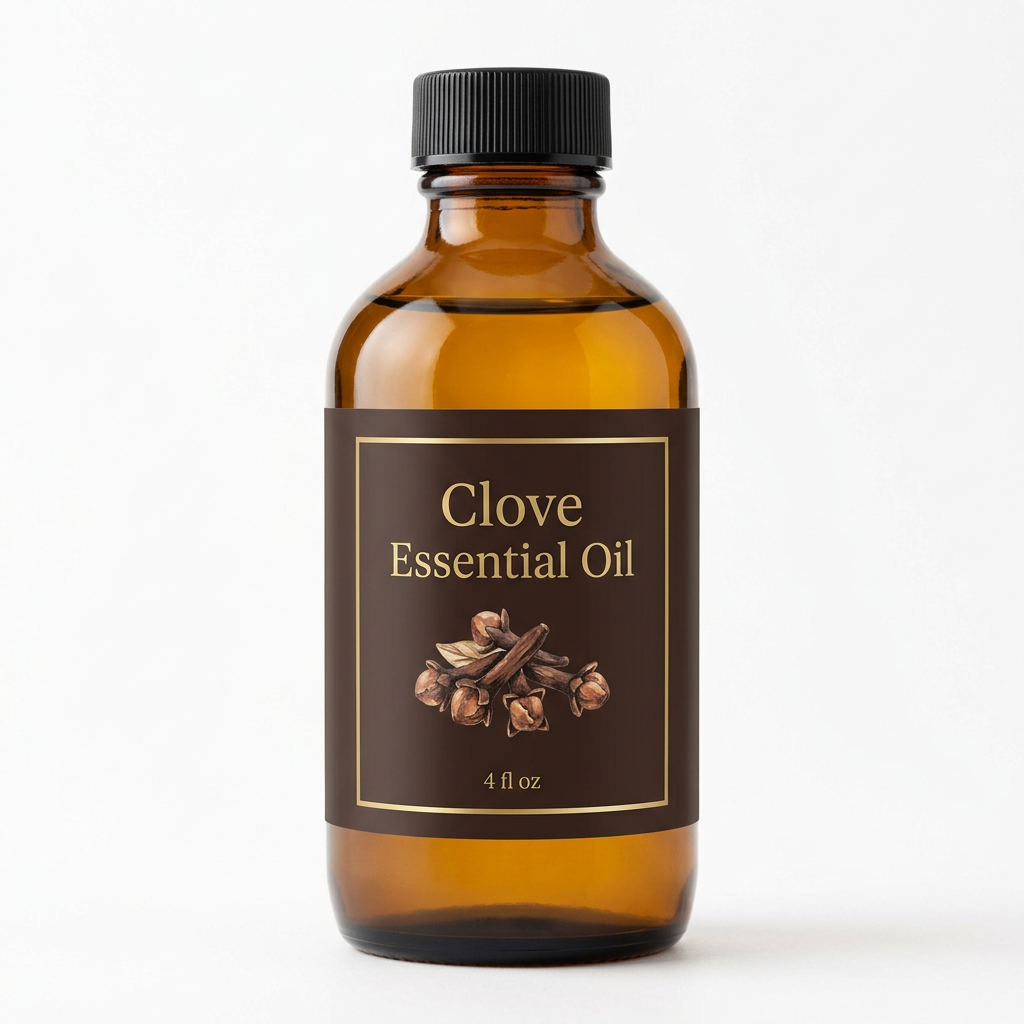
Clove Essential Oil
Our own Clove Essential Oil, in sizes from 0.5 oz to bulk.
From $10.99
Shop Now →Starting with a bud
Clove bud oil comes from the dried flower buds of Syzygium aromaticum, the same buds that sell as a whole spice. A review of eugenol production (Kamatou and colleagues, Molecules, 2012) describes the buds as hand-picked, labor-intensive work, and notes that dried buds weigh only about a third of what they did fresh. The buds for our oil are hand-picked green and sun-dried to russet brown before distillation.
Picture the pickers first. A clove tree is tall and glossy, and its clusters of buds start out pale green before they turn pink at the tips. The moment to pick is a narrow one, and the work is done by hand, cluster by cluster. Spread on mats in the sun, the buds shrivel and darken to the familiar brown, and the whole yard smells of cloves long before any steam is involved.
Timing matters. A study cited in a later review (Haro-Gonzalez and colleagues, 2021) found that buds at the flowering stage gave the best yield and eugenol content, and that oil quality was best from mature trees. A bud picked at the right moment holds more of what makes the oil what it is.
What happens in the still
In steam distillation, steam passes through the plant material and carries the aromatic compounds along with it. When the vapor cools, the oil and water separate, because clove oil does not mix with water. The sibling method, hydrodistillation, boils the plant material in water instead. Both are used for clove, and our oils are steam-distilled.
If you want to get a feel for the principle at home, hold a lid over a pot of simmering water with a few whole cloves in it. The scent that gathers under the lid and drifts out when you lift it is the same idea at kitchen scale: heat and steam lifting aroma out of the plant. A real still is bigger, hotter and far more controlled, but the basic move is the same.
The laboratory studies in that 2021 review ran for anything from a few hours to ten hours, and the authors note that very long contact with hot water or steam can change some compounds through hydrolysis. Reasoning from that, how long a still runs is one more reason that two clove oils with the same label can differ in their minor components. It does not make one run better than another, and the review makes no such claim.
Bud oil and leaf oil are separate products
Clove oil is made from the buds and from the leaves, and each is distilled on its own. We sell both, never blended into each other, and we do not sell a stem oil. The bud oil is warm, rich and sweetly spicy, with a baking-spice depth. The leaf oil is bolder, smokier and earthy, and drier and less sweet. A European food safety panel that reviewed batch data (EFSA FEEDAP, 2023) found the biggest difference in the minor compounds: bud oil carried a visible share of eugenyl acetate, while leaf oil carried very little and more beta-caryophyllene. Our bud versus leaf comparison walks through what that means for choosing one.
One way to tell the two apart is simply by nose. Open the bud oil and you meet sweetness first, a rounded, baking-spice warmth. Open the leaf oil and the smoke and earth come forward, with the sweetness trailing behind. Neither is better; they just suit different jobs, the way a pastry spice and a stew spice suit different pots.
Oil versus isolated eugenol
Clove oil is also a raw material for something else. Commercial eugenol is often made from clove oil: shake the oil with a dilute alkali so the eugenol dissolves, set aside the rest, acidify, and purify the eugenol by distillation (Kamatou and colleagues, 2012). The same review describes a fully synthetic route from another chemical. So eugenol on its own is an industrial ingredient, and an essential oil is the whole mixture, with eugenyl acetate, caryophyllene and a long tail of smaller compounds. Our oils are never diluted or extended with synthetic eugenol, and the way to see the whole mixture is a GC profile. Clove essential oil versus clove fragrance oil picks up that difference.
The last step: the bottle
Once the oil has separated, it goes into amber glass, which keeps light out. We bottle and ship from a US facility. The GC-MS report we publish for the bud oil names Indonesia as the origin, and the Certificate of Analysis we publish for one bud batch lists the plant part as flower bud and the extraction as steam distilled. The report and the certificate cover the bud oil, and if you want paperwork for the specific lot you are buying, ask us in writing through the contact page. For a guided read of the report, see how to read a GC-MS report for clove oil.
Both oils are concentrated, and skin use calls for dilution and a patch test, which our safety basics explain.
It is worth giving the amber bottle a moment of respect too. Its dark color is there to keep light off the oil, which is why we like to keep clove in glass and in a cupboard rather than on a sunny shelf.
It all comes back to the bud: pick it green, dry it brown, and let steam do the rest.
Clove Essential Oil
Clove Essential Oil from our own shop, in sizes from 0.5 oz to bulk.
From $10.99
Shop Now →Sources & Further Reading
- Kamatou GP, Vermaak I, Viljoen AM, 2012. Eugenol: from the remote Maluku Islands to the international market place. Molecules. pmc.ncbi.nlm.nih.gov/articles/PMC6268661
- Haro-Gonzalez JN et al., 2021. Clove essential oil (Syzygium aromaticum L. Myrtaceae): extraction, chemical composition, food applications, and essential bioactivity for human health. Molecules 26(21):6387. pmc.ncbi.nlm.nih.gov/articles/PMC8588428
- EFSA FEEDAP Panel, 2023. Safety and efficacy of feed additives consisting of essential oils derived from the flower buds or the leaves of Syzygium aromaticum. EFSA Journal 21(7):e08183. pmc.ncbi.nlm.nih.gov/articles/PMC10375362