Zanzibar Clove History: A Tree That Crossed the Sea
Say "Zanzibar clove" and it sounds ancient, as if the tree had grown there forever. It has not. The clove tree is a newcomer to East Africa, and the island's famous crop is barely two centuries old, which makes the story of how it rose and fell more interesting than the postcard version.
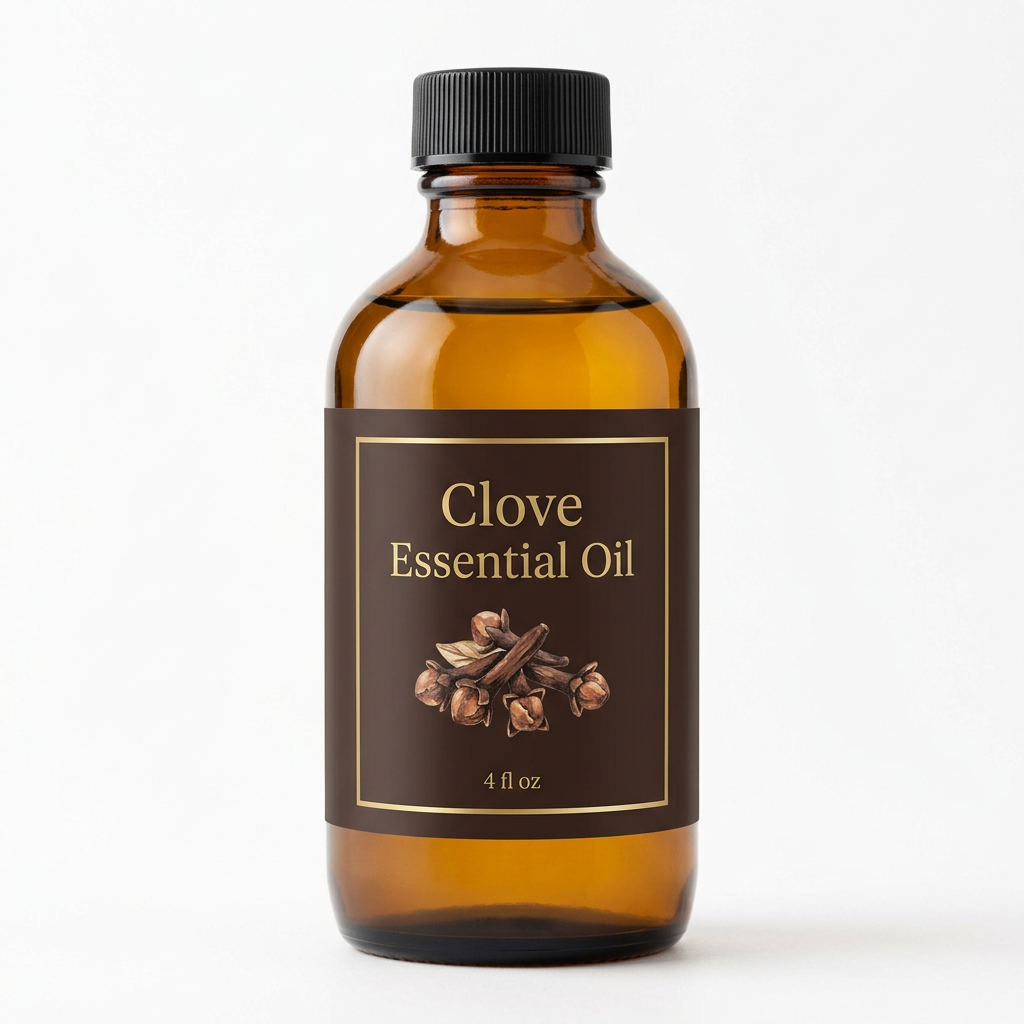
Clove Essential Oil
Our own Clove Essential Oil, in sizes from 0.5 oz to bulk.
From $10.99
Shop Now →A tree from the Spice Islands
Syzygium aromaticum began in the Moluccas, in what is now eastern Indonesia. For centuries that was the only place it grew. Cloves reached Zanzibar in the early nineteenth century, brought over from Madagascar, and the man who turned them into an industry was Sa'id bin Sultan, the Omani ruler who made Zanzibar his base after 1828. Writing in Saudi Aramco World, Charles Cecil describes a sultan who saw the money in cloves and ordered his subjects to plant clove trees or risk having their property confiscated. By 1850, Zanzibar and its sister island Pemba were the biggest clove producers in the world.
Brayan Bwana, in a January 2026 column for The Citizen, adds the economic backdrop: plantations of hundreds of thousands of trees, planted to replace income lost when the slave trade ended. It is worth sitting with how much patience that took. A clove tree typically needs six to ten years before it yields much, and up to two decades to reach full maturity. Nobody plants cloves for next season. They plant them for the next generation.
Imagine standing in a young plantation in those early years: rows of slender saplings with nothing to show for the work yet, no buds, no income, only the promise of one. It takes a particular kind of faith to keep tending trees like that, and it explains why the clove island became such a part of local identity. The crop was woven into family plans, land and inheritance.
Why the crown slipped
That long horizon is also what makes clove farming so hard to steer once things go wrong. By the middle of the twentieth century Zanzibar was exporting close to 31,000 tonnes a year. Output peaked at about 16,000 tonnes in the 1970s, and by 1990 exports had fallen to roughly 3,500 tonnes. In recent years the harvest has swung between about 1,700 and 8,300 tonnes from one year to the next.
The two writers point to a handful of causes. Cecil, writing in 2011, reported that since the 1964 revolution a state trading corporation had held the monopoly on buying and exporting cloves, so farmers received only about half of what mainland private buyers would pay, which took away the reason to plant more. Bwana lists ageing trees, disease that has hit hundreds of thousands of them, competition from Indonesia and Madagascar, and tighter export standards. His account puts the 2025 export earnings down about 76 percent on the year before.
Put those together and the pattern is easy to follow, even if neither writer ranks the causes. A tree that takes a decade to pay back needs a grower who believes the price will still be there in ten years. When the price a farmer sees is low and the trees are old, replanting is the first thing to slip, and the gap only shows up years later. That is our reading of the two accounts, not a finding from either.
If you ever visit a spice market, you can picture the other end of this long chain. The jar of whole cloves on the shelf is the small, dried end of a story that began years earlier with a seedling. It is worth a moment of thought the next time a stuck orange or a pot of mulled wine reaches the table.
What is left of the name
There is something quietly moving about the picture of whole buds drying on mats in the sun. It is a slow, human-scale scene, with nothing automated about it, and it is the same picture whether you are looking at a hillside in Indonesia, a village in Madagascar or a courtyard in Pemba. The name on the map may shift, but the work looks very much the same.
Cecil put Zanzibar and Pemba at about eight percent of world production when he wrote, a distant third behind Indonesia and Madagascar. The island's real legacy is cultural and visual: whole buds drying on mats in the sun, picked by hand, the same way they are in other clove countries. That image is accurate. The idea that Zanzibar still sets the world's clove standard is the part that has faded.
For anyone shopping for clove oil, the useful takeaway is that a place name on a bottle is a story, and the lot behind it is the fact. The GC-MS report we hold for our bud oil lists Indonesia, the tree's original home, and if you want the paperwork for the lot you are buying, you can ask us in writing through our contact page. To compare the three big growing regions side by side, see where cloves grow, and for the wider story of how the spice moved around the world, read the clove trade. The oranges stuck with cloves that people still make at the holidays have their own history in our pomander piece.
Clove Essential Oil
Clove Essential Oil from our own shop, in sizes from 0.5 oz to bulk.
From $10.99
Shop Now →Sources & Further Reading
- Cecil, C., 2011. Zanzibar: Cloves and Stone. Saudi Aramco World 62(2). archive.aramcoworld.com
- Bwana, B., 2026. Cloves in Africa: A 200-year legacy and the road ahead. The Citizen (Tanzania), 16 January. thecitizen.co.tz