Where Do Cloves Grow? Origins and Oil Labels
Ask which country grows the best cloves and almost every seller has a confident answer. The record is more interesting than any single answer: the tree traveled across the Indian Ocean in the nineteenth century, a whole island once ran on it, and today the label on a bottle tells you less than you might hope.
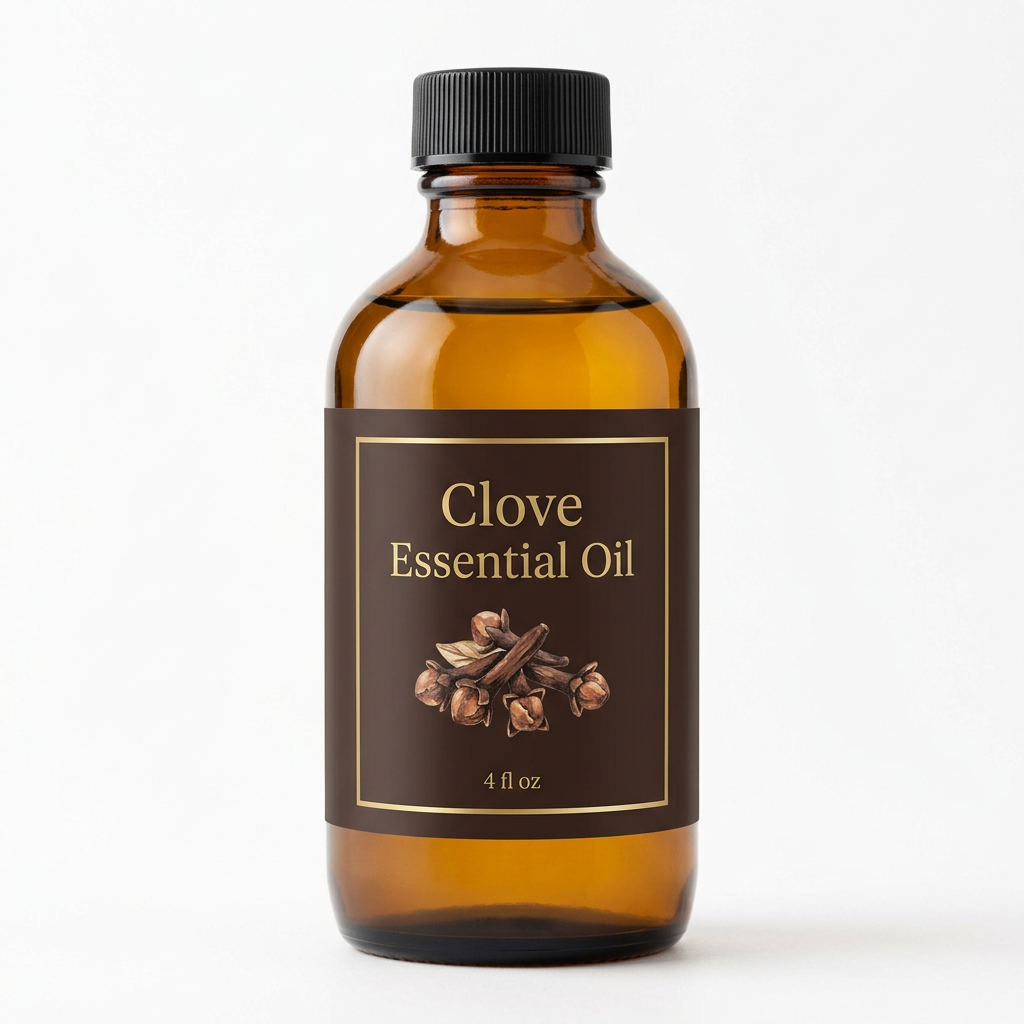
Clove Essential Oil
Our own Clove Essential Oil, in sizes from 0.5 oz to bulk.
From $10.99
Shop Now →From the Spice Islands outward
The clove tree, Syzygium aromaticum, is native to the Moluccas in eastern Indonesia, the original Spice Islands, according to Charles Cecil's account in Saudi Aramco World (2011). Today Indonesia is still the largest producer, with Madagascar close behind. Cecil puts Zanzibar and Pemba, the Tanzanian islands, at about eight percent of world production, "a distant third."
How Zanzibar got involved
Cloves are not native to Africa. Cecil writes that they reached Zanzibar from Madagascar in the early nineteenth century, that Sultan Sa'id bin Sultan expanded planting by ordering subjects to plant clove trees or risk losing their property, and that by 1850 Zanzibar and Pemba were the largest producers in the world. A January 2026 opinion piece in Tanzania's The Citizen carries the story forward: exports of nearly 31,000 tonnes a year in the mid-twentieth century fell to about 3,500 tonnes by 1990, and recent output has ranged from roughly 1,700 to 8,300 tonnes. Zanzibar once came close to being a synonym for clove, and the label still carries that glow even though production has moved on. Our Zanzibar story tells it in full.
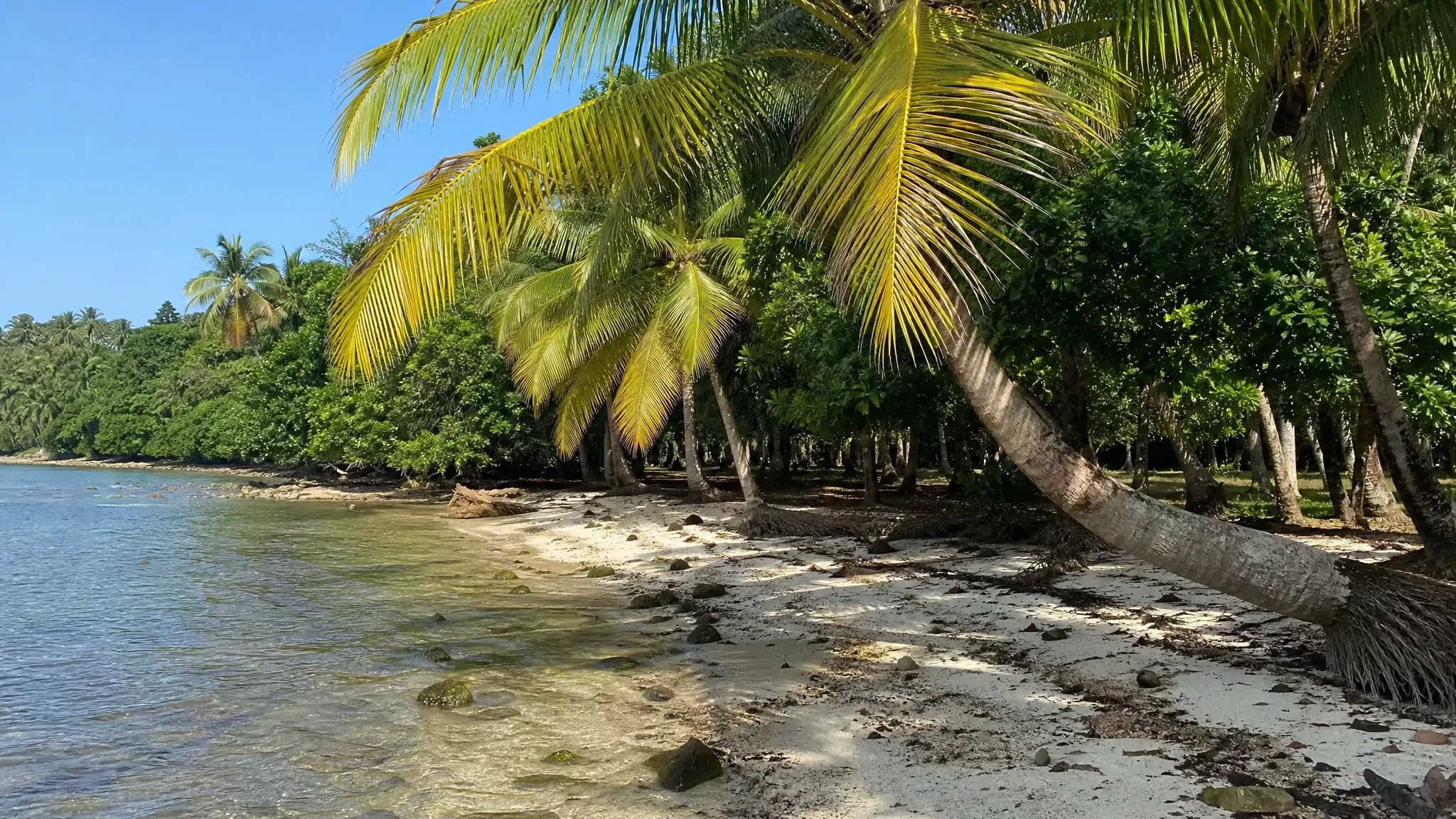
It is a lovely thing to picture. Clove trees are evergreen and glossy, growing in warm, humid places where the air is soft and the soil is rich, and the harvest involves pickers climbing ladders to reach the buds. The buds are dried in the open, spread out so the sun can do its slow work. By the time they reach a distiller or a spice shelf, they have traveled a long way from the tree.
A look at one Madagascar oil
Madagascar ranks high on both sources, and Cecil says it was the source of Zanzibar's first trees. We found one direct measurement, a 2026 paper in Molecules by Sytykiewicz and colleagues that analyzed a commercial clove bud oil bought from a Polish retailer and labelled as Madagascar origin. By GC-MS peak area it was 55.0% eugenol, 32.9% beta-caryophyllene and 4.7% eugenyl acetate. The authors note that geographic origin, plant stage and extraction method all strongly influence an oil's composition.
The GC-MS report we publish for our bud oil names Indonesia and lists 73.57% eugenol, 12.82% eugenyl acetate and 7.95% beta-caryophyllene. Put the two side by side and the temptation is to declare Indonesian clove richer in eugenol than Madagascan. Resist it. These are two single samples, from different labs and methods, with unknown harvest years and distillation practices. The honest reading is that clove oil varies from lot to lot, and neither report tells you what a third lot holds. Any table that ranks origins by eugenol with no named sample is marketing.
When you smell the two kinds of clove side by side, in a bottle and in a jar of whole spice, you will notice how similar their character is, and how little a map would help you tell them apart. A good nose can tell bud from leaf with ease. Telling one country from another by smell alone is a game for very experienced noses.
Using an origin label wisely
Our view is that a country name is a lead rather than a specification. It says where a crop was grown or shipped from, and the composition of the oil in your bottle comes from a report for that lot. A few habits help:
- Choose the plant part first. Bud or leaf moves the profile far more predictably than the country does. Our bud versus leaf comparison covers the difference, and we sell both, distilled separately.
- Ask what the origin claim means. Grown there, distilled there and merely shipped from there are three different statements.
- Match paperwork to the lot. The GC-MS report we publish covers our bud oil, and if you need documents for the exact lot you will receive, ask us in writing through the contact page.
- Read beyond eugenol. The headline percentage says little about smell, and our GC-MS guide shows what the other peaks do.
The origin page on our site, The Plant, says what we state about where our bud oil comes from. If you are buying at scale and origin matters to your downstream customers, ask any supplier for customs or phytosanitary documents, since production figures from news and encyclopedias are only a start.
If you are simply buying a bottle for your own home, you do not need any of that. Ask what the oil is, which plant part it came from, and how it smells, and then trust your nose. A label that tells you plainly what is in the bottle is worth more than a fancy place name on the front.
The tree began on a handful of small islands and now grows around the Indian Ocean, and the best clove is the one whose paperwork matches what is in the bottle.
Clove Essential Oil
Clove Essential Oil from our own shop, in sizes from 0.5 oz to bulk.
From $10.99
Shop Now →Sources & Further Reading
- Cecil C, 2011. Zanzibar: Cloves and Stone. Saudi Aramco World 62(2). archive.aramcoworld.com
- Bwana B, 2026. Cloves in Africa: a 200-year legacy and the road ahead. The Citizen (Tanzania). thecitizen.co.tz
- Sytykiewicz H, Lukasik I, Golawska S, 2026. GC-MS profiling, antioxidant and enzyme inhibitory activities of basil and clove essential oils and their binary mixtures. Molecules 31(18):3292. pmc.ncbi.nlm.nih.gov/articles/PMC13609182