Therapeutic Grade Clove Oil: Does the Label Mean Anything?
Walk through any essential oil aisle and you will meet labels that sound like a lab coat: therapeutic, medical, clinical. For clove oil, as for every other essential oil, no authority defines any of them. They are a seller's adjective. The good news is that a few things on a bottle and in the paperwork behind it can be checked, and those are worth far more than any grade.
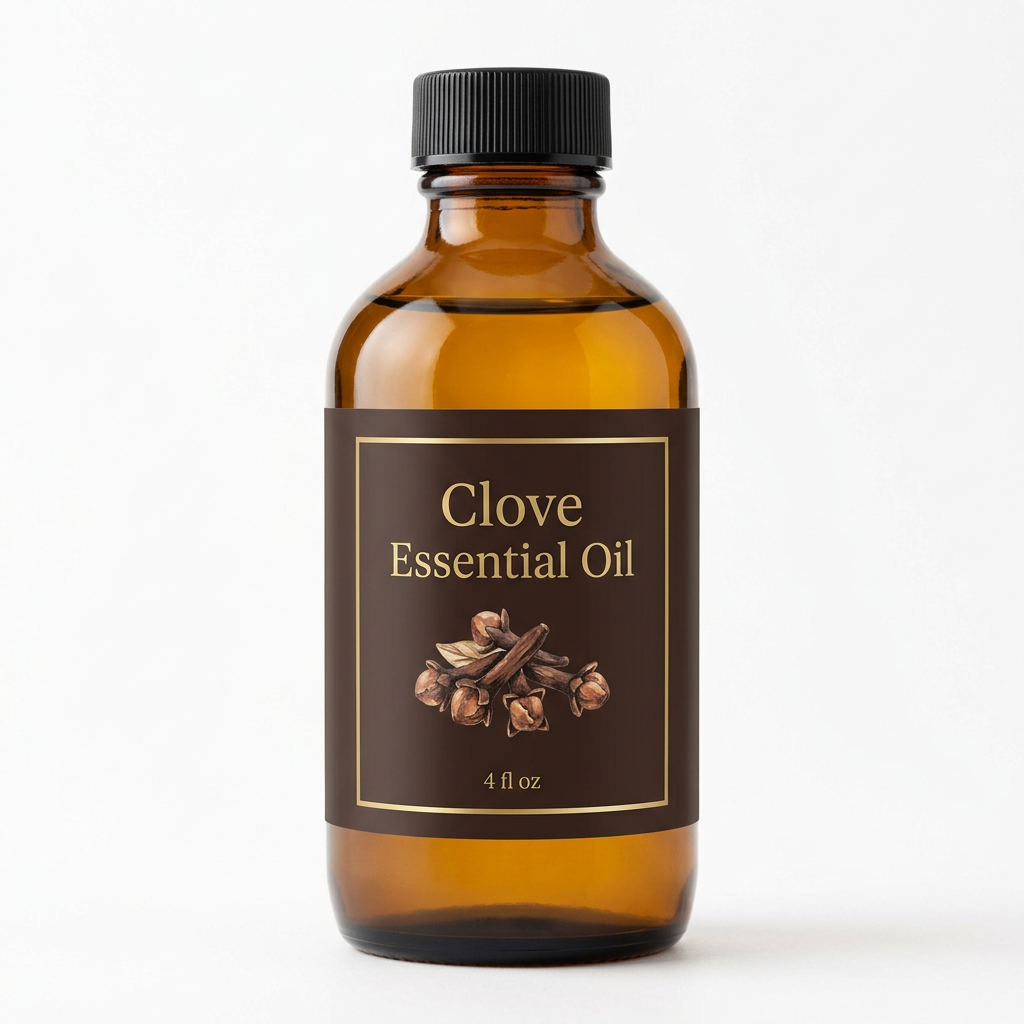
Clove Essential Oil
Our own Clove Essential Oil, in sizes from 0.5 oz to bulk.
From $10.99
Shop Now →It is easy to see why the wording works. A grade sounds like a ladder, with a top rung that someone has measured and a bottom rung that someone has rejected. Real quality is less tidy. It is a bundle of ordinary facts: which plant, which part, how it was made, what is in the bottle and whether anyone will show you the evidence. None of that fits on a gold sticker, and all of it is worth asking about.
What FDA and the standards bodies say
FDA's page on aromatherapy never mentions grades. It explains that a product's regulatory status depends mainly on its intended use, judged from labelling and claims: a product meant to cleanse or beautify is a cosmetic, while one with a therapeutic purpose falls under the drug rules (FDA, Aromatherapy). So "therapeutic" on a bottle sold for aromatic and cosmetic use is a claim about purpose, not a quality tier, and it is one reason we do not use the word.
Standards are written differently. ISO 3142:1997 is titled "Oil of clove buds" and the leaf oil has its own separate standard, ISO 3141. That tells you something useful: bud and leaf oil are treated as different commercial materials, which is how we list ours. Robert Tisserand, a well-known writer on essential oil safety, has made the point that ISO standards were not written with therapeutic properties in mind, just good-quality oils, and that no independent industry standard for a therapeutic tier exists (Tisserand, on so-called grades of oil).
What helps instead: a composition report
Tisserand's advice is to ask a supplier for a GC or GC-MS report, and we agree. Ours is public for the bud oil. The GC-MS report we publish identifies 98.68% of the sample, led by eugenol at 73.57% and eugenyl acetate at 12.82%, and reports no adulterants, diluents or contaminants detected by that method.
A little arithmetic shows what a report can tell you. Those two compounds together make up about 86% of the oil. Reports that identify slightly under 100% are normal, since small unidentified fractions are common. The rest is a handful of smaller compounds, including beta-caryophyllene, which is the pattern you expect from a bud oil. Published values for eugenol range quite widely from sample to sample, so a single percentage is a description, not a rank. A bud oil and a leaf oil can be close on eugenol and still smell different because other compounds differ.
What a report does not do
- Prove your bottle is the tested bottle. A report describes one sample, so it is fair to ask any seller how it connects to your lot. If you need paperwork tied to a specific order, ask us in writing through the contact page.
- Replace common sense. A single method sees what it is built to see, so a report is one useful piece of evidence alongside the botanical name, the plant part and how openly a seller answers questions.
- Say anything about what the oil does for a body. Composition is chemistry, and we make no claims about outcomes.
How to shop around a grade claim
When you meet a grade on a label, you do not have to argue with it. Just move to questions the seller can answer with facts. What is the botanical name? Is it bud, leaf or stem? Is there a report, and does it say which sample it covers? Can I ask you about my specific bottle? A seller who answers those in plain words has told you more than any badge could.
Open a bottle and use your nose, too. A bud oil should smell warm, rich and sweetly spicy, and a leaf oil bolder and smokier. If something smells thin, flat or oddly sweet, that is worth a question to the seller.
Plant part, botanical name, and the words "pure" and "organic"
The checks that mean something are plain ones: the botanical name (Syzygium aromaticum), the plant part (bud or leaf), whether anything has been added, and whether a report backs it up. We sell both bud and leaf oil, steam-distilled and sold undiluted. We keep "pure" out of our own vocabulary as a quality claim because nothing standard defines it, and we do not describe our oils as organic. If organic matters to you, look for a certificate from a named certifier, and see our piece on what an organic seal covers.
The same habit helps with any bottle you buy, and our label guide and GC-MS reading guide walk through it step by step. The best sign of a good seller is that they hand you documents and invite questions instead of a grade.
Clove Essential Oil
Clove Essential Oil from our own shop, in sizes from 0.5 oz to bulk.
From $10.99
Shop Now →