Clove Oil Mouthwash: Why a DIY Rinse Is a Poor Idea
We sell two clove oils and we will not give you a recipe for a clove oil mouthwash. Our bud and leaf oils are bottled undiluted and labelled for aromatic and cosmetic use, never internal use, and a rinse is the one preparation where that label and the temptation to ignore it meet head on. This page explains the reasoning so you can judge it yourself.
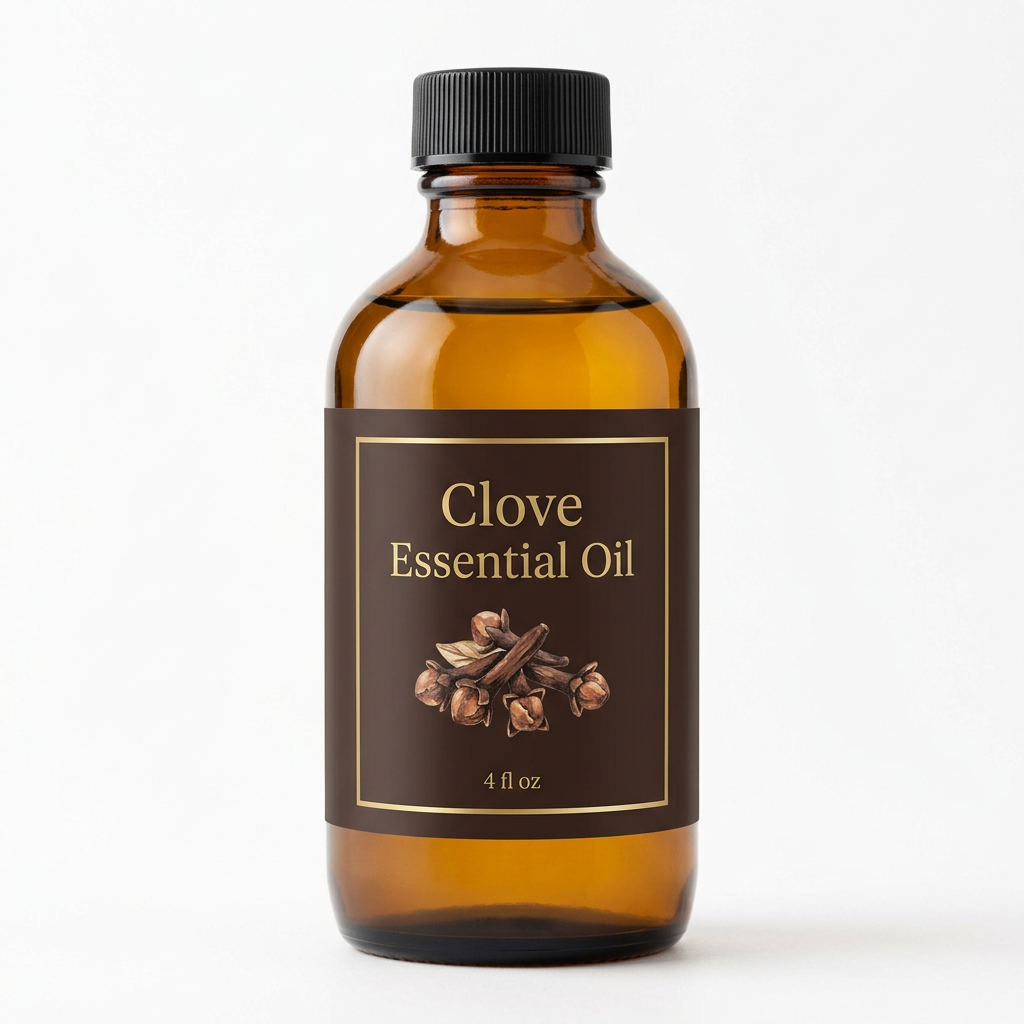
Clove Essential Oil
Our own Clove Essential Oil, in sizes from 0.5 oz to bulk.
From $10.99
Shop Now →What a rinse needs before anyone should recommend it
The American Dental Association (ADA) divides mouthwash into two groups. Cosmetic rinses may temporarily mask bad breath and leave a pleasant taste but, in the ADA's wording, "don't reduce your risk of cavities or gum disease." The second group carries active ingredients meant to reduce plaque, gingivitis or cavities (ADA MouthHealthy, mouthwash page). A home-made clove rinse could be neither: nobody has measured what it does.
Products that carry the ADA Seal have been through that measurement. The ADA's Council on Scientific Affairs accepts an antiseptic rinse on the basis that it is safe and has shown efficacy in reducing gingivitis and plaque above the gumline when used as directed (ADA Seal product listing). The point is the phrase "when used as directed": the Seal attaches to one finished, tested formula, not to an ingredient.
Formulation changes the result, even among essential oil rinses
A 2025 systematic review and meta-analysis in the International Journal of Dental Hygiene, by van Swaaij et al., compared two versions of commercially formulated essential oil mouthwash, one with alcohol and one without. Seven papers qualified. In the non-brushing studies the alcohol-containing version produced lower plaque scores (difference in means 0.40, 95% CI 0.27 to 0.53); in brushing studies the gap shrank to 0.05. Bleeding and gingival scores showed no clear difference. The authors rated the certainty as small to moderate and disclosed that some of the research team had prior links to industry.
Reasoning from that review, the practical consequence is this: if removing alcohol from an engineered essential oil rinse measurably moves its plaque numbers, then a kitchen mixture with no solvent system, no stabiliser and no trial behind it is not a cheaper version of the same thing. It is a different, unmeasured product.
The evidence for single oils is weaker still. A 2024 meta-analysis of tea tree oil used adjunctively in oral care, by Zhang et al., pooled randomised trials and found a non-significant improvement in plaque index for tea tree mouthwash over placebo; the authors concluded there was a lack of strong evidence and noted an unpleasant taste in three of four studies that examined subgingival use. That is tea tree, not clove. We did not find a comparable pooled analysis for clove oil rinses in the sources we read, and we will not extrapolate one.
The problem with oil in the mouth
Three separate hazards are documented, and they do not depend on whose bottle it is.
- Mucosal irritation. The UK summary of product characteristics for a 100% clove oil dental solution sold for temporary toothache states that eugenol can irritate skin and mucous membranes, that repeated use may cause gum damage, and that patients may become sensitised to clove oil. It lists hypersensitivity to clove oil, eugenol or Peru balsam as a contraindication, and it is intended for dental use only, in small amounts, in a cavity (emc, Clove Oil BP SmPC, 2014). That is a licensed professional-grade product with its own labelling; it is not a template for what happens when someone adds essential oil to a glass of water.
- Swallowing. The ADA notes that young children may swallow large amounts of mouthwash, with nausea, vomiting and intoxication particularly linked to alcohol-containing rinses, and it does not recommend mouthwash for children under 6 (ADA MouthHealthy). Clove oil adds a specific hazard: a 2005 case report in the European Journal of Pediatrics describes a 15-month-old who developed fulminant liver failure after swallowing 10 ml of clove oil, with ALT above 13,000 U/l at 24 hours, and who improved after intravenous N-acetylcysteine (Janes et al., Eur J Pediatr, 2005). The Tennessee Poison Center puts clove oil at about 60 to 90 percent eugenol and notes toxicity in small children with as little as 5 to 10 ml (Tennessee Poison Center, 2025).
- Allergy. The same SmPC lists sensitisation. Eugenol is the dominant constituent of our bud oil: our published GC-MS report for it says 73.57% eugenol and 12.82% eugenyl acetate. Reasoning from that composition, anyone sensitised to eugenol would be reacting to the main component of the oil, so a reaction is not a minor side issue.
A bottle-size calculation worth doing
Our smallest size is 0.5 oz. Converting at roughly 29.6 ml per fluid ounce, that is about 14.8 ml, more than the 10 ml in the case report above. Whatever the household, a bottle of undiluted clove oil holds more than the quantity linked to that child's liver failure, which is why we say keep it away from children and why a bathroom shelf next to the mouthwash is the wrong place for it.
What we would do instead
If the goal is fresher breath or healthier gums, the sources point toward professionals and finished products, not our shelf. A dentist can say whether gum bleeding is gingivitis, whether a tooth is the real source of an odour, and whether an ADA-accepted rinse suits you; a pharmacist can compare labels and flag interactions or alcohol content. A 2022 review by Takenaka et al. describes antimicrobial mouthwash as an adjunct to mechanical removal of plaque, not a replacement for it, and raises open questions about resistant strains and effects on the oral microbiota. Our takeaway is modest: brushing and cleaning between teeth do the foundational work, and a rinse sits on top.
Where clove oil does belong is in the air and, diluted, on skin. Our product pages give a 0.5% to 2% range in a carrier oil with a patch test for skin use, and diffusing is covered in the diffuser guide. For the broader picture of what the evidence says about the mouth, see clove oil and oral health, clove oil and bad breath, clove oil and gums, and the verdict on oil pulling with clove oil.
Who should skip this idea entirely, and who to see
Everyone, for a home rinse: children, anyone who might swallow it, pregnant or nursing people, anyone with a known eugenol or Peru balsam allergy, anyone with ulcers, braces-related sores or recent dental surgery, should ask a dentist or pharmacist before putting any essential oil in the mouth. If a rinse has already been swallowed, call your local poison center (in the US, 1-800-222-1222). Persistent gum bleeding, an odour that does not clear, or a mouth sore that keeps returning belongs with a dentist, and swallowing trouble or facial swelling is an emergency.
So our position is simple. We sell aromatic oil, not dental advice, and the one thing we can say with confidence is that a rinse is a finished product that has to be tested, and ours is not one.
Clove Essential Oil
Clove Essential Oil from our own shop, in sizes from 0.5 oz to bulk.
From $10.99
Shop Now →Sources & Further Reading
- American Dental Association, MouthHealthy. Mouthwash. mouthhealthy.org/all-topics-a-z/mouthwash
- American Dental Association. ADA Seal of Acceptance, antiseptic mouthrinse. ada.org ADA Seal product search
- van Swaaij et al., 2025. Essential oils mouthwash with or without alcohol: systematic review and meta-analysis. pubmed.ncbi.nlm.nih.gov/39133629
- Zhang et al., 2024. Tea tree oil adjunctive to daily oral maintenance: systematic review and meta-analysis. pubmed.ncbi.nlm.nih.gov/38864380
- Takenaka et al., 2022. Evidence on the use of mouthwash for control of supragingival biofilm and potential adverse effects. pubmed.ncbi.nlm.nih.gov/35740134
- Janes et al., 2005. Essential oil poisoning: N-acetylcysteine for eugenol-induced hepatic failure. pubmed.ncbi.nlm.nih.gov/15895251
- Tennessee Poison Center, 2025. What is the main toxic component of oil of cloves? vumc.org/poison-control
- Electronic Medicines Compendium, 2014. Clove Oil BP dental solution, summary of product characteristics. medicines.org.uk/emc/product/4817