Clove Oil Myths: 6 Things People Get Wrong
Most clove oil folklore is one true fact stretched a bit too far. The fact: eugenol, the main compound in the oil, is lively stuff, and dentists have used purified eugenol for a very long time. The stretch is deciding that this makes a bottle of essential oil safe, identical from bottle to bottle, or fit for every job. Here are six beliefs we hear most, starting with the one that matters most.
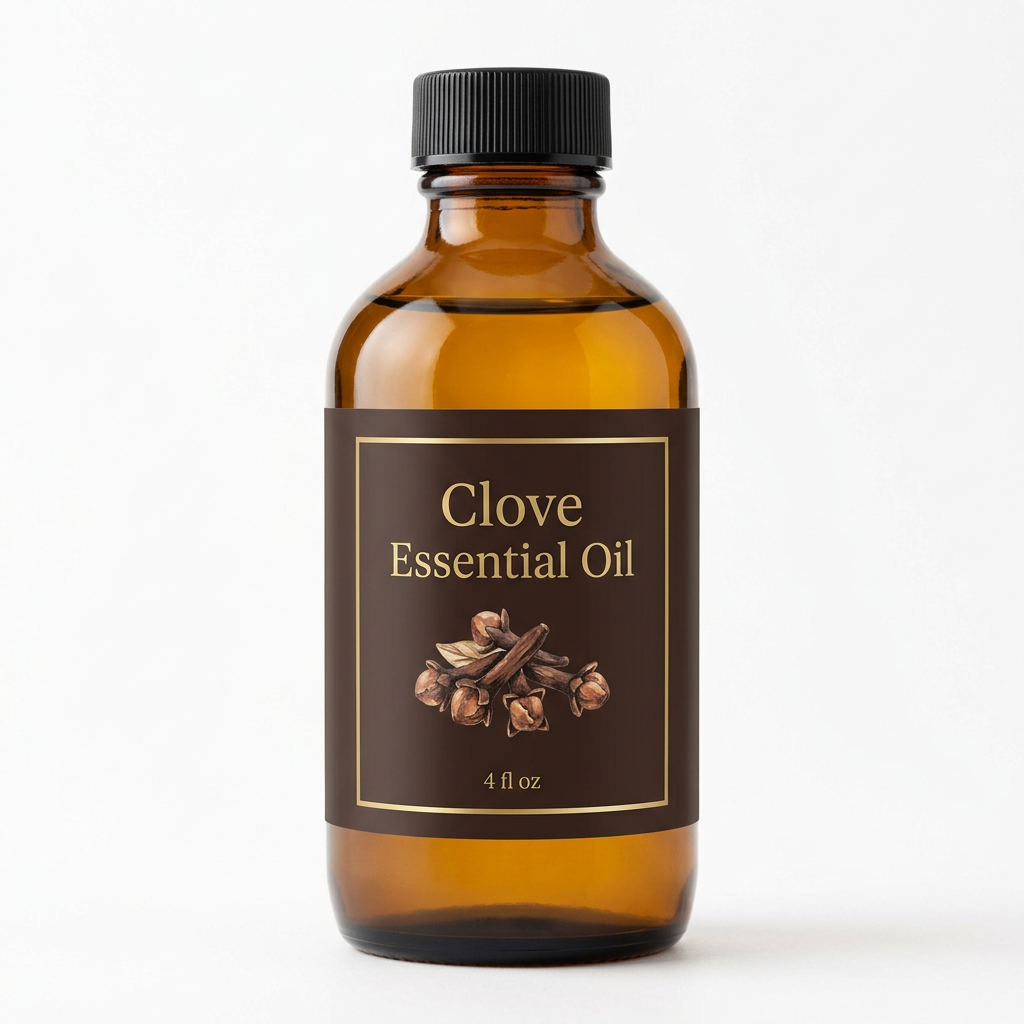
Clove Essential Oil
Our own Clove Essential Oil, in sizes from 0.5 oz to bulk.
From $10.99
Shop Now →"It is a spice, so the oil is gentle"
A spice is something you sprinkle. The oil is that spice concentrated into a few drops, and most of it is one compound. A review in Molecules describes eugenol as a primary irritant and sensitiser and puts its share of clove oil at 45 to 90% across the literature (Kamatou et al., 2012). It is also one of the standard fragrance allergens used in patch testing. Researchers describe eugenol as a prohapten, meaning skin chemistry turns it into the thing that triggers a reaction, which is why having tolerated it once is not a promise about next time (Sukakul et al., 2024). Our approach is simple: always dilute, patch test, and keep the Tisserand Institute's 0.5% figure for clove bud in mind.
"Food-grade means you can swallow it"
Clove oils are on a US food list, and the regulation permits them as flavourings at levels consistent with good manufacturing practice (21 CFR 184.1257). That is permission for food makers to use a trace in a recipe. It says nothing about taking drops of the oil itself. Our oils are labelled for aromatic and cosmetic use, never internal use, and if anyone swallows some, call poison control or a physician. We go deeper in our article on ingesting clove oil.
"Clove oil is a toothache remedy, so it counts as a medicine"
The tradition is old; the Kamatou review dates written toothache use to a French text from 1640. Dentists also use eugenol in dental materials, applied by a professional. A sensible reading stops there. Toothache is a sign something needs a dentist, and we sell an aroma oil, not a dental product. Our fuller look is in the toothache article.
"All clove oil is the same"
Bud, leaf and stem oils are different oils, each with its own character. We sell bud and leaf, and we describe them differently: the bud is warm, rich and sweetly spicy, while the leaf is bolder, smokier and drier. Even within bud oil, analyses vary with where and how the oil was made. One review table lists bud oils from 82% to nearly 98% eugenol, depending on the sample (Liñán-Atero et al., 2024). Different studies, labs and methods feed into those figures, so the numbers are best read as a reminder that one oil's report describes that oil.
"More eugenol means a better oil"
If good bud oils land anywhere from the low 80s to the high 90s, a bigger number alone cannot rank them. What helps a buyer is whether the paperwork fits the product: the right plant part, a botanical name, a batch reference and the method used. The GC-MS report we publish for our bud oil lists eugenol at 73.57% by area, and it describes that report's sample.
"A grade on the label means a better oil"
No official body defines labels such as "therapeutic" or "clinical" for clove oil, and we go through why in our piece on grade claims. A certificate with real parameters can be checked, while a phrase with no standard behind it cannot. The Certificate of Analysis we publish for one bud batch lists a density of 1.054, a refractive index of 1.535 and an optical rotation of -0.68 degrees, each within the standard range printed beside it. The better question for any seller is which documents exist and for which batch. If you need paperwork for your own lot, ask us in writing through the contact page.
Why myths about clove stick around
Clove has been in kitchens, apothecaries and dental offices for a very long time, so every era has added its own story. The smell does a lot of the work, too. Something that smells that strong and that familiar feels like it must be useful for everything, and a good story attaches itself to a good smell. We love that history. We just think the oil is more fun to use when you are not carrying a stack of promises it never made.
A handy habit when you hear a new clove claim: ask who is saying it and what they sell. A bottle that comes with a list of cures should make you curious about the paperwork, not more convinced about the oil. Ours comes with a scent description, a botanical name and a short list of ways to enjoy it.
What holds up
Plenty of the lore stands once it stays modest. Clove has a distinctive scent that chemists have long described as the smell of cloves, tied to eugenol (PubChem, eugenol). It is a warm, spicy note that suits diffusers, candle pours and potpourri, and it blends happily with orange, cedarwood and vanilla. That is a good place for a clove myth to end up: just a lovely smell.
Clove Essential Oil
Clove Essential Oil from our own shop, in sizes from 0.5 oz to bulk.
From $10.99
Shop Now →Sources & Further Reading
- Kamatou et al., 2012, Eugenol: from the remote Maluku Islands to the international market place
- Sukakul et al., 2024, eugenol and isoeugenol as prohaptens (Acta Derm Venereol)
- 21 CFR 184.1257, Clove and its derivatives
- Liñán-Atero et al., 2024, Clove essential oil review (Antioxidants)
- PubChem, Eugenol