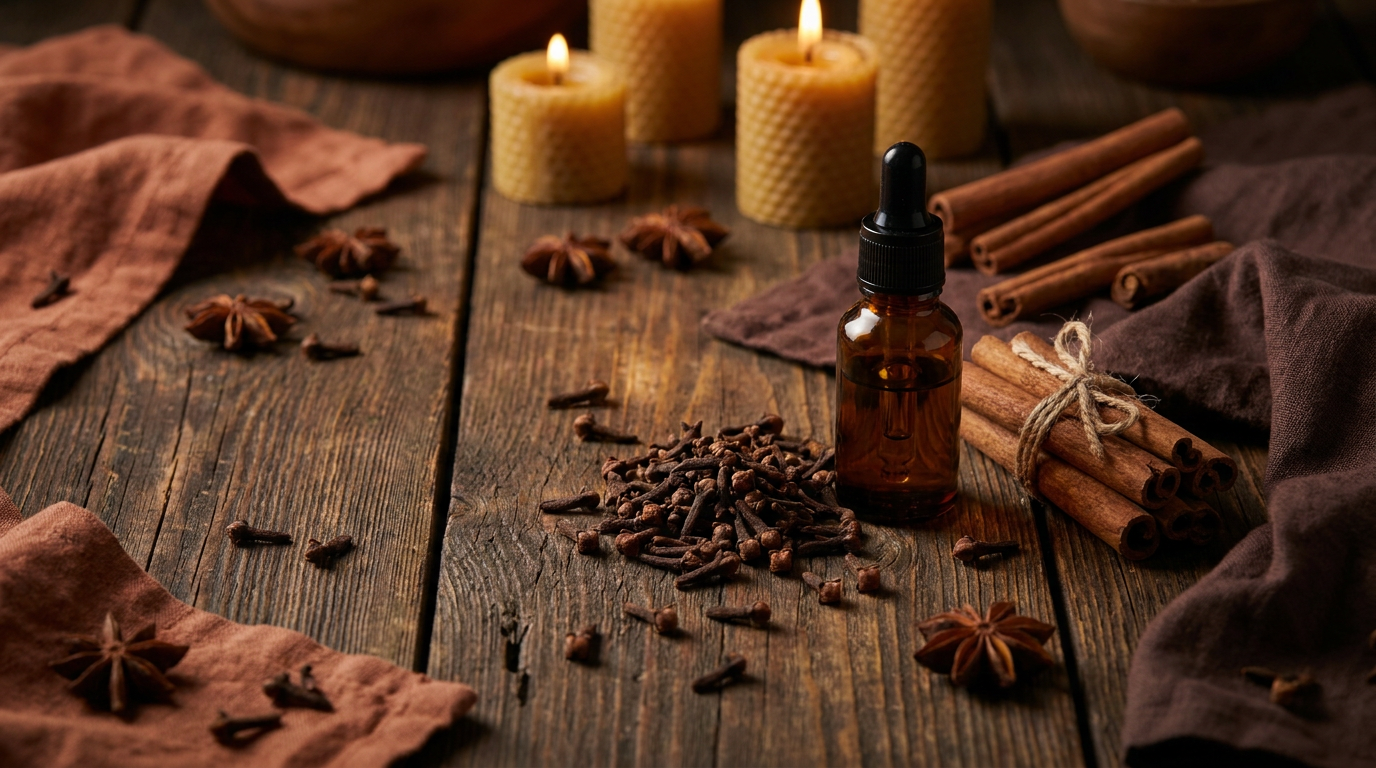
Clove Oil at Home: The Complete Guide to Cozy, Seasonal Ambiance
Key Takeaways
- Clove essential oil is one of the most potent home-scenting oils available. A little goes a long way.
- It pairs beautifully with citrus, warm spices, vanilla, and conifer notes for seasonal atmosphere.
- Always dilute properly before any skin contact. Clove oil is a high-phenol oil and requires careful handling.
- You can use clove oil in diffusers, simmer pots, wax melts, potpourri, room sprays, and homemade candles.
- Clove bud oil is generally considered gentler than clove stem or clove leaf oil for home fragrance purposes.
- Sourcing matters: look for oils that disclose country of origin, botanical name, and extraction method.
- Seasonal rituals built around familiar scents can meaningfully shape the mood and character of your home.
Some scents are more than fragrance. They are time travel. The moment warm clove drifts through a kitchen, you are somewhere specific: a grandmother's holiday baking, a market stall stacked with oranges and spices, the first cold afternoon of autumn when someone finally lights a candle. Clove oil has that kind of power.
This guide is for anyone who wants to use clove oil home fragrance thoughtfully and well. You will find information on sourcing and grades, on how to match the oil to the right delivery method, on blending it with other scents for cozy home ambiance across every season, and on staying safe while you do it. The goal is a home that smells deliberate, warm, and genuinely yours.
1. What Is Clove Essential Oil? A Brief Spice-Trade Origin Story
Clove essential oil comes from Syzygium aromaticum, a tropical evergreen tree native to the Maluku Islands of Indonesia (the original Spice Islands). For centuries, cloves were among the most valuable traded commodities on earth. Portuguese, Dutch, and Arab traders moved cloves across oceans at extraordinary cost because the dried flower buds were, simply, irreplaceable.
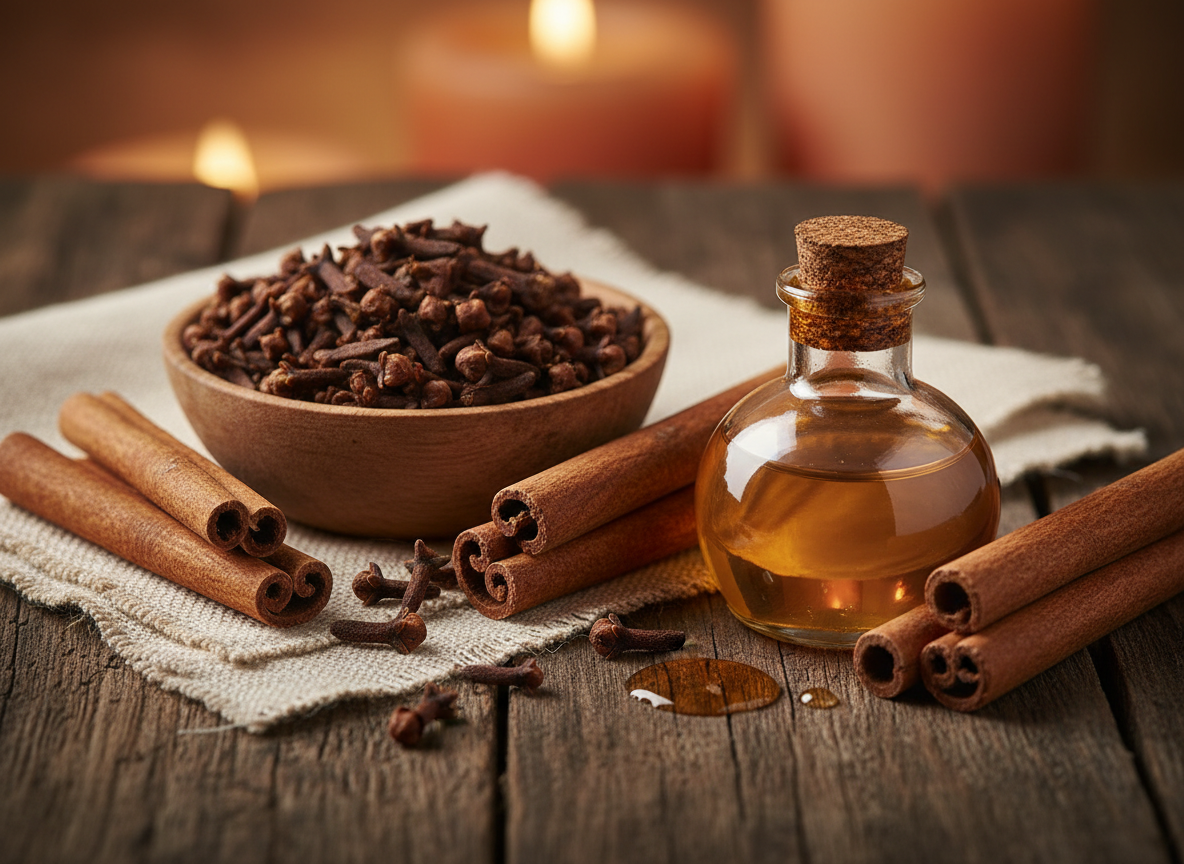
The essential oil is extracted from those same flower buds, as well as from the leaves and stems of the tree. Steam distillation is the standard method, though CO2 extraction is used for some specialty grades. The resulting oil is a deep amber-to-yellow liquid with a sharp, intensely spicy scent driven primarily by a compound called eugenol.
Eugenol is the reason clove smells the way it does. It is also why the oil requires careful handling. High eugenol content makes clove one of the most concentrated and skin-sensitizing essential oils in common use. For clove oil for the home, that concentration is an asset. A single drop in a diffuser fills a room. A few drops in a simmer pot scent an entire floor of a house. You are working with something genuinely powerful.
Modern production is centered primarily in Indonesia, Madagascar, Sri Lanka, and Tanzania. Each origin brings slight character differences to the oil, much the way terroir influences wine. Indonesian clove bud oil tends toward a warmer, rounder profile. Madagascan bud oil can present with slightly brighter, fruitier topnotes. These are subtle distinctions, but if you love the oil enough to use it seasonally, they become interesting.
2. Understanding Grades and Sourcing: Bud, Leaf, and Stem
Not all clove oil is the same. This is one of the most practically important things to understand when you start building home fragrance routines. The three main types differ in scent character, eugenol concentration, and appropriate use.
Clove Bud Oil
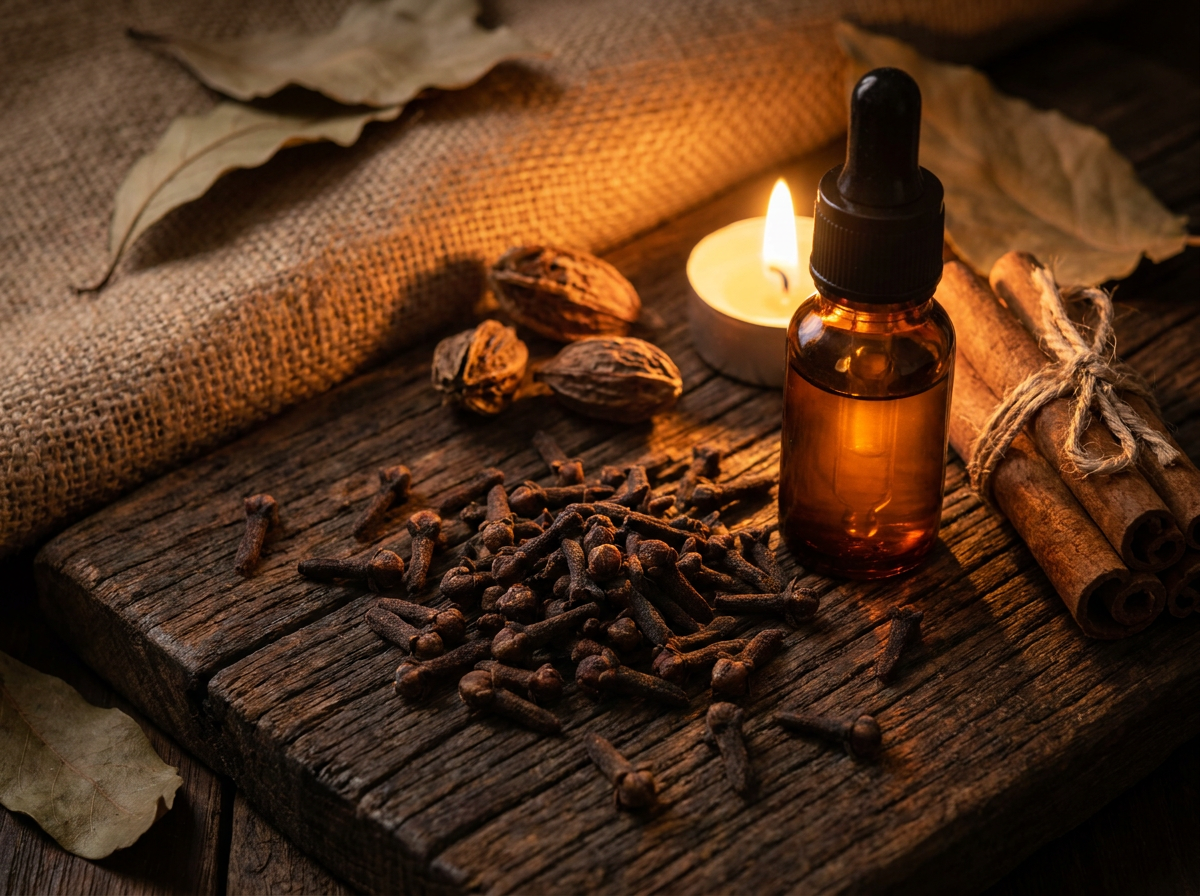
This is the premium grade for home fragrance. It is steam-distilled from the dried, unopened flower buds. The scent is warm, rounded, and richly spicy with subtle floral undertones. Eugenol content typically runs between 70 and 90 percent. For cozy home ambiance, clove bud oil is the version to reach for when you want something nuanced and inviting rather than simply sharp.
Clove Leaf Oil
Distilled from the leaves of the tree, this grade is significantly less expensive and more widely produced. The scent is sharper and somewhat harsher, often described as woody-medicinal rather than warm-spicy. Eugenol content is typically higher than bud oil, sometimes exceeding 95 percent. It is commonly used in industrial applications and as a starting material for eugenol isolation. For home fragrance, it can work in candles and wax melts where it will be modified by fragrance blending, but it is rarely the first choice for diffuser use.
Clove Stem Oil
Distilled from the small twigs and stems, this grade sits between leaf and bud in both cost and scent character. Eugenol content is very high. It is used commercially in perfumery and flavoring but is less commonly sold to home users. Most people will not encounter stem oil unless they seek it out specifically.
What to Look for on a Label
| Label Element | What It Tells You | Why It Matters |
|---|---|---|
| Botanical name | Syzygium aromaticum | Confirms it is clove and not a cheaper substitute |
| Plant part | Bud, leaf, or stem | Directly affects scent quality and price |
| Country of origin | Indonesia, Madagascar, etc. | Allows you to track provenance and trace quality |
| Extraction method | Steam distilled or CO2 | CO2 extracts may have a fuller scent profile |
| GC/MS testing | Third-party chemical analysis | Verifies purity and composition |
| Batch or lot number | Traceability code | Allows you to request test results for your specific bottle |
Reputable suppliers make GC/MS (gas chromatography/mass spectrometry) reports available on request or downloadable from their websites. If a company is opaque about sourcing and testing, that is worth noting before you buy.
"The spice trade was built on clove. Knowing where your oil comes from is, in a small way, participating in that long story with intention."
3. The Scent Profile: What Clove Oil Actually Smells Like at Home
Words for scent are always approximate, but they are useful for blending. Here is an honest breakdown of what clove bud oil smells like in a home setting, and how it behaves across different delivery methods.
The Core Character
Clove bud oil leads with a bold, hot, spicy opening. The eugenol-driven sharpness hits first. Behind it, there is sweetness (some describe it as faintly fruity), and beneath that a dry, slightly woody base. In smaller quantities diffused into a room, the aggressive opening softens and what remains is the warmth: something that reads universally as cozy and autumnal.
How Delivery Method Changes the Scent
- Cold-air diffuser: Preserves the full aromatic profile, including the sharper eugenol notes. Best for short diffusion sessions of 30 to 60 minutes.
- Ultrasonic diffuser: Gentler dispersion. The scent is softer and more ambient in the room. Good for longer background scenting.
- Simmer pot: Heat rounds the sharp edges considerably. The scent that wafts from a stovetop simmer blends with steam and becomes notably warmer and softer than the raw oil. This is many people's favorite way to experience clove in the kitchen.
- Wax melt or candle: The heat of the wax pool transforms the scent. Blended with vanilla, orange, or balsam fragrance oils, clove in wax becomes extraordinarily welcoming.
- Room spray: The alcohol carrier in a room spray creates a brief burst of sharp spice that softens within minutes to a warm background note.
Classic Scent Pairings for Home Fragrance
Clove is a strong blender but also a dominating one. Think of it as a bass note that grounds everything around it. It pairs best with:
- Sweet orange and blood orange: The classic spiced-citrus combination. Bright and instantly autumnal.
- Cinnamon bark or cinnamon leaf: Both are high-phenol oils like clove, so use them in small quantities together. The combination is deeply warming.
- Cardamom: Adds a green, aromatic lift that keeps the blend from feeling heavy.
- Vanilla (as a fragrance oil or in resin form): Softens clove considerably and pushes the blend toward bakery-warm territory.
- Black pepper: A surprising pairing. Pepper adds a dry, bright peppery edge that complements clove without competing with it.
- Cedarwood or sandalwood: Woody base notes that anchor clove blends and add depth without sweetness.
- Frankincense: Resinous and slightly smoky, frankincense creates a more contemplative, cathedral-like atmosphere when blended with clove.
- Fir needle or pine: For winter blends, conifer notes push a clove-forward blend toward the outdoors in a fresh, bracing way.
4. The Main Methods: How to Use Clove Oil for Home Fragrance
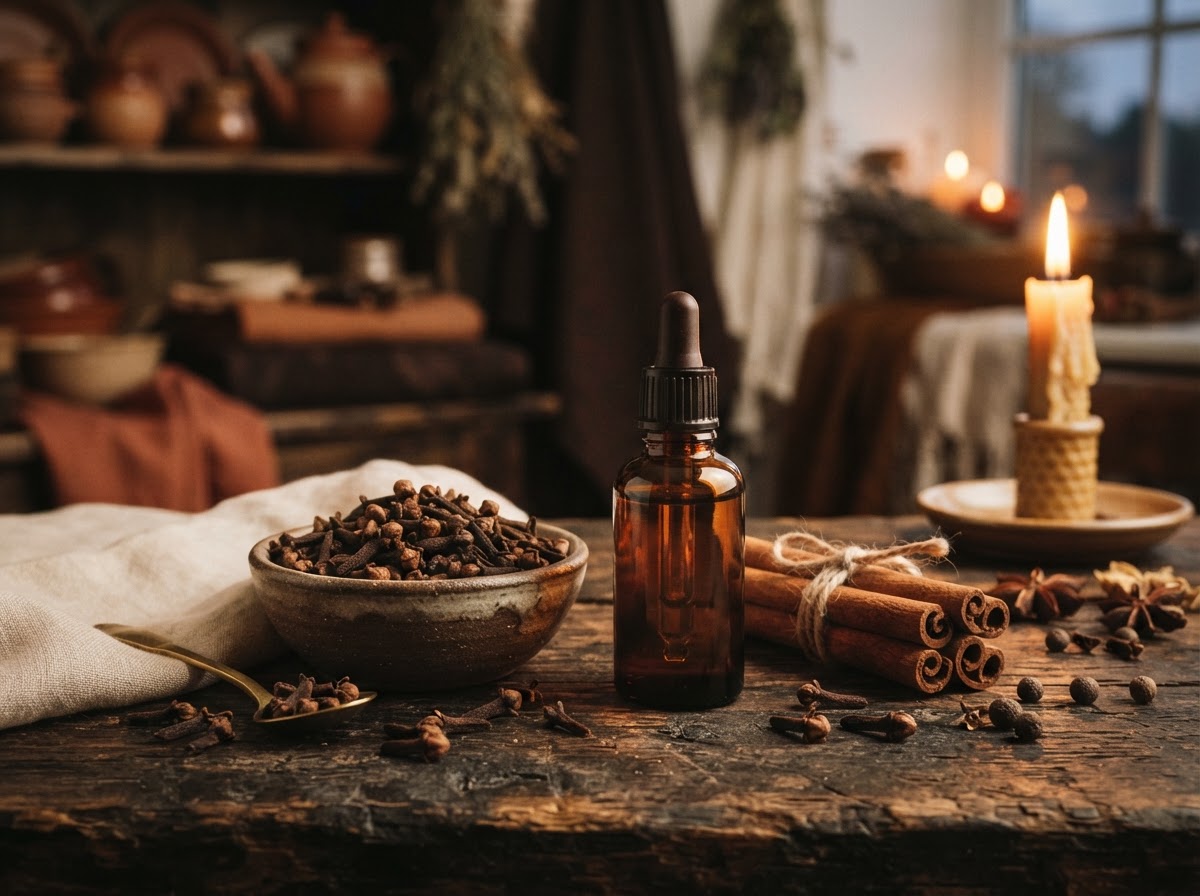
Clove oil is one of the most versatile seasonal home scents available. It works across an impressive range of delivery systems, each with its own character and use case. Here is a thorough look at each method.
Diffusers
The diffuser is many people's entry point to clove oil home fragrance. For a comprehensive guide to blend ratios and seasonal combinations designed specifically for diffusion, see our dedicated resource on clove oil in the diffuser: cozy spice blends for autumn.
General guidelines for diffusing clove oil:
- Start with 1 to 2 drops of clove bud oil per 100ml of water in an ultrasonic diffuser. Clove is powerful. You can always add more.
- Run the diffuser in 30-minute intervals rather than continuously. This prevents olfactory fatigue and keeps the scent feeling fresh.
- Ventilate the room between sessions. Open a window briefly and let the scent disperse before running another session.
- Do not use clove oil in a diffuser in spaces regularly occupied by pets or young children without consulting a qualified professional first. See the safety section below.
Simmer Pots
A stovetop simmer pot is arguably the oldest form of intentional home scenting and it remains one of the best. You add whole spices, citrus peels, fresh or dried botanicals, and a few drops of essential oil to a pot of water and let it barely simmer on the stove. The steam carries the scent through the kitchen and adjoining rooms.
Clove oil is exceptional in simmer pots because heat rounds its sharpness into something purely welcoming. For a full collection of tested recipes, visit our guide to clove simmer pot recipes: five stovetop blends.
Basic simmer pot technique:
- Fill a small saucepan or dedicated simmer pot with water (about 3 to 4 cups).
- Add whole spices and botanicals: clove buds, cinnamon sticks, star anise, bay leaves, orange or lemon peels.
- Bring to a gentle simmer over medium heat, then reduce to low.
- Add 2 to 4 drops of clove bud essential oil if you want to amplify the scent.
- Check the water level every 20 to 30 minutes and top up as needed. Never let it run dry.
- Never leave a simmering pot unattended.
Wax Melts and Candles
Wax is an excellent carrier for clove oil in home crafting. The heat of a wax warmer or candle flame gently releases the scent over hours. For step-by-step guidance on making your own clove-scented wax melts, our article on clove oil for home fragrance crafts: wax melts and simmer covers the full process including fragrance load percentages and suitable wax types.
A few notes if you are blending clove into wax at home:
- Clove oil has a relatively high flash point (above 100°C / 212°F), which makes it safer for use in candles than some lower-flash-point oils. Still, always check supplier specifications.
- Typical fragrance load for wax melts is 6 to 10 percent. Because clove is potent, start at the lower end and work up.
- Blend clove with sweet orange, vanilla fragrance oil, or cedarwood to create a balanced wax melt that diffuses beautifully.
Room Sprays
A simple room spray is one of the fastest ways to shift the atmosphere of a space. Combine distilled water, a dispersant such as witch hazel or polysorbate 20, and essential oils in a small spray bottle. Clove behaves well in sprays when properly diluted and dispersed.
A basic starting formula:
- 100ml distilled water
- 20ml witch hazel (or polysorbate 20)
- 5 drops clove bud essential oil
- 10 drops sweet orange essential oil
- 5 drops cedarwood essential oil
Shake well before each use. Spray into the air, not onto delicate fabrics, as concentrated oils can stain. Allow the mist to settle before entering the space. Total essential oil concentration here is well under 1 percent, which is appropriate for a room spray that may contact skin incidentally.
Potpourri and Dried Arrangements
Refreshing dried potpourri with a few drops of clove oil is one of the coziest and most low-effort home fragrance practices there is. Place your dried botanical mixture (clove buds, dried orange slices, cinnamon sticks, star anise, rosehips) into a decorative bowl. Add 5 to 10 drops of clove bud oil, toss gently, and let it breathe for a day before putting it on display. The scent gradually diffuses over weeks.
You can also make stovetop potpourri, which is really just the simmer pot method with a more decorative presentation. Our full resource on DIY clove potpourri: stovetop and dried bowl recipes goes deep on botanical combinations and display ideas for every season.
Linen Sachets and Wardrobe Fresheners
Small fabric sachets filled with dried clove buds and refreshed with a drop or two of clove oil make excellent wardrobe or drawer fresheners. The scent is subtle at this scale: a pleasant spice note when you open the closet rather than a room-filling presence. They also tuck nicely under pillowcases and inside luggage for a familiar, home-like scent when you travel.
5. Seasonal Blending Guide: Room-by-Room and Month-by-Month
One of the most rewarding aspects of working with seasonal home scents is building a scent calendar. Clove oil does not have to be a holiday-only ingredient. With thoughtful blending, it can anchor your home's atmosphere from early autumn all the way through late winter. Here is a practical framework.
Early Autumn (September through October)
This is the season of harvest and transition. Clove pairs here with apple, pear, and bright citrus to create something energetic and fresh rather than heavy. The spice note is present but not dominant.
Suggested diffuser blend for early autumn:
- 2 drops clove bud
- 3 drops sweet orange
- 2 drops cardamom
- 1 drop ginger
This blend works beautifully in kitchens and entryways. It has the character of an orchard on a cool day. For more ideas at this scale, our resource on clove oil in the diffuser: cozy spice blends for autumn offers a dozen tested combinations.
Mid-Autumn (October through November)
As the light drops and evenings get properly cold, the blend can get warmer and more enveloping. This is peak cozy home ambiance season for most people, and clove is at its most characterful here.
Suggested simmer pot blend for mid-autumn:
- 1 orange, sliced
- 3 cinnamon sticks
- 1 tablespoon whole clove buds
- 2 star anise
- 3 drops clove bud essential oil
- 2 drops vanilla fragrance oil (added near the end of simmering)
This is one of those blends that makes the whole house feel like something is baking. It fills the kitchen and living areas within minutes of reaching a simmer.
For room-by-room guidance on carrying these scents through your whole home this time of year, see our guide to autumn porch to cozy den: scenting every room with clove oil.
Holiday Season (Late November through December)
Clove becomes almost culturally iconic in this period. Mulled cider, spiced wine, holiday cookies, pomander balls: all of these traditions lean heavily on clove. The scent of clove in December functions as a shared cultural shorthand for warmth and gathering.
Suggested holiday wax melt blend:
- 4% clove bud essential oil
- 4% sweet orange essential oil
- 2% cinnamon bark essential oil
- 2% fir needle essential oil
- 2% vanilla fragrance oil
- 86% wax base
This blend at these ratios (total fragrance load 14%) is appropriate for most container wax types. Always verify the maximum fragrance load recommended by your specific wax supplier.
For scenting the whole house with mulled-cider-inspired blends during the holidays, our dedicated resource on winter clove blends: mulled cider scents for the whole house covers every delivery method with tested formulas.
Deep Winter (January through February)
After the holiday season, the tendency is to pivot immediately to fresh, clean scents. But deep winter still calls for warmth. This is the season to use clove in more contemplative, resinous blends. Step back from the citrus-forward holiday combinations and move toward frankincense, cedarwood, and sandalwood pairings.
Suggested deep winter diffuser blend:
- 1 drop clove bud
- 3 drops frankincense
- 2 drops cedarwood
- 2 drops sandalwood (or sandalwood substitute)
This combination is slower and quieter than the autumn blends. It suits long evenings, reading by a lamp, or a bedtime wind-down ritual.
Room-by-Room Recommendations
| Room | Best Method | Suggested Pairing |
|---|---|---|
| Kitchen | Simmer pot | Orange, cinnamon, apple |
| Living room | Ultrasonic diffuser, wax melts | Vanilla, cedarwood, orange |
| Entryway | Room spray, dried potpourri bowl | Black pepper, cardamom, citrus |
| Bedroom | Linen sachet, low-drop diffuser blend | Frankincense, sandalwood, lavender |
| Dining room | Candle, wax melts | Cinnamon, vanilla, clementine |
| Home office | Mini diffuser (low concentration) | Black pepper, cardamom, rosemary |
| Bathroom | Room spray | Eucalyptus, orange, clove at very low concentration |
6. Safety First: Dilution, Pets, Children, and Ventilation
Clove essential oil is one that genuinely requires respect. This is not boilerplate caution. The high eugenol content makes it a known skin sensitizer, and misuse can cause real problems. The good news: used correctly, it is perfectly safe for home fragrance purposes. Here is what you need to know.
Skin Contact and Dilution
For any application where clove oil might contact skin (massage blends, body oils, bath products), the maximum recommended dilution is very low: typically 0.5 percent or less according to IFRA (International Fragrance Association) guidelines for leave-on products. That is 3 drops per 30ml of carrier oil.
For rinse-off products, the threshold is slightly higher, but clove oil in any personal care product warrants careful dilution and patch testing.
Patch test protocol: Apply a small amount of your diluted blend to the inner forearm. Cover with a bandage and leave for 24 hours. If you notice redness, itching, or irritation, do not use that blend. Even if you have used clove oil before without issue, patch test each new batch, as sensitization can develop over time.
Clove Oil and Children
Most essential oil safety organizations recommend avoiding clove oil entirely in spaces occupied by children under ten, and exercising particular caution with children up to age twelve. This includes diffusing. If you choose to diffuse clove oil in a home with children, do so only in well-ventilated spaces where children are not present, using very low drop counts, and for short periods.
Never apply undiluted clove oil to a child's skin. Consult a qualified pediatric professional before using any essential oil product on or near children.
Clove Oil and Pets
Cats and dogs process volatile compounds differently from humans. Cats in particular lack certain liver enzymes that help metabolize phenols, and eugenol is a phenol-dominant compound. This makes clove oil potentially problematic in spaces where cats spend significant time.
If you have cats:
- Diffuse only in rooms your cat does not occupy, with good ventilation.
- Keep all essential oil bottles securely closed and stored out of reach.
- Monitor for signs of respiratory discomfort in any pet when diffusing spice oils.
- Consult a veterinarian before diffusing essential oils in any space your pet regularly uses.
Dogs are generally considered more tolerant of diffused oils than cats, but the same principles of ventilation, low concentration, and giving the animal the ability to leave the space apply.
Ventilation and Duration
Good ventilation is the simplest safety tool for home diffusion. Open a window slightly when diffusing. Alternate between diffusing sessions and fresh air. Never diffuse clove oil in a sealed, airtight room for extended periods.
For anyone with respiratory sensitivities, strong aromatic oils including clove may be irritating. Start with a very small amount in a large, well-ventilated space and assess your own response. If you experience any discomfort, move to fresh air and discontinue use in enclosed spaces.
Pregnancy and Other Considerations
Pregnant individuals should consult a qualified healthcare provider before using clove essential oil in any form. The same applies to anyone managing a health condition or taking medication. Always work with your healthcare provider when introducing new aromatic products into your routine.
This guide does not constitute medical advice. Consult a qualified healthcare provider with any specific health questions.
7. DIY Projects to Bring Clove Oil into Your Home Decor
Beyond diffusing and simmering, clove oil has a place in tangible, seasonal decor projects. These are the kinds of things you make once, display for weeks, and return to year after year as part of a home ritual. They are also enormously satisfying to give as gifts.
Pomander Balls
The pomander ball is one of the oldest clove-based home fragrance traditions in the world. You push whole clove buds into the skin of an orange (or apple or lemon), hang it to dry, and the resulting object releases scent for weeks. The clove oil in the buds preserves the fruit as it dries and contributes to the dense spicy-sweet scent.
To intensify the scent of finished pomanders, place them in a bag with a few drops of clove bud essential oil and a tablespoon of orris root powder (a fixative) for a week before displaying. The orris root absorbs and holds the oil, and the pomander's scent will last much longer.
Scented Pinecone Fire Starters
Dried pinecones dipped in melted wax and allowed to dry make beautifully rustic fire starters. Add clove bud essential oil to the melted wax before dipping (remove the wax from heat first, let it cool to around 140°F/60°C before adding oil). The blend of clove, pine, and beeswax creates a genuinely atmospheric scent when these are used in a fireplace.
A suggested blend for scented fire starters:
- 10 drops clove bud essential oil
- 15 drops fir needle essential oil
- 10 drops sweet orange essential oil
- Per 200g of wax
Clove-Infused Reed Diffuser Blend
Commercial reed diffusers use a carrier oil or alcohol base to draw fragrance up through rattan reeds and into the air. You can make your own with a narrow-necked glass bottle, natural rattan reeds, a light carrier such as fractionated coconut oil or DPG (dipropylene glycol), and your chosen essential oil blend.
A starting reed diffuser formula:
- 90ml DPG or fractionated coconut oil
- 10ml sweet almond oil (to thin slightly)
- 15 drops clove bud essential oil
- 20 drops sweet orange essential oil
- 10 drops cedarwood essential oil
- 5 drops vanilla fragrance oil
Total fragrance concentration here is approximately 4 percent, which gives a gentle, continuous background scent appropriate for a bedroom or small sitting room.
Spiced Beeswax Sachets
Pour melted beeswax into shallow silicone molds (star shapes, leaf shapes, or simple rounds) and add dried clove buds, dried orange peel, and a few drops of clove bud essential oil while still liquid. Once set, these make flat, solid sachets that can hang in wardrobes, sit in drawers, or decorate a seasonal bowl arrangement. The beeswax holds the scent gently and releases it slowly over months.
For more craft ideas that combine clove oil with wax and other seasonal botanicals, our guide on clove oil for home fragrance crafts: wax melts and simmer is a good next step.
Seasonal Linen Spray
A linen spray is one of the most versatile home fragrance tools. Mist it onto cushion covers, throw blankets, curtains, and bedding for an ambient scent that lingers for hours. Use the room spray formula from the Methods section above, and adjust the ratio if you prefer a stronger or lighter presence.
Always spot-test on a hidden corner of fabric before misting broadly. Clove oil is pigmented (amber colored) and can potentially mark pale or delicate fabrics in concentrated form.
8. Buying Guide: What to Look for When You Shop
The essential oil market is vast and poorly regulated at the retail level. Labels like "100% pure" and "therapeutic grade" are marketing terms, not regulated certifications. Knowing how to evaluate a supplier independently is the most useful skill you can develop as an essential oil user.
Questions Worth Asking Before You Buy
- Is the botanical name listed? It should be Syzygium aromaticum. Some older suppliers still use the former classification Eugenia caryophyllata, which is acceptable.
- Which plant part is the oil from? Look for "bud" for home fragrance use.
- Is the country of origin disclosed? A reputable supplier is proud of their sourcing and transparent about it.
- Is GC/MS testing available? Either as a downloadable certificate of analysis (COA) or available on request per batch number.
- Does the supplier have a physical address and contact information? Storefronts that exist only as a brand name on a marketplace platform with no direct contact information are worth approaching cautiously.
- What is the price? Genuine clove bud essential oil is not the cheapest product on the shelf but it is not extraordinarily expensive either. If a price seems implausibly low, the oil may be adulterated, diluted, or mislabeled. If it seems implausibly high relative to other reputable suppliers, you may simply be paying for marketing.
Understanding Adulteration
Clove oil is frequently adulterated with synthetic eugenol, with clove leaf oil sold as clove bud oil, or diluted with carrier oils and not disclosed as such. GC/MS testing reveals all of these issues. An adulterated oil will still smell like clove, but the scent character will be flatter, sharper, or in some way less nuanced than a properly produced bud oil. Over time, working with genuine single-origin bud oils trains your nose to recognize the difference.
Packaging and Storage
Buy essential oils in dark glass bottles (amber or cobalt). Clove oil is particularly prone to oxidation when exposed to light and air. Oxidized clove oil is both less pleasant to use and more likely to cause skin sensitization. Store your bottle:
- Away from direct sunlight
- In a cool, stable-temperature location (not next to a stove or heat source)
- With the cap tightly closed after each use
- Away from children and pets
Clove bud essential oil typically has a shelf life of 2 to 3 years when stored correctly. An old or oxidized oil will have a harsher, less rounded scent and should not be used on skin.
How Much Do You Need?
Because clove oil is so potent, a small bottle goes a surprisingly long way. A 10ml bottle holds approximately 200 drops. If your average diffuser session uses 2 drops of clove oil, that is 100 diffuser sessions per bottle. For most home fragrance users, 10 to 15ml is an appropriate quantity to purchase. Buying in larger quantities only makes sense if you are regularly making wax melts, candles, or large-batch potpourri.
Organic Certification
Certified organic clove essential oil is available and worth seeking out if organic sourcing is important to your values. Look for USDA Organic or ECOCERT certification. Be aware that organic certification refers to farming practices, not to the quality or purity of the resulting oil: a non-organic oil from a reputable, transparent supplier may well be as clean as a certified organic oil from a less transparent source. The ideal is both: verified purity through GC/MS testing and certified organic sourcing.
Ethical Sourcing
The spice trade has a long and complicated history, and clove growing regions in Indonesia and Madagascar include farming communities whose economic wellbeing is directly connected to the essential oil market. Some suppliers work with fair-trade cooperatives or direct-trade models that ensure farmers receive fair compensation. If this matters to you (and there are good reasons it might), look for suppliers who can articulate their supply chain relationships and who publish sourcing information that goes beyond a vague gesture toward "sustainability."
Bringing It All Together: Your Seasonal Clove Oil Practice
A well-scented home is not an accident. It is a practice: small, seasonal decisions about what the house should smell like and why. Clove oil, used thoughtfully across the methods and blends in this guide, gives you one of the most powerful tools in that practice.
Start simply. A simmer pot in October. A diffuser blend in November. A batch of wax melts before the holidays. A pomander in the entry hall. A reed diffuser in the bedroom through January. Each of these is a small ritual, and rituals are how homes acquire character.
The spice trade moved clove across oceans for centuries because the scent was irreplaceable. Your home gets to benefit from all that history in a small amber bottle. Use it well.
For more ways to bring clove oil into your seasonal routines, explore our companion guides:
- Clove simmer pot recipes: five stovetop blends
- DIY clove potpourri: stovetop and dried bowl recipes
- Winter clove blends: mulled cider scents for the whole house
- Autumn porch to cozy den: scenting every room with clove oil
- Clove oil in the diffuser: cozy spice blends for autumn
- Clove oil for home fragrance crafts: wax melts and simmer