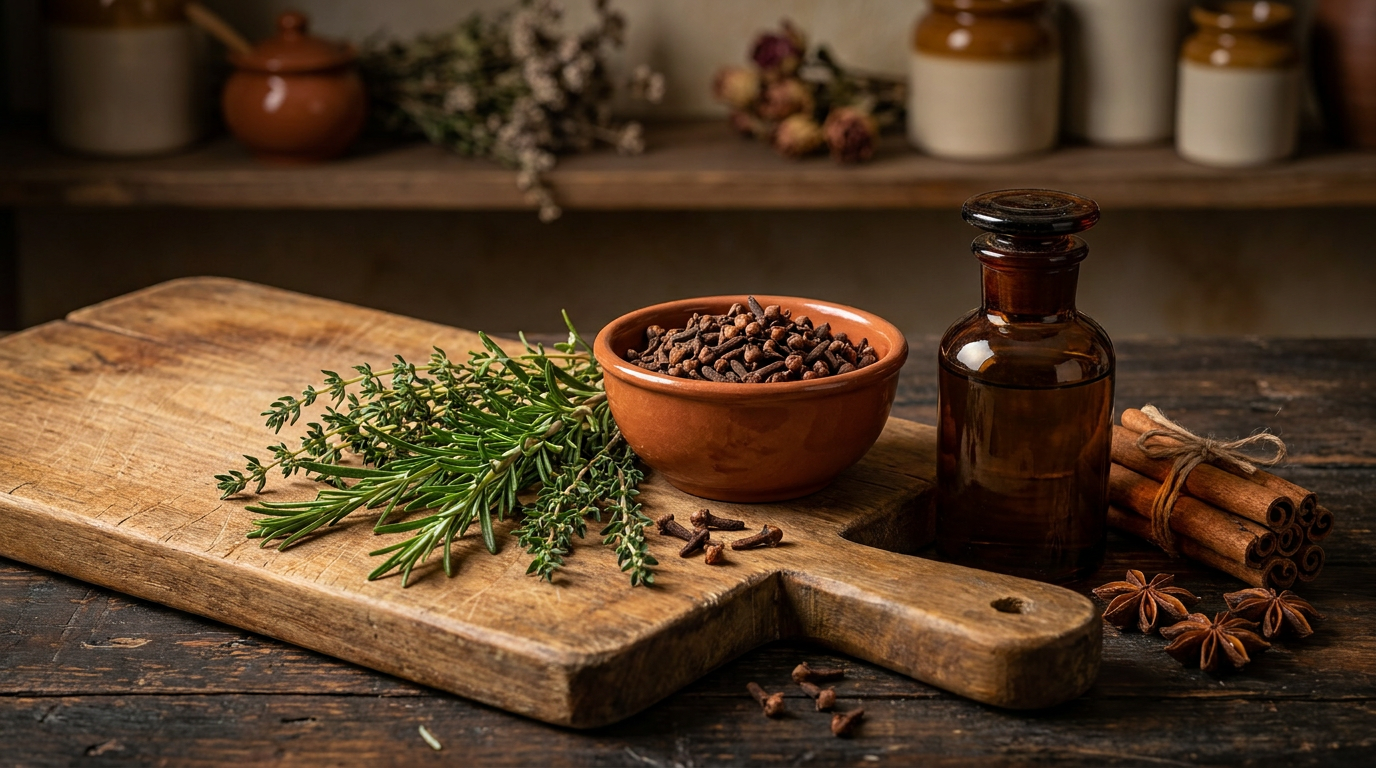
DIY Clove Potpourri: Stovetop and Dried-Bowl Recipes
There is a particular kind of satisfaction that comes from walking into your own home and smelling something that feels genuinely intentional. Not a plug-in. Not a synthetic spray. Something that actually came from a pot on your stove or a bowl of dried botanicals you assembled yourself. Clove potpourri delivers exactly that kind of grounded, spiced home fragrance, and it has done so across centuries of kitchens, bazaars, and holiday tables.
This guide walks you through two distinct approaches. The stovetop version is immediate and immersive, filling a room within minutes. The dried-bowl version is a slower project with a much longer payoff, lasting weeks on a shelf or coffee table. Both use whole cloves as their anchor ingredient, with clove essential oil stepping in to refresh and intensify the scent as it fades.
For a broader look at working with clove oil around the house, the complete guide to cozy seasonal clove oil use is a good companion read.
Before You Start: A Note on Safety
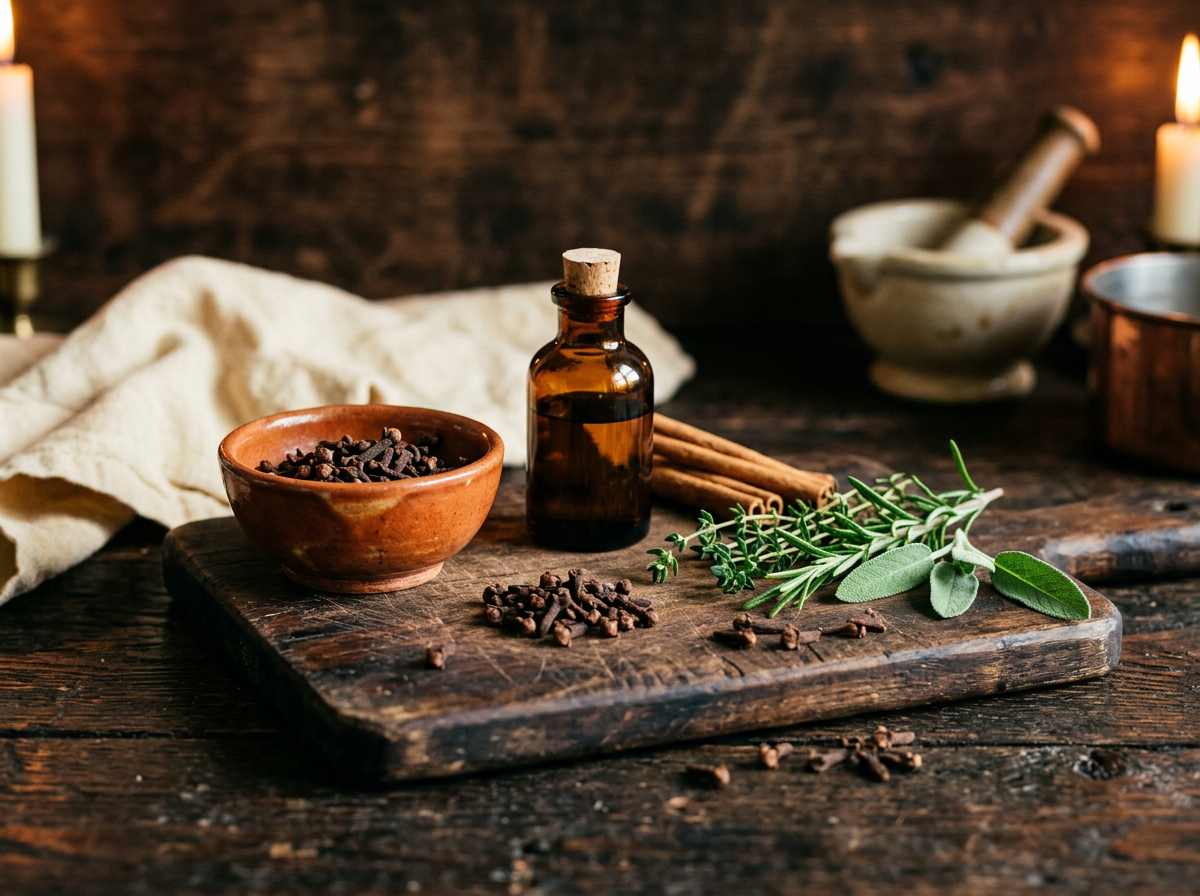
Clove essential oil is one of the more potent oils you will encounter in the spice family. Its primary active component, eugenol, is present at high concentrations and requires careful handling.
- Never apply undiluted clove essential oil directly to skin. For any skin-contact application, dilute to no more than 0.5% in a carrier oil (roughly 3 drops per 30 ml of carrier). This project keeps the oil in a bowl or simmering pot, not on skin, but the warning is worth having in front of you.
- Patch test if you plan to handle botanicals coated in clove oil. Wash hands after touching the dried mix.
- Keep stovetop potpourri attended. Never leave a simmering pot unwatched or allow it to boil dry. Low heat only.
- Keep out of reach of children and pets. Both clove essential oil and simmering pots pose risks. Cats in particular are sensitive to phenol-rich oils; ensure good ventilation and keep animals out of enclosed spaces where you are simmering.
- If you are pregnant, nursing, or managing any health situation, consult a qualified healthcare provider before working extensively with concentrated clove oil.
- Ventilate the room. Open a window slightly while simmering. Strong spice vapors can be overwhelming in a small, closed space.
Recipe 1: Stovetop Clove Potpourri
Difficulty: Easy
Active prep time: 10 minutes
Total time: 10 minutes prep, then 1 to 3 hours simmering
Yield: One pot, enough to scent a medium-sized room
This is the workhorse of diy potpourri recipes. You drop everything into a small saucepan, cover with water, and let the heat do the work. The fragrance is immediate and rich. It is genuinely one of the fastest ways to shift the atmosphere of a kitchen or living room during cooler months.
If you are hosting a holiday gathering, the guide to Thanksgiving table scents with clove oil pairs well with this recipe for timing and room placement ideas.
Ingredients
| Ingredient | Amount | Notes |
|---|---|---|
| Whole cloves | 2 tablespoons | Use fresh, fragrant cloves for the best scent throw |
| Cinnamon sticks | 2 to 3 sticks (3-inch) | Break in half to release more fragrance |
| Orange peel | Peel of 1 large orange | Fresh or dried; fresh releases more citrus top notes |
| Star anise | 4 to 5 whole stars | Optional but adds depth |
| Vanilla extract or 1 vanilla bean | 1 teaspoon extract or 1 pod | Adds a soft, rounded base note |
| Fresh or dried rosemary | 2 sprigs | Optional; adds a green, slightly piney contrast |
| Water | 4 to 5 cups | Filtered water avoids any mineral smell |
| Clove essential oil | 2 to 3 drops | Add only at the end or to refresh a second-day pot |
Instructions
- Combine the whole cloves, broken cinnamon sticks, orange peel, star anise, vanilla, and rosemary in a small to medium saucepan.
- Pour in 4 to 5 cups of water. The botanicals should be well submerged.
- Bring to a gentle boil over medium heat, then immediately reduce to the lowest possible simmer. You want just a few lazy bubbles, not a rolling boil.
- Leave uncovered. The fragrance rises with the steam.
- Check the water level every 30 to 45 minutes and top up with additional water as needed. The pot should never drop below about 1 cup of liquid.
- After 2 to 3 hours of simmering, or when the scent begins to feel thin, add 2 to 3 drops of clove essential oil directly to the water to reinvigorate the blend. Stir gently.
- When finished, allow the mixture to cool completely before handling or discarding.
Storage and reuse: You can refrigerate the simmered mixture in a sealed jar for up to 3 days and reheat it. After that point, the botanicals begin to lose their potency and may develop an off-smell. Discard and start fresh.
Recipe 2: Dried-Bowl Clove Potpourri
Difficulty: Easy to moderate (drying time adds a waiting period)
Active prep time: 20 to 30 minutes
Drying time: 1 to 2 weeks (if drying your own botanicals)
Shelf life: 3 to 6 months with proper care
Yield: Approximately 3 to 4 cups of finished potpourri
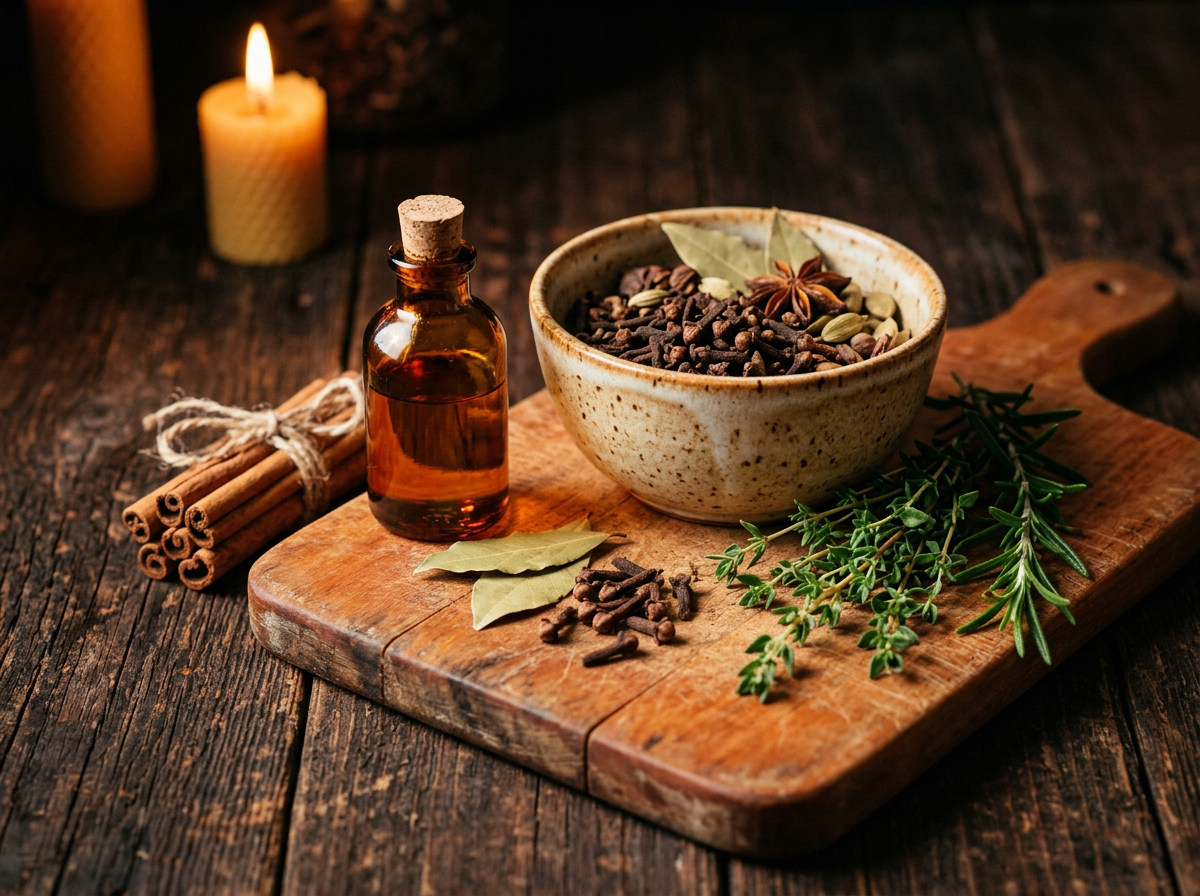
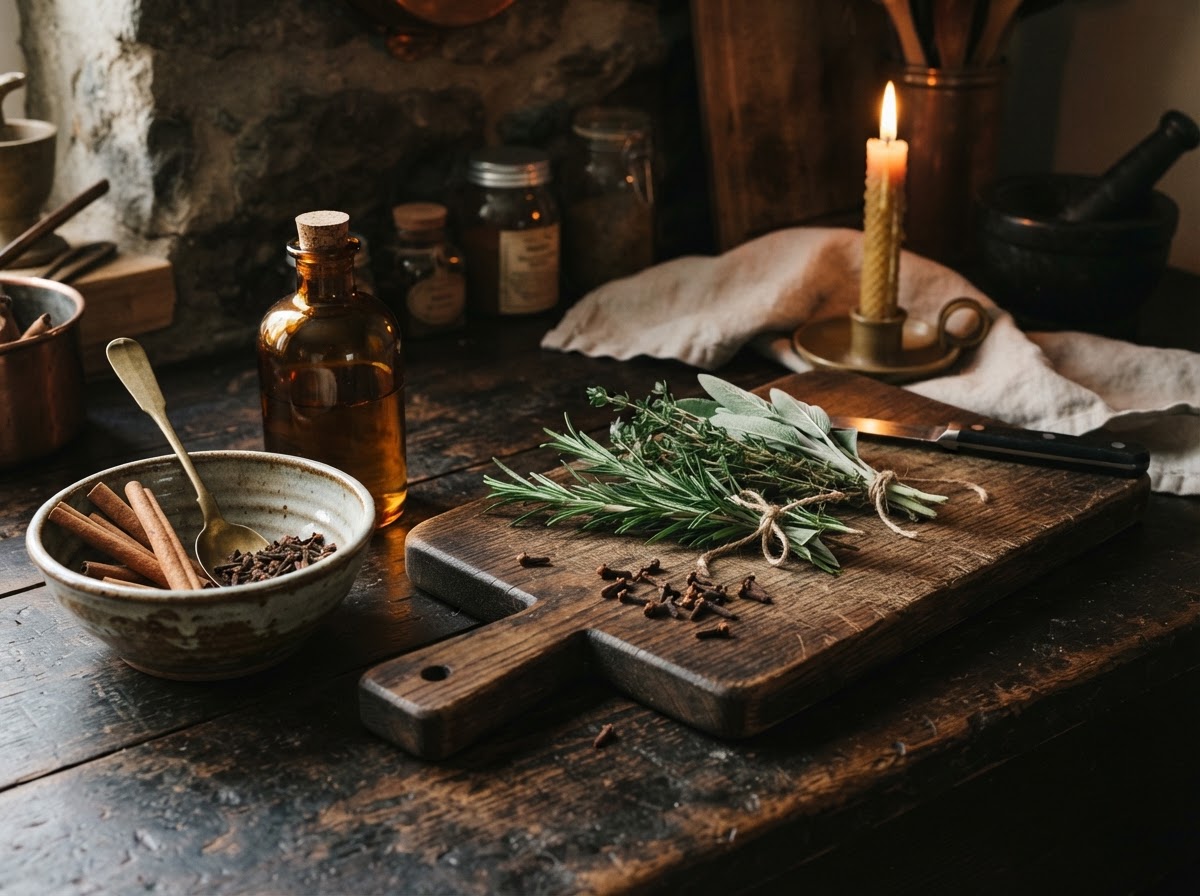
Dried-bowl potpourri is slower to make but offers something the stovetop version cannot: a persistent, low-level ambient fragrance that works around the clock without any effort from you. It also doubles as a visual element. A wide ceramic bowl filled with dried citrus wheels, whole cloves, and dark star anise is genuinely attractive on a shelf or a dining table.
For more stovetop blending inspiration before you commit to a dried batch, browse the five stovetop clove simmer pot blends to identify which fragrance profile you enjoy most. That knowledge will help you choose your dried botanical mix.
Ingredients
| Ingredient | Amount | Notes |
|---|---|---|
| Whole cloves | 3 tablespoons | The anchor of this blend; use the freshest you can find |
| Dried orange slices | 6 to 8 slices (about 1/4-inch thick) | See drying instructions below |
| Dried apple rings | 4 to 6 rings | Store-bought works fine; adds a softer sweetness |
| Cinnamon sticks | 3 to 4 sticks | Leave whole for visual appeal, or snap for stronger scent |
| Star anise | 6 to 8 whole stars | Visually striking and fragrant |
| Dried rose petals or rose buds | 1/4 cup | Optional; adds color contrast and a soft floral lift |
| Bay leaves, dried | 8 to 10 leaves | Adds an earthy, slightly herbal background |
| Orris root powder (fixative) | 2 tablespoons | Helps the blend hold its scent longer; find at craft or herb suppliers |
| Clove essential oil | 10 to 15 drops | Used to fix and intensify; applied to orris root, not directly to all botanicals |
| Cinnamon essential oil (optional) | 5 drops | Layered with clove for a fuller spiced profile |
How to Dry Citrus Slices (if making from scratch)
- Preheat your oven to 200 degrees Fahrenheit (93 degrees Celsius).
- Slice oranges (or lemons, blood oranges, or limes) into rounds approximately 1/4-inch thick.
- Pat slices dry with a clean towel and arrange them in a single layer on a wire rack set over a baking sheet.
- Bake for 2.5 to 4 hours, flipping once at the halfway point, until the slices feel dry and slightly leathery but not brittle. Thin slices dry faster; thicker ones take longer.
- Allow to cool completely on the rack before adding to your potpourri. Any residual moisture will invite mold.
Assembly Instructions
- Prepare the fixative base. Place the orris root powder in a small glass jar. Add the clove essential oil (and cinnamon oil, if using) drop by drop to the powder. Stir with a small spoon or wooden skewer to distribute evenly. Seal the jar and set aside for 24 hours. This allows the orris root to absorb the oil fully before it hits the rest of the botanicals.
- Combine the botanicals. In a large mixing bowl, gently toss together the whole cloves, dried citrus slices, apple rings, cinnamon sticks, star anise, rose petals, and bay leaves.
- Add the scented fixative. Sprinkle the oil-infused orris root over the botanical mix. Use your hands (wearing gloves is a good idea here given the clove oil concentration) to toss everything together until the powder is distributed throughout.
- Set the blend. Transfer the mixture to a large zip-lock bag or a container with a tight-fitting lid. Seal it and place it in a cool, dark location for 1 to 2 weeks. Shake or gently turn the container every couple of days. This setting step allows the fragrance to meld and deepen considerably.
- Display. Pour the set potpourri into a wide, shallow bowl, a wooden tray, or a glass apothecary jar with the lid slightly ajar. A wide surface area maximizes scent diffusion.
Storage and Shelf Life
Dried-bowl clove potpourri keeps well for 3 to 6 months when stored properly. A few guidelines:
- Keep the bowl away from direct sunlight, which fades the botanicals and accelerates scent loss.
- When the fragrance begins to fade (usually after 4 to 6 weeks of display), refresh it by adding 3 to 5 drops of clove essential oil directly to the bowl. Stir gently to distribute. Avoid dripping oil onto fabrics or furniture surfaces.
- If you need to store the mix between seasons, seal it in an airtight bag or glass jar and keep it in a cool, dark cupboard. This can extend its usable life considerably.
- Discard if you notice any mustiness or visible mold, which indicates residual moisture was present during drying or storage.
Variations and Substitutions
Warm Vanilla Clove (Less Spicy)
Reduce whole cloves to 1 tablespoon and increase vanilla (extract in the stovetop version, or vanilla-infused orris root in the dried version). Add a handful of dried chamomile flowers to the dried bowl for a softer, more rounded scent profile. This variation tends to work well in bedrooms and reading nooks.
Citrus-Forward Clove
Double the citrus: use orange and lemon peel together in the stovetop version, or mix dried orange, lemon, and grapefruit slices in the bowl version. Pull back the cinnamon to one stick. The result is a brighter, less heavy spiced home fragrance that works particularly well in kitchens and entryways.
Forest Floor Clove
Add a small handful of dried cedar shavings (available at craft stores), a few drops of cedarwood essential oil to the orris root, and some dried pine needles to the dried-bowl version. Keep the whole cloves as the backbone. This variation leans outdoorsy and works beautifully in dens or home offices.
Ingredient Substitutions
- No orris root: Substitute with 2 tablespoons of dried lavender buds (which have mild fixative properties) or simply accept a shorter scent life and refresh with essential oil more frequently.
- No star anise: Use a small amount of fennel seeds or simply leave it out. The blend will be slightly less complex but still very pleasant.
- No clove essential oil: Whole cloves alone carry significant fragrance, especially in the stovetop version. The oil is most important for the dried-bowl refresh step.
A Few Final Thoughts on Sourcing
The quality of your whole cloves matters more than most people expect. Cloves that have been sitting in a grocery store spice rack for two years will produce a noticeably flat result. Look for whole cloves from a spice shop, a specialty grocer, or an online spice supplier with visible harvest dates. Fresh cloves should feel slightly oily to the touch and release a sharp, almost numbing scent when you crush one between your fingers.
For the essential oil component, source from a supplier who provides information about country of origin (Madagascar and Indonesia are the primary clove-producing regions) and the extraction method (steam-distilled from buds is the standard for fragrance use). This level of sourcing transparency is a reliable signal of quality across the board.
Good materials make the whole project more satisfying. And given how straightforward both of these diy potpourri recipes are, the ingredients are really where the magic lives.