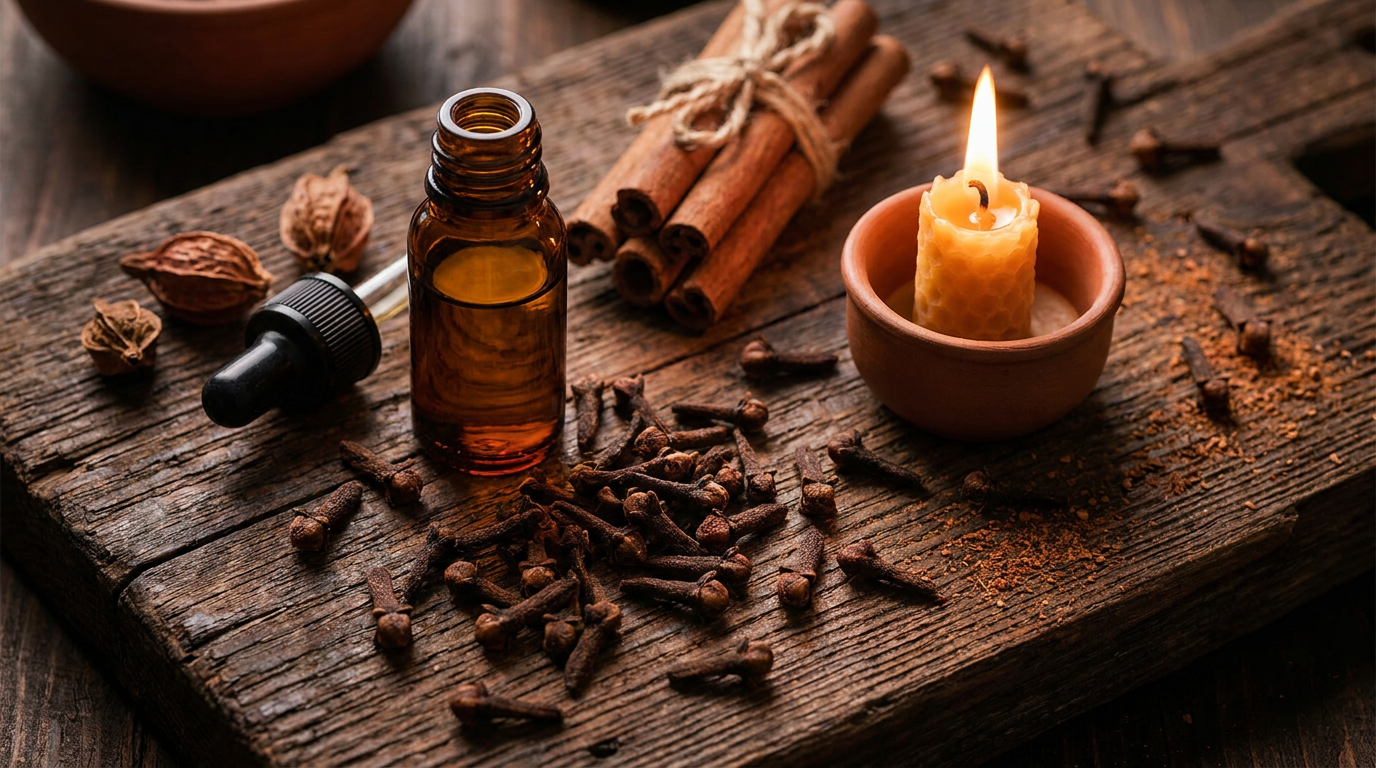
Thanksgiving Table Scents: Setting a Warm Mood with Clove Oil
There is a specific kind of magic that happens when guests step through the front door on Thanksgiving. Before the pie comes out of the oven, before the table is set, before anyone raises a glass, the house itself makes a first impression. Scent does that work quietly and immediately. It signals welcome, warmth, and we have been cooking all day in a way that no centerpiece ever quite can.
Clove oil thanksgiving traditions are older than the holiday itself. The spice trade brought dried cloves to European kitchens centuries before anyone was roasting turkeys in North America, and the warm, dense aroma of clove bud has been woven into harvest and feast cultures across the globe ever since. Today, a single bottle of pure clove essential oil gives you the concentrated essence of those centuries of celebration, ready to blend into your diffuser, your stovetop, or your linen spray before the first guest arrives.
This guide walks you through why clove oil is such a natural fit for the holiday table, how to build layered diffuser blends for different moments in the day, and practical tips for keeping your scent strategy from overwhelming the room.
Why Clove Oil Belongs at the Thanksgiving Table
Clove essential oil is steam-distilled from the dried buds of Syzygium aromaticum, a tropical tree native to the Maluku Islands of Indonesia. The primary aromatic compound, eugenol, is the same compound responsible for the characteristic scent of whole cloves in your spice cabinet. Because good quality clove bud oil is simply that spice cabinet smell in its most concentrated form, it has an almost instant psychological association with warmth, baked goods, and festive cooking.
That association is not accidental. Scent memory is one of the most powerful forms of memory the human brain stores. The olfactory system connects directly to the limbic region, which governs emotion and long-term memory. Researchers who study sensory environments consistently note that familiar, seasonally appropriate scents tend to make people feel more comfortable and at ease in a space. Clove, cinnamon, and orange are among the most commonly cited as producing a sense of coziness in North American and European contexts, likely because of their deep roots in holiday cooking traditions.
For hosts, that means clove oil is doing double duty. It layers beautifully with your actual kitchen smells, reinforcing rather than competing with the feast you have spent days preparing. And for guests who grew up with clove-spiked cider or a studded ham on the holiday table, the scent may quietly trigger a wave of fond nostalgia before they have even sat down.
Choosing the Right Clove Oil for Holiday Hosting Scents
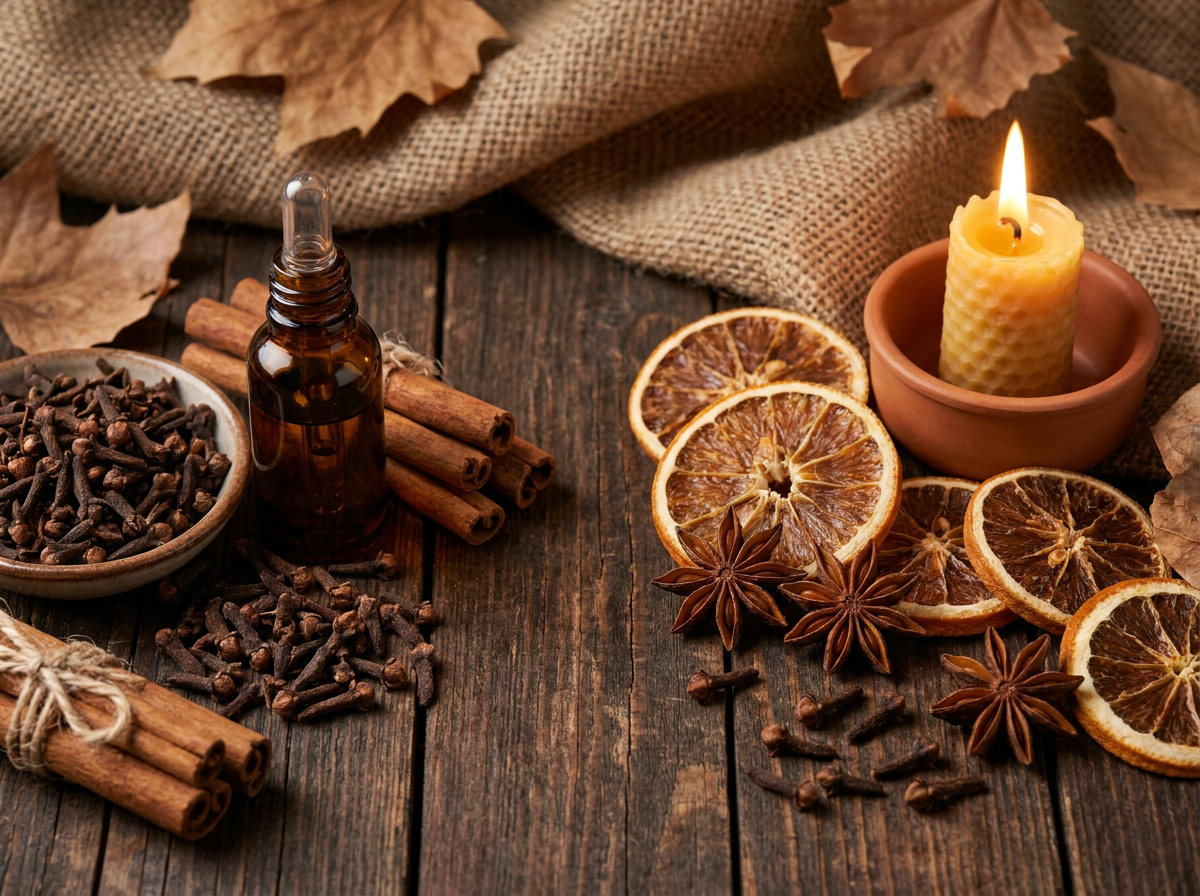
Not all clove oils behave the same way in a diffuser, and the distinction matters when you are hosting a room full of people. There are three main types on the market: clove bud, clove leaf, and clove stem. Each has a different aroma profile and a different eugenol concentration.
- Clove Bud Oil: Distilled from the flower buds. This is the gentlest of the three, with a rounded, slightly sweet warmth. It is the best choice for diffusing in living and dining spaces.
- Clove Leaf Oil: Distilled from the leaves. Sharper, more phenolic, and somewhat medicinal in character. It works in blends but can be polarizing on its own in a domestic setting.
- Clove Stem Oil: Distilled from the woody stems. The highest eugenol content of the three, with a raw intensity that requires careful dilution. Not ideal for diffusing near food.
For Thanksgiving specifically, clove bud oil is the clear choice. Its warmth is inviting rather than sharp, and it plays well with orange, cinnamon bark, cardamom, and vanilla absolute, all of which feature in the blends below.
Source your oil from a supplier who lists the botanical name (Syzygium aromaticum), the plant part (bud), the country of origin, and the extraction method on the label. Indonesia, Madagascar, and Sri Lanka are the primary producing regions. Batch-specific GC/MS testing reports, available from reputable suppliers, confirm purity and eugenol percentage. For a deeper look at quality markers and sourcing, see our complete guide to clove oil at home.
Thanksgiving Diffuser Blends: A Timeline for the Day
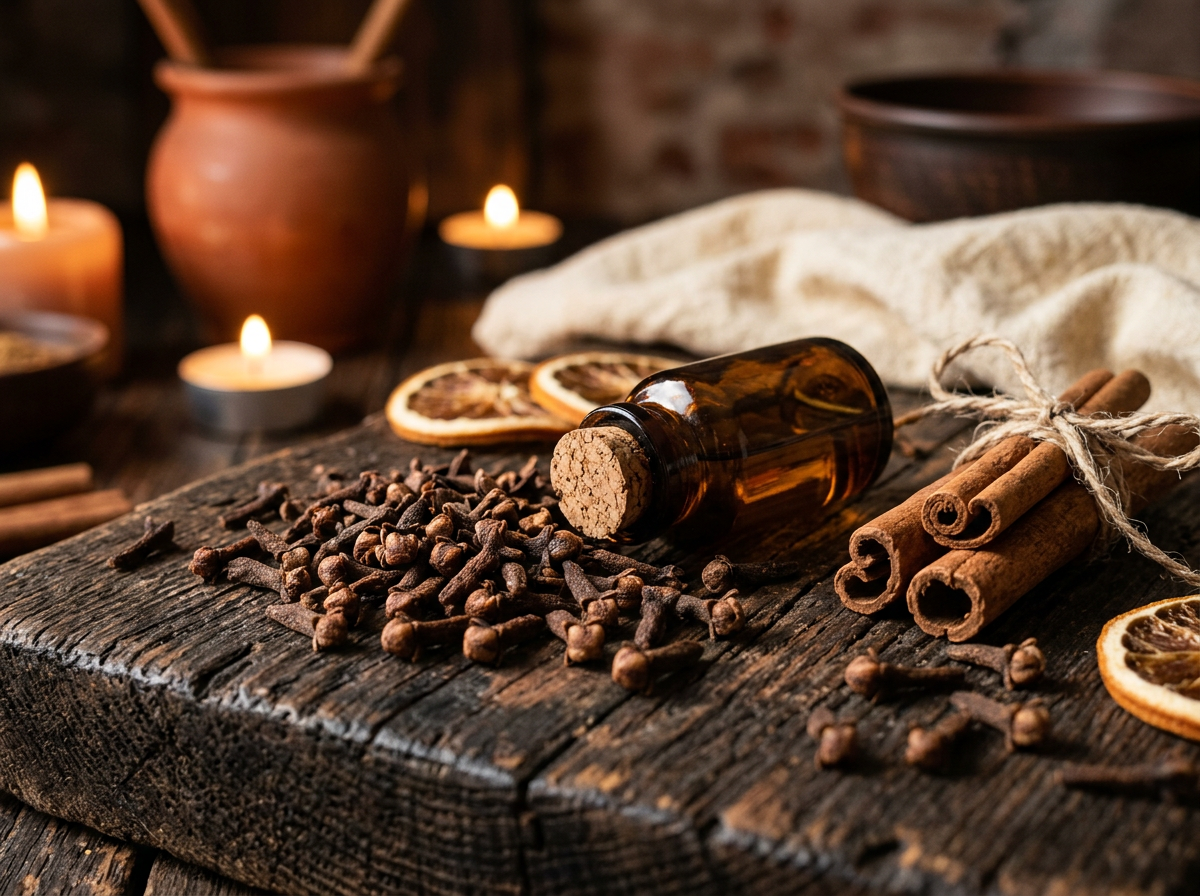
One of the more practical pieces of advice for holiday hosting scents is to think in chapters. The morning of the feast, the hour before guests arrive, the meal itself, and the long dessert-and-coffee stretch all call for slightly different aromatic atmospheres. Diffusing the same blend all day leads to nose fatigue, and nose fatigue means no one notices the scent at all.
The blends below are designed for a standard ultrasonic diffuser running for 30 to 60 minutes at a time. Drop counts assume a 100 ml water reservoir. Scale proportionally for larger units.
Morning Kitchen Blend: The Early Start
This blend is meant for the kitchen while you are prepping, not for the dining room. It is brisk and slightly bright, designed to keep the cook alert and the space smelling intentional rather than chaotic.
- 3 drops clove bud
- 3 drops sweet orange
- 2 drops rosemary
- 1 drop black pepper
Run this intermittently, not continuously. Turn the diffuser off when the oven is at full temperature; you want the cooking smells to build naturally from that point forward.
Welcome Blend: The 30-Minute Window Before Guests Arrive
This is the most important scent window of the day. Start diffusing 30 minutes before the first guests are expected, in the entryway or main living area, and turn it off once the house is full of people. Body heat and conversation shift the aromatic environment naturally from there.
- 4 drops clove bud
- 3 drops cinnamon bark (use sparingly; it is a strong sensitizer)
- 4 drops sweet orange or blood orange
- 2 drops cardamom
This is your classic thanksgiving diffuser blend: rich, spiced, and immediately evocative of a holiday kitchen. It reads as festive without veering into potpourri-shop territory.
Dinner Table Blend: Low and Subtle
During the meal itself, the food should be the aromatic star. If you diffuse at all during dinner, keep it extremely light and in an adjacent room rather than at the table. Strong diffuser blends compete with the smells of the food and can suppress appetite.
- 2 drops clove bud
- 3 drops sweet orange
- 2 drops frankincense
Place the diffuser in a hallway between the kitchen and dining room, running on the lowest mist setting. The effect should be atmospheric, something guests might sense without being able to name it.
After-Dinner Blend: The Long Evening
Once the plates are cleared and the pie comes out, the mood shifts. The rush is over. The room is warm with people and conversation. This is the moment for something quieter and more grounding, a scent that encourages lingering rather than winding down.
- 3 drops clove bud
- 2 drops sandalwood (Australian or Hawaiian, sustainably sourced)
- 2 drops vanilla absolute (or 3 drops cedarwood as a substitute)
- 2 drops sweet orange
Run this in the living room while people are settling in with dessert. It is warmer and rounder than the welcome blend, better suited to candlelight and slower conversation.
Beyond the Diffuser: Other Ways to Use Clove Oil for Holiday Hosting
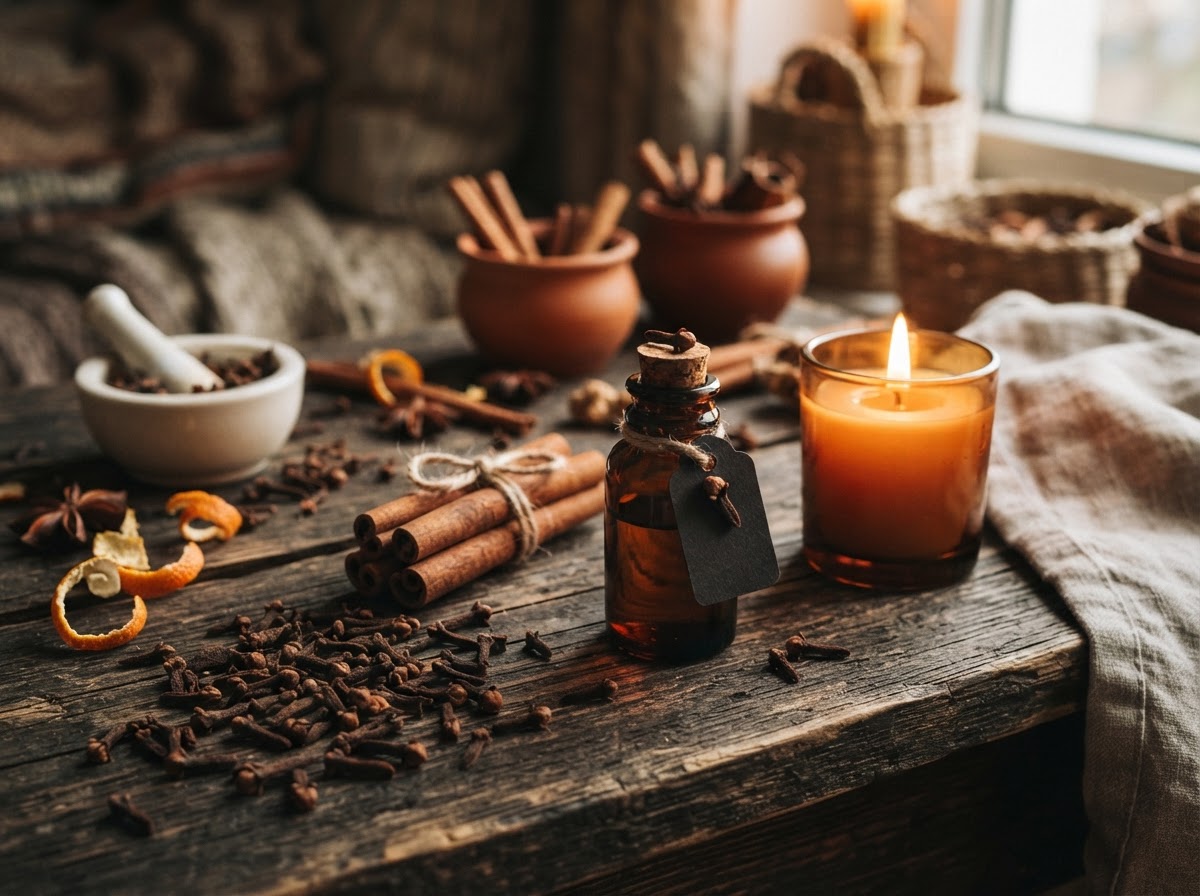
Diffusers are the most controllable delivery method for clove oil, but they are not the only option for building holiday hosting scents throughout your home.
The Simmer Pot
A stovetop simmer pot is one of the oldest forms of home scenting, and it produces a quality of humid, enveloping warmth that no diffuser quite replicates. A few whole cloves in simmering water alongside orange slices and a cinnamon stick will fill your kitchen naturally, and adding one drop of clove bud essential oil deepens the base note without overpowering the fresh fruit notes. For five fully developed stovetop recipes built around clove, see our clove simmer pot recipe guide.
Linen and Room Spray
A quick linen spray lets you scent tablecloths, guest towels, and throw pillows in minutes. To make a basic version, combine 15 drops of clove bud oil with 10 drops of sweet orange and 5 drops of cardamom in a 2-ounce (60 ml) glass spray bottle. Fill the remaining space with a mixture of witch hazel (about one third) and distilled water. Shake before each use. Spritz linens several hours before guests arrive so the alcohol notes dissipate.
Safety note: Always patch-test fabric before spraying widely. Clove bud oil contains eugenol, which can potentially discolor delicate or light-colored textiles. Test on an inconspicuous corner first.
Scented Porch Welcome
If you have a covered porch or entryway, a battery-operated diffuser with the Welcome Blend above running for 20 minutes before guests arrive sets the tone before anyone steps inside. It is a small detail with an outsized effect. For a full room-by-room scenting strategy from front porch through living room, see our guide on scenting every room with clove oil from porch to den.
Safety Considerations for Diffusing Around Guests
Clove bud essential oil is potent, and what smells wonderful to the host can occasionally be overwhelming for guests with scent sensitivities. A few ground rules for responsible holiday hosting scents:
- Ventilate the space. Crack a window slightly during diffusing sessions, especially in smaller rooms. Fresh air circulation prevents the scent from building to an oppressive level.
- Never diffuse continuously for more than 60 minutes. Cycle your diffuser on for 30 to 45 minutes, then off for at least 30 minutes. This approach keeps the scent present without causing sensory overload.
- Ask about sensitivities. If any of your guests have known scent sensitivities, respiratory conditions, or are pregnant, keep scenting to exterior spaces only and skip the dining room diffuser entirely. Consult a qualified healthcare provider for guidance specific to individual circumstances.
- Keep pets and young children away from the diffuser. Clove oil and many other essential oils should not be diffused in enclosed spaces where infants, toddlers, cats, or dogs spend extended time. Place diffusers out of reach and in rooms those family members are not using.
- Never apply clove oil directly to skin without appropriate dilution. Eugenol is a known skin sensitizer. If you are making any topical products alongside your holiday preparations, follow established dilution guidelines and always patch-test.
A Note on Proportion: When Less Is More
The goal of scenting a Thanksgiving table is to create an atmosphere, not to announce that you own essential oils. The best compliment a host can receive is a guest saying the house smells wonderful without being able to pinpoint why. That effect comes from restraint.
Clove bud oil at low concentrations reads as warm and baked and autumnal. At high concentrations, it reads as sharp and almost sharp-edged. The blends in this guide are calibrated for the lower end of perceptible, which is exactly where you want to be. When in doubt, use one fewer drop than you think you need. You can always add more at the next diffuser cycle; you cannot take scent back out of a room once it is there.
Thanksgiving is ultimately a feast for all five senses, and the aromatic layer you build around it does not need to compete with the food, the table, or the people. It just needs to say, quietly and warmly, that this was a day someone thought carefully about.
| Moment | Key Oils | Duration | Location |
|---|---|---|---|
| Morning prep | Clove bud, orange, rosemary, black pepper | Intermittent, 20 min on/off | Kitchen |
| Guest arrival (30 min prior) | Clove bud, cinnamon bark, orange, cardamom | 30 min, then off | Entryway or living room |
| Dinner service | Clove bud, orange, frankincense (light) | Low setting, adjacent room only | Hallway |
| After dinner | Clove bud, sandalwood, vanilla, orange | 45 min, then assess | Living room |
Good hosting scent is like good background music: it shapes the feeling of a room without ever demanding attention. Clove oil, used with a light hand, is one of the most reliable tools for that kind of quiet, warm magic.