
Autumn Porch to Cozy Den: Scenting Every Room with Clove Oil
The first week of October arrives and something shifts. The light turns golden and low, the air carries that particular crispness, and suddenly every candle at every shop smells of cinnamon and clove. There's a reason for that. Clove oil has been woven into autumn rituals for centuries, from the spice-laden trade routes that once made it more valuable than gold to the pomander balls pressed into grandmother's linen closets. This season, it deserves a proper home in every room you live in.
This guide walks you through fall home scenting with clove oil, room by room, from the front porch all the way to the bedroom. You'll find practical recipes, honest tips on dilution and safety, and a few tricks for making the scent last longer than a single cozy afternoon.
Why Clove Oil Belongs in Your Autumn Scenting Rotation
Clove bud essential oil carries eugenol as its primary compound, which gives it that signature warm, spicy depth. It blends beautifully with other autumn-adjacent oils: sweet orange, cinnamon bark, cedarwood, frankincense, and cardamom all play well alongside it. The result is a scent profile that reads as unmistakably seasonal without the artificial sweetness of most commercial fall candles.
From a sourcing standpoint, not all clove oils are equal. Look for steam-distilled clove bud oil rather than clove leaf or clove stem oil if you want the smoothest, most rounded fragrance for home scenting. Clove leaf oil is sharper and less sweet. Clove stem oil sits somewhere in between. For diffusing and room scents, clove bud is the warmest choice. For deeper reading on the differences, the complete guide to cozy seasonal use covers sourcing, grades, and storage in full.
A Note on Safety Before You Start
Clove oil is potent. It deserves respect. A few ground rules before diving into recipes:
- Always dilute before skin contact. For adults, a 0.5% to 1% dilution in a carrier oil is the general guideline for body application. That means roughly 3 to 6 drops of clove oil per ounce of carrier oil. Clove oil can cause significant irritation when used undiluted on skin.
- Patch test any new blend. Apply a small amount of diluted oil to the inner arm and wait 24 hours before broader use.
- Keep diffusion sessions moderate. Thirty to sixty minutes at a time is typically sufficient. Prolonged diffusion in a small enclosed space can cause headaches or irritation, especially for those sensitive to strong scents.
- Clove oil is not recommended for use around infants or young children without guidance from a qualified healthcare provider. The same applies to individuals who are pregnant or nursing.
- Keep all essential oils away from pets. Cats in particular can be very sensitive to phenol-rich oils like clove. Ensure good ventilation and give pets the ability to leave the room.
- Consult a qualified healthcare provider before using clove oil if you are on medication or have any health concerns.
The Front Porch: A Seasonal Welcome
Your porch sets the first impression of your home's seasonal atmosphere. A stovetop simmer pot brought outside in a small slow cooker works beautifully here during cooler evenings when guests arrive for a gathering.
Autumn Welcome Simmer Blend
- 1 orange, sliced into rounds
- 3 cinnamon sticks
- 1 tablespoon whole cloves
- 2 to 3 drops clove bud essential oil (added toward the end)
- 1 star anise pod
- Water to cover
Simmer on the lowest setting. Add water as needed to keep things going. The whole cloves carry the initial fragrance, and the essential oil added near the end of a session gives a brighter, more concentrated burst. Keep the slow cooker on a stable, heatproof surface and never leave it unattended.
For a no-heat alternative outdoors, fill a small clay pot with dried orange peel, cinnamon sticks, and whole cloves. Add 4 to 5 drops of clove bud oil to a cotton ball tucked into the arrangement. The natural porosity of unglazed clay will absorb and slowly release the scent. Refresh with a few drops every few days.
The Entryway and Living Room: First Impressions and Long Evenings
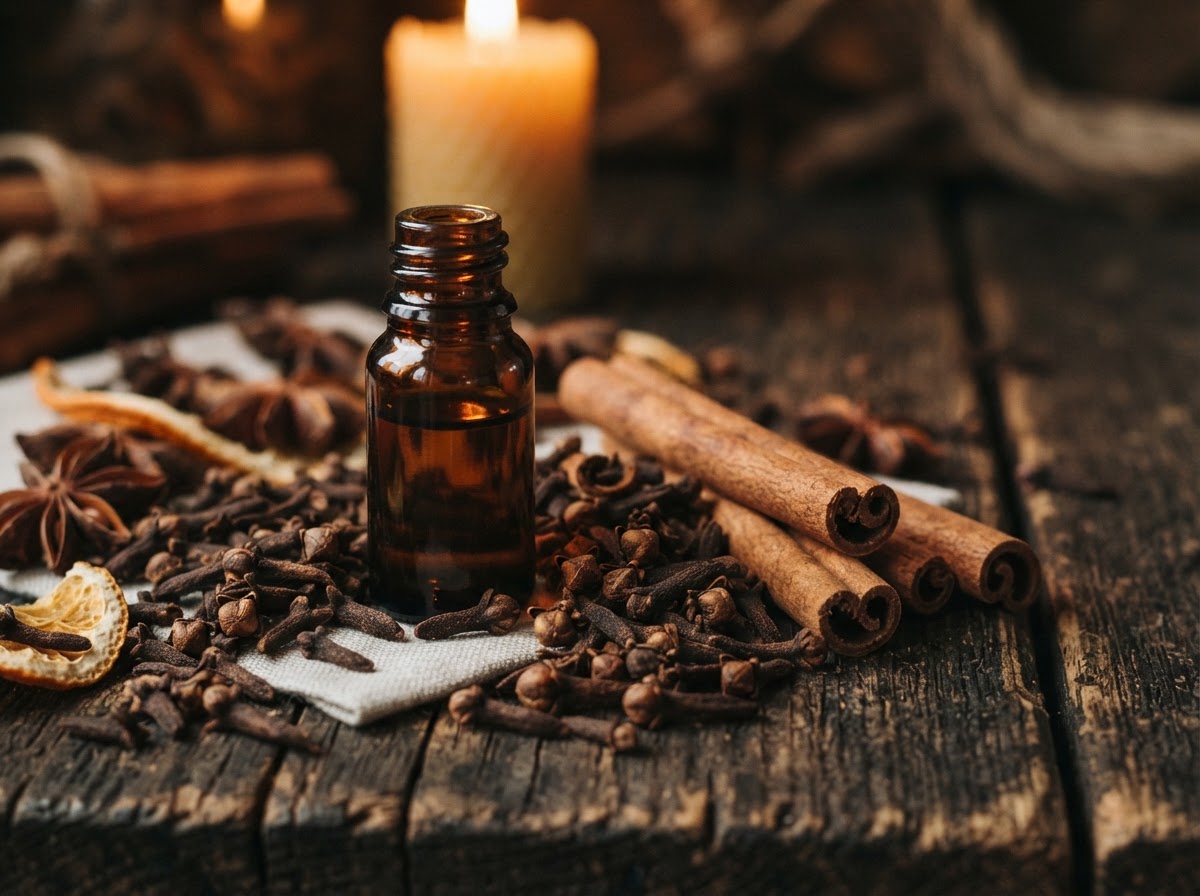
This is where your diffuser earns its keep. The living room is often the largest space you'll scent, so choose a diffuser with sufficient output for the square footage. Ultrasonic diffusers work well here because they don't use heat and preserve the complexity of the oil.
Cozy Den Diffuser Blend
- 3 drops clove bud essential oil
- 4 drops sweet orange essential oil
- 2 drops cedarwood essential oil
- 1 drop cardamom essential oil
Run for 30 to 45 minutes, then take a break. This ratio keeps the clove present and warm without letting it dominate. The cedarwood grounds everything with a woody dryness, and the cardamom adds a subtle spice-market complexity. For a full breakdown of autumn diffuser combinations, see the dedicated guide on cozy spice blends for autumn diffusing.
Reed Diffuser Refill for the Coffee Table
If you prefer passive scenting, clove oil blends into reed diffuser bases easily. Mix 70% carrier oil (fractionated coconut or safflower work well for reeds) with 30% alcohol (like vodka or isopropyl at 91%), then add your essential oils at about 20 to 25% of the total blend. A small 4-ounce bottle with 6 to 8 reed sticks will scent a living room gently for several weeks. Flip the reeds every few days to refresh.
The Kitchen: Where Scent and Season Collide
The kitchen already smells wonderful in autumn, between roasting squash and simmering apple cider. Clove oil fits here naturally. Rather than diffusing heavily in a cooking space (scent can interfere with how you taste food while you cook), focus on between-meals moments and cleaning rituals.
Spiced Kitchen Surface Spray
- 1 cup distilled water
- 1/4 cup white vinegar
- 10 drops clove bud essential oil
- 8 drops lemon essential oil
- 5 drops cinnamon leaf essential oil
Combine in a dark glass spray bottle and shake well before each use. This makes a pleasant-smelling surface spray for countertops, stovetops (once cool), and cabinet fronts. Always test on a small hidden area first, as vinegar-based sprays are not suitable for all surfaces (avoid natural stone). The oil adds fragrance and a bright, spiced scent to the kitchen during seasonal cleaning. For more on incorporating clove oil into your home cleaning routines, the guide to spice-scented natural cleaning sprays has full recipes and surface guidance.
Stovetop Simmer for Kitchen Ambiance
The classic kitchen approach: a small saucepan on the lowest possible heat, never left unattended. Sliced apples, a handful of whole cloves, two cinnamon sticks, a few drops of clove oil added to the water. Your kitchen will smell like a spice merchant's dream within minutes. Always keep water levels topped up.
The Dining Room: Setting a Seasonal Table
Autumn dinner gatherings call for atmosphere. Scent is part of that, but it needs to be subtle here so it doesn't compete with the food being served. A gently scented candle on a sideboard (away from the table itself) or a small diffuser running in an adjoining hallway gives the room warmth without overwhelming diners.
For table linens, a simple linen spray freshens tablecloths and cloth napkins with seasonal fragrance. Spray onto fabric a few hours before the meal so the scent settles and softens.
Autumn Linen Spray for Table Textiles
- 3/4 cup distilled water
- 2 tablespoons witch hazel or unfragranced vodka
- 6 drops clove bud essential oil
- 6 drops vanilla oleoresin or vanilla CO2 extract
- 4 drops cedarwood essential oil
Shake before use and mist lightly over fabric. Allow to dry completely before laying on the table. Avoid spraying directly on silk, velvet, or any fabric that water-spots easily. Always check a hidden spot first.
The Home Office: Staying Grounded During Busy Season
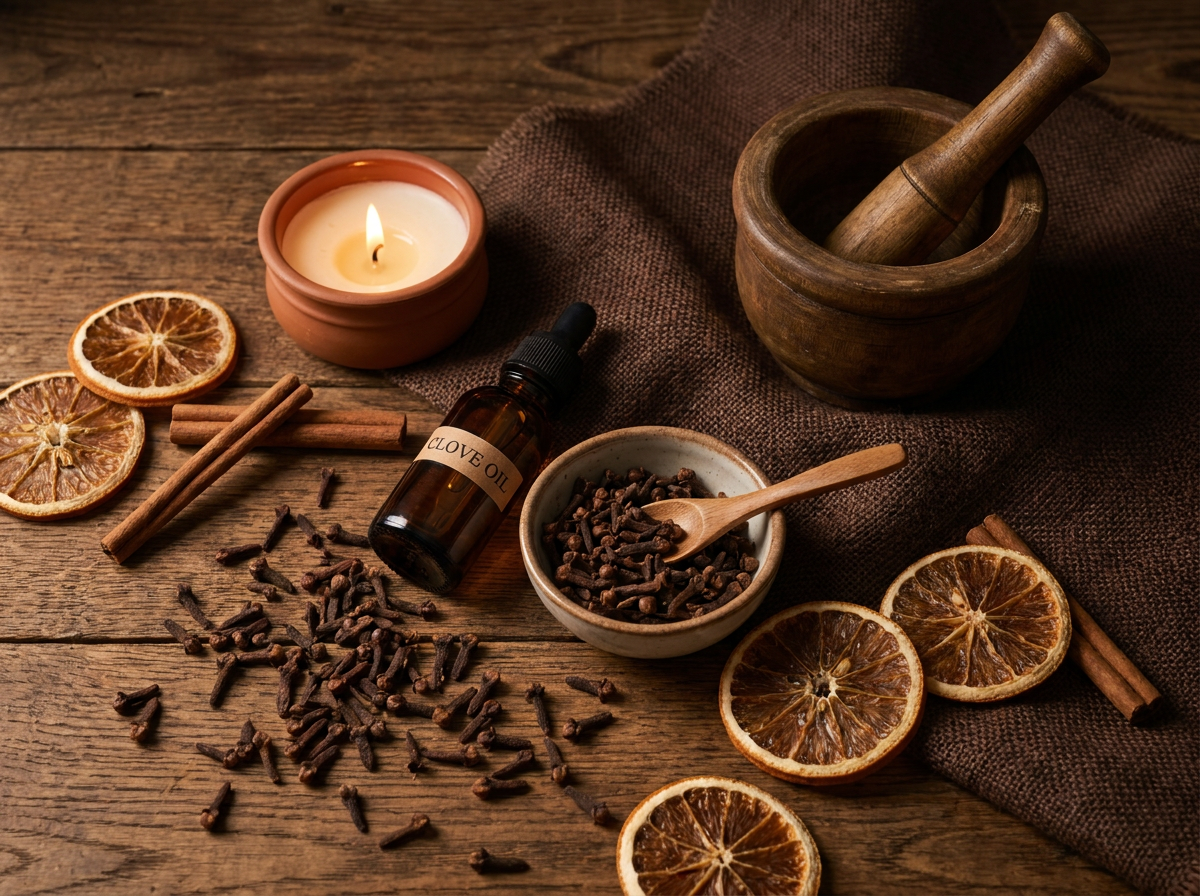
Autumn is often as productive as it is cozy. The home office benefits from clove blends that lean woodier and less intensely sweet, which tends to feel more grounding than festive.
Focused Autumn Desk Blend
- 2 drops clove bud essential oil
- 3 drops frankincense essential oil
- 2 drops sandalwood or atlas cedarwood essential oil
Use in a small personal diffuser or aromatherapy inhaler. Personal inhalers (small aluminum or plastic tubes with an absorbent wick inside) are ideal for desk use: scent stays in your immediate space, doesn't disperse through the whole room, and sessions feel intentional rather than passive.
The Bathroom: Small Space, Big Seasonal Impact
Bathrooms respond well to scenting because they're small. A few drops go a long way. Add 3 to 4 drops of clove oil to a cotton ball and tuck it behind the toilet tank or inside a cabinet with louvered doors. The warmth of the room will help diffuse the scent gently throughout the day.
For bath soaks, clove oil must be properly dispersed in a carrier before entering water. Mix no more than 3 drops of clove bud oil with a tablespoon of carrier oil or unscented liquid soap before adding to the tub. Do not add essential oils directly to bath water, as undiluted oil will float and can cause skin irritation on contact.
The Bedroom: Warm Evenings and Bedtime Wind-Downs
Evening routines call for softer, quieter scent choices. For the bedroom, clove works best when blended down with lavender, vetiver, or Roman chamomile. It gives warmth without the stimulating sharpness that heavier clove concentrations can carry.
Evening Wind-Down Pillow Mist
- 1/2 cup distilled water
- 1 tablespoon witch hazel
- 4 drops lavender essential oil
- 2 drops clove bud essential oil
- 2 drops vetiver essential oil
Mist lightly over pillowcases about 20 minutes before bedtime, allowing the scent to settle. One or two sprays is typically plenty. The clove plays a supporting role here, giving the blend a spiced autumn warmth rather than taking center stage.
Making Seasonal Scents Last: Practical Tips
Clove oil can feel intense in the first moments of diffusion and then seem to disappear. A few strategies help extend the experience throughout your home:
- Layer formats. Use passive options (cotton balls, clay pots, reed diffusers) alongside active diffusion. The passive elements maintain a low background note throughout the day.
- Store your oils properly. Keep clove oil in a dark glass bottle away from heat and direct sunlight. Properly stored oil retains its potency for two to three years.
- Avoid over-scenting. Olfactory fatigue is real. When you stop noticing a scent, it often means your nose has adjusted, not that the scent is gone. Guests will notice what you no longer do.
- Rotate blends weekly. Switching between two or three different autumn blends keeps the experience fresh for everyone in the household.
- Clean your diffuser regularly. Clove oil's eugenol content can build up over time. A brief run with water and a few drops of lemon oil every week or two keeps diffuser output clean and consistent.
Seasonal Variations to Try as Autumn Progresses
Early autumn calls for brighter, fruitier combinations: clove with sweet orange and ginger feels like the first crisp weekend in September. As October deepens, lean into darker, earthier blends: clove with patchouli, vetiver, and a drop of black pepper. By November, when the days shorten and the urge to stay inside intensifies, clove paired with frankincense and sandalwood gives rooms a slower, more contemplative warmth.
Whole-home scenting doesn't require the same blend everywhere at the same time. The kitchen can carry something brighter and citrus-forward. The bedroom, softer and woodier. The entryway, boldest of all. Think of your home as a landscape where the scent shifts as you move through it, each room telling a slightly different part of the same autumn story.
Clove oil has had centuries to earn its place in the seasonal pantry. This autumn, let it find its way into every room you love.