Clove Oil in Natural Cleaning: Spice-Scented Sprays and Scrubs
There is something quietly satisfying about a kitchen that smells like warm cloves instead of harsh chemicals. Cleaning with clove oil has become a staple seasonal ritual for a lot of home keepers, and it is easy to see why. The scent alone turns a mundane chore into something that feels almost festive, especially in autumn and winter. But beyond the fragrance, clove essential oil brings some genuinely interesting properties to a cleaning routine, and the recipes are simpler than you might expect.
This guide walks through everything you need: ingredient lists, numbered steps, ratios, and the honest mistakes people make when they first start. If you want a broader look at living with clove oil day to day, the complete guide to cozy seasonal clove oil use at home is a good companion piece to bookmark alongside this one.
Why Clove Oil in Cleaning?
Clove essential oil is steam-distilled from the dried flower buds of Syzygium aromaticum, a tree native to the Maluku Islands of Indonesia. The oil is rich in eugenol, a naturally occurring compound that gives clove its characteristic warmth and bite. Some research suggests eugenol interacts with certain surface contaminants in ways that make it worth including in a homemade cleaning blend, though it works best as part of a formulation rather than as a standalone cleaner.
A few practical reasons people reach for clove oil in cleaning recipes:
- The scent is strong enough to linger pleasantly after cleaning, replacing the sharp chemical smell that lingers with conventional products.
- It pairs exceptionally well with citrus oils and vinegar, both common cleaning staples.
- A little goes a long way. Clove oil is one of the more potent essential oils by volume, so a small bottle lasts through many batches.
- It blends easily into oil-based scrubs and water-based sprays when a dispersant is used.
Important sourcing note: For cleaning recipes, a food-grade or high-quality bud oil is ideal. Clove leaf oil and clove stem oil are cheaper alternatives sometimes sold as cleaning-grade, but bud oil has the most balanced eugenol profile and a rounder scent. Always check that your supplier lists the botanical name, plant part, and country of origin on the label. Madagascar and Indonesia are the primary quality producers.
Safety First: What You Need to Know Before You Start
Clove essential oil is one of the most potent oils in common use. Please read this section before mixing anything.
- Never apply undiluted clove oil to any surface you will touch with bare skin. Even in cleaning contexts, skin contact with concentrated clove oil can cause irritation.
- Keep finished sprays and scrubs away from children and pets. Clove oil can be harmful to cats in particular. Store bottles out of reach and ventilate the room after cleaning.
- Test surfaces before use. Clove oil can discolor or affect the finish on some natural stone surfaces, certain painted surfaces, and unfinished wood. Always spot-test a hidden area and wait 10 minutes before wiping down.
- Wear gloves when mixing. This protects your skin during the formulation process, when concentrations are highest.
- Do not mix with bleach-based products. Combining essential oils with bleach creates unpredictable chemical reactions.
- Ventilate your workspace. Open a window or run a fan when mixing and when using these sprays in small spaces.
Recipe 1: All-Purpose Clove Cleaning Spray
This is the workhorse of the collection. It works well on sealed countertops, stovetop surrounds, cabinet fronts, and tiled surfaces. The vinegar carries most of the cleaning work, while the clove oil and optional orange oil contribute fragrance and their own surface-interaction properties.
What You Will Need
- One 16-ounce glass spray bottle (amber or cobalt if possible, to protect the oils from light)
- 1 cup distilled white vinegar
- 1 cup distilled water (tap water can introduce minerals that affect shelf life)
- 20 drops clove bud essential oil
- 10 drops sweet orange essential oil (optional, but it rounds the scent beautifully)
- 1 teaspoon liquid castile soap (acts as a dispersant to help oil blend into the water)
- Funnel
- Gloves
Steps
- Put on your gloves. This is worth repeating. Clove oil at this concentration can irritate skin quickly.
- Add the castile soap to the bottle first. This matters. Adding it first prevents excessive foaming when the vinegar goes in.
- Count your essential oil drops directly into the bottle. Twenty drops of clove, then ten of orange if using. The dropper insert on most essential oil bottles gives consistent counts, but a pipette works too.
- Pour in the vinegar slowly through a funnel. Go slowly to minimize fizzing from the soap-acid interaction. One cup exactly.
- Add the distilled water. Fill the rest of the bottle to the 16-ounce mark.
- Cap the bottle and invert it gently five or six times to combine. Do not shake vigorously. The goal is to disperse, not to aerate.
- Label the bottle with the date and contents. This spray is best used within four to six weeks. Essential oils oxidize over time, and the scent shifts.
- Spot-test your surface. Spray a small amount in a hidden corner, wait 10 minutes, then wipe and inspect before cleaning the whole surface.
- To use: Spray onto the surface, wait 30 seconds, then wipe with a clean cloth. For more stubborn spots, a second application helps.
Tips and Common Mistakes
- Do not use on natural stone like marble or granite. Vinegar is acidic and can etch these surfaces over time. Swap the vinegar for distilled water if you have stone countertops, and reduce the clove oil to 10 drops.
- The scent will seem strong at first. It mellows within a few minutes of drying. If the first spray feels overwhelming in a small space, open a window.
- Skipping the castile soap leaves the essential oils floating on top of the water rather than dispersing. The soap is the bridge between the oil and water phases.
Recipe 2: Clove and Baking Soda Scrub Paste
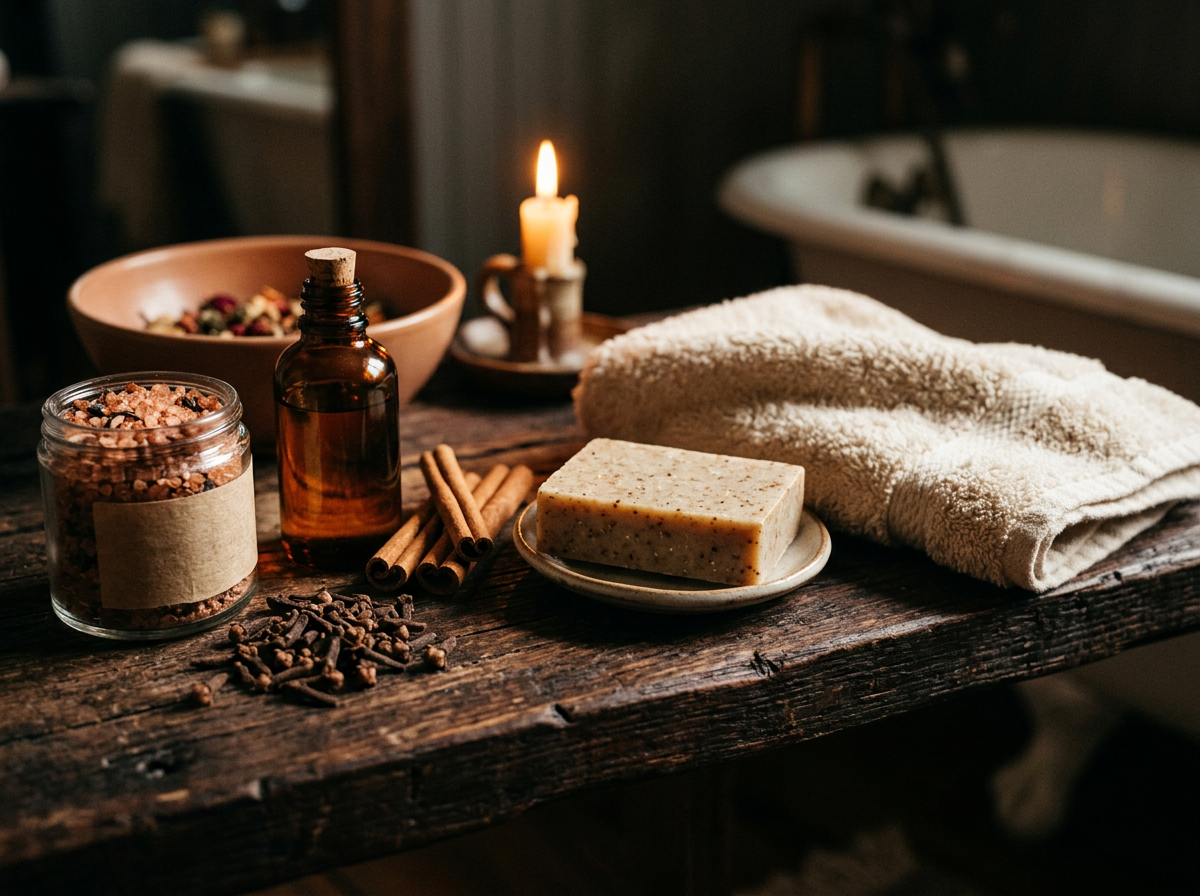
This scrub is built for slightly more textured surfaces: grout lines, the inside of a cast-iron sink, oven interiors, and the gritty ring that forms inside bathtubs. The baking soda does the physical scrubbing work while the clove oil adds character to the whole process.
What You Will Need
- 1 cup baking soda
- 1/4 cup liquid castile soap
- 15 drops clove bud essential oil
- 10 drops lemon essential oil (brightens the scent and supports the cleaning action)
- Enough distilled water to reach a thick paste consistency (start with 2 tablespoons, add more slowly)
- A wide-mouth glass jar with a lid for storage
- A stiff-bristled brush or old toothbrush for grout work
- Gloves
Steps
- Measure the baking soda into a mixing bowl. Use a ceramic or glass bowl. Some essential oils can react with plastic over time.
- Add the castile soap and stir it into the baking soda until you have a crumbly, sand-like texture. It will look dry. That is correct at this stage.
- Drop in the clove oil and lemon oil. Stir immediately so the oils distribute through the baking soda before they can pool.
- Add the distilled water one tablespoon at a time, stirring between each addition. Stop when the mixture resembles thick toothpaste. It should hold its shape when scooped but spread easily when pressed.
- Transfer to your glass jar and seal. Use within two weeks. The baking soda can absorb moisture from the air and change texture over time.
- To use on grout: Apply a small amount with a brush, work it into the grout lines with circular motions, leave for two minutes, then rinse thoroughly.
- To use on sinks or tubs: Scoop a tablespoon onto a damp cloth, apply to the surface with light pressure, scrub in circles, and rinse well.
Tips and Common Mistakes
- Do not use on fiberglass tubs or acrylic surfaces. The abrasive baking soda can scratch these finishes.
- Rinse thoroughly. Baking soda residue leaves a white film if not fully washed away. A second rinse with warm water usually handles it.
- Adding too much water too fast results in a runny paste that slides off vertical surfaces. Add slowly.
- The scent is strong in the jar. In use, it diffuses quickly and leaves behind a faint warm note rather than an overpowering one.
Recipe 3: Clove Spice Cleaning Spray for Wood Surfaces
This is a gentler variation built for sealed wood cabinets, wood-look laminate, and painted trim. It skips the vinegar entirely, which makes it safer for these surfaces.
What You Will Need
- One 12-ounce glass spray bottle
- 1.5 cups distilled water
- 1 teaspoon liquid castile soap
- 10 drops clove bud essential oil
- 5 drops cedarwood essential oil (complements the clove and suits a wood-forward application)
Steps
- Add the castile soap to the bottle.
- Drop in the essential oils.
- Fill with distilled water and invert gently to combine.
- Spot-test on a hidden section of the wood surface and inspect after 10 minutes before broader use.
- Spray lightly onto a cloth rather than directly onto wood. Direct spray can introduce excess moisture into seams and joints over time.
- Wipe in the direction of the wood grain. Follow with a dry cloth to remove any residue.
Scent Pairing Notes
Clove bud oil is assertive. It will dominate a blend if you let it. These pairings keep it balanced in cleaning contexts:
| Pairing Oil | Effect on the Blend | Suggested Ratio (clove to pairing) |
|---|---|---|
| Sweet orange | Brightens and softens the spice note | 2:1 (clove:orange) |
| Lemon | Adds a clean, sharp top note | 2:1 |
| Cinnamon bark | Deepens the warm spice character (use sparingly) | 4:1 (clove dominant) |
| Cedarwood | Grounds the scent, suits wood surfaces | 2:1 |
| Eucalyptus | Adds a crisp, fresh contrast | 1:1 |
These ratios assume clove is the primary oil. Adjust based on the strength of your specific batch. Oil concentration varies between suppliers and distillation runs.
Building a Cleaning Ritual Around Clove Season

Many people who use these recipes fall into a rhythm of making a fresh batch at the start of each month from October through February. The spice-forward scent fits autumn and winter in a way that lighter oils do not. A Saturday morning cleaning session with clove sprays simmering a pot of cinnamon tea on the stove nearby is a genuinely pleasant way to spend a few hours.
If you enjoy the idea of clove as part of a wider seasonal scent palette, the DIY clove and orange pomander spray is a natural next project. It uses many of the same ingredients and turns the leftover oils into something decorative rather than functional.
Clove oil also has uses beyond the kitchen and bathroom. If you have a shed, workshop, or garden storage space, the guide to clove oil in the garden shed covers some of the more unexpected places people have found it useful.
Storing Your Recipes and Ingredients
A few storage rules that make a real difference in how long your recipes last and how well the oil holds up:
- Keep clove essential oil in a cool, dark location. A cabinet away from the stove is better than a countertop display. Heat and light accelerate oxidation.
- Finished sprays should be used within four to six weeks. Label everything with the date you made it.
- Glass is better than plastic for both storage and use. Clove oil, like many phenol-rich oils, can leach compounds from plastic over time and degrade the container.
- Keep the cap tight on your essential oil bottle. Exposure to air is the other major cause of oxidation.
Expected Results: An Honest Summary
These recipes work as everyday surface cleaners in a home that sees normal household use. People who use clove cleaning sprays regularly report that surfaces look well-maintained, that the scent is a noticeable upgrade from conventional products, and that the recipes are genuinely cost-effective once you have the basic oils and castile soap on hand.
What these recipes are not: they are not a substitute for deep sanitation in medical or food-service contexts, and they are not formulated for heavy-duty industrial use. For everyday home cleaning, they hold their own comfortably. The clove note in particular seems to encourage people to clean more often, simply because the experience is more pleasant than it used to be. That might be the most underrated benefit of all.