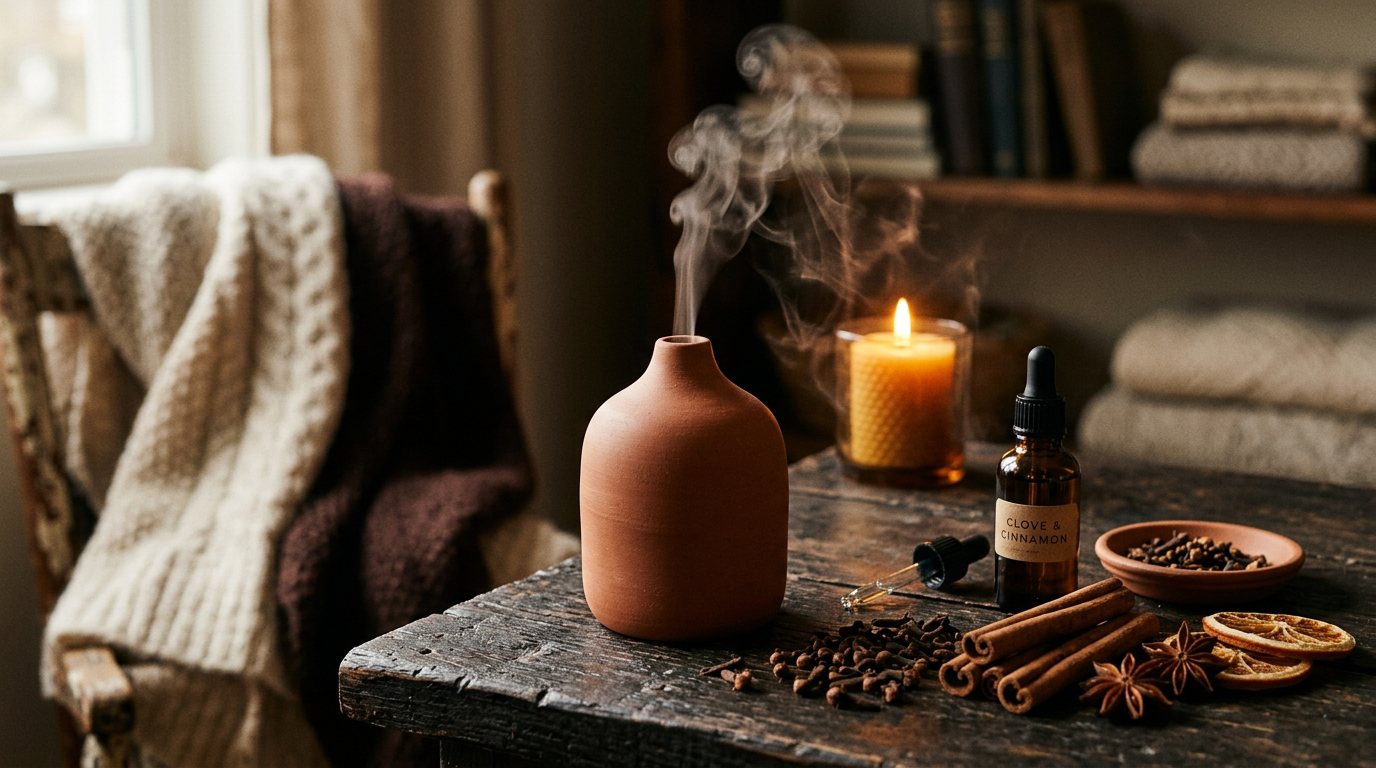
Clove Oil in the Garden Shed: Hobbyist Uses Beyond the Diffuser
Most people discover clove essential oil through a diffuser or a holiday simmer pot, and that warm, spiced scent becomes a seasonal staple. But there is a whole other world for this oil that lives somewhere between the potting bench and the craft table. The garden shed crowd has quietly been putting clove oil to work in ways that have nothing to do with aromatherapy, and the results are genuinely useful.
This list is for the tinkerers, the weekend woodworkers, the seed-swappers, the people who keep a dedicated apron hung by the back door. If you already love the scent of clove, you will find a lot to enjoy here. If you are new to clove essential oil in hobby contexts, consider this your starting point. For a broader home overview, the complete guide to cozy seasonal clove oil use at home is worth bookmarking alongside this one.
A quick note before we begin: Clove essential oil is potent. Always work in a ventilated space, use gloves when handling undiluted oil, and keep finished products away from children and pets. Dilution guidance for each use is included throughout.
-
1. Wood Conditioning for Handles and Tool Grips
Old tool handles dry out and crack. The usual fix is linseed oil, but hobbyist woodworkers have been adding a few drops of clove essential oil to their conditioning blends for years, mostly because it smells incredible and may help deter the beetles and borers that find their way into untreated wood stored in sheds over winter. The eugenol in clove oil is what gives the spice its characteristic punch, and some woodworking communities report that it seems to discourage certain insects from taking up residence in treated wood. This is anecdotal evidence, not a guarantee, but the scent alone makes conditioning day more pleasant.
A simple blend: mix three or four drops of clove essential oil per tablespoon of raw linseed oil or pure tung oil. Rub the mixture into wooden handles with a lint-free cloth, let it soak for 20 to 30 minutes, then wipe away any excess. The wood will darken slightly and the spice note will fade to something subtle within a day or two. Repeat once a season on tools that live outside or in unheated spaces.
Practical takeaway: Add 3 to 4 drops of clove oil per tablespoon of conditioning oil. Apply with a cloth, let it absorb, and wipe clean. Good for spade handles, mallet heads, and the wooden grips on old pruning shears.
-
2. Scented Beeswax Wood Polish
If you make furniture, picture frames, or wooden decorative objects, a homemade beeswax polish is a lovely finishing touch. Adding clove oil gives the polish a warm, woodsy scent that suits rustic or heritage-style pieces particularly well. The fragrance does not overpower finished wood; it lingers just long enough to notice and then settles into the background.
The base recipe is simple: melt two tablespoons of beeswax pellets with two tablespoons of sweet almond or jojoba oil in a double boiler. Remove from heat, let it cool for about a minute, then stir in six to eight drops of clove essential oil. Pour into a small tin and let it set. The finished polish buffs on with a soft cloth and leaves wood with a low sheen. For light-colored woods, test on an inconspicuous area first, as clove oil can deepen the tone slightly.
Practical takeaway: Use 6 to 8 drops of clove oil per small tin of beeswax polish. Test on a hidden spot before applying to finished light-colored pieces. Works beautifully on walnut, cedar, and reclaimed wood projects.
-
3. Natural Moth-Deterrent Sachets for Stored Woolens and Seed Packets
The garden shed in autumn becomes a storage zone for things you want to protect over winter: wool gloves, seed packets, dried herbs, jute twine. Moths and certain insects are famously unwelcome guests in these spaces. Clove has a long history in the spice trade as a preserving agent, and many hobbyists use clove-scented sachets in storage areas as a deterrent, though individual results vary and this is not a guaranteed pest-control solution.
To make sachets, fill small muslin bags with dried cedar chips, dried lavender, and a few whole cloves. Add two or three drops of clove essential oil to the cedar before filling the bag, then tie it shut. Place sachets inside seed storage boxes, on shelves near woolens, or tucked into corners of storage bins. Refresh the oil every six to eight weeks during storage season.
Practical takeaway: Combine dried cedar, whole cloves, and 2 to 3 drops of clove essential oil in a muslin sachet. Refresh every 6 to 8 weeks. Place in seed boxes or near stored woolens. Not a substitute for proper airtight storage of seeds.
-
4. Scented Modeling Clay and Air-Dry Clay Projects
Hobbyist sculptors working with air-dry clay often add fragrance to their projects, especially ornaments, medallions, or decorative tiles. A few drops of clove oil kneaded into the clay before shaping gives finished pieces a long-lasting warm scent. This works especially well for seasonal ornaments like autumn leaf impressions, acorn shapes, or spiced-theme gift tags.
The amount to use depends on the clay batch size, but a general starting point is three to five drops per cup of clay. Knead thoroughly until the oil is fully incorporated. Keep in mind that clove oil can slightly discolor pale clays, shifting them toward ivory or warm beige. That effect is often desirable for rustic pieces but may not suit bright white decorative items. Always wear gloves when kneading, since prolonged skin contact with undiluted oil can cause irritation. For more scented craft ideas, the article on clove oil for home fragrance crafts, wax melts, and simmer pots covers related territory in depth.
Practical takeaway: Use 3 to 5 drops per cup of clay. Wear gloves during kneading. Expect slight warming of pale clay tones. Great for autumn ornaments, gift tags, and pressed-leaf tiles.
-
5. Pressing and Preserving Botanicals
Flower pressing is a slow hobby, full of waiting. Many hobbyists add a light botanical wash to pressed specimens before framing them, to discourage mold during the pressing process and to keep stored botanicals from degrading too quickly in humid sheds. Clove oil has historically been valued in preservation contexts, and some botanical artists add a very dilute solution to their blotting layers.
The method is careful: add just one drop of clove oil to a tablespoon of isopropyl alcohol, shake to blend, and lightly mist or dab the solution onto clean blotting paper before layering specimens for pressing. The oil content reaching the plant material is minimal at this dilution. Avoid direct application of undiluted oil to delicate petals, as it can cause browning. This approach is most useful for specimens stored over long periods in less-than-ideal conditions, not for pieces going immediately into archival frames.
Practical takeaway: Dilute 1 drop of clove oil in 1 tablespoon of isopropyl alcohol. Apply lightly to blotting paper, not directly to petals. Best used for storage-phase pressing, not final framing. Let blotting paper dry before use.
-
6. Scented Fire Starters and Kindling Bundles
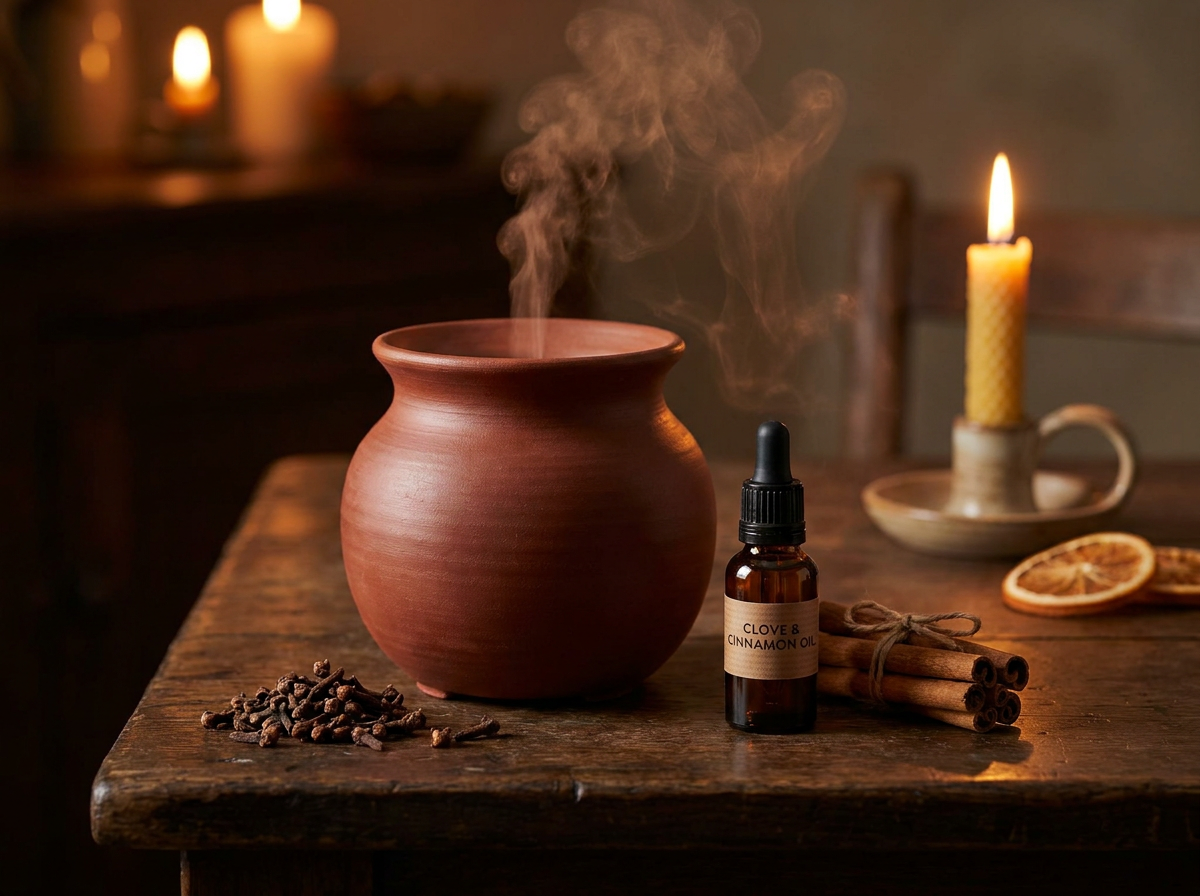
For those who heat a workshop, a garden room, or a home with a wood stove or fireplace, clove-scented fire starters are a genuinely lovely seasonal project. The warmth of the fire carries the scent into the room as it lights, and it fills the first few minutes of a fire with something that smells like mulled cider without needing a pot on the stove. It is a small detail that makes a cold afternoon ritual feel considered.
The simplest version: gather small bundles of dried rosemary, pine cones, cedar shavings, and twine-wrapped newspaper. Before bundling, apply two to three drops of clove oil to the cedar shavings or dried herbs in each bundle. The oil should be absorbed into the dry material before use, which usually takes about an hour at room temperature. Store finished bundles in a paper bag or open basket, not in sealed containers, so moisture does not accumulate. For more seasonal scent inspiration, the guide to winter clove blends and mulled cider scents for the whole house pairs naturally with this project.
Practical takeaway: Apply 2 to 3 drops of clove oil to dry cedar shavings per bundle. Allow 1 hour for absorption before storing. Keep bundles in open-air storage. Do not apply oil to bundles and burn immediately, as raw essential oil in flame can flare briefly.
-
7. Terracotta Pot Refresher and Seasonal Decoration
Terracotta is porous, which makes it an excellent diffuser of scent. Hobbyists who collect or paint terracotta pots have discovered that a dilute clove oil wash applied to the outside of a pot creates a slow, ambient release of fragrance over several days. It is a particularly nice trick for pots used as autumn or winter decor on a porch or in an entryway.
Mix five drops of clove essential oil with two teaspoons of carrier oil (fractionated coconut oil works well because it does not go rancid quickly). Use a clean cloth or brush to apply the blend to the outside of a clean, dry terracotta pot. The clay will absorb the blend and release the scent gradually as temperatures fluctuate. This works best on unglazed pots. Glazed or sealed pots will not absorb the oil in the same way, so the effect will be much milder. Avoid applying to pots currently holding plants, as the oil may affect the soil around roots.
Practical takeaway: Blend 5 drops clove oil with 2 teaspoons fractionated coconut oil. Apply to unglazed, empty terracotta only. Do not use on pots with plants. Refresh weekly during decorative display season.
-
8. Scented Drawer Liners for the Potting Bench
Potting benches with drawers collect a particular kind of must over time: damp soil, old seed packets, rubber bands that perish in the cold. A scented drawer liner made with clove oil shifts the atmosphere of the whole bench and keeps things smelling like intention rather than neglect. This is a five-minute project with a satisfying payoff.
Cut kraft paper or brown packing paper to fit the bottom of each drawer. In a small spray bottle, combine one cup of water, two teaspoons of witch hazel (which helps the oil disperse in water), and eight to ten drops of clove essential oil. Shake well before each use. Lightly mist the paper, allow it to dry completely, then line the drawers. Replace every four to six weeks or whenever the scent fades. The clove note deepens slightly as the paper ages, which is a pleasant surprise.
Practical takeaway: Mix 8 to 10 drops of clove oil with 2 teaspoons witch hazel in 1 cup water. Spritz onto cut paper, let dry fully before lining drawers. Replace every 4 to 6 weeks. Works equally well in indoor craft drawers and storage chests.
-
9. Clove Oil in Homemade Ink and Natural Dye Projects
Natural dye and ink-making has grown into a dedicated hobby community over the past decade. Clove oil is used in some homemade iron gall ink recipes as a preservative agent to slow the growth of mold in ink jars stored over time. The quantities are very small, typically one to two drops per 100ml of finished ink, and the goal is extended shelf life, not fragrance.
For natural fabric dyers, clove oil occasionally appears in recipes as a mordant assistant, though its role in this context is debated among practitioners and results are highly variable depending on fiber type and dye material. If you are experimenting in this area, document your batches carefully and expect inconsistency. The craft is as much about exploration as outcome, and clove oil projects of any kind reward the hobbyist who approaches them with patience and a willingness to adjust. That mindset, really, is what ties all nine of these uses together. The shed is a place for trying things.
Practical takeaway: For ink preservation, add 1 to 2 drops of clove oil per 100ml of finished ink. Store ink in dark glass bottles. For natural dye projects, use clove oil experimentally and document results by fiber type and dye combination. Results will vary.
A Few General Rules for Clove Oil in the Shed
Clove essential oil is one of the stronger oils available, and it deserves respect. Keep these points in mind across all hobby applications:
- Always dilute before skin contact. A 1% dilution (roughly 6 drops per ounce of carrier) is a sensible starting point for anything that might touch skin.
- Ventilate your workspace. The scent is pleasant but concentrated in an enclosed shed it can become overwhelming.
- Store your clove oil away from direct sunlight and heat sources. A cool, dark shelf extends shelf life significantly.
- Grade matters for craft use. Food-grade or cosmetic-grade clove oil is not necessary for wood conditioning or fire starters, but if any project has a chance of skin contact, use a cosmetic-grade oil from a transparent supplier.
- Keep all essential oils out of reach of children and pets, and consult a qualified healthcare provider with any personal health questions.
The spice trade moved clove oil across continents for centuries precisely because it was useful in so many contexts. Your garden shed is just the latest chapter in that story.