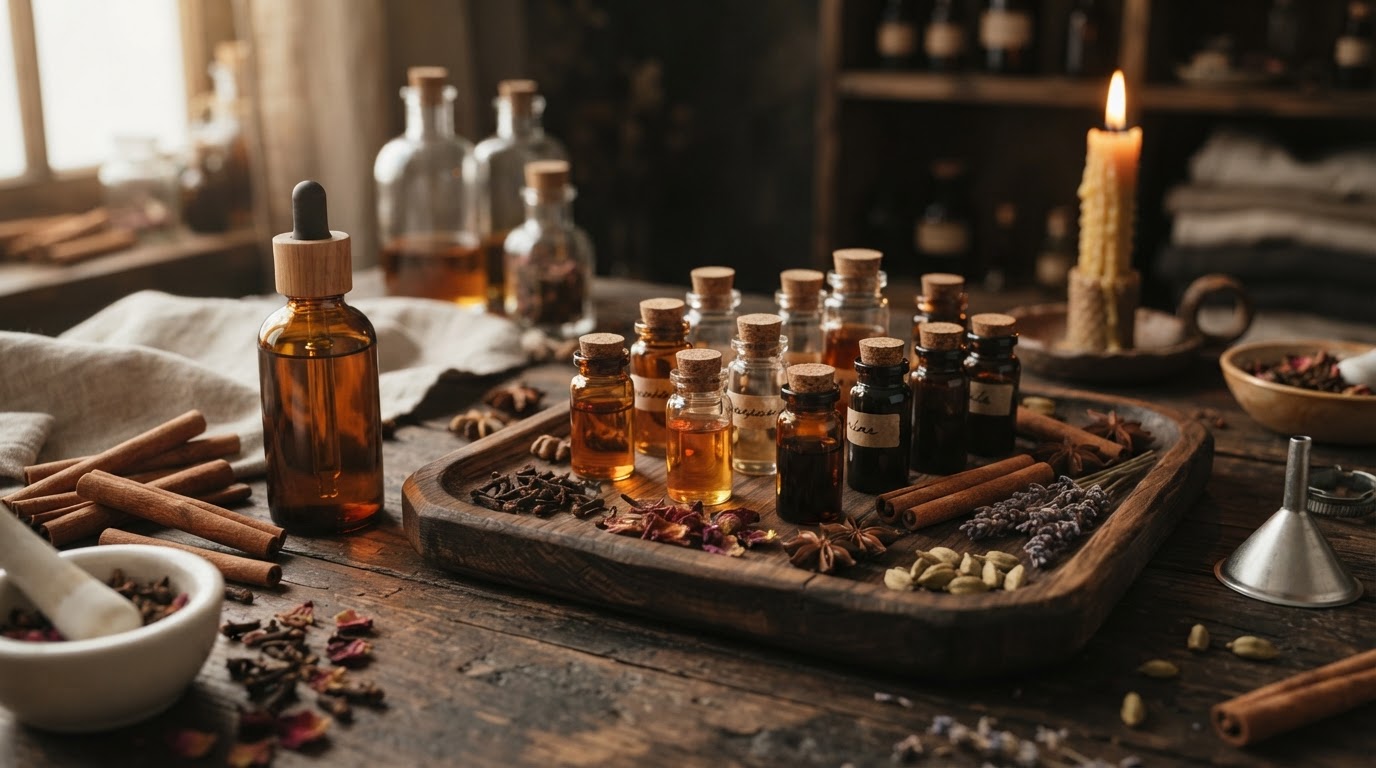
Winter Clove Blends: Mulled-Cider Scents for the Whole House
There is a moment every winter when the house needs to smell like something. Not a candle from a box store, not a plug-in. Something that actually feels like the season. Mulled cider has always been that smell: clove-forward, faintly sweet, with a little citrus brightness cutting through the warmth. The good news is that you can build that scent with essential oils and fill every room in the house with it, each space getting its own quiet variation on the theme.
This guide walks through why clove oil is the anchor of any honest mulled-cider blend, which oils pair with it room by room, and how to use your diffuser safely so the scent stays pleasant rather than overwhelming. It is written for December and January, but honestly, these blends work from the first cold snap in October through the last grey days of February.
Why Clove Is the Heart of Every Mulled-Cider Blend
Real mulled cider gets its spine from cloves. Before the orange peel, before the cinnamon stick, before any added sweetener, it is the clove that gives the pot its depth. Clove essential oil works the same way in a diffuser blend. It is rich, slightly woody, and dense in a way that other spice oils are not.
The primary aromatic compound in clove bud oil is eugenol. That single compound is responsible for the warm, almost smoky character that distinguishes clove from cinnamon (which leans sweeter and more linear) or cardamom (which is brighter and almost floral). When you want a scent that reads as spiced and wintery rather than just sweet, eugenol is what you are reaching for.
A quick note on grades: for diffuser blends, you want steam-distilled clove bud oil specifically. Clove leaf and clove stem oils are also available and are less expensive, but they tend to read as sharper and more medicinal on first impression. Bud oil is softer and rounder, which makes it far easier to blend in a home diffuser without overpowering every other note. If you want more background on sourcing and grades, our complete guide to clove oil at home covers the differences in detail.
The Core Mulled-Cider Formula (and How to Adjust It)
Before going room by room, it helps to have a baseline. Think of this as the master recipe that every variation in this article builds from.
Classic Mulled-Cider Blend (for a 100 ml diffuser)
- 2 drops clove bud essential oil
- 3 drops sweet orange or wild orange essential oil
- 2 drops cinnamon bark or cinnamon leaf essential oil
- 1 drop cardamom essential oil
This gives you the citrus brightness on top, the familiar spice warmth in the middle, and the clove depth underneath. It diffuses as something genuinely close to a pot of cider simmering on the stove.
Safety note: Clove bud and cinnamon bark are both high-intensity oils. For home diffusers, the drop counts above are intentionally conservative. Start here and resist the urge to add more. Run your diffuser in 30-to-60 minute cycles with breaks in between. Keep the room ventilated. Pregnant individuals, young children, and pets should not be in enclosed spaces with these blends running continuously. When in doubt, consult a qualified healthcare provider before diffusing spice oils around vulnerable household members.
Room-by-Room Blends for the Whole House
A single blend does not fit every room. The kitchen can handle something bold. A bedroom calls for something softer, a wind-down variation that settles rather than stimulates. Here is how to tune the core formula for each space.
Kitchen and Dining Room: Bold and Festive
This is the room where you can lean in. Guests gather here. Food smells compete with everything. You want something that holds its own.
- 3 drops clove bud essential oil
- 3 drops sweet orange essential oil
- 2 drops cinnamon bark essential oil
- 1 drop black pepper essential oil
- 1 drop ginger essential oil
The black pepper and ginger push this into something almost savory. It reads less like mulled cider and more like a whole holiday kitchen at full capacity. Run it before guests arrive, then switch off the diffuser once the room is full of people and actual food smells. Layering cooking aromas on top of active diffuser output can be a lot.
Living Room and Entryway: The First Impression Blend
The entryway is what people smell when they walk in from the cold. You want warmth and welcome, not intensity.
- 2 drops clove bud essential oil
- 3 drops sweet orange essential oil
- 2 drops cedarwood essential oil
- 2 drops frankincense essential oil
Swapping cinnamon for cedarwood softens the whole thing considerably. Frankincense adds a faint resinous quality that is unmistakably winter without being aggressively spiced. This is the blend that makes someone walk in and immediately say the house smells good. They may not know why. That is the point.
Home Office or Reading Nook: Focused and Grounded
For a workspace or a quiet corner with a book, you want something that does not demand your attention. A background hum of winter rather than a statement.
- 1 drop clove bud essential oil
- 2 drops sweet orange essential oil
- 2 drops rosemary essential oil
- 2 drops fir needle or balsam fir essential oil
Clove drops to a supporting role here. The fir needle pulls things outdoors, and the rosemary keeps the blend from going entirely cozy-sleepy. People who find straight spice blends too distracting while working often report this combination feels more balanced for long sessions.
Bedroom and Hallway: Evening Wind-Down Variation
Clove is stimulating at higher concentrations, so evening diffusion calls for restraint. One drop does real work when the room is small and you are not competing with cooking smells or foot traffic.
- 1 drop clove bud essential oil
- 2 drops lavender essential oil
- 2 drops vetiver essential oil
- 1 drop sweet orange essential oil
This is a cider-adjacent blend. It still reads as wintery and spiced, but the lavender and vetiver soften it into something that feels appropriate for the last hour before bed. Run it for 30 minutes before your bedtime routine, then switch off the diffuser before you sleep. Continuous overnight diffusion of any essential oil blend is not recommended.
Seasonal Variations: Stretching the Blends Through Winter
The mulled-cider theme is versatile enough to shift with the weeks. Early December calls for something festive and high-energy. The week between Christmas and New Year leans quieter. January and February want something that acknowledges the cold without giving into it entirely.
Early December: Holiday Party Prep
Stack the citrus. Use tangerine or clementine oil alongside sweet orange for a brighter top note. Add a drop of Douglas fir or spruce to bring in the tree smell. This is the blend that makes your home feel like the holidays are actively happening, not just approaching.
Late December: Quiet Midwinter
Pull back on the citrus and lean into the resins. Frankincense, myrrh, and sandalwood all pair well with a single drop of clove. The result is warmer, older-feeling, and better suited to the long quiet evenings of the week after Christmas.
January and February: Winter-Long Comfort
By January, the holiday decorations are down and the grey sets in. This is when a simpler blend does the most work. Two drops clove, three drops bergamot, two drops cedarwood. The bergamot is surprising here but welcome: it adds a warmth that is less obviously spiced and more generally golden, which suits a season that needs brightness without the visual cues of December.
Beyond the Diffuser: Other Ways to Use These Blends
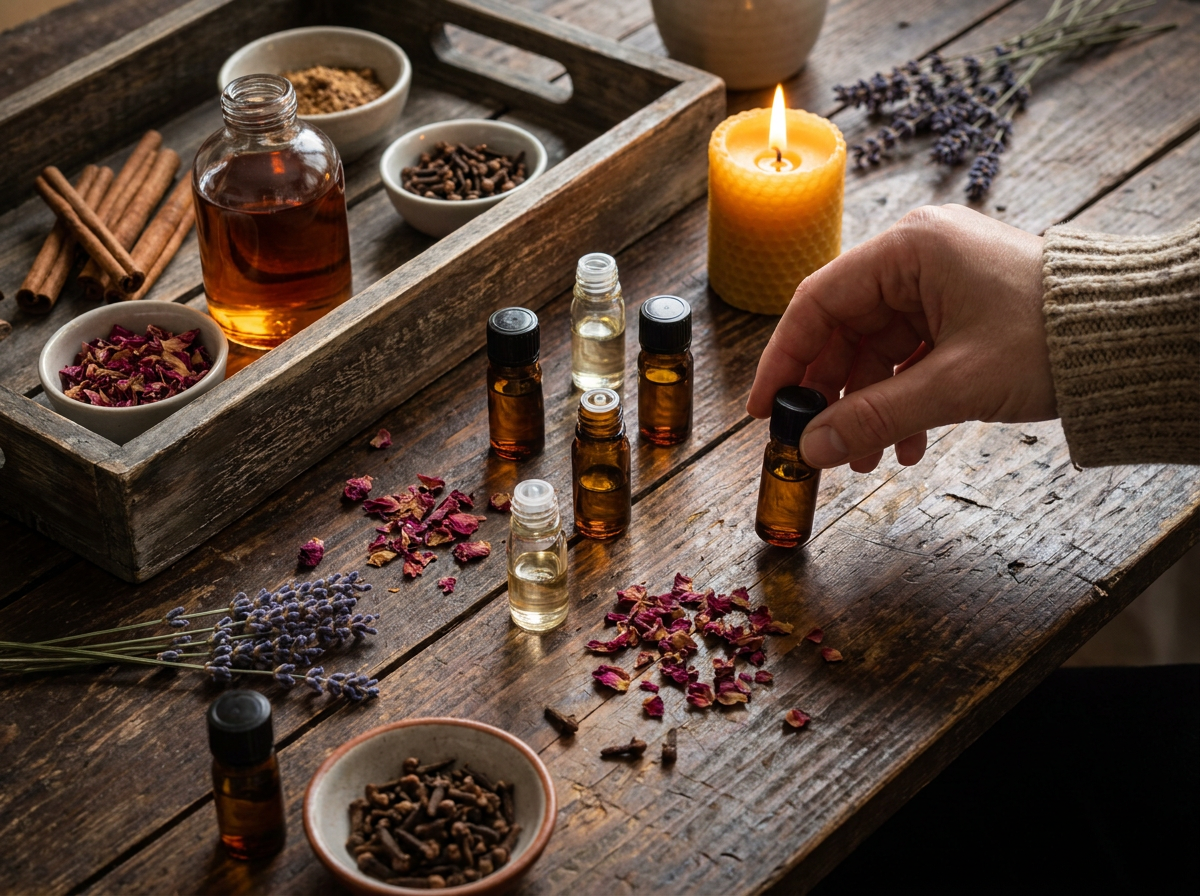
Diffusers are the easiest delivery method, but they are not the only option. These blends translate well to other home-scenting approaches.
Stovetop Simmer Pots
A small pot of water on low heat with whole cloves, orange slices, cinnamon sticks, and a splash of vanilla extract does everything a diffuser does but with more kitchen authenticity. If you enjoy the hands-on side of this, our guide to DIY clove potpourri, stovetop and dried bowl recipes goes deep on ratios and variations.
Linen and Room Sprays
To make a simple room spray, combine distilled water and a small amount of unscented alcohol (like witch hazel or high-proof vodka) in a 2-ounce spray bottle. Add 10 to 15 drops of your chosen blend per 2 ounces of liquid. Shake before each use. Mist curtains, throw blankets, or the air near your entryway. Because clove and cinnamon oils can potentially irritate skin, avoid direct skin contact with these sprays and always patch test fabric in an inconspicuous area before using on upholstery.
Wood Diffuser Sticks and Dried Ornaments
Unfinished wood diffuser sticks can be saturated with a clove-citrus blend and placed in a shallow dish of river stones. They release scent slowly over days rather than hours. Dried orange pomanders studded with whole cloves are the original version of this idea, and they still work beautifully. The essential oil version simply lets you refresh and adjust the scent as often as you like.
Gift Ideas: Sharing the Scent
A well-labeled set of winter diffuser blends makes a genuinely thoughtful gift for people who already have a diffuser at home. You can pre-blend in small amber roller or dropper bottles and label each one with the room it suits best. Add a card with drop counts and safety notes. For broader gift set inspiration, the clove oil gift guide for cozy season gifting has curated options across a range of budgets.
A few practical tips for gifting blends: use dark glass bottles to protect the oils from light degradation. Include a printed note about dilution and diffuser cycle times. If the recipient has young children or pets, note the safety considerations clearly so they can make informed choices about where and how to use the blends.
A Few Sourcing Notes Worth Knowing
The quality of your clove bud oil shapes every blend you make from it. Cheap clove oil is often cut with clove leaf oil or synthetic eugenol, both of which smell sharper and less rounded. Look for oil that specifies clove bud on the label (not just clove oil), lists the country of origin (Indonesia and Madagascar are the primary sources of well-regarded bud oil), and comes with a GC/MS report available on request. Third-party testing is the clearest signal that a supplier takes purity seriously.
Sweet orange oil should be cold-pressed from the peel. Cinnamon bark is stronger than cinnamon leaf; if you are new to working with it, start with leaf oil and work your way up. Cardamom oil can be expensive, but a single drop in a 100 ml diffuser goes a long way and it is worth the investment for the complexity it adds.
Keeping It Safe All Season
Spice oils deserve respect. Clove bud and cinnamon bark both have relatively low recommended usage rates compared to gentler oils like lavender or bergamot. In a diffuser, the drop counts in this article are calibrated for typical home diffusers in rooms with some air circulation. Smaller rooms need fewer drops, not more.
If you notice any irritation in the eyes, nose, or throat while diffusing, turn the unit off and open a window. This is a signal to reduce your drop count or extend the ventilation breaks between cycles. Sensitivity varies significantly from person to person, and starting conservative is always the right call.
Pets, particularly cats and birds, can be more sensitive to concentrated aromatic compounds than humans. Keep diffusers in rooms your pets can freely leave, and watch for signs of discomfort. If you have concerns about specific oils around animals or young children, a conversation with your veterinarian or a qualified healthcare provider is worth having before you begin.
Winter diffusing is one of the quieter pleasures of the season. A well-chosen blend in the right room at the right time can shift the feeling of an entire evening. Start with the core mulled-cider formula, adjust it to your space, and let the house tell you what it wants.