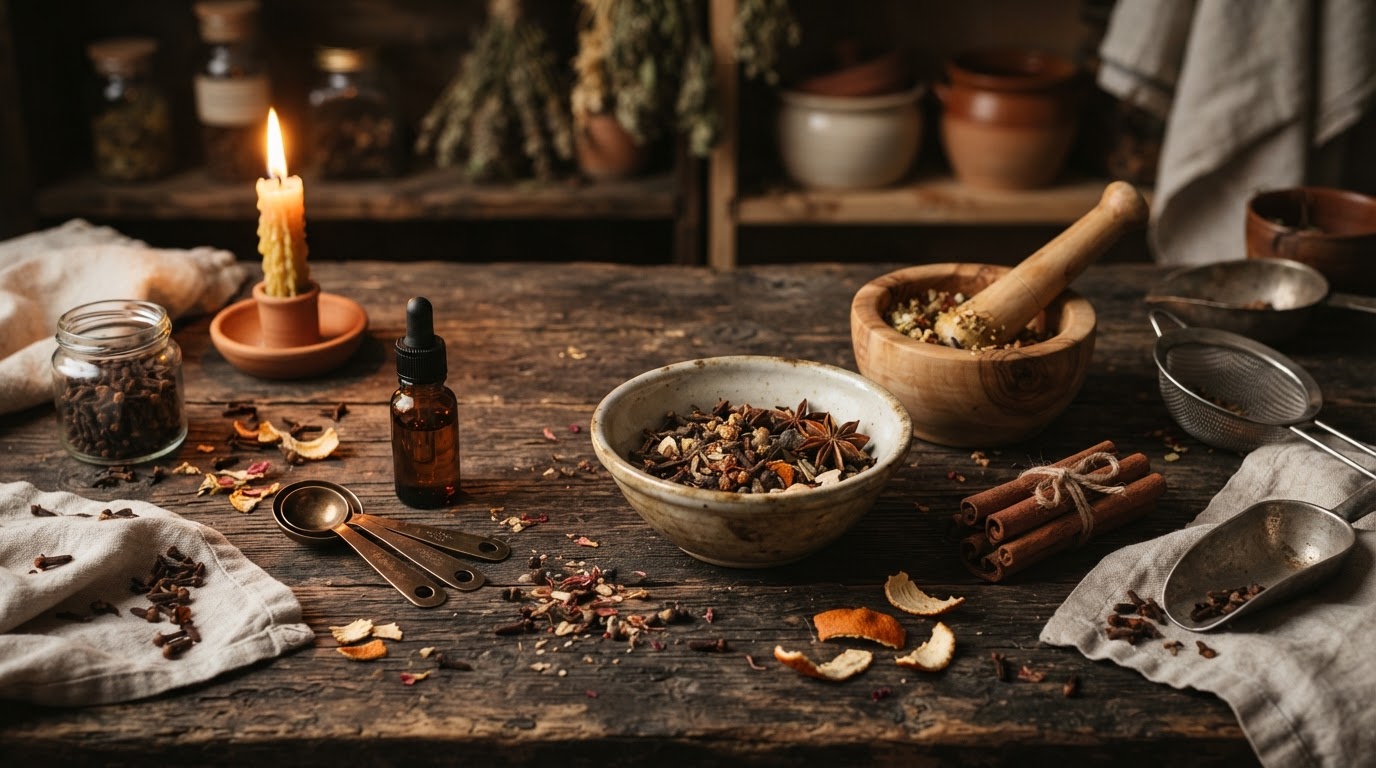
DIY Clove and Orange Spray: A Classic Pomander Scent, Modernized
There is something about the smell of clove and orange together that feels like a memory. Spice markets. Holiday kitchens. A bowl of whole oranges studded with cloves, sitting on a sideboard and slowly perfuming the whole room. The pomander is one of the oldest scent rituals in the Western world, carried in pockets and hung in wardrobes for centuries before synthetic fragrance ever existed.
This recipe takes that same beloved combination and turns it into a simple, sprayable room mist you can make at home in about fifteen minutes. No simmering required. No dried fruit. Just a clove orange spray that brings the warmth of a pomander into any space, on demand.
If you are new to working with clove essential oil and want a broader introduction before you start blending, the complete guide to cozy seasonal clove oil use at home is a good place to get your bearings. Clove is one of the most potent oils in the spice family, and a little context goes a long way before your first batch.
Why Clove and Orange?
The pairing works because of contrast. Clove essential oil is deep, dense, and almost woody in its warmth. Sweet orange essential oil is bright and citrusy, sitting right at the top of any blend. Together, they create something that is neither purely sharp nor purely heavy. The orange lifts the clove. The clove grounds the orange.
In traditional pomander-making, whole cloves were pressed directly into orange peel, which released both the clove's eugenol and the orange's natural citrus oils at once. This spray mimics that effect with essential oils and a few simple carrier ingredients. The result is a pomander scent DIY project that smells genuinely handcrafted, not like a synthetic air freshener.
Recipe Overview
- Difficulty: Beginner
- Prep time: 15 minutes
- Yield: One 4-ounce (120 ml) spray bottle
- Shelf life: 4 to 6 weeks at room temperature; up to 3 months if refrigerated
Ingredients
| Ingredient | Amount | Notes |
|---|---|---|
| Distilled water | 60 ml (2 fl oz) | Tap water introduces minerals that can cloud the spray; distilled is cleaner |
| Witch hazel (alcohol-based, 14% or higher) | 55 ml (roughly 1.85 fl oz) | Acts as the dispersing agent; higher alcohol content disperses oils more evenly |
| Clove bud essential oil | 10 drops | Clove bud is milder than clove leaf or clove stem; use bud grade for this recipe |
| Sweet orange essential oil | 20 drops | Cold-pressed is preferred for the brightest citrus note |
| Cedarwood essential oil (optional) | 5 drops | Adds a soft base note that makes the scent last longer on fabric |
| Polysorbate 20 (optional but recommended) | 1 teaspoon (5 ml) | A gentle solubilizer that keeps oils suspended in water; prevents oily residue on surfaces |
A note on essential oil concentration: This recipe yields a room spray with an overall essential oil concentration of approximately 1% when measured against total liquid volume. That falls comfortably within the general guidance for linen and room sprays. Do not increase the clove oil beyond 10 drops in a 4-ounce batch. Clove is one of the highest-rated essential oils for skin sensitization, and even in a room spray, higher concentrations can irritate eyes and airways.

Step-by-Step Instructions
-
Gather your equipment
You will need a 4-ounce dark glass spray bottle (amber or cobalt), a small glass measuring cup or beaker, a stirring stick or small whisk, and a funnel if your bottle has a narrow neck. Dark glass protects both the citrus oils and the clove from light degradation. Plastic bottles can absorb essential oil compounds over time, so glass is strongly preferred.
-
Combine the essential oils with polysorbate 20
If you are using polysorbate 20, add it to your glass measuring cup first. Drop the clove bud oil, sweet orange oil, and cedarwood oil directly into the polysorbate. Stir gently for about 30 seconds. This step pre-dissolves the oils into the solubilizer before water is added, which prevents the finished spray from separating into oily droplets. Skipping this step is the most common reason homemade room sprays leave greasy spots on fabric.
-
Add the witch hazel
Pour the witch hazel into the measuring cup with the oil mixture. Stir again for about 20 seconds. The blend should look mostly clear or very slightly hazy at this point. A strong cloudy or milky appearance usually means the oils have not fully dispersed; keep stirring, or add another small splash of witch hazel.
-
Add the distilled water
Pour in the distilled water slowly while continuing to stir. The liquid may become slightly cloudy as the water is introduced. This is normal, especially if you skipped the polysorbate. Give the mixture a good 60-second stir to help everything combine.
-
Transfer to the spray bottle
Using a funnel, pour the finished blend into your dark glass bottle. Attach the spray top and give the bottle a firm shake for about 10 seconds.
-
Label and date the bottle
Write the date of creation and the ingredients on a label. This matters more than it sounds. Citrus oils oxidize relatively quickly, and you want to know when a batch is approaching the end of its useful scent life.
-
Test the spray
Mist into the air a few times to check the dispersion. A fine, even mist is the goal. If the spray feels oily or leaves visible droplets on surfaces, the oils are not fully dispersed. Empty the bottle, add a bit more polysorbate 20, and shake again.
How to Use Your Clove Room Spray
Shake the bottle before every use. Essential oils and water will separate even with a solubilizer, and you want the full scent profile in every spray.
Mist into the air from about 12 to 18 inches away and let the droplets fall naturally. You can also spray lightly onto curtains, upholstered furniture, or bedding, but always test a hidden area first. Sweet orange oil can occasionally affect certain fabric dyes, so a quick spot check before going anywhere near heirloom textiles is worth the extra minute.
This clove orange spray works especially well in living rooms and entryways during autumn and winter months. It is the scent equivalent of walking into a well-spiced kitchen. A few spritzes before guests arrive can shift the entire feel of a space.
Safety Warnings
Please read this section before making or using the spray.
- Clove oil is a potent sensitizer. Even in a room spray, concentrated clove essential oil can irritate the eyes, skin, and airways. Do not spray directly onto skin. Do not spray near the face. If you experience any discomfort, move to fresh air immediately.
- Keep away from children and pets. Small children and animals are more sensitive to concentrated volatile compounds. Do not use this spray in enclosed spaces where children under two or pets are present. Birds are especially sensitive to airborne compounds from essential oils.
- Pregnancy and nursing. If you are pregnant or nursing, consult a qualified healthcare provider before using any product containing clove essential oil.
- Do not spray near open flames. Witch hazel and essential oils are flammable. Keep away from candles, gas burners, and fireplaces during spraying.
- Fabric and surface testing. Citrus oils can affect some dyes and finishes. Always test on a hidden area before spraying on visible fabric, wood, or painted surfaces.
- Do not ingest. This spray is for aromatic use only. Essential oils are not safe to consume.
- Sensitization over time. Repeated exposure to clove in an enclosed space over long periods may increase the likelihood of developing a sensitivity. Use in well-ventilated areas and vary your scent routines periodically.
Storage Instructions and Shelf Life
Store the finished spray in a cool, dark location away from direct sunlight and heat sources. A cabinet or drawer works well. At room temperature, expect a useful scent life of 4 to 6 weeks. After that point, the citrus components in particular will begin to oxidize, and the spray may start to smell slightly off, flat, or vaguely sour.
Refrigerating the bottle extends the shelf life to approximately 3 months. If you refrigerate, allow the bottle to come to room temperature for a few minutes before spraying; cold liquids atomize less evenly than room-temperature ones.
If the spray develops an off smell, becomes very cloudy, or shows any visible growth, discard it. Making a fresh small batch every month is far better practice than stretching a large batch until it degrades.
Variations and Substitutions
Warmer, Deeper Version
Replace the cedarwood with 5 drops of frankincense essential oil and 3 drops of cinnamon bark essential oil. Cinnamon bark, like clove, is a skin sensitizer, so keep the total combined drops of clove and cinnamon at or below 12 drops per 4-ounce batch. This variation smells like the spice route in a bottle. Deeply warm, slightly resinous, and long-lasting.
Lighter, Brighter Version
Reduce the clove bud oil to 6 drops and increase the sweet orange to 25 drops. Add 5 drops of bergamot essential oil. The result is a much airier spray where the clove reads as a background note rather than a feature. This version works well in kitchens and bathrooms where a heavier spice scent might feel overpowering.
Autumn Harvest Version
Keep the base recipe and add 4 drops of cardamom essential oil and 3 drops of ginger essential oil. Cardamom adds a slightly green, aromatic edge that complements both the clove and orange beautifully. Total oil drop count should still stay within the 1% concentration guideline; adjust other oils down slightly to accommodate the additions.
No Polysorbate Version
If you prefer to skip the polysorbate 20, increase the witch hazel to 80 ml and reduce the water to 35 ml. The higher alcohol ratio helps disperse the oils more evenly without a solubilizer. The spray may still require a vigorous shake before each use, and some surface misting is possible. Avoid spraying directly on delicate fabrics without testing.
Substituting the Orange
Cold-pressed sweet orange is the most traditional choice for a pomander scent DIY, but blood orange, tangerine, and mandarin essential oils all work in this recipe. Each brings a slightly different character. Blood orange is richer and slightly deeper. Mandarin is softer and almost floral. Tangerine sits closest to sweet orange in overall brightness.
Sourcing Notes: Choosing the Right Clove Oil
For this recipe, clove bud essential oil is the right choice. Clove leaf and clove stem oils are less expensive and more commonly available in bulk, but they tend to have a harsher, more phenolic scent profile that can dominate a blend rather than complement it. Bud oil is rounder and more complex.
Look for a supplier who specifies the country of origin (Madagascar and Sri Lanka are the most reputable sources for clove bud oil) and provides a GC/MS report on request. That report tells you the eugenol content and confirms the oil has not been adulterated. A quality clove bud oil will have a eugenol content somewhere between 70% and 90%.
For more ideas on how clove oil shows up in home fragrance projects beyond room sprays, the guide to clove oil for home fragrance crafts, wax melts, and simmer pots covers a wide range of seasonal options worth exploring.
A Final Note on the Ritual
The original pomander was a small perforated case, often made of silver or ivory, filled with aromatic compounds and worn close to the body. It was partly practical and partly ceremonial. People cared about how their homes and belongings smelled. They put thought into it.
This spray is a modern version of that same impulse. It takes about fifteen minutes to make, costs very little, and lasts for weeks. The clove orange spray you bottle today can scent a whole season of quiet evenings, candlelit dinners, and front-door arrivals.
And if this project sparks a broader curiosity about what clove oil can do around the house, from linen closets to workshop benches, the piece on clove oil in the garden shed and hobbyist spaces goes deep into some of the less obvious places this spice shows up. The spice trade built empires on clove for a reason. It is worth getting to know.