Clove Oil for Canker Sores: What the Evidence Does Not Show
Searching for clove oil and canker sores turns up plenty of advice and, as far as we could find, no trial. We looked, and we are not going to hand you a home method for putting an essential oil on an open sore in the mouth. Our clove bud and clove leaf oils are labelled for aromatic and cosmetic use only, and an ulcer is exactly where a strong irritant is least welcome.
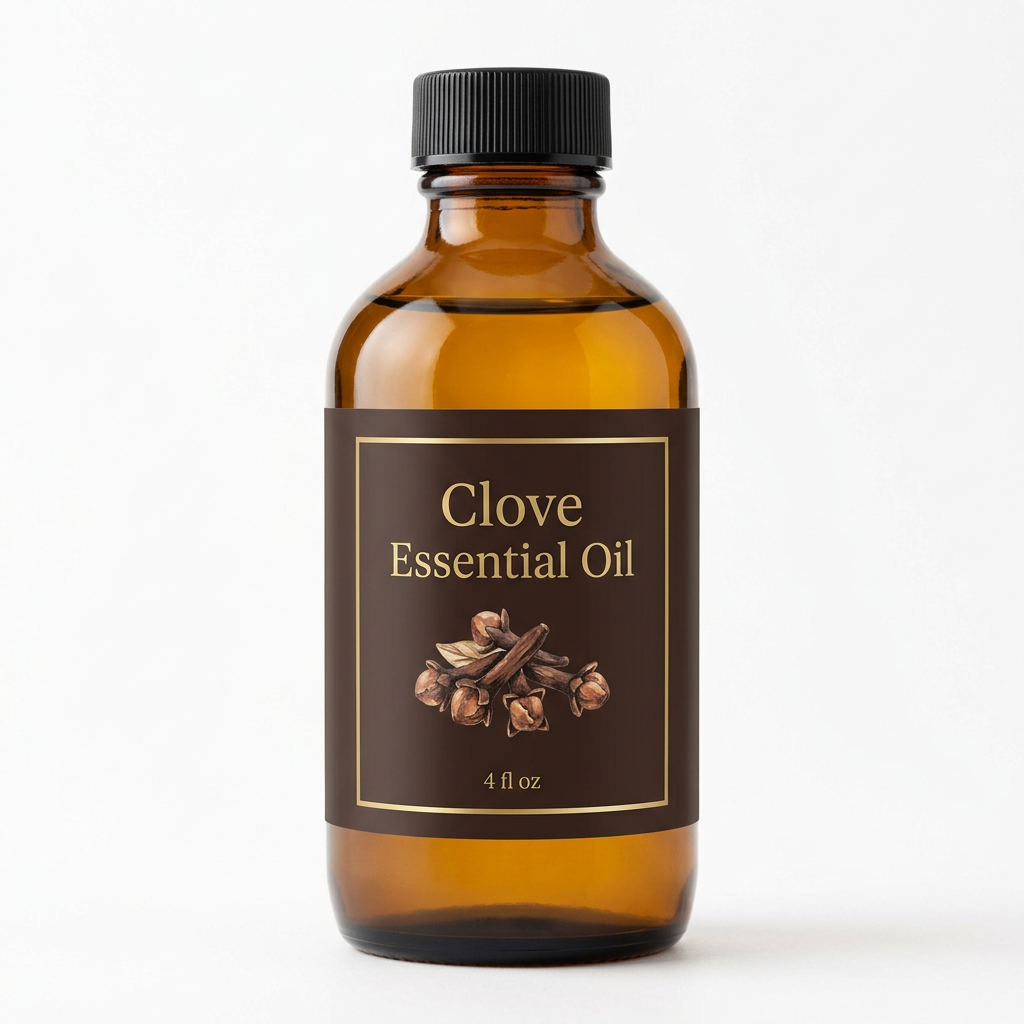
Clove Essential Oil
Our own Clove Essential Oil, in sizes from 0.5 oz to bulk.
From $10.99
Shop Now →First, is it a canker sore?
MedlinePlus describes canker sores as small, round mouth sores with a red edge and a gray centre, found inside the cheek, under the tongue or at the back of the throat. They are not contagious, and they are not cold sores, which come from the herpes simplex virus. Listed possible triggers include viral infection, stress, food allergies, low vitamin or mineral levels and hormonal changes, and sometimes the cause is unknown. In most cases, it says, they go away by themselves (MedlinePlus, canker sores).
The NHS gives numbers for the usual course: mouth ulcers typically clear in about 1 to 2 weeks (NHS, mouth ulcers). That timeline matters for this topic, because anything you try will appear to work if you start it on day three of a sore that was already on its way out. This is the main reason a single before-and-after story about any home remedy is weak evidence. Reasoning from the NHS timeline, only a placebo-controlled trial can separate the remedy from the calendar.
The checks that come before any remedy
The NHS lists when to see a GP or dentist: an ulcer that lasts longer than 3 weeks, one that looks different from your usual ones (unusually large, or near the back of the throat), one that bleeds or becomes more painful and red, or ulcers elsewhere on the body or painful, swollen joints. It adds that a long-lasting ulcer can occasionally be a sign of mouth cancer, so getting it checked is worthwhile (NHS).
That is the real reason we resist the advice to try clove on a sore. A remedy that seems to calm a sore for a week can delay the appointment that matters for the sore that is not a canker sore. If any of those NHS signs apply, the next step is a dentist or physician, not a bottle.
What the trials have actually compared
The most useful single source we found is a 2023 systematic review and network meta-analysis in the Journal of Evidence-Based Dental Practice by Cheng et al.. It pooled 38 randomised trials with 2,773 patients with recurrent aphthous ulcers and ranked interventions on pain, duration, diameter and area. Diode laser ranked best for reducing pain, followed by amlexanox; a herbal product called Iralvex did best for ulcer duration; and diode laser, an acacia nilotica with licorice formulation and amlexanox led on ulcer diameter. Most trials reported no adverse effects, and those reported were mild. The authors concluded that several interventions beat placebo.
Two things to notice. First, none of those headline interventions is a single essential oil. Second, they are specific products or procedures, tested in a specific way, which is the same point we make about mouthwash: the evidence belongs to the finished product, not to the plant name on the ingredient list.
For ordinary over-the-counter care, the NHS names what a pharmacist can offer without a prescription: antimicrobial mouthwash, pain-relieving tablets, mouthwash, gel or spray, corticosteroid lozenges and a warm salt-water rinse. For severe, persistent or infected ulcers it lists stronger options from a GP or dentist, including steroid mouth sprays or dissolvable tablets and prescription painkillers (NHS). Notice what is missing from that list: clove oil.
What is known about clove oil in the mouth
There is clove research in dentistry, but it asks other questions. In a 2006 randomised, subject-blinded trial in the Journal of Dentistry, Alqareer et al. compared a homemade clove gel, 20% benzocaine gel and matching placebos on the buccal mucosa of 73 healthy adult volunteers, then gave each person two needle sticks after 5 minutes. Both active gels scored lower pain than placebo (p=0.005) with no difference between them. The authors called it a potential replacement for benzocaine before needle insertion.
Read what that does and does not show. The tissue was intact, healthy mucosa on the upper canine area, the stimulus was a needle, the preparation was a gel of unreported strength made by the researchers, and the question was needle discomfort. It says nothing about an ulcer, which is a break in the lining. We cannot carry that result across to a canker sore, and doing so would be an inference with no trial behind it.
A 2025 systematic review of plant-derived analgesics in dental pain, by Reddy et al., covered 21 studies and named clove oil (eugenol) among agents with the strongest analgesic signal, with clinical uses such as pulpitis, post-extraction pain and oral mucositis. Its authors also said that standardisation of preparations and larger trials are needed. That review looked at dental pain, not canker sores, and the preparations vary.
The harm side
The UK product information for a 100% clove oil dental solution, sold for temporary toothache and used in small amounts in a tooth cavity, says that eugenol can irritate skin and mucous membranes, that repeated use may cause gum damage, that patients may become sensitised, and that it is not recommended under 2 years (emc, Clove Oil BP SmPC). Reasoning from that, an open ulcer already has an exposed surface, so an irritant meant for a cavity is a poor match. We say that as reasoning, not as a documented finding about canker sores.
There is also the swallowing risk, since a mouth sore sits where oil can be swallowed. The Tennessee Poison Center reports that oil of cloves is about 60 to 90 percent eugenol and that toxicity has occurred in small children with as little as 5 to 10 ml (Tennessee Poison Center, 2025). Our 0.5 oz bottle holds about 14.8 ml, so keep every bottle out of reach of children. For the related skin question, see clove oil and burns.
What we do say
If you like the smell of clove, we sell it for the air. Our bud oil is described on our pages as warm, rich and sweetly spicy, and the leaf oil as bolder and smokier. You can diffuse either; see the diffuser guide and the wider oral health overview for how we think about the mouth. A canker sore is a question for a dentist, a pharmacist or your physician, particularly if the sores keep coming back, because recurring ulcers sometimes point to something else the clinician needs to look for, such as the low vitamin or mineral levels MedlinePlus lists.
The plain version: most canker sores clear by themselves, pharmacy products exist with trial support behind finished formulations, no clove trial for these ulcers turned up in our search, and an irritant on an open sore is a risk we would rather you not take on our word.
Clove Essential Oil
Clove Essential Oil from our own shop, in sizes from 0.5 oz to bulk.
From $10.99
Shop Now →Sources & Further Reading
- MedlinePlus, National Library of Medicine. Canker sores. medlineplus.gov/cankersores
- NHS. Mouth ulcers. nhs.uk/conditions/mouth-ulcers
- Cheng et al., 2023. Comparative efficacy of therapeutic interventions for recurrent aphthous ulcers: systematic review and network meta-analysis. pubmed.ncbi.nlm.nih.gov/38035895
- Alqareer et al., 2006. The effect of clove and benzocaine versus placebo as topical anesthetics. pubmed.ncbi.nlm.nih.gov/16530911
- Reddy et al., 2025. Analgesic efficacy of phytotherapeutic agents in dental pain management: a systematic review. pubmed.ncbi.nlm.nih.gov/41322706
- Electronic Medicines Compendium, 2014. Clove Oil BP dental solution, summary of product characteristics. medicines.org.uk/emc/product/4817
- Tennessee Poison Center, 2025. What is the main toxic component of oil of cloves? vumc.org/poison-control